Yi Jing
 61
61

Yi Jing



Aurelia Blackwood (Occult Philosophy Critic) — Gia-fu Feng's Yi Jing is a luminous beacon in the often-murky waters of ancient Chinese metaphysics. This edition transcends mere translation, offering a deeply resonant interpretation that speaks directly to the soul. Feng's profound understanding of Taoist principles imbues the text with an unparalleled esoteric richness. He masterfully deciphers the layered symbolism of the hexagrams, revealing their potent archetypal power and their capacity for profound self-discovery. For those who seek not just prediction, but genuine spiritual insight and a path towards inner harmony, this work is indispensable. It is a cornerstone for any serious student of Eastern mysticism and divination.
📝 Description
61
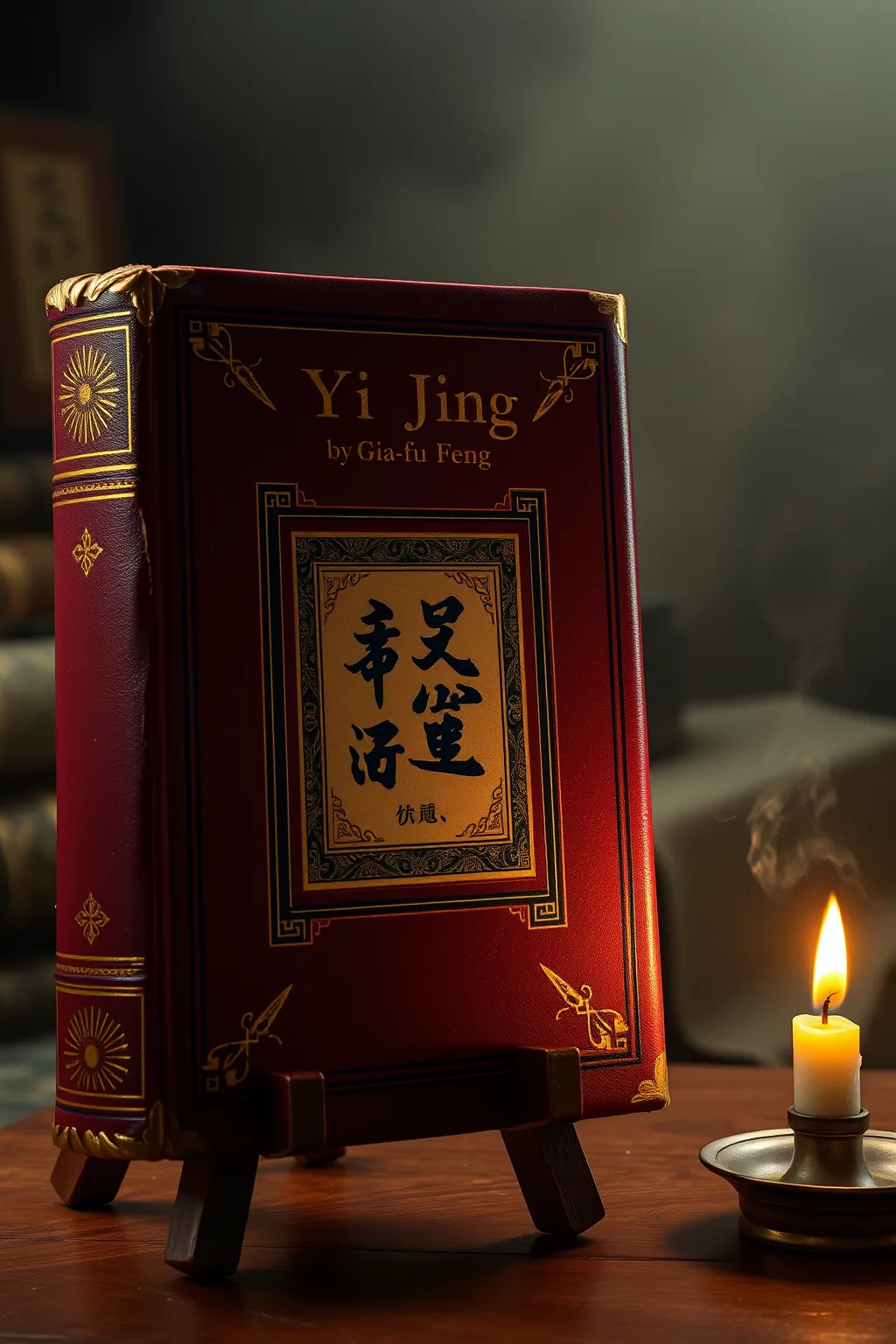
Gia-fu Feng's 1977 translation of the Yi Jing illuminates its role beyond divination.
This edition of the Yi Jing presents Gia-fu Feng's translation and commentary on the ancient Chinese text. It moves beyond its common perception as a divinatory tool, emphasizing its philosophical depth. The book details the sixty-four hexagrams, explaining the interplay of Yin and Yang as fundamental forces in the universe. Feng's work aims to make the original verses understandable, revealing concepts of change, cosmic patterns, and alignment with the Tao.
The text is structured for those seriously studying esoteric practices or philosophy. It invites readers to engage with the Yi Jing's underlying intelligence. The goal is to understand the subtle influences that shape events and to foster an awareness of universal interconnectedness. This rendition seeks to provide clear access to the text's wisdom for contemporary readers.
The Yi Jing, or Book of Changes, is a foundational text in Chinese cosmology and philosophy, influencing Daoism, Confucianism, and various esoteric traditions for over two millennia. Its system of hexagrams, derived from combinations of broken and unbroken lines, represents archetypal situations and processes of change. Esoteric interpretations often focus on the Yi Jing as a map of consciousness, a means to align with cosmic rhythms, and a guide for personal transformation. Feng's translation and commentary aim to bridge the gap between these ancient insights and modern understanding.
💡 Why Read This Book?
Unravel the secrets of cosmic order and personal destiny. This Yi Jing offers a profound exploration of change, fate, and the Tao. Ideal for seekers of ancient wisdom, scholars of Eastern philosophy, and practitioners of divination seeking deeper, symbolic understanding. Discover a timeless guide to navigating life's transformations with clarity and insight.
⭐ Reader Reviews
Honest opinions from readers who have explored this book.
❓ Frequently Asked Questions
What is the Yi Jing?
The Yi Jing, or I Ching, is an ancient Chinese text considered one of the oldest Chinese classics. It's a complex system of divination and philosophy, using hexagrams derived from combinations of Yin and Yang lines to interpret situations and offer guidance.
How is this edition different?
Gia-fu Feng's edition is celebrated for its profound philosophical insights and clear, evocative translation. It emphasizes the esoteric and symbolic aspects, making the ancient text accessible for modern spiritual exploration and contemplation.
Is it only for divination?
While widely used for divination, the Yi Jing is also a profound philosophical and ethical text. It explores the principles of change, balance, and the Tao, offering guidance on personal conduct and understanding the natural order of the universe.
What are hexagrams?
Hexagrams are the sixty-four fundamental symbols of the Yi Jing, each composed of six stacked lines. These lines represent different combinations of Yin (broken) and Yang (solid) energies, forming unique patterns that symbolize archetypal situations and transformations.
Who was Gia-fu Feng?
Gia-fu Feng was a highly respected scholar and translator, known for his deep understanding of Chinese philosophy and his ability to convey its spiritual essence to a Western audience. His work on the Yi Jing is considered a seminal contribution.
🔮 Key Themes & Symbolism
The Nature of Change
Fundamentally, the Yi Jing is a meditation on the ceaseless flow of existence. It teaches that change is the fundamental constant, not something to be feared but understood and embraced. The hexagrams illustrate the cyclical nature of transformation, from growth and prosperity to decline and renewal. By studying these patterns, readers learn to discern the opportune moments for action and inaction, navigating life's flux with wisdom and resilience. This theme invites a profound acceptance of impermanence, fostering adaptability and a deeper connection to the cosmic rhythm.
The Balance of Opposites
The interplay of Yin and Yang is the bedrock of the Yi Jing's philosophy. These complementary, yet opposing, forces—feminine and masculine, passive and active, dark and light—are not viewed as in conflict but as essential partners in the creation and maintenance of the universe. The hexagrams are visual representations of their dynamic balance and shifting proportions in any given situation. Understanding this duality allows for a more nuanced perception of reality, encouraging the integration of seemingly contradictory aspects within oneself and the world, leading to greater harmony and completeness.
Cosmic Resonance and Personal Destiny
The Yi Jing posits a profound interconnectedness between the microcosm of human experience and the macrocosm of the universe. The patterns revealed in the hexagrams are not arbitrary but reflect universal archetypes and cosmic forces at play. By consulting the oracle, one seeks to align their personal journey with these greater currents, understanding their present circumstances as a manifestation of both past actions and celestial influences. This theme empowers individuals to make conscious choices that resonate with the harmonious flow of the Tao, thereby shaping their destiny with wisdom and intention.
💬 Memorable Quotes
Direct passages from the work, attributed to the author.
“To know the changes is to know the Tao.”
— This emphasizes that understanding the principles of constant flux and transformation, as depicted in the Yi Jing, is equivalent to grasping the fundamental nature and operation of the universe.
“In doubt, consult the oracle; in action, follow its counsel.”
— This succinctly describes the practical application of the Yi Jing: seeking clarity during uncertainty and adhering to the wisdom it imparts when making decisions and taking action.
“The superior person acts when it is right to act, and rests when it is right to rest.”
— This reflects the Yi Jing's emphasis on timing and discernment, advising individuals to act in accordance with the prevailing cosmic and situational energies for optimal outcomes.
“Every beginning contains a hidden end, and every end contains a hidden beginning.”
— This profound statement underscores the cyclical and interconnected nature of all phenomena, as understood by the Yi Jing, where no state is permanent and transformation is inherent.
💡 Key Ideas
Editorial paraphrase of the work's core concepts — not direct quotes.
The Book of Changes is the history of the universe and the oracle of all fates.
This quote highlights the Yi Jing's dual nature: a comprehensive record of cosmic evolution and a profound guide for understanding personal destiny and navigating life's challenges.
🌙 Esoteric Significance
Tradition
The Yi Jing is deeply rooted in Taoist and Confucian esoteric traditions, bridging philosophical inquiry with practical divination. It represents a sophisticated system for understanding the Tao, the fundamental, ineffable principle that underlies all existence. Its esoteric significance lies in its ability to act as a cosmic map, revealing the subtle energies and archetypal patterns that govern both the external world and the inner range of the human psyche.
Symbolism
The hexagrams are the primary symbols, each a complex arrangement of six lines (solid Yang, broken Yin) representing fundamental archetypes and situations. The trigrams (three-line combinations) are building blocks, and their stacking creates the sixty-four hexagrams, each with unique meanings, imagery, and associated judgments. The symbolism extends to the changing lines within a hexagram, indicating points of transition and potential transformation, offering a dynamic, ever-unfolding symbolic language.
Modern Relevance
In the modern era, the Yi Jing offers a powerful antidote to the fragmentation and uncertainty of contemporary life. Its emphasis on balance, change, and interconnectedness provides a framework for navigating complex challenges. Esoterically, it serves as a profound tool for self-awareness, spiritual growth, and intuitive development. Practitioners use it to gain insight into their inner states, understand the dynamics of their relationships, and align their actions with a deeper, cosmic wisdom for greater harmony and purpose.
👥 Who Should Read This Book
The Yi Jing by Gia-fu Feng is a treasure for a diverse audience. **Beginners** will find Feng's commentary clear, offering a clear entry point into this profound system. **Scholars of Eastern philosophy and comparative religion** will appreciate the meticulous scholarship and nuanced interpretations. **Spiritual seekers and practitioners of divination** will discover a rich oracle for self-reflection, guidance, and deeper understanding of cosmic patterns. Those interested in **metaphysics, ancient wisdom, and the art of living in harmony with nature** will find this edition an indispensable companion on their journey.
📜 Historical Context
The Yi Jing's origins are shrouded in antiquity, with its foundational elements likely dating back to the Shang Dynasty (c. 1600–1046 BCE) in China. Its development as a philosophical and divinatory text spans millennia, with significant contributions from Confucius and his disciples during the Spring and Autumn period (771–476 BCE), who added commentary and moralistic interpretations. The Han Dynasty (206 BCE–220 CE) further solidified its status as one of the 'Five Classics' of Confucianism. Throughout Chinese history, the Yi Jing has served as a crucial text for rulers, scholars, and mystics alike, influencing not only philosophy and religion but also art, literature, and governance. Its enduring relevance lies in its ability to adapt to changing eras while retaining its core message about the dynamic nature of reality and the art of living in harmony with universal principles.
📔 Journal Prompts
Reflect on a recent significant change in your life. How did the Yi Jing's principles of transformation apply?
Consider a situation where you felt a strong tension between opposing forces (e.g., action vs. inaction, logic vs. intuition). How does the concept of Yin and Yang offer insight?
If the Yi Jing were a mirror, what aspect of your inner self or your current path would it most clearly reflect back to you?
How can understanding the cyclical nature of change, as depicted in the Yi Jing, help you approach future challenges with greater equanimity?
What does it mean to live in harmony with the Tao, and how can the wisdom of the Yi Jing guide you toward this state?
🗂️ Glossary
Tao (Dao)
The fundamental, ineffable principle that underlies and flows through all existence. It is often translated as 'the Way' and represents the natural order, the cosmic rhythm, and the ultimate reality.
Yin
The feminine, passive, dark, receptive, and yielding principle. It is often associated with the moon, earth, and the interior aspects of existence.
Yang
The masculine, active, light, creative, and assertive principle. It is often associated with the sun, heaven, and the exterior aspects of existence.
Hexagram
A symbol composed of six stacked lines, either solid (Yang) or broken (Yin). There are 64 hexagrams in the Yi Jing, each representing a distinct archetypal situation or transformation.
Trigram
A symbol composed of three stacked lines, either solid (Yang) or broken (Yin). There are eight fundamental trigrams, which are the building blocks for the hexagrams and represent core elements like Heaven, Earth, Water, Fire, etc.
This book appears in 2 collections
🔮 Readers Also Liked
Browse all →







From the “I Ching” Collection
View all →









More Free Divination & Tarot Books
View all →