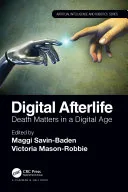
Digital Afterlife
 74
74

Digital Afterlife
Savin-Baden and Mason-Robbie’s *Digital Afterlife* grapples with the disquieting prospect of our digital selves outliving our biological ones. The strength of this collection lies in its multifaceted approach, bringing together scholars from disparate disciplines to consider the legal, ethical, and philosophical ramifications of digital persistence. For instance, the discussion surrounding the ownership and control of digital avatars and online personas post-mortem is particularly compelling, moving beyond sentimentality to the practical and legal quagmires. However, the sheer breadth of topics, while a strength, occasionally leads to a lack of depth in specific areas, leaving some threads feeling underdeveloped. The book’s exploration of simulated consciousness, a concept that could easily veer into science fiction, is handled with scholarly rigor, grounding speculative futures in present-day technological realities. Ultimately, *Digital Afterlife* serves as a crucial, if sometimes dense, primer on the emerging questions surrounding digital mortality.
📝 Description
74
Published in April 2020, Digital Afterlife examines how our digital lives intersect with death and the enduring self.
This collection scrutinizes the intersection of our digital existence with mortality, grief, and the concept of a continuing self. It moves past simple discussions of online memorials to tackle complex legal, ethical, and philosophical issues. The essays question the nature of identity when it is uploaded, archived, or simulated, raising crucial points about consciousness, legacy, and what it means to exist after biological death in digital spaces.
Digital Afterlife is written for academics, researchers, and advanced students who are considering the effects of digital technology on fundamental human experiences. It will appeal to those in sociology, philosophy, media studies, digital humanities, and religious studies interested in the societal and existential changes driven by pervasive digital culture. The book is for anyone seeking a thorough, interdisciplinary look at the post-death digital environment.
The book addresses a gap in research that had often focused on the online performance of grief rather than deeper structural and ethical questions. It engages with contemporary discussions in fields like digital sociology and posthumanism, considering ideas about technology's impact on embodiment and consciousness.
Emerging in 2020, this work arrived as digital integration accelerated, particularly with the onset of the COVID-19 pandemic. It addresses how our persistent online presence reconfigures traditional notions of the soul, consciousness, and the afterlife. By examining digital personhood and the ethics of posthumous data, the book engages with spiritualist and philosophical traditions that have long pondered the nature of existence beyond the physical body. It asks what continuity of self means when identity is mediated by technology and archived indefinitely.
💡 Why Read This Book?
• Gain a foundational understanding of digital personhood and the ethical frameworks surrounding posthumous digital data, as explored in the collection's detailed analyses. • Grasp the legal complexities of digital inheritance and ownership, examining how existing legal structures are challenged by persistent online identities, a topic discussed in the book's legal sections. • Consider the philosophical implications of simulated consciousness and digital persistence, moving beyond mere technological speculation to contemplate the nature of selfhood in a digitally extended existence, as presented in the philosophical discussions.
⭐ Reader Reviews
Honest opinions from readers who have explored this book.
❓ Frequently Asked Questions
What are the primary legal challenges discussed in Digital Afterlife concerning digital assets after death?
The book highlights issues of ownership, inheritance, and control over digital assets like social media profiles, virtual property, and personal data. It questions who has the right to access, manage, or delete these digital remnants once the individual has passed.
How does Digital Afterlife address the concept of a 'digital self' beyond simple online profiles?
The work examines the idea of a persistent digital identity that can be simulated, archived, or even continue to interact in virtual spaces. This goes beyond a passive profile to consider active or emergent digital personhood.
What ethical dilemmas are raised by the possibility of digital immortality or persistence?
Ethical questions include the right to privacy for the deceased, the potential for exploitation of digital remains, the psychological impact on the living interacting with digital simulacra, and the very definition of life and consciousness.
Which academic fields contribute to the discussions in Digital Afterlife?
The collection draws from sociology, philosophy, media studies, digital humanities, religious studies, and law, reflecting the interdisciplinary nature of the subject matter.
When was Digital Afterlife first published?
The book was first published on April 2, 2020, positioning it as a response to rapidly evolving digital culture and its implications for mortality.
Does the book offer solutions to the challenges of the digital afterlife?
Rather than providing definitive solutions, *Digital Afterlife* focuses on identifying and thoroughly exploring the complex problems and the range of perspectives required to address them, acting as a foundational text for further research and debate.
🔮 Key Themes & Symbolism
Digital Personhood
The collection critically examines the emergence of 'digital personhood,' exploring how individuals can be recognized and treated as persons within digital environments, even after biological death. This includes the legal and ethical standing of digital avatars, AI constructs, and archived personal data, questioning whether these entities possess rights or require protection, and how they interact with notions of legacy and continuity.
Persistence of Self
Central to the work is the concept of the 'persistence of self' in the digital age. This theme examines how aspects of identity—memories, personality traits, even simulated consciousness—can endure through digital means. It questions the boundaries between authentic selfhood and digital replication, and the psychological and societal impacts of a world where one's presence might continue beyond corporeal existence.
Posthumous Digital Ethics
This theme addresses the complex ethical landscape surrounding what happens to our digital footprints after death. It scrutinizes issues of data privacy, digital inheritance laws, the potential for digital remains to be manipulated or exploited, and the responsibilities of platforms and individuals in managing these posthumous digital legacies, moving towards establishing new ethical frameworks.
Simulated Consciousness
The book engages with the speculative yet increasingly relevant idea of simulated consciousness. It explores the philosophical and technical challenges of creating digital replicas that exhibit genuine awareness or sentience, and what this implies for our understanding of life, death, and the potential for non-biological forms of existence, pushing the boundaries of traditional metaphysical thought.
💬 Memorable Quotes
Direct passages from the work, attributed to the author.
“Research largely focuses on cultural practices and meanings played out in digital environments.”
— This highlights the book's foundational premise: moving beyond descriptive analyses of online mourning rituals to engage with the deeper, systemic questions about digital existence and its implications for mortality.
“The book covers matters neglected in other research texts.”
— This assertion points to the collection's ambition to tackle less-explored aspects of digital afterlife, such as specific legal frameworks, profound philosophical inquiries, and the very definition of a 'digital person'.
“Digital Afterlife brings together experts from diverse fields.”
— This emphasizes the interdisciplinary nature of the work, suggesting that understanding the digital afterlife requires insights from sociology, philosophy, law, and media studies, among others, to build a comprehensive picture.
“The collection interrogates the legal, ethical, and philosophical dimensions of digital persistence.”
— This succinctly captures the core analytical focus of the book, indicating that it doesn't just describe digital phenomena but actively questions their underlying structures and consequences.
“The work examines how identity is played out and maintained through digital environments.”
— This points to the dynamic and performative aspect of digital identity, suggesting that our online selves are not static but are actively constructed and sustained through our interactions in the digital realm.
🌙 Esoteric Significance
Tradition
While not explicitly aligned with a single esoteric tradition, *Digital Afterlife* engages with themes that resonate with Gnostic and Hermetic inquiries into the nature of consciousness, the soul's persistence, and the creation of artificial life or knowledge. It echoes Gnostic concerns with escaping the material body and the potential for knowledge (gnosis) to confer a form of immortality. Hermetic principles regarding the correspondence between the macrocosm and microcosm, and the potential for human creation (as in artificial beings), find a modern manifestation in the exploration of digital selves and simulated consciousness.
Symbolism
The 'digital self' can be seen as a modern symbol for the Ka or Ba in ancient Egyptian thought, representing an enduring aspect of personality or consciousness that can persist beyond the physical form. The concept of 'digital immortality' echoes ancient myths of apotheosis or ascension, where individuals achieve a form of eternal life, albeit through technological rather than divine means. The archived data itself can symbolize a modern form of the Akashic records or a universal library, containing the essence of an individual's experience.
Modern Relevance
Contemporary thinkers and practitioners in transhumanism, digital spirituality, and AI ethics draw heavily on the foundational questions posed by *Digital Afterlife*. It informs discussions on digital consciousness, the ethics of AI personhood, and the practicalities of managing digital legacies. Researchers exploring the philosophical underpinnings of virtual reality and the metaverse also find its analysis of digital identity and persistence directly applicable to their work, bridging academic inquiry with emerging technological and spiritual frontiers.
👥 Who Should Read This Book
• Researchers in digital humanities and media studies seeking to understand the theoretical frameworks for analyzing digital identity, memory, and post-mortem existence. • Philosophers and ethicists grappling with new definitions of personhood, consciousness, and life in the context of artificial intelligence and digital simulation. • Legal scholars and policymakers concerned with the evolving field of digital inheritance, data ownership, and the rights of digital entities.
📜 Historical Context
First published in April 2020, *Digital Afterlife* emerged as digital technologies were becoming inextricably woven into the fabric of human existence, a trend rapidly accelerated by global events. The intellectual climate was ripe for such a collection, with burgeoning fields like digital sociology and posthumanism questioning the nature of embodiment and consciousness in technologically mediated worlds. Contemporary scholars like N. Katherine Hayles, whose work on techno-bodies and information had already laid significant groundwork, provided an intellectual backdrop. Unlike earlier discussions that might have focused primarily on the cultural expressions of online grief, this book aimed to address the more structural and philosophical underpinnings of digital persistence. Its publication coincided with a growing academic and public discourse around data privacy, AI ethics, and the long-term implications of digital legacies, positioning it as a timely intervention.
📔 Journal Prompts
Digital personhood and its legal recognition.
The ethical considerations of managing posthumous digital data.
The philosophical implications of simulated consciousness.
The concept of the persistence of self in digital environments.
Defining boundaries between biological and digital identity.
🗂️ Glossary
Digital Afterlife
The state or condition of an individual's digital presence, data, or simulated consciousness persisting after biological death.
Digital Personhood
The recognition or attribution of rights, status, or characteristics of a person to a digital entity or archive.
Persistence of Self
The continuation of an individual's identity, consciousness, or personality through digital means, potentially beyond physical death.
Simulated Consciousness
Artificial consciousness generated through computational processes, which may mimic or possess genuine awareness.
Digital Legacy
The collection of an individual's digital assets, data, and online presence that remains after their death, and the management thereof.
Posthumous Data Management
The ethical and legal frameworks governing the access, control, and disposition of an individual's digital information after their passing.
Digital Immortality
The theoretical possibility of achieving a form of eternal existence through digital means, such as uploading consciousness or creating highly advanced simulations.