Die Essenz der Bhagavad Gita
 80
80

Die Essenz der Bhagavad Gita
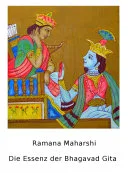
Ramana Maharshi's 'Die Essenz der Bhagavad Gita' offers a singular, potent distillation of a text that has perplexed and inspired for millennia. By focusing on his selected 42 verses, Maharshi cuts through the narrative and philosophical layers to present what he considered the irreducible core. The strength lies in this focused approach; the spiritual seeker is not overwhelmed by extensive exegesis but presented with direct pronouncements. A limitation, however, is that the absence of the original context for these 42 verses might leave some readers wanting a fuller understanding of their placement within the larger discourse. The passage where Maharshi points to Krishna's declaration, "I am the Self, O Gudakesa, that dwells in the heart of all beings," serves as a powerful anchor for the book's thesis. This work succeeds in delivering a concentrated dose of spiritual wisdom.
📝 Description
80
Ramana Maharshi's distillation of the Bhagavad Gita's core teachings was first published in 2016.
Die Essenz der Bhagavad Gita presents a focused selection of verses from the Hindu scripture, interpreted by the sage Ramana Maharshi. Maharshi identified 42 key verses and reordered them to clarify the text's central message. This is not a comprehensive commentary but rather an extraction of essential spiritual insights derived from Maharshi's lifelong engagement with the Gita and his teachings to disciples.
The book aims to provide a concentrated understanding of the Bhagavad Gita's spiritual core. It is suited for those who want to grasp the fundamental tenets of this influential text without studying its full 700 verses. Students of Advaita Vedanta, followers of Ramana Maharshi, and individuals interested in comparative spirituality will find value here. The work is designed for practitioners seeking the heart of the teachings for their own spiritual development.
The Bhagavad Gita, compiled between the 5th and 2nd centuries BCE, is a central text in Indian philosophy. Ramana Maharshi, a significant 20th-century sage, deeply engaged with its teachings. His interpretations, presented in this work, align with Advaita Vedanta's non-dualistic philosophy. This book offers a modern access point to Maharshi's understanding of the Gita's message on the indwelling Self and the unity of all existence, placing it within the lineage of Indian spiritual inquiry.
💡 Why Read This Book?
• Gain a direct apprehension of the Bhagavad Gita's core teaching, as identified by Ramana Maharshi, through his curated selection of 42 verses, providing a focused spiritual anchor. • Understand the Advaita Vedanta concept of the indwelling Self as the ultimate reality, as explained by Maharshi, offering a non-dualistic perspective on existence. • Grasp the essence of spiritual inquiry as exemplified by Ramana Maharshi's method of distilling profound truths, applicable to personal spiritual practice.
⭐ Reader Reviews
Honest opinions from readers who have explored this book.
❓ Frequently Asked Questions
What is the original publication date of Ramana Maharshi's 'Die Essenz der Bhagavad Gita'?
The work 'Die Essenz der Bhagavad Gita' by Ramana Maharshi was first published on January 4, 2016. This date marks the initial release of this specific compilation and interpretation.
How many verses does Ramana Maharshi select as the essence of the Bhagavad Gita?
Ramana Maharshi selected 42 verses from the Bhagavad Gita and reordered them to represent its essential message. This focused selection aims to provide a concentrated spiritual teaching.
What is the primary philosophical school associated with Ramana Maharshi's interpretation?
Ramana Maharshi's teachings are strongly aligned with Advaita Vedanta, a school of Hindu philosophy emphasizing non-duality. This perspective views the individual soul and the ultimate reality as one.
What specific verse did Ramana Maharshi initially point to as the essence of the Gita?
When asked for a single essence, Ramana Maharshi pointed to Bhagavad Gita, Chapter X, Verse 20, which states: 'I am the Self, O Gudakesa, that dwells in the heart of all beings. I am the beginning, the middle, and also the end of all beings.'
Is 'Die Essenz der Bhagavad Gita' a comprehensive commentary on the scripture?
No, 'Die Essenz der Bhagavad Gita' is not a comprehensive verse-by-verse commentary. It is a focused distillation, presenting Maharshi's selection of 42 key verses reordered for clarity and spiritual impact.
Who is Ramana Maharshi?
Ramana Maharshi (1879-1950) was an Indian sage and jivanmukta (liberated being) whose teachings, drawn from his own experience of self-realization, are considered a prominent expression of Advaita Vedanta.
🔮 Key Themes & Symbolism
The Indwelling Self
The work centers on the concept of the Self (Atman) as the singular, immutable reality residing within the heart of every creature. Ramana Maharshi emphasizes that recognizing this internal Self is paramount, transcending the perceived multiplicity of the external world. This theme, derived from Bhagavad Gita X.20, suggests that the ultimate truth is not external but an intrinsic presence, the source and sustainer of all existence, aligning with Advaita Vedanta's non-dualistic outlook.
Spiritual Discernment
A significant theme is the practice of spiritual discernment, epitomized by Maharshi's act of selecting and reordering 42 verses from the Bhagavad Gita. This process highlights the importance of identifying the most potent teachings that lead to self-knowledge. The book implicitly guides the reader to look beyond mere scriptural accumulation towards the core principles that facilitate direct realization and liberation from ignorance.
Essence Extraction
The very structure of the book underscores the theme of extracting the 'essence' of a spiritual text. Rather than a linear exposition, it presents a concentrated form of wisdom. This approach reflects Maharshi's own direct, experiential understanding of spirituality, suggesting that the profoundest truths can be identified and understood in their most concise form, accessible to those seeking direct insight.
Unity of Existence
Underlying Maharshi's interpretation is the profound message of unity. By identifying the Self as the common ground for all beings, the work dismantles the illusion of separation. This emphasis on oneness challenges conventional perceptions and points towards a unified consciousness as the fundamental nature of reality, a central to many esoteric traditions.
💬 Memorable Quotes
Direct passages from the work, attributed to the author.
“I am the Self, O Gudakesa, that dwells in the heart of all beings. I am the beginning, the middle, and also the end of all beings.”
— This statement, identified by Ramana Maharshi as the essence of the Gita, emphasizes the immanent and transcendent nature of the ultimate reality. It points to the Self as the origin, sustainer, and ultimate destination of all existence, highlighting non-duality.
“Ramana Maharshi selected 42 verses from the Bhagavad Gita and rearranged them.”
— This factual statement highlights the author's methodological approach. The reordering of verses suggests an intention to present a more coherent and direct path to understanding the book's central message, prioritizing clarity and impact.
“The core teaching focuses on the Self as the resident within all living entities.”
— This interpretation emphasizes the immanent aspect of the divine or ultimate reality. It suggests that the path to spiritual understanding lies in recognizing this universal, indwelling consciousness rather than seeking it externally.
“The book serves as a concentrated spiritual guide.”
— This interpretation speaks to the practical utility of the work. It positions the text not as an academic treatise but as a tool for spiritual aspirants seeking direct experience and guidance towards liberation.
💡 Key Ideas
Editorial paraphrase of the work's core concepts — not direct quotes.
The work explores the idea of identifying the singular essence within the vastness of the Bhagavad Gita.
This paraphrased concept reflects the book's central aim: to distill the extensive teachings of the Bhagavad Gita into a core set of principles, as interpreted by Ramana Maharshi, for easier contemplation and realization.
🌙 Esoteric Significance
Tradition
This work aligns with the Advaita Vedanta tradition within Hindu esoteric thought. Advaita, meaning 'non-dualism,' posits that the ultimate reality (Brahman) is singular and identical to the individual self (Atman). Ramana Maharshi's interpretation emphasizes direct experience and self-realization, moving beyond mere intellectual understanding of scripture, which is a hallmark of advanced esoteric practice within this lineage.
Symbolism
The primary symbolism revolves around the 'Heart' (Hridayam) as the seat of consciousness and the Self. In esoteric traditions, the heart often represents the spiritual center within an individual. The number 42, representing the selected verses, can also carry numerological significance, though Maharshi's focus was less on esoteric symbolism and more on the direct meaning of the words for realization.
Modern Relevance
Ramana Maharshi's teachings, particularly the emphasis on self-inquiry ('Who am I?'), continue to influence contemporary spiritual seekers and non-dualistic traditions globally. Thinkers and practitioners in Western mindfulness, contemplative Christianity, and various Eastern-inspired meditation movements draw inspiration from his direct approach to uncovering the nature of the Self.
👥 Who Should Read This Book
['• Students of Advaita Vedanta seeking a concentrated expression of its core principles as articulated by a modern master.', '• Devotees of Ramana Maharshi interested in his specific interpretations of foundational Hindu scriptures like the Bhagavad Gita.', '• Comparative religion scholars and spiritual explorers looking for accessible yet useful insights into Indian spiritual philosophy.']
📜 Historical Context
The Bhagavad Gita, integral to the Mahabharata epic, likely took shape between the 5th and 2nd centuries BCE, reflecting a period of intense philosophical synthesis in ancient India. Its teachings have been a central to Hindu thought, profoundly influencing various schools, including Vedanta. Ramana Maharshi (1879-1950) emerged as a significant spiritual figure in the 20th century, his interpretations rooted in Advaita Vedanta, a non-dualistic philosophy that posits the oneness of the individual soul and Brahman. While Maharshi engaged deeply with the Gita, his direct teachings often emphasized self-inquiry over scriptural study alone. His approach contrasted with more ritualistic or devotional practices prevalent at the time, though he did not reject them. The publication of 'Die Essenz der Bhagavad Gita' in 2016 brings Maharshi's distilled understanding to a contemporary audience, seeking to bridge the gap between ancient wisdom and modern spiritual seekers.
📔 Journal Prompts
The Self as the resident within all beings: how does this concept challenge perceived separations?
Ramana Maharshi's selection of 42 verses: what criteria might have guided this distillation process?
The heart as the seat of consciousness: what practices might help one realize the Self residing there?
The beginning, middle, and end of all beings: reflecting on the cyclical nature of existence as presented.
Essence extraction: how can this method be applied to other complex spiritual or philosophical texts?
🗂️ Glossary
Bhagavad Gita
A 700-verse Hindu scripture in Sanskrit that is part of the Hindu epic Mahabharata. It describes a dialogue between Prince Arjuna and his charioteer Lord Krishna on the battlefield.
Ramana Maharshi
An influential Indian sage (1879-1950) whose teachings are rooted in Advaita Vedanta, emphasizing self-inquiry and the direct experience of the Self.
Advaita Vedanta
A school of Hindu philosophy that emphasizes the oneness of the individual soul (Atman) and the ultimate reality (Brahman), meaning 'non-duality'.
Self (Atman)
In Hindu philosophy, the true, innermost self or soul. In Advaita Vedanta, it is considered identical to Brahman, the ultimate reality.
Essence
The intrinsic nature or indispensable quality of something, providing its fundamental character. In this context, it refers to the core teachings of the Bhagavad Gita.
Gudakesa
An epithet for Arjuna, the warrior prince to whom Krishna is speaking in the Bhagavad Gita. It literally means 'one with tangled hair' or 'one who has conquered sleep'.
Hridayam
Sanskrit term for 'heart', often used in spiritual contexts to denote the center of consciousness or the seat of the Self.