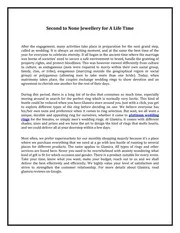
Der eine Gott

 79
79

Der eine Gott
Richard Gramlich's "Der eine Gott" offers a rigorous, if sometimes dense, exploration of monotheistic thought. Its strength lies in its meticulous dissection of how the concept of a singular God has been conceptualized beyond the confines of conventional religious dogma. Gramlich excels at tracing the philosophical lineage of divine unity, particularly through examining Gnostic and Neoplatonic frameworks, showcasing a nuanced understanding of their theological architecture. A notable passage discusses the Gnostic concept of the Aeons as emanations, illustrating how divine totality can be understood as both singular and manifold. However, the book's academic tone, while commendable for its rigor, can occasionally be a barrier to accessibility for those less versed in philosophical jargon. Its detailed engagement with specific Gnostic texts, while informative, might feel overly specialized for a general reader seeking broader esoteric insights. Ultimately, "Der eine Gott" serves as an invaluable, albeit demanding, resource for understanding the philosophical underpinnings of divine singularity.
📝 Description
79
Richard Gramlich's 1998 book, Der eine Gott, examines monotheistic ideas beyond standard theology.
Der eine Gott, published in 1998, is Richard Gramlich's academic study of monotheistic concepts, particularly within esoteric thought. The book goes beyond basic theological definitions to analyze the philosophical foundations and historical development of the idea of a single, supreme deity. Gramlich investigates how this concept has been understood, reshaped, and sometimes radically altered across different spiritual and philosophical systems throughout history.
This work is intended for serious students of comparative religion, philosophy of religion, and esoteric studies. Readers interested in the intellectual history of monotheism, its forms outside Abrahamic faiths, and its connections to mystical thought will find significant content. It is suited for those with a background in theological or philosophical study who want to grasp the conceptual structure of divine unity.
Gramlich's research emerges from the late 20th century's academic study of religion and philosophy, a time of growing interdisciplinary methods. While mainstream theology concentrated on established doctrines, scholars like Gramlich started to examine the conceptual flexibility of divine attributes across various traditions. The book connects to a tradition of critical analysis that recognizes the diverse philosophical expressions of monotheism, often using Gnostic and Hermetic traditions for comparison, differing from analyses based solely on Abrahamic faiths.
Gramlich's study situates monotheism within a broader spectrum of spiritual and philosophical traditions, moving beyond conventional Abrahamic frameworks. It draws comparative insights from Gnostic and Hermetic thought, traditions that often engage with concepts of emanation, divine multiplicity within unity, and hidden knowledge. By examining these esoteric currents, the book highlights how the idea of a single, ultimate principle has been conceptualized and expressed in ways that differ from, yet relate to, more orthodox theological understandings. This approach acknowledges the philosophical depth and variety found within mystical traditions concerning the divine.
💡 Why Read This Book?
• Gain insight into the Gnostic concept of the Aeons, understanding how divine unity can be expressed through multiple emanations, a perspective distinct from traditional monotheistic views. • Explore the philosophical underpinnings of Neoplatonism's "The One," learning how an absolute, singular divine principle is conceptualized in esoteric thought. • Understand the historical evolution of monotheistic ideas beyond Abrahamic faiths, appreciating Gramlich's analysis of their varied interpretations since 1998.
⭐ Reader Reviews
Honest opinions from readers who have explored this book.
❓ Frequently Asked Questions
What is the primary focus of Richard Gramlich's "Der eine Gott"?
The book primarily focuses on the philosophical and esoteric interpretations of monotheism, examining the concept of a singular God beyond traditional religious doctrines and tracing its evolution across various traditions since its initial publication in 1998.
Does "Der eine Gott" discuss Abrahamic religions?
While the book's core analysis often moves beyond conventional Abrahamic theology, it engages with and contrasts these traditions to highlight the diverse philosophical expressions of divine unity found in other esoteric and philosophical systems.
What esoteric traditions are examined in the book?
The work extensively explores concepts found within Gnostic traditions and Neoplatonism, investigating their unique approaches to understanding the divine as a singular, ultimate principle.
Is "Der eine Gott" accessible to beginners in philosophy?
The book is written with an academic rigor that may present challenges for absolute beginners. However, readers with some background in philosophy or religious studies will find its detailed analyses rewarding.
What is the significance of the publication year 1998 for this book?
The 1998 publication date situates Gramlich's work within a period of evolving interdisciplinary scholarship on religion and philosophy, allowing it to engage with and contribute to late 20th-century discourse on monotheism.
What does the Gnostic concept of Aeons refer to in the context of "Der eine Gott"?
Within the book, the Gnostic Aeons are presented as divine emanations or powers, illustrating a complex understanding of the divine realm that, while stemming from a singular source, manifests in a multiplicity of forms.
🔮 Key Themes & Symbolism
The Absolute and the Manifest
This theme explores the philosophical tension between an ultimate, singular divine reality (The Absolute) and its expression in the multiplicity of existence. Gramlich investigates how traditions like Neoplatonism conceptualize "The One" as the source from which all emanates, yet remains distinct from its creations. This is crucial for understanding esoteric cosmology, where the divine is not merely a distant creator but an immanent, foundational principle whose nature is reflected in the manifest world, often through complex symbolic systems.
Gnostic Cosmology of Divine Unity
Gramlich examines how Gnostic thought, particularly concerning the Aeons, presents a unique model of divine unity. Unlike simpler monotheism, Gnosticism often posits a supreme, transcendent God from whom emanate various divine beings or principles (Aeons). This framework allows for a complex understanding of divinity that is both singular in its ultimate source and manifold in its active presence within the cosmos, offering a sophisticated alternative to linear theological progression.
Symbolic Representation of the Divine
A significant aspect of the work concerns the use of symbols and allegory to represent the ineffable nature of the singular God. Gramlich examines how various esoteric traditions employ symbolic language to bridge the gap between human understanding and the divine absolute. This involves interpreting mythological narratives, theological metaphors, and philosophical concepts as pathways to apprehending divine unity, which often transcends literal or empirical description.
Philosophical Evolution of Monotheism
The book traces the philosophical journey of monotheistic ideas, demonstrating how the concept of "one God" has been reinterpreted and expanded upon throughout intellectual history since its early formulations. Gramlich highlights how thinkers and movements have grappled with the logical, metaphysical, and spiritual implications of divine singularity, moving beyond fixed dogma to explore the concept's fluid and adaptable nature within different philosophical paradigms.
💬 Memorable Quotes
Direct passages from the work, attributed to the author.
“The concept of "The One" in Neoplatonism as the ultimate, ineffable source.”
— This highlights how philosophical traditions posit a singular divine principle that is beyond human comprehension or description, serving as the genesis of all existence.
“Gnostic Aeons as emanations of the divine.”
— This interpretation points to a complex Gnostic view where divine unity is expressed through a pantheon of interconnected beings, a departure from simpler monotheistic structures.
“The challenge of articulating divine unity through symbolic language.”
— This underscores the esoteric approach of using allegory and metaphor to convey truths about the absolute that cannot be stated directly or empirically.
“Gramlich's analysis of philosophical shifts in monotheistic thought.”
— This refers to the book's examination of how the idea of a single God has been conceptually developed and debated across different historical philosophical contexts.
“The distinction between literal theology and esoteric interpretation.”
— This suggests the book differentiates between dogmatic religious pronouncements and the deeper, often symbolic, meanings sought within mystical and philosophical traditions.
🌙 Esoteric Significance
Tradition
Gramlich's work is situated within the philosophical examination of esoteric traditions, particularly Neoplatonism and Gnosticism. It engages with these lineages not as historical curiosities but as sophisticated philosophical systems that offer useful insights into the nature of divine unity. The book departs from traditional theological exegesis by focusing on the conceptual architecture and symbolic language employed within these traditions to describe an absolute, singular God.
Symbolism
Key symbols explored include "The One" from Neoplatonism, representing an ultimate, ineffable divine principle that is the source of all existence. Another crucial motif is the Gnostic concept of the Aeons, divine emanations that articulate the divine realm as both singular and manifold. These symbols are vital for understanding how esoteric thought attempts to map the unmanifest divine onto the manifest world.
Modern Relevance
Contemporary thinkers and practitioners in fields like comparative mysticism, philosophical theology, and esoteric studies continue to draw on Gramlich's rigorous analysis. His exploration of Gnostic and Neoplatonic models of divine unity provides valuable conceptual tools for those seeking to understand non-dualistic philosophies and complex cosmological systems relevant to modern spiritual and philosophical inquiry.
👥 Who Should Read This Book
• Students of Comparative Religion: Those seeking to understand the diverse philosophical and historical expressions of monotheism beyond the Abrahamic faiths will find Gramlich's analysis useful. • Neoplatonism and Gnosticism Enthusiasts: Readers specifically interested in the intricate cosmological and theological frameworks of these ancient traditions will gain clear insights into their concept of the divine. • Philosophy of Religion Scholars: Academics and advanced students exploring the metaphysical and epistemological challenges of defining a singular, absolute deity will benefit from the book's rigorous argumentation.
📜 Historical Context
Published in 1998, Richard Gramlich's "Der eine Gott" entered a scholarly landscape in which the study of religion was increasingly interdisciplinary, engaging with philosophy, anthropology, and history. While Abrahamic monotheism remained a primary focus for many theologians and historians, Gramlich's work positions itself within a critical tradition that explored the philosophical and esoteric dimensions of divine singularity. He draws heavily on Gnostic texts and Neoplatonic philosophy, engaging with concepts that were often marginalized in mainstream theological discourse. This approach contrasts with more literalist theological interpretations prevalent at the time. His work can be seen as contributing to a broader late 20th-century academic interest in non-canonical religious expressions and philosophical systems that offered alternative frameworks for understanding divinity, such as those explored by scholars of Hermeticism and ancient mystery religions.
📔 Journal Prompts
The concept of "The One" as an ineffable divine source.
Gnostic Aeons as a model for divine multiplicity.
Symbolic representation of the absolute.
Philosophical evolution of monotheistic ideas.
The tension between divine unity and manifest existence.
🗂️ Glossary
The One
A central concept in Neoplatonism, referring to the ultimate, absolute, and transcendent source of all reality, which is beyond being and comprehension.
Aeons
In Gnostic cosmology, these are divine emanations or beings that originate from the supreme God and populate the divine realm, forming a complex spiritual hierarchy.
Monotheism
The belief in the existence of only one God. Gramlich's work explores its philosophical and esoteric interpretations beyond conventional religious doctrine.
Neoplatonism
A philosophical system derived from Plato, heavily influenced by Plotinus, which emphasizes a hierarchical reality emanating from a supreme, unknowable "One."
Gnosticism
A diverse set of religious movements in the early Christian era characterized by a belief in salvation through secret knowledge (gnosis) and a complex cosmology involving divine emanations.
Esoteric
Relating to or accessible only by a small number of people with a specialized knowledge or interest; often referring to mystical or spiritual teachings.
Emanation
The act of flowing out from a source; in esoteric and philosophical contexts, it refers to the process by which reality or divine beings originate from a primary, ultimate principle.
🔮 Readers Also Liked
Browse all →





More by Richard Gramlich
All books →
More Free Mysticism & Contemplation Books
View all →