Das Yoga-Lehrbuch
 80
80

Das Yoga-Lehrbuch
Gerhard Pflug’s Das Yoga-Lehrbuch, arriving in 2004, attempts to demystify the practice of yoga through a straightforward, image-heavy approach. Its primary strength lies in the clarity of its photographic instructions; unlike texts that rely solely on descriptive prose, Pflug’s book allows practitioners to visually grasp the nuances of each asana. This directness is invaluable for beginners or those struggling with abstract descriptions of physical form. However, the book's focus on the physical can sometimes feel narrowly defined. While the original blurb mentions "Übungen mit Fotos," it implies a scope limited to the purely physical. The work explores the execution of postures but might offer less on the deeper philosophical underpinnings or advanced pranayama techniques that are central to many yogic traditions. For instance, the detailed visual guides to poses like the *Adho Mukha Shvanasana* (Downward-Facing Dog) are excellent, but the text surrounding them could potentially expand on its energetic or mental dimensions. It’s a solid primer for the body, less so for the spirit. For those seeking a visually-supported entry into yoga’s physical aspects, it’s a competent resource.
📝 Description
80
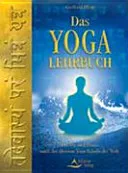
Gerhard Pflug's Das Yoga-Lehrbuch, published in 2004, uses photographs to guide readers through yogic practices.
Das Yoga-Lehrbuch, by Gerhard Pflug and first published in 2004, presents a practical approach to yoga, notable for its inclusion of photographic illustrations. The book aims to make yogic practices accessible to a German-speaking audience, bridging theory and physical execution with clear instructions. It is written for those new to yoga or seeking to refine their existing routines through visual aids and step-by-step guidance. Readers who benefit from explicit demonstrations and detailed explanations will find this manual particularly useful.
Published in the early 2000s, Pflug's work appeared during a time of growing international interest in Eastern disciplines like yoga. While yoga had already gained popularity in Western countries, often adapted for fitness and stress relief, Pflug's instructional book offered a specific resource for the German market. It entered a field with many established yoga teachers and traditions, but found its own space through a direct, image-focused method. The book emphasizes correct physical posture (asanas) and proper alignment, which are important for safe and effective practice.
As a guide to yoga published in 2004, this book enters a tradition that has evolved considerably from its ancient Indian origins. Yoga's transmission to the West has seen it interpreted through various lenses, from physical fitness to spiritual discipline. Pflug's work contributes to this ongoing dialogue, providing a structured, visual method for engaging with asanas and breathwork. It reflects the modern Western integration of yoga into personal development, offering a clear path for practitioners interested in its physical and mental aspects, separate from more overtly religious or mystical interpretations.
💡 Why Read This Book?
• You will learn precise physical alignment for common yoga postures through detailed photographic examples, offering a clarity that text alone cannot provide, as seen in the visual guides to asanas. • You will gain a practical understanding of executing foundational yoga exercises, directly applicable to personal practice, supported by the book's initial publication in 2004 when yoga's popularity surged globally. • You will develop a more concrete connection between instruction and physical form, potentially enhancing safety and efficacy in your practice, a benefit highlighted by the book's direct, exercise-focused approach.
⭐ Reader Reviews
Honest opinions from readers who have explored this book.
❓ Frequently Asked Questions
When was Das Yoga-Lehrbuch first published?
Das Yoga-Lehrbuch by Gerhard Pflug was first published in 2004, during a period of growing international interest in yoga practices.
What is the main focus of Gerhard Pflug's yoga book?
The book's primary focus is on the practical execution of yoga exercises, significantly enhanced by photographic illustrations that guide the reader through each posture.
Is Das Yoga-Lehrbuch suitable for absolute beginners?
Yes, its visually-driven approach with clear photographic examples makes it especially suitable for absolute beginners seeking to understand the physical aspects of yoga.
Does the book cover advanced yoga philosophy?
While it provides a strong foundation in physical practice, its coverage of advanced yoga philosophy might be limited, focusing more on the 'Übungen mit Fotos' (exercises with photos).
What makes this book different from other yoga guides?
Its key differentiator is the extensive use of photographs to demonstrate yoga poses, offering a visual learning experience that complements textual instructions.
Is this book available in English?
As of its initial publication in 2004 and its original title 'Das Yoga-Lehrbuch', the book is primarily in German. English translations may not be widely available.
🔮 Key Themes & Symbolism
Visual Instruction in Asana
The book's core strength lies in its photographic documentation of yoga postures. Unlike many texts that rely solely on descriptive language, Pflug's work offers a visual roadmap. This approach is particularly significant for understanding correct alignment and form, which are crucial for both efficacy and injury prevention. The images serve as direct demonstrations, allowing readers to replicate the physical shapes with greater accuracy. This emphasis on visual learning caters to kinesthetic learners and explains complex poses, making the practice of asana more accessible.
Foundations of Yogic Practice
Das Yoga-Lehrbuch aims to establish a solid groundwork for engaging with yoga. It prioritizes the fundamental physical exercises (asanas) as the entry point into the discipline. By focusing on clear execution of these postures, the book implicitly suggests that a strong physical foundation is a prerequisite for exploring deeper aspects of yoga, such as breath control (pranayama) or meditation. The 2004 publication date places it within a context where yoga was increasingly adopted for its physical benefits in Western societies.
Accessibility and Clarity
Gerhard Pflug’s intention appears to be making yoga understandable and achievable for a broad audience. The use of photographs is a deliberate choice to enhance clarity and remove ambiguity often associated with textual instructions for physical movements. This focus on clear, direct guidance positions the book as a practical tool rather than a philosophical treatise. It’s designed to empower individuals to begin or refine their yoga practice independently, emphasizing the 'how-to' aspect of the exercises.
The Body as a Vehicle
Central to the book's approach is the understanding of the body as the primary instrument for yogic exploration. The detailed attention given to each posture, facilitated by the photographic aids, highlights the importance of physical form and stability. This perspective aligns with certain branches of yoga that view the mastery of the physical body as a necessary step towards achieving greater mental and spiritual awareness. The book’s structure suggests a progressive journey, starting with mastering the physical shapes.
💬 Memorable Quotes
Direct passages from the work, attributed to the author.
“Übungen mit Fotos”
— This concise German phrase, meaning 'exercises with photos,' captures the book's core pedagogical strategy. It signals a departure from purely textual instruction towards a visually-driven learning experience, prioritizing direct observation and replication of yogic postures.
“The book likely emphasizes correct posture alignment.”
— This interpretation highlights the critical importance of precise bodily positioning in yoga practice, a focus heavily suggested by the inclusion of photographic guides designed to ensure accuracy and safety.
“Pflug provides step-by-step visual demonstrations.”
— This highlights the pedagogical method employed by the author, where each stage of performing a yoga posture is clearly illustrated through sequential images for the reader's benefit.
“Bridging the gap between theory and practice.”
— This interpretation suggests the book's role in making yoga accessible by translating theoretical knowledge into actionable, physical steps, aided by visual aids that clarify complex movements.
💡 Key Ideas
Editorial paraphrase of the work's core concepts — not direct quotes.
A practical manual for physical yoga.
This paraphrased concept underscores the book's function as a hands-on guide, concentrating on the tangible aspects of yoga practice rather than its more abstract philosophical or spiritual dimensions.
🌙 Esoteric Significance
Tradition
While primarily a practical guide, Das Yoga-Lehrbuch can be situated within the broader context of Hatha Yoga, which is itself a significant branch of classical Yoga philosophy. Hatha Yoga traditionally focuses on physical postures (asanas) and breath control (pranayama) as preparatory steps for higher states of meditation and self-realization. Pflug’s work, by emphasizing precise physical execution, aligns with the Hatha Yoga tradition’s focus on purifying and strengthening the body as a vehicle for spiritual development, though it may not explicitly look at the deeper philosophical texts like the *Yoga Sutras* of Patanjali.
Symbolism
The primary symbols within Das Yoga-Lehrbuch are the human body and the yoga postures themselves. Each asana, such as the *Savasana* (Corpse Pose) or *Padmasana* (Lotus Pose), carries symbolic weight. *Savasana*, for instance, represents relaxation, surrender, and the integration of practice, often seen as a gateway to deeper consciousness. *Padmasana*, while perhaps more advanced, symbolizes stability, balance, and the potential for meditative transcendence, with its cross-legged form visually suggesting rootedness and upward spiritual aspiration.
Modern Relevance
Pflug's approach, emphasizing clear visual instruction, remains highly relevant in today's digital age, where video tutorials and image-heavy content dominate online learning. Contemporary yoga instructors and digital platforms often adopt similar methods to demonstrate poses effectively. While not explicitly referencing modern thinkers, the book's practical, body-focused methodology speaks to current trends in functional fitness, mindfulness-based stress reduction (MBSR), and therapeutic yoga applications, demonstrating the enduring value of accessible, well-illustrated physical training.
👥 Who Should Read This Book
• Beginning yoga practitioners seeking clear, visual guidance on fundamental postures and alignment. • Individuals who learn best through observation and step-by-step photographic demonstrations rather than purely descriptive text. • Those interested in a practical, exercise-focused introduction to Hatha Yoga, published in 2004, as a point of reference in the evolving range of yoga literature.
📜 Historical Context
Gerhard Pflug’s Das Yoga-Lehrbuch, published in 2004, entered the Western yoga landscape at a time of its widespread popularization. By the early 2000s, yoga had transitioned from a niche spiritual practice to a mainstream form of exercise and stress management globally. In Germany, this period saw a proliferation of yoga studios and instructional materials. Pflug’s work emerged alongside numerous other yoga guides, but its distinct feature was its explicit commitment to photographic instruction ('Übungen mit Fotos'). This contrasted with many contemporary texts that relied heavily on descriptive prose or simpler line drawings. While influential figures like B.K.S. Iyengar had already established the importance of precise alignment with his own detailed photographic works decades earlier, Pflug's book offered a modern, accessible entry point specifically for the German market, catering to a growing demand for practical, visually-supported wellness techniques.
📔 Journal Prompts
The visual demonstration of the *Adho Mukha Shvanasana* in the book.
The clarity provided by the photographs in understanding physical alignment.
Your own experience attempting a posture solely from textual description versus a photograph.
The role of the body in your personal understanding of yoga.
How the 2004 context of yoga's popularity might influence your practice today.
🗂️ Glossary
Asana
A posture or position in yoga, especially one held for the purpose of meditation or bodily health. In Das Yoga-Lehrbuch, these are extensively illustrated.
Hatha Yoga
A branch of yoga that focuses on physical postures (asanas) and breathing techniques (pranayama) to prepare the body and mind for deeper spiritual practices.
Pranayama
The practice of breath control in yoga, considered vital for managing life energy and achieving mental clarity. While the book focuses on asanas, pranayama is a related key component of yoga.
Alignment
The correct positioning of the body's joints and limbs within a yoga posture. Proper alignment is crucial for safety, stability, and maximizing the benefits of the asana.
Savasana
The Corpse Pose, a resting posture typically performed at the end of a yoga session to allow the body and mind to integrate the practice. Symbolizes relaxation and surrender.
Padmasana
Lotus Pose, an advanced seated posture known for its stability and its use in meditation. Symbolizes balance and spiritual potential.
Übungen
German word for 'exercises' or 'practices,' referring to the physical activities and postures detailed within the book.