Between Sleep and Nightmare
 75
75

Between Sleep and Nightmare
Telbin Alves’s *Between Sleep and Nightmare* offers a compelling, if occasionally dense, re-framing of sleep paralysis. Rather than merely cataloging the physiological and psychological distress, Alves dares to interpret these episodes as profound, albeit terrifying, encounters with the self and the unknown. The work shines when it connects the subjective experience of paralysis to historical accounts of spiritual visitation and liminal states, drawing a line from ancient practices to modern nightmares. A particular strength lies in the detailed deconstruction of the "shadow figures" often reported, positing them not as external demons but as potent archetypal projections. However, the dense philosophical language, while fitting for the subject, may prove an obstacle for readers seeking a more straightforward exploration. The book’s central argument, that fear can be transmuted into a tool for esoteric insight, is potent. It is a challenging but rewarding read for those willing to confront the darker corners of consciousness.
📝 Description
75
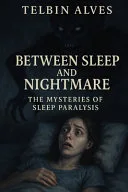
Telbin Alves's 2025 book examines sleep paralysis not just as a medical event, but as a spiritual encounter.
Between Sleep and Nightmare, published in 2025, investigates sleep paralysis from an esoteric viewpoint. Telbin Alves moves past medical and psychological explanations to consider the phenomenon's connections to consciousness, the subconscious, and possible spiritual experiences. The author suggests that these often frightening episodes can open doors to different states of awareness, questioning common ideas about reality and the self. The book is for anyone interested in the unusual aspects of human experience, especially those who have gone through sleep paralysis and want a deeper meaning than clinical accounts. Students of consciousness, comparative religion, and esoteric philosophy will find it relevant.
Alves connects sleep paralysis to a long history of exploring altered states. He draws parallels to ancient dream incubation, Emanuel Swedenborg's visions, and historical accounts of astral projection and out-of-body experiences. The work treats the sleeping state as a potential portal rather than just a time for rest. Key concepts include the 'hypnagogic threshold,' the point between waking and sleeping where these events happen, and the 'incursion of the unconscious,' suggesting these are real, though unusual, interactions.
This book fits within a long tradition of examining non-ordinary states of consciousness. From ancient Greek Asclepian temple practices involving dream incubation to the visionary accounts of figures like Emanuel Swedenborg, humanity has sought meaning in its nocturnal experiences. Alves's work places sleep paralysis within this historical lineage, comparing it to historical descriptions of astral projection, out-of-body experiences, and shamanic trances. It engages with a line of thought that views the sleeping state not solely as passive rest, but as a potential gateway to other realities.
💡 Why Read This Book?
• You will learn to reframe sleep paralysis not just as a frightening event, but as a potential "hypnagogic threshold" experience, offering a unique perspective on consciousness beyond typical medical explanations. • Discover how the "lucid observer" technique, as detailed in the book, can transform the terror of paralysis into a tool for self-exploration, drawing on principles similar to lucid dreaming practices. • Gain an understanding of the "incursion of the unconscious" as presented by Alves, connecting modern sleep paralysis accounts to historical narratives of spiritual encounters and visionary states, providing a richer context than standard psychological interpretations.
⭐ Reader Reviews
Honest opinions from readers who have explored this book.
❓ Frequently Asked Questions
What is sleep paralysis according to Telbin Alves's 'Between Sleep and Nightmare'?
Alves describes sleep paralysis not solely as a medical condition but as a potent esoteric phenomenon occurring at the "hypnagogic threshold." It's an intersection where consciousness is awake but the body remains paralyzed, offering potential for profound, albeit often frightening, encounters with the subconscious and potentially other realms.
Does the book offer practical advice for dealing with sleep paralysis?
Yes, the book advocates for the "lucid observer" approach, encouraging a detached, analytical stance during paralysis. This method aims to transmute fear into curiosity and self-discovery, turning a terrifying experience into a potential gateway for understanding one's inner landscape.
What historical context does 'Between Sleep and Nightmare' provide for sleep paralysis?
The book situates sleep paralysis within a long tradition of exploring altered states. It draws parallels to historical accounts of spiritual visitations, out-of-body experiences, and shamanic trances, linking modern phenomena to ancient visionary practices and esoteric traditions.
What are 'shadow figures' in the context of this book?
Alves interprets "shadow figures" reported during sleep paralysis not as external entities, but as potent archetypal projections from the "incursion of the unconscious." They represent suppressed aspects of the psyche that manifest during these vulnerable liminal states.
Is 'Between Sleep and Nightmare' a scientific or spiritual book?
It bridges the two, using the phenomenon of sleep paralysis as a focal point to explore spiritual and esoteric interpretations of consciousness. While acknowledging scientific observations, its primary aim is to examine the metaphysical and psychological depths of the experience.
Who is Telbin Alves and when was 'Between Sleep and Nightmare' first published?
Telbin Alves is an author focused on esoteric philosophy and consciousness studies. 'Between Sleep and Nightmare' was first published on May 3, 2025, positioning it as a contemporary exploration of long-standing mystical and psychological themes.
🔮 Key Themes & Symbolism
The Hypnagogic Threshold
This concept refers to the liminal state between waking and sleeping where the most potent sleep paralysis experiences occur. Alves details how this boundary is not merely a physiological transition but a psychic space ripe for encounters. The book explores how, at this threshold, the veil between the conscious mind and deeper layers of the psyche, or even other perceived realities, thins, making one susceptible to both terrifying visions and profound self-awareness. Understanding this threshold is presented as key to interpreting the phenomena.
Archetypal Incursions
Alves posits that the figures and entities often encountered during sleep paralysis, such as the classic "shadow figure," are not external demons but powerful archetypal manifestations from the "incursion of the unconscious." These are projections of deep-seated psychological patterns, fears, and suppressed aspects of the self. The work suggests that by confronting these figures with awareness, individuals can integrate these shadow aspects, leading to psychological wholeness and spiritual growth, rather than succumbing to fear.
Consciousness Beyond the Body
The book challenges the notion that consciousness is solely confined to the physical brain, especially during sleep paralysis. It examines the sensation of being "awake" while unable to move as evidence of a disembodied or expanded state of awareness. Alves draws parallels to historical accounts of astral projection and out-of-body experiences, suggesting that sleep paralysis, when approached correctly, can offer glimpses into the non-physical dimensions of existence and the nature of the soul.
Transmuting Fear into Insight
A central tenet of Alves's work is the potential for transforming the profound terror of sleep paralysis into a source of esoteric knowledge. By adopting the "lucid observer" stance, the reader is encouraged to approach the experience with curiosity rather than panic. This active engagement allows the fear-inducing elements to become data points for self-understanding, revealing hidden aspects of the psyche and offering pathways to spiritual development. Fear becomes a catalyst for awakening.
💬 Memorable Quotes
Direct passages from the work, attributed to the author.
“The paralysis is not the prison; it is the threshold.”
— This interpretation suggests that the inability to move during sleep paralysis should not be seen as a confinement. Instead, it is a central point, a gateway or boundary that, when understood and approached correctly, can lead to expanded awareness and new perceptions.
“Shadow figures are the psyche’s emissaries, not its executioners.”
— This highlights Alves's view that the terrifying figures encountered are not malevolent external entities. They are symbolic messengers from one's own unconscious, appearing to communicate vital, though perhaps difficult, truths about the self.
“Wakefulness is not the only state of true perception.”
— This challenges the conventional understanding of consciousness, suggesting that altered states, such as those experienced during sleep paralysis, can offer valid and important forms of perception and insight that are overlooked in ordinary waking life.
“The body’s stillness is the mind’s invitation.”
— This phrase suggests that the physical immobility of sleep paralysis is not an accident but a deliberate opening. It serves as an invitation for the conscious mind to explore inner landscapes or perceive realities beyond the normal sensory input.
💡 Key Ideas
Editorial paraphrase of the work's core concepts — not direct quotes.
To observe the nightmare is to begin its dissolution.
This quote emphasizes the power of conscious awareness during sleep paralysis. By maintaining a state of detached observation, the fearful nature of the experience can be diminished, and its underlying meaning revealed.
🌙 Esoteric Significance
Tradition
This work aligns with the Hermetic and Gnostic traditions, which emphasize the exploration of consciousness and the hidden nature of reality. It views the human psyche as a microcosm capable of perceiving macrocosmic truths, particularly during altered states. Alves departs from purely mystical interpretations by grounding his analysis in the specific, often terrifying, phenomenon of sleep paralysis, suggesting it’s a universal, accessible portal rather than a rare ecstatic experience. It reinterprets traditional notions of spiritual encounters within a modern psychological and physiological context.
Symbolism
Key symbols include the "shadow figure," representing the feared, repressed aspects of the unconscious that must be integrated for wholeness; the "threshold" itself, symbolizing the liminal space between worlds and states of being; and "light," often perceived during these episodes, signifying spiritual awakening or gnosis. The paralysis itself symbolizes the ego's temporary loss of control, an invitation for the deeper self to emerge.
Modern Relevance
Contemporary thinkers and practitioners in fields like transpersonal psychology, lucid dreaming, and consciousness studies draw on Alves's interpretations. His emphasis on the "lucid observer" technique appeals to mindfulness and meditation practices that seek to cultivate detached awareness. The work provides a framework for understanding phenomena explored by groups like the Lucidity Institute and individuals interested in the intersection of dreams, altered states, and personal transformation.
👥 Who Should Read This Book
• Individuals who have personally experienced sleep paralysis and seek a deeper, esoteric understanding beyond clinical explanations, exploring the spiritual and psychological dimensions. • Students of comparative religion and mysticism interested in how phenomena like sleep paralysis connect to historical accounts of shamanism, out-of-body experiences, and spiritual visitations. • Practitioners of consciousness exploration, lucid dreaming, and esoteric philosophy looking for frameworks to interpret altered states and integrate challenging psychological experiences for personal growth.
📜 Historical Context
Published in 2025, Telbin Alves's *Between Sleep and Nightmare* emerges in an era where scientific materialism often dominates discussions of consciousness. However, it taps into a long esoteric lineage that views altered states of sleep and waking as significant spiritual events. This tradition includes figures like Helena Blavatsky and the Theosophical Society, who explored dream states and astral projection extensively in the late 19th and early 20th centuries. Alves's work can be seen as a contemporary re-engagement with these ideas, particularly concerning the "hypnagogic threshold." While medical and psychological explanations for sleep paralysis, focusing on REM atonia, were firmly established by the mid-20th century, Alves deliberately departs from this purely biomedical framework. He positions his work in dialogue with earlier esoteric thinkers who saw these episodes as potential spiritual visitations or interactions with non-physical realms, thereby challenging the prevailing scientific consensus and offering a metaphysical interpretation.
📔 Journal Prompts
The "hypnagogic threshold" as a space for inner exploration.
Interpreting "shadow figures" as psychic emissaries.
The meaning of physical stillness during the "incursion of the unconscious."
Transforming fear into insight via the "lucid observer" technique.
Consciousness's potential beyond the physical body during paralysis.
🗂️ Glossary
Hypnagogic Threshold
The transitional state between wakefulness and sleep, characterized by vivid sensory experiences, altered perceptions, and the onset of sleep paralysis. It's seen as a liminal space where consciousness interfaces with the subconscious.
Incursion of the Unconscious
The phenomenon described as the emergence of deep psychological material, archetypal figures, or non-ordinary states of awareness into conscious perception, often during sleep paralysis or other altered states.
Lucid Observer
A state of awareness cultivated during sleep paralysis where the individual remains conscious and detached, observing the experience without succumbing to fear or panic, thereby gaining insight.
Shadow Figure
A common manifestation during sleep paralysis, often perceived as a dark, menacing presence. Alves interprets this as an archetypal projection of repressed aspects of the psyche rather than an external entity.
Archetype
In Jungian psychology and esoteric thought, a universal, inherited pattern of thought or imagery derived from the collective unconscious. These manifest as symbolic figures or themes in dreams and altered states.
REM Atonia
The temporary paralysis of voluntary muscles that occurs during the Rapid Eye Movement (REM) stage of sleep, preventing individuals from acting out their dreams. Sleep paralysis occurs when consciousness awakens before or during this atonia.
Gnosis
In Gnostic traditions, direct spiritual knowledge or insight into divine mysteries. Alves suggests that experiences during sleep paralysis can sometimes lead to moments of profound self-knowledge akin to gnosis.