The House Where We Were Ghosts
 82
82

The House Where We Were Ghosts
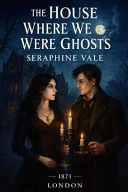
Seraphine Vale's "The House Where We Were Ghosts" crafts a palpable atmosphere of dread from its opening pages. The inherited manor, Blackwood, feels less like a setting and more like a character actively resisting Liora's presence in 1871. Vale excels at rendering the claustrophobic interiors and the pervasive sense of being watched, a hallmark of effective Gothic literature. The intertwining of Liora's personal grief with the spectral disturbances is handled with a delicate, unsettling touch. However, the romantic subplot, while present, occasionally feels less developed than the spectral elements, particularly in its resolution. A particularly potent passage involves Liora discovering fragmented letters detailing her mother’s final séance, a moment that masterfully blends historical detail with chilling premonition. The novel ultimately succeeds as a moody, atmospheric exploration of grief and lingering secrets.
📝 Description
82
In 1871 London, a young woman inherits a house haunted by her mother's vanishing during a séance.
The House Where We Were Ghosts tells a story set in Victorian London in 1871. The narrative centers on Liora, who comes into possession of a dilapidated estate. This inheritance is complicated by the unresolved disappearance of her mother, an event that occurred during a spiritualist séance. The novel builds an atmosphere steeped in Gothic romance and the supernatural.
Readers encounter a world where the boundary between the living and the dead is permeable, particularly within groups focused on spiritualism. The decaying house itself becomes a character, reflecting the internal turmoil of its inhabitants and acting as a conduit for the past. Liora’s inheritance triggers her search for truth about her mother's fate, a quest intertwined with suspense and a pervasive sense of unease.
This novel is placed within the context of Victorian England's intense fascination with spiritualism and the occult. The era saw a widespread interest in mediums, séances, and attempts to communicate with the afterlife, often driven by grief and societal anxieties. The book taps into the popular literary themes of haunted houses and encounters with the spectral, reflecting a cultural moment where the boundaries of the known world were being questioned and explored through spiritualist practices and Gothic literature.
💡 Why Read This Book?
• Gain insight into the Victorian séance societies of the 1870s, understanding their social function and spiritual underpinnings, as depicted through the gatherings in "The House Where We Were Ghosts." • Experience a carefully constructed Gothic atmosphere, feeling the oppressive presence of Blackwood Manor and its spectral inhabitants, mirroring the anxieties of the era. • Explore the intersection of romantic entanglements and supernatural occurrences, observing how spectral phenomena complicate Liora's search for closure regarding her mother's 1871 disappearance.
⭐ Reader Reviews
Honest opinions from readers who have explored this book.
❓ Frequently Asked Questions
What historical period does "The House Where We Were Ghosts" depict?
The novel is set in Victorian London during 1871, an era marked by significant interest in spiritualism, séances, and the occult, which heavily influences the story's atmosphere and plot.
Is "The House Where We Were Ghosts" part of a series?
No, "The House Where We Were Ghosts" is a standalone novel, offering a complete narrative arc without requiring prior reading of other books.
What are the main themes explored in the book?
The book explores themes of grief, unresolved pasts, the nature of hauntings, and the blurred lines between romance and spectral presence within a Gothic framework.
Who is the author of "The House Where We Were Ghosts"?
The author is SERAPHINE. VALE. The book was first published in 2025.
What is the primary setting of the novel?
The primary setting is a crumbling inherited manor in Victorian London, a location central to the mystery of Liora's mother's disappearance.
Does the book involve supernatural elements?
Yes, the book prominently features supernatural elements, including séances, spectral presences, and a haunted house, central to its Gothic romance genre.
🔮 Key Themes & Symbolism
Lingering Hauntings
The narrative intricately explores how past traumas and unresolved events manifest as spectral presences within the inherited manor. This isn't merely about ghosts appearing but about the pervasive psychological and emotional weight of history that continues to affect the living. The house itself becomes a vessel for these lingering energies, echoing the experiences of those who suffered within its walls, particularly concerning Liora's mother's fate.
Victorian Spiritualism
The book situates itself within the 19th-century fascination with spiritualism and séance societies. These gatherings are depicted not just as plot devices but as reflections of societal anxieties and a widespread desire to communicate with the deceased during a time of high mortality. The author examines the rituals and beliefs surrounding these practices, integrating them into the fabric of the story's mystery and atmosphere.
Grief and Closure
Fundamentally, the story is a journey through grief, focusing on Liora's quest for understanding and resolution regarding her mother's mysterious disappearance. The spectral occurrences serve as both obstacles and catalysts in this process, forcing Liora to confront painful truths. The house's secrets are intrinsically linked to her personal mourning, highlighting the struggle to find peace when the past remains unsettled.
Haunted Romance
The novel blends elements of Gothic romance with supernatural suspense. Romantic entanglements develop within an atmosphere charged with spectral activity and psychological unease. The presence of the past and the unresolved mysteries surrounding the manor create a unique tension, influencing the development of relationships and the characters' emotional landscapes.
💬 Memorable Quotes
Direct passages from the work, attributed to the author.
“The dust on the piano keys held the silence of years, a silence that felt more active than any sound.”
— This observation highlights the palpable atmosphere of the inherited manor, suggesting that neglect and the passage of time have imbued the house with a sentient, oppressive presence, a common trope in Gothic literature.
“The séance circle felt less like a gathering of the living and more like a waiting room for the departed.”
— This interpretation conveys the intense, perhaps unsettling, focus on the spectral within the séance society setting. It suggests the participants' deep immersion in the otherworldly, blurring the lines between the physical and spiritual realms.
“Blackwood Manor did not welcome her; it merely tolerated her presence, a silent sentinel of buried secrets.”
— This statement personifies the manor, emphasizing its hostile and secretive nature. It frames the house as an antagonist or a gatekeeper of forbidden knowledge, integral to the Gothic suspense.
💡 Key Ideas
Editorial paraphrase of the work's core concepts — not direct quotes.
She arrived seeking answers, but the house offered only more questions, whispered on drafts that carried the scent of decay.
This paraphrase captures Liora's initial motivation and the unsettling nature of the manor. It emphasizes the overwhelming mystery and the pervasive sense of unease that the house instills, hinting at secrets rooted in its very structure.
He spoke of her mother's last days, of a light flickering in the parlor and a voice that wasn't hers.
This paraphrase hints at the central mystery surrounding Liora's mother's disappearance. It introduces specific, eerie details – a peculiar light and an uncharacteristic voice – that suggest supernatural interference during the final séance.
🌙 Esoteric Significance
Tradition
The work engages with the broad tradition of Western esotericism, particularly its manifestations in the Victorian era. While not strictly adhering to a single lineage like Hermeticism or Kabbalah, it draws heavily on the period's popular interest in spiritualism, mediumship, and the perceived ability to communicate with spirits. It reflects the era's eclectic approach to the occult, where diverse beliefs about the afterlife and spiritual planes converged in practices like séances.
Symbolism
The inherited manor, Blackwood, functions as a primary symbol, representing the protagonist's subconscious and the weight of ancestral trauma. Shadows and flickering lights are recurring motifs, symbolizing hidden truths, obscured realities, and the tenuous connection to the spirit world. The séance itself symbolizes a ritualistic attempt to bridge the veil between life and death, often fraught with deception or genuine uncanny phenomena.
Modern Relevance
Contemporary practitioners of occult studies and Gothic literature scholars find relevance in "The House Where We Were Ghosts" for its nuanced portrayal of Victorian spiritualism. It serves as a fictionalized case study for understanding the social and psychological dimensions of 19th-century occult movements. The novel's exploration of grief through spectral encounters also appeals to modern therapeutic approaches that acknowledge the impact of unresolved trauma.
👥 Who Should Read This Book
• Readers interested in the history and practice of Victorian spiritualism, seeking a narrative that depicts séance societies and the era's fascination with the afterlife. • Enthusiasts of Gothic romance and spectral mysteries who appreciate atmospheric settings, psychological suspense, and slow-burn romantic tension. • Students of literature examining the evolution of the haunted house trope and the intersection of personal grief with supernatural phenomena in 19th-century inspired fiction.
📜 Historical Context
Published in 2025, "The House Where We Were Ghosts" taps into a resurgence of interest in Victorian Gothic literature, a genre that flourished in the late 19th century with authors like Sheridan Le Fanu and Bram Stoker. The novel's setting in 1871 London places it squarely within the era of peak spiritualist activity. Mediums like Daniel Dunglas Home were gaining notoriety, and séances were common social events, often blending entertainment with genuine spiritual inquiry. This widespread cultural phenomenon, fueled by anxieties surrounding death and industrialization, provides fertile ground for the novel's exploration of the spectral and the uncanny. While the period saw works like "The Haunting of Hill House" (though published later in 1959, it reflects enduring Gothic themes) exploring psychological hauntings, Vale's work engages directly with the specific rituals and societal embrace of the supernatural prevalent in the 1870s.
📔 Journal Prompts
The spectral echoes within Blackwood Manor, reflecting Liora's mother's fate.
The rituals and atmosphere of the Victorian séance societies depicted.
Liora's pursuit of closure amidst the house's unsettling revelations.
The symbolic weight of the decaying manor as a repository of secrets.
The interplay between nascent romance and pervasive supernatural dread.
🗂️ Glossary
Séance Society
A group that convenes for the purpose of attempting communication with spirits, prevalent in the Victorian era. These gatherings often involved mediums and specific rituals to facilitate alleged contact with the deceased.
Victorian Gothic
A literary subgenre characterized by an atmosphere of mystery, horror, and romance, set against the backdrop of Victorian society. It often features decaying settings, supernatural elements, and psychological suspense.
Medium
An individual believed to have the ability to communicate with spirits or act as an intermediary between the living and the dead, a common figure in Victorian spiritualism.
Spectral Presence
The manifestation or perceived presence of ghosts or spirits. In the context of the novel, this refers to the uncanny phenomena and apparitions experienced within the manor.
Inherited Manor
A large, often ancestral, estate passed down through inheritance. In Gothic literature, such settings frequently harbor dark secrets and historical hauntings.
Standalone Novel
A book that tells a complete story within a single volume, not requiring readers to consult other books in a series for plot resolution or character development.
Gothic Romance
A genre that blends elements of Gothic horror, such as suspense, mystery, and the supernatural, with a central romantic plotline.
This book appears in 1 collection
🔮 Readers Also Liked
Browse all →








From the “Séance” Collection
View all →

More Free Occult Philosophy Books
View all →