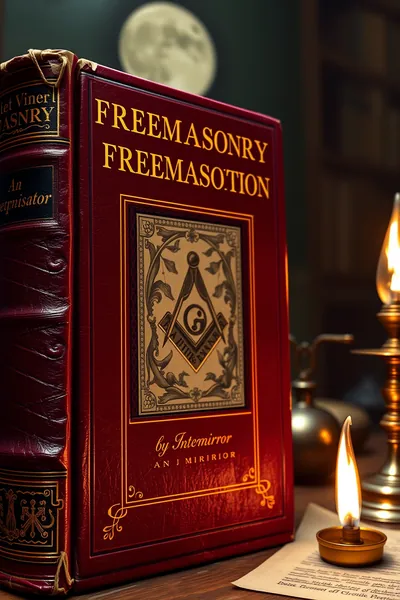
Luciferianism or Satanism in English freemasonry, an essay

 81
81

Luciferianism or Satanism in English freemasonry, an essay
L. Fouquet’s essay, Luciferianism or Satanism in English Freemasonry, offers a rare academic foray into a subject frequently clouded by misapprehension. The strength of this 2009 work lies in its disciplined approach, meticulously tracing potential symbolic lineages rather than succumbing to sensationalist claims. Fouquet’s analysis of the symbolic reinterpretation of Luciferian archetypes within certain Masonic degrees, specifically referencing the Royal Arch, is particularly compelling. However, the essay’s primary limitation is its brevity; the subject warrants a more expansive treatment than this concise format allows. The detailed exploration of the concept of the 'divine spark' as interpreted through Luciferian lenses within the context of Masonic initiation is a highlight. While not a definitive exposé, Fouquet’s work provides a valuable scholarly perspective on a controversial intersection of esoteric thought.
📝 Description
81
L. Fouquet's 2009 essay examines Luciferian and Satanic links within English Freemasonry.
First published in 2009, L. Fouquet's essay, "Luciferianism or Satanism in English Freemasonry," investigates the connections between these occult philosophies and the fraternity's rituals. The work moves past sensationalism to analyze historical and esoteric currents that may have shaped Masonic symbolism and practices. It is intended for students of esotericism, Freemasonry, and comparative religion who seek a deeper understanding of spiritual traditions' interactions. Researchers interested in the evolution of Western occult thought and the symbolic language of secret societies will find it valuable.
Fouquet's essay situates its inquiry within late 20th and early 21st-century esoteric scholarship. It addresses a time when interest in the occult and its historical manifestations, including its relationship with Freemasonry, saw a resurgence. The work engages with earlier interpretations and debates in the field, offering a critical examination of Masonic symbolism. It introduces readers to conceptual frameworks linking Luciferian and Satanic ideas to Masonic degrees and allegories. Symbols and narratives within Freemasonry are dissected and reinterpreted through dualistic philosophies and esoteric traditions that emphasize self-deification and the pursuit of forbidden knowledge.
This essay engages with a strain of esoteric scholarship focused on the historical interplay between Western occult traditions and established fraternal orders. It follows critical examinations of Masonic symbolism that have sought to uncover deeper meanings beyond the exoteric. The work situates itself within discussions concerning the evolution of occult thought in the West, particularly its relationship with secret societies and the reinterpretation of their symbolic systems through dualistic and Gnostic lenses.
💡 Why Read This Book?
• Gain an understanding of how specific Luciferian archetypes, such as the pursuit of forbidden knowledge, are explored within the symbolic framework of Masonic degrees like the Royal Arch, as detailed in Fouquet's analysis. • Learn about the historical scholarship surrounding occultism and Freemasonry that emerged around 2009, providing context for Fouquet's specific research into Western esoteric traditions. • Discover a scholarly approach to re-interpreting Masonic symbolism through the lens of dualistic philosophies, moving beyond common sensationalism to explore deeper esoteric meanings.
⭐ Reader Reviews
Honest opinions from readers who have explored this book.
❓ Frequently Asked Questions
What is the main focus of L. Fouquet's essay on Luciferianism and Freemasonry?
The essay, first published in 2009, examines the symbolic and historical connections between Luciferian or Satanic philosophies and the rituals and teachings found within English Freemasonry.
Is this book for beginners in occult studies?
It is more suited for advanced students of esotericism and Freemasonry, as it assumes a certain familiarity with symbolic language and historical occult traditions.
What specific Masonic degrees are discussed in the essay?
The work particularly delves into the symbolic interpretations within the Royal Arch degree, exploring how Luciferian archetypes might be symbolically represented.
Does the book claim Freemasonry is inherently Satanic?
No, the essay focuses on symbolic interpretation and potential esoteric correspondences, rather than making direct claims of inherent Satanism within Freemasonry itself.
When was 'Luciferianism or Satanism in English Freemasonry' first published?
The essay was first published in 2009, reflecting a period of renewed academic interest in the intersection of esoteric movements and fraternal orders.
What kind of esoteric traditions does the book reference?
It references traditions such as Hermeticism and Gnosticism, exploring how their dualistic concepts might inform interpretations of Masonic symbolism.
🔮 Key Themes & Symbolism
Symbolic Reinterpretation of Lucifer
The essay scrutinizes how the archetype of Lucifer, often associated with forbidden knowledge and the 'light-bringer,' is symbolically present or interpretable within Masonic rituals. It moves beyond simplistic demonization to explore Lucifer as a symbol of enlightenment and self-awareness, drawing parallels to Gnostic traditions that valued gnosis (knowledge) as a path to liberation. The work suggests that certain Masonic allegories, particularly those involving the pursuit of hidden truths, can be viewed through this symbolic lens.
Esoteric Currents in Freemasonry
Fouquet’s work investigates the deeper, often esoteric, layers of Freemasonry that extend beyond its social or charitable aspects. It positions Freemasonry not merely as a fraternal organization but as a system that employs strong symbolism to convey spiritual or philosophical teachings. The essay explores how Hermetic principles and dualistic worldviews might have influenced the development and interpretation of Masonic degrees and their associated narratives over time.
The Royal Arch Degree
A central focus of the essay is the symbolic content of the Royal Arch degree. Fouquet analyzes its narrative and rituals to identify elements that can be interpreted through a Luciferian or Satanic hermeneutic. This involves dissecting specific symbols and moments within the degree, suggesting that they may represent a form of esoteric initiation aligned with the pursuit of divine or hidden knowledge, echoing themes found in Luciferian thought.
Dualism and Enlightenment
The essay explores the concept of dualism as a framework for understanding both Luciferianism and certain interpretations of Masonic symbolism. It suggests that the perceived 'darkness' or 'forbidden' nature of Luciferianism is, in some esoteric traditions, a symbol for the challenging path to enlightenment, which often involves confronting and integrating opposing forces or concepts. This aligns with Masonic themes of overcoming ignorance through knowledge.
💬 Memorable Quotes
Direct passages from the work, attributed to the author.
“The Royal Arch degree's narrative offers fertile ground for interpreting esoteric concepts.”
— This points to a specific area of focus within the book, indicating that the author finds particular symbolic resonance and potential for esoteric reinterpretation within this particular Masonic degree.
“Fouquet analyzes the 'light-bringer' symbolism in relation to Masonic initiation.”
— This interpretation emphasizes how the essay connects the traditional Luciferian association with bringing light or knowledge to the Masonic journey of self-discovery and enlightenment.
“The work positions occult philosophies within the broader context of Western esoteric traditions.”
— This suggests that the book is not isolated but contributes to a larger academic and spiritual discourse, situating its specific findings within established fields like Hermeticism and Gnosticism.
“Symbolic reinterpretation moves beyond sensationalist claims about Freemasonry.”
— This reflects the essay's critical stance, aiming to provide a nuanced, scholarly perspective that contrasts with more common, often unfounded, accusations or sensationalized views of secret societies.
💡 Key Ideas
Editorial paraphrase of the work's core concepts — not direct quotes.
The essay explores the symbolic correspondences between Luciferian archetypes and Masonic allegories.
This paraphrase highlights Fouquet's method of examining Masonic narratives and rituals not literally, but as symbolic vehicles that might carry meanings akin to those found in Luciferian thought.
🌙 Esoteric Significance
Tradition
This work fits within the lineage of esoteric scholarship that analyzes Western mystery traditions, particularly those influenced by Gnosticism and Hermeticism. It departs from purely historical accounts by employing symbolic hermeneutics to explore potential correspondences between disparate esoteric systems. Fouquet's approach aligns with traditions that view initiation rites and symbolic language as carriers of profound spiritual or philosophical truths, applicable across different historical and cultural manifestations of esoteric thought.
Symbolism
Key symbols explored include the concept of 'light' as representing forbidden knowledge or gnosis, a direct link to Luciferian archetypes. The essay also likely explores symbols associated with the Royal Arch degree, such as the recovery of lost wisdom or the divine spark, reinterpreting them through a dualistic lens. These symbols are not treated superficially but as potent carriers of esoteric meaning related to spiritual awakening and self-realization.
Modern Relevance
Contemporary practitioners and scholars of Western esotericism, particularly those interested in comparative occultism and the deeper symbolic meanings within fraternal orders, continue to draw on such analyses. Thinkers exploring modern Luciferianism or re-examining Gnostic and Hermetic influences in various spiritual movements might find Fouquet's essay a valuable, albeit concise, resource for understanding historical symbolic interpretations.
👥 Who Should Read This Book
• Students of comparative religion and esoteric studies seeking to understand the nuanced interplay between occult philosophies and fraternal organizations. • Freemasons interested in exploring deeper symbolic interpretations of their rituals beyond conventional exoteric explanations. • Researchers of Western esotericism investigating the historical evolution and symbolic language of traditions like Gnosticism and Hermeticism within different contexts.
📜 Historical Context
Published in 2009, L. Fouquet's essay emerged during a period of significant scholarly interest in the intersection of Western esotericism and fraternal organizations. The late 20th and early 21st centuries witnessed a rise in academic works that critically examined the symbolic language and philosophical underpinnings of groups like Freemasonry, moving beyond purely historical or sociological analyses. Fouquet's work engages with this intellectual current, offering a specific lens through which to view Masonic symbolism. It implicitly responds to earlier debates, such as those surrounding the alleged occultism within Freemasonry, by focusing on interpretative frameworks rather than definitive pronouncements. While not directly engaging with a specific contemporary author in a published debate, the essay is situated within the broader academic conversation that included researchers of Gnosticism, Hermeticism, and comparative religion, who were increasingly exploring the lineage of occult ideas.
📔 Journal Prompts
The symbolic representation of 'forbidden knowledge' within the Royal Arch degree.
Fouquet's interpretation of the 'light-bringer' archetype in relation to Masonic initiation.
The application of dualistic philosophies to Masonic symbolism as presented in the essay.
Tracing the historical lineage of esoteric ideas discussed in the 2009 publication.
Exploring the concept of self-realization through symbolic reinterpretation.
🗂️ Glossary
Luciferianism
An esoteric and occult belief system that venerates Lucifer as a symbol of enlightenment, wisdom, and rebellion against oppressive dogma, distinct from the Abrahamic concept of Satan.
Satanism
A broad term encompassing various belief systems, some theistic and some atheistic, that involve Satan as a central figure, often representing individualism, materialism, or rebellion, with significant divergence from Luciferianism.
Freemasonry
A fraternal organization that traces its origins to the stonemasons' guilds of the late Middle Ages, known for its use of allegorical rituals and symbols to impart moral and philosophical lessons.
Esotericism
Belief systems and practices that focus on hidden knowledge, spiritual transformation, and direct experience of the divine, often transmitted through secret teachings or initiatory rites.
Gnosticism
An ancient religious movement characterized by a belief in a transcendent God and the existence of a secret knowledge (gnosis) that leads to salvation, often viewing the material world as flawed or evil.
Hermeticism
A philosophical and religious tradition based on writings attributed to Hermes Trismegistus, emphasizing concepts like 'as above, so below' and the pursuit of wisdom and spiritual ascent.
Royal Arch
A degree within some Masonic bodies, often considered a culmination of the previous degrees, which is central to the narrative and symbolism explored in Fouquet's essay.
🔮 Readers Also Liked
Browse all →






More Free Freemasonry & Secret Societies Books
View all →