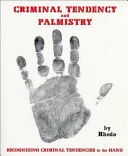
Criminal Tendency and Palmistry
 80
80

Criminal Tendency and Palmistry
Rhoda Hamilton's "Criminal Tendency and Palmistry" attempts a bold synthesis, proposing that the lines etched on our palms might serve as indicators of criminal inclination. The book's strength lies in its direct, unfettered exploration of this controversial nexus. Hamilton argues cogently, within her framework, that palmistry isn't mere divination but a scientific observation of human physical traits. A particularly striking section details the supposed correlation between specific finger lengths and aggressive behavior, a concept that, while speculative, is presented with analytical rigor. However, the work falters in its lack of rigorous empirical validation; the leap from observed patterns to definitive pronouncements on criminality feels premature without broader, peer-reviewed studies. The 1998 publication date also means it predates significant advancements in forensic genetics and behavioral psychology, which offer alternative, more established methods of criminal profiling. Despite these limitations, Hamilton's direct challenge to dismiss palmistry outright offers a unique, if controversial, perspective on a practice often relegated to the esoteric fringe. It's a provocative read for those interested in the historical and speculative links between physical form and human behavior.
📝 Description
80
Rhoda Hamilton's 1998 book, Criminal Tendency and Palmistry, proposes a scientific basis for hand analysis in identifying criminal behavior.
Published in June 1998, Rhoda Hamilton's "Criminal Tendency and Palmistry" investigates a potential link between the physical characteristics of hands and criminal behavior. The author argues that palmistry, often seen as mere superstition, might hold a scientific foundation for detecting inclinations toward violence and criminality. Hamilton's work challenges established views by suggesting that detailed hand analysis could eventually be considered in legal investigations. It is aimed at criminologists, law enforcement officers, amateur palmists, and serious students of esoteric disciplines who are open to unconventional profiling methods. The book appeals to those interested in the overlap between forensic science and occult studies, especially those looking for empirical support for practices usually considered mystical.
The book introduces the 'Chiro-Criminological Index,' a theoretical system designed to measure indicators of criminal predisposition within palm lines, mounts, and finger shapes. Hamilton examines particular dermatoglyphic patterns and their supposed connections to psychopathy and aggressive tendencies. She draws comparisons between specific hand features and recognized criminal profiles. This work emerged during a period of revived interest in fringe sciences, even as it faced skepticism from mainstream academic circles. While not directly citing other palmistry authors, its core idea echoes earlier efforts to bring a more systematic approach to chiromancy.
This book fits within a tradition of attempting to legitimize chiromancy through scientific or pseudo-scientific frameworks. While often relegated to fortune-telling, figures throughout history have sought to establish a more systematic and observational basis for palm reading. Hamilton's work in the late 20th century follows in this vein, aiming to connect physical traits with psychological predispositions, aligning with earlier attempts to classify human characteristics and behaviors through physiognomy and related disciplines.
💡 Why Read This Book?
• Understand the 'Chiro-Criminological Index' concept, a specific framework proposed by Hamilton for assessing criminal tendencies through palmistry, offering a unique perspective on forensic divination. • Explore the historical arguments for palmistry's scientific basis, referencing the author's belief that it predates mere guesswork, potentially informing your view of esoteric practices. • Examine the specific correlation between hand features and behavioral predispositions as detailed by Hamilton, providing concrete examples for comparative study with modern criminology.
⭐ Reader Reviews
Honest opinions from readers who have explored this book.
❓ Frequently Asked Questions
What is the main argument of 'Criminal Tendency and Palmistry'?
The book argues that palmistry, when studied scientifically, can reveal indicators of criminal and violent tendencies. Rhoda Hamilton suggests hand analysis could be a future tool in law enforcement and legal contexts, moving beyond superstition.
When was 'Criminal Tendency and Palmistry' first published?
The book was first published in June 1998. This late 20th-century publication date places it within a period of interest in esoteric subjects but prior to some modern forensic advancements.
Who is Rhoda Hamilton?
Rhoda Hamilton is the author of 'Criminal Tendency and Palmistry.' While detailed biographical information is scarce, her work positions her as an investigator into the potential scientific underpinnings of palmistry, particularly concerning criminology.
Does the book claim palmistry is accepted in courts?
No, the book suggests that a time may come in the future when hand analysis will be accepted in criminal courts, with palmists acting as expert witnesses. It posits this as a potential development, not a current reality.
What kind of evidence does the book present?
Hamilton refers to 'scientific studies' and observations linking handprints, fingerprints, and palm features to criminal behavior. The book posits that these are not mere guesses but observable patterns that can be analyzed.
Is this book about predicting future crimes?
While the book discusses identifying tendencies, its primary focus is on analyzing existing hand features for predispositions. It suggests potential for profiling rather than a direct prediction of future criminal acts.
🔮 Key Themes & Symbolism
Chiromancy as Forensic Science
This theme centers on Hamilton's core argument: that palmistry transcends fortune-telling to become a viable method for identifying criminal traits. The book posits that specific markings on the palm, such as the shape of mounts or the clarity of certain lines, can correlate with psychological predispositions towards violence or deceit. It frames these observations as empirical data, suggesting that law enforcement agencies could potentially utilize palmistry alongside traditional forensic techniques, a concept explored in the book's discussion of future legal applications.
Physical Manifestations of Criminal Mind
Hamilton explores the idea that the physical structure of the hand, including finger length ratios and palm shape, offers clues to an individual's inherent character and potential for criminal behavior. The work studies how these physical attributes might be interpreted as outward signs of inner psychological states or tendencies, such as aggression or impulsivity. This theme challenges readers to consider the biological and physical correlates of personality, particularly in the context of criminal profiling, suggesting a tangible link between anatomy and psychopathology.
The Scientific Basis of Palmistry
A significant theme is the defense of palmistry as a practice grounded in scientific study rather than mere guesswork. Hamilton asserts that the patterns observed in hand reading are not random but follow discernible principles that can be systematically analyzed. The book aims to legitimize palmistry by presenting it as a form of physiognomy, a field concerned with inferring character from physical features. This is presented as an alternative or complementary approach to understanding human behavior, particularly deviant behavior.
💬 Memorable Quotes
Direct passages from the work, attributed to the author.
“Hands Do Show Criminal And Violent Tendencies.”
— This stark assertion forms the book's central thesis. It suggests a direct, observable link between the physical characteristics of a person's hands and their propensity for criminal acts, positioning palmistry as a diagnostic tool for behavioral pathology.
“The Practice Of Palmistry Is Based Upon Scientific Studies And Not Mere Guess Work.”
— This statement directly counters common skepticism towards palmistry. Hamilton insists on an empirical foundation for the practice, aiming to reframe it as a systematic analysis of observable human traits rather than arbitrary prediction.
“Criminologist, F. B. I. And Law Enforcement Agencies Identify Criminals By Their Finger And Palmprints.”
— This observation serves as a bridge between established forensic science and Hamilton's more speculative claims. It grounds her argument by pointing to the current use of prints for identification, suggesting that further analysis of palms could yield behavioral insights.
💡 Key Ideas
Editorial paraphrase of the work's core concepts — not direct quotes.
There May Come A Time In The Near Future When Hand Analysis Will Be Accepted In The Criminal Courts.
This quote highlights Hamilton's forward-looking perspective, envisioning a future where palmistry gains legal and scientific legitimacy. It underscores the book's ambition to elevate hand reading from an esoteric art to a recognized forensic discipline.
🌙 Esoteric Significance
Tradition
This work fits loosely within the Western esoteric tradition, particularly the branch concerned with physiognomy and the interpretation of physical signs as indicators of inner states. While not directly tied to Hermeticism or Kabbalah, it reflects the ancient Hermetic principle 'As Above, So Below,' suggesting a correspondence between the macrocosm (universal laws of behavior) and the microcosm (the human hand). Hamilton attempts to secularize and scientize elements of chiromancy, moving it away from purely divinatory traditions towards a more empirical, albeit controversial, framework.
Symbolism
The primary symbols are the lines and mounts of the hand itself. The 'Life Line,' 'Head Line,' and 'Heart Line' are not just markers of longevity, intellect, or emotion, but are interpreted here as potentially revealing deviations from normative psychological states. Specific shapes or breaks in these lines, along with the prominence of mounts (e.g., Mount of Mars, Mount of Venus), are examined for their potential correlation with aggressive, deceitful, or self-serving tendencies, symbolic of underlying character flaws.
Modern Relevance
While direct citation of Hamilton's work in contemporary criminology is rare, her underlying thesis appeals to ongoing discussions in behavioral science and forensic psychology regarding the biological and physical markers of personality disorders and criminal predispositions. Modern thinkers exploring psychopathy, behavioral genetics, and even certain aspects of evolutionary psychology might find her attempt to link physical form to innate tendencies a provocative, if flawed, precursor to their own research, albeit from a vastly different methodological standpoint.
👥 Who Should Read This Book
• Students of esoteric history seeking to understand attempts to scientize divination in the late 20th century, particularly how practices like palmistry were reframed. • Criminology enthusiasts interested in unconventional profiling methods and historical perspectives on identifying criminal tendencies beyond mainstream psychological or biological approaches. • Amateur palmists and chiromancers looking for texts that explore the diagnostic potential of hand analysis in relation to character and behavior, offering a unique analytical framework.
📜 Historical Context
Rhoda Hamilton's "Criminal Tendency and Palmistry," published in June 1998, emerged in an era where esoteric interests were present but often viewed with skepticism by mainstream science. The late 20th century saw a continued fascination with occult and metaphysical subjects, yet the academic and forensic communities largely dismissed practices like palmistry. Hamilton's work can be seen as an attempt to bridge this gap, presenting chiromancy through a lens of empirical observation rather than mystical pronouncement. This contrasts with earlier, more established forms of palmistry that focused on character reading or future prediction. While not directly engaging with specific contemporary critics by name, the book implicitly addresses the broader scientific dismissal of such arts. Its premise aligns with fringe inquiries into physiognomy and the physical basis of character, a field that has seen intermittent interest throughout history but has rarely gained traction in formal criminology, which by the late 1990s was increasingly reliant on DNA analysis and psychological profiling.
📔 Journal Prompts
The 'Chiro-Criminological Index' as a concept: how might one theoretically quantify palm features for behavioral assessment?
Hamilton's assertion that 'Hands Do Show Criminal And Violent Tendencies' – explore potential biases in such a statement.
Consider the historical precedent for linking physical form to character (e.g., phrenology); how does Hamilton's work compare?
Reflect on the proposed future acceptance of hand analysis in criminal courts; what societal or scientific shifts would be required?
Analyze the symbolic meaning of the Mount of Mars in palmistry and its potential connection to aggression as discussed in the book.
🗂️ Glossary
Chiro-Criminological Index
A hypothetical framework proposed by Rhoda Hamilton within the book, aiming to systematically analyze palm features (lines, mounts, shapes) to identify indicators of criminal or violent tendencies in individuals.
Physiognomy
The practice of assessing a person's character or personality from their outward appearance, especially the face. Hamilton applies a similar principle to the hand, viewing palmistry as a form of hand-based physiognomy.
Dermatoglyphic Patterns
The study of the patterns of skin ridges found on the fingers, palms, and soles of the feet. While Hamilton uses the term, her focus is on the interpretation of these patterns for behavioral traits, extending beyond standard forensic identification.
Mounts (of the Hand)
The fleshy, raised pads on the palm, named after Roman deities (e.g., Mount of Venus, Mount of Jupiter, Mount of Mars). In palmistry, their prominence or deficiency is interpreted as indicative of specific personality traits or energies.
Lines (of the Hand)
The creases on the palm, most notably the Life Line, Head Line, and Heart Line. Hamilton examines their characteristics (depth, clarity, breaks) for potential correlations with psychological states relevant to criminal behavior.
Expert Witness
A person who is permitted to testify at a trial because of special knowledge or proficiency in a particular field that is relevant to the case. Hamilton suggests palmists could potentially serve this role in the future.
Forensic Science
The application of science to criminal matters. Hamilton aims to position palmistry as a potential, albeit unconventional, adjunct to established forensic disciplines.
This book appears in 1 collection
🔮 Readers Also Liked
Browse all →









From the “Palmistry” Collection
View all →








More Free Occult Philosophy Books
View all →