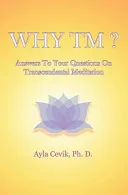
Why TM?
 79
79

Why TM?
Ayla Cevik’s "Why TM?" offers a concise argument for Transcendental Meditation, positioning it as a direct route to personal evolution through consciousness expansion. Cevik foregrounds the technique’s unique mechanism: transcending thought rather than engaging with it. This distinction, she argues, unlocks a deeper reservoir of creativity and intelligence. The book’s strength lies in its clear articulation of TM’s core principle as a natural, effortless process, a welcome contrast to more demanding contemplative disciplines. However, the work could benefit from more detailed exploration of TM's physiological effects, beyond stating it leads to "restful alertness." A particularly compelling passage is the explanation of how the mind naturally settles when allowed to, a concept central to the technique’s efficacy. "Why TM?" provides a functional introduction to a widely practiced, yet often misunderstood, meditative system.
📝 Description
79
Ayla Cevik's 2017 book, "Why TM?", argues Transcendental Meditation elevates consciousness beyond mere relaxation.
Published in 2017, "Why TM?" by Ayla Cevik, Ph.D., presents Transcendental Meditation (TM) as more than a relaxation technique. Cevik asserts that true self-improvement arises from raising one's awareness, a process initiated internally. The book describes TM as a simple practice that connects individuals to an inner source of intelligence and creativity. Its core principle is enabling the mind to transcend ordinary thought processes, operating from a state beyond conceptualization.
This work targets individuals interested in personal growth and understanding their inner potential. It appeals to those curious about consciousness expansion and self-transformation. Readers seeking methods that work with the mind's inherent capacities, rather than imposing external structures, will find "Why TM?" relevant. The book is especially suited for those who found other meditation or self-help approaches too difficult or complex, offering a seemingly effortless path to inner change.
Emerging in 2017 amidst growing interest in mindfulness, "Why TM?" positions TM within this contemporary spiritual development landscape. Cevik distinguishes it from practices relying heavily on focused attention or visualization. The book acknowledges a lineage of contemplative traditions while presenting TM as a distinct, scientifically studied method developed by Maharishi Mahesh Yogi, which gained prominence in the late 20th century.
💡 Why Read This Book?
• You will learn how Transcendental Meditation, as described by Cevik, utilizes a unique mechanism of "transcending the thinking process" to access inner resources, differentiating it from concentration-based practices. • You will understand the specific claim that TM allows contact with a "source of infinite intelligence and creativity" within, a concept central to the book’s premise of internal change. • You will grasp why the book emphasizes TM's simplicity and naturalness as key to raising "consciousness to higher levels," a core tenet of Cevik's self-improvement philosophy.
⭐ Reader Reviews
Honest opinions from readers who have explored this book.
❓ Frequently Asked Questions
What is the core difference between TM and other meditation techniques according to "Why TM?"?
"Why TM?" highlights that Transcendental Meditation's primary distinction is its ability to lead the mind to "transcend the thinking process." Unlike techniques requiring concentration or contemplation, TM allows the mind to naturally settle to quieter states, accessing inner intelligence.
When was "Why TM?" first published?
The book "Why TM?" by Ayla Cevik, Ph.D., was first published in May 2017, positioning it within contemporary discussions on consciousness and personal development.
What does Cevik mean by raising one's consciousness?
Cevik explains that raising consciousness involves connecting with a deeper, more fundamental level of awareness, described as the "source of infinite intelligence and creativity." This inner connection is presented as the catalyst for positive change from within.
Is TM presented as a spiritual practice in the book?
While the book discusses connecting with "infinite intelligence and creativity," it frames TM primarily as a natural technique for personal development and self-improvement, focusing on the psychological and cognitive benefits of transcending thought.
Who developed the Transcendental Meditation technique discussed in the book?
The Transcendental Meditation technique, as presented in "Why TM?", was developed by Maharishi Mahesh Yogi. Cevik's work explains this specific method and its purported benefits.
Can TM be learned from this book alone?
"Why TM?" introduces the principles and rationale behind Transcendental Meditation but does not serve as a substitute for instruction from a certified TM teacher. Learning the technique typically involves personalized guidance.
🔮 Key Themes & Symbolism
Consciousness Elevation
The book posits that genuine self-improvement is achieved by elevating one's consciousness to higher levels. This is not about acquiring new knowledge, but about accessing a deeper, more fundamental state of awareness. Cevik suggests that "change begins from within" and that TM provides a natural mechanism for this internal shift. The work contrasts this with external efforts, emphasizing that true transformation arises from a more profound connection to one's inner self and its latent capacities.
Transcending Thought
A core tenet of "Why TM?" is the unique ability of Transcendental Meditation to allow the mind to transcend the process of thinking itself. This is presented as distinct from concentration or contemplation, which engage the thinking faculty. By transcending thought, the mind is said to settle to quieter, more settled states of awareness. This process is described as effortless and natural, leading to a unique state of restful alertness that is key to unlocking inner potential.
Inner Source of Intelligence
Cevik asserts that within each individual lies a "source of infinite intelligence and creativity." Transcendental Meditation is presented as the means to contact this inner wellspring. The book suggests that by transcending the surface level of active thought, individuals can tap into a deeper reservoir of wisdom, creativity, and problem-solving ability. This connection is portrayed as fundamental to holistic self-development and the enhancement of life experiences.
Natural Simplicity
The book repeatedly emphasizes the simplicity and naturalness of the Transcendental Meditation technique. Unlike many self-help or spiritual practices that require significant effort, discipline, or complex mental gymnastics, TM is presented as an easy-to-learn, effortless method. This natural approach is central to its efficacy, allowing individuals to achieve profound results without struggle, aligning with the idea that accessing one's inner nature is inherently a gentle process.
💬 Memorable Quotes
Direct passages from the work, attributed to the author.
“Change begins from within.”
— This concise statement expresses the book's central thesis: that lasting personal growth and improvement are not achieved through external manipulation or acquisition, but through internal shifts in awareness and consciousness.
“The simple and natural Transcendental Meditation technique.”
— This highlights TM's unique positioning as an effortless and innate practice, distinguishing it from more demanding or artificial methods of self-development and meditation.
“Raise the level of your individual consciousness.”
— This phrase articulates the primary goal of practicing TM as described in the book: to expand one's awareness beyond ordinary limitations and access higher states of being.
“Contacting the source of infinite intelligence and creativity within you.”
— This points to the profound, yet accessible, inner potential that the book claims TM unlocks, suggesting a direct connection to innate wisdom and inventive capacity.
“TM is unique in many ways. - It leads the mind to transcend the thinking process.”
— This emphasizes TM's distinctive methodology, contrasting it with practices that engage or direct thought, suggesting a different pathway to mental quietude and insight.
🌙 Esoteric Significance
Tradition
While TM is often presented with a scientific veneer, its core principle of "transcending" aligns with concepts found in various contemplative traditions, including some Vedantic and Yogic lineages emphasizing effortless awareness. It departs from more ritualistic or devotional paths by focusing on a direct, internal mechanism for consciousness expansion, bypassing elaborate philosophical systems or deity worship. Cevik's work situates TM as a practical, accessible method for accessing deeper states of being, resonating with the Hermetic principle of "As above, so below" by suggesting internal states mirror external potential.
Symbolism
The book primarily focuses on the functional aspect of the technique rather than overt symbolism. However, the concept of "transcendence" itself acts as a symbolic gateway, representing a movement beyond the limitations of the mundane, ego-bound self towards a unified, boundless consciousness. The "source of infinite intelligence and creativity" can be seen as a symbolic representation of the divine spark or the universal mind within the individual, an inner sanctum accessible through the practice.
Modern Relevance
Contemporary thinkers and practitioners exploring consciousness, peak performance, and stress reduction often reference TM. Its emphasis on effortless access to inner resources finds echoes in modern positive psychology and performance coaching. Schools of thought focusing on mindfulness and meditative states, even those with different methodologies, often engage with TM's research base. Cevik’s work contributes to the ongoing dialogue about practical, secularized techniques for mental and emotional well-being in an increasingly complex world.
👥 Who Should Read This Book
• Individuals curious about consciousness expansion who seek a practical, non-dogmatic approach to inner development. • Practitioners of other meditation or mindfulness techniques who are interested in understanding TM's unique method of transcending thought. • Those seeking self-improvement and stress reduction who are drawn to methods emphasizing simplicity and naturalness over effortful control.
📜 Historical Context
Published in May 2017, Ayla Cevik's "Why TM?" enters a contemporary spiritual and self-help landscape saturated with mindfulness techniques and neuroscientific explorations of well-being. The Transcendental Meditation (TM) movement, pioneered by Maharishi Mahesh Yogi, gained significant global traction from the 1960s onwards, often positioned as a distinct alternative to Eastern mysticism and Western psychology. Cevik’s 2017 work appears within a lineage of books aiming to clarify TM, often emphasizing its scientific validation and ease of practice. It navigates a field where practices like Vipassanā and Zen Buddhism also hold prominent positions, yet TM distinguishes itself by its specific technique of effortless transcending. In the early 2000s, TM saw a resurgence with research funded by figures like David Lynch, further embedding it in a discourse that blends esoteric principles with empirical claims, a trend Cevik’s book continues.
📔 Journal Prompts
Reflect on the concept of "transcending the thinking process."
Consider the "source of infinite intelligence and creativity" within you.
How does the idea of "change begins from within" apply to a personal challenge?
Explore the "simple and natural Transcendental Meditation technique" in relation to your daily routine.
What does "raising the level of your individual consciousness" mean to you personally?
🗂️ Glossary
Transcendental Meditation (TM)
A specific, effortless technique developed by Maharishi Mahesh Yogi, designed to allow the mind to settle inward and experience a state of "restful alertness" by transcending thought.
Transcendence
In the context of "Why TM?", this refers to the process by which the mind naturally moves beyond the active thinking process to experience quieter levels of awareness.
Consciousness
The state of being aware and responsive to one's surroundings, but also, as Cevik discusses, a deeper, more fundamental level of awareness that can be expanded.
Restful Alertness
A unique state achieved through TM, characterized by deep rest for the body and mind, coupled with a clear, alert state of inner awareness.
Infinite Intelligence and Creativity
The book's description of the inner source of potential that TM practitioners can access by transcending thought.
Individual Consciousness
The unique field of awareness belonging to a single person, which "Why TM?" suggests can be raised to higher levels through the practice.
Thinking Process
The active, conceptualizing, and analyzing functions of the mind, which TM aims to allow the individual to transcend, rather than engage directly.