Coin Divination
 76
76

Coin Divination
Buckland’s "Coin Divination" succeeds by demystifying a seemingly simple act into a potent divinatory tool. The strength lies in its clear, step-by-step methodology, making it accessible even for absolute beginners. Buckland avoids overly complex jargon, which is refreshing. However, the book occasionally feels a bit too procedural, potentially sacrificing some of the intuitive depth that can arise from less structured methods. A particularly illustrative section details the interpretation of different coin combinations for specific life areas, showcasing the practical application. While not a groundbreaking treatise on divination, it is a solid, functional guide for those seeking concrete answers through an elemental method.
📝 Description
76
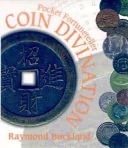
Raymond Buckland published "Coin Divination" in 2000, detailing a structured approach to coin tossing for answers.
This book serves as a practical guide to divining with coins. Buckland outlines a clear method for asking questions and interpreting the results of a coin toss within a divinatory system. It moves beyond simple chance, offering readers a way to gain insights into personal matters, career choices, and relationships.
The text is accessible to those new to esoteric practices, requiring no prior experience. It provides concrete tools for self-reflection and decision-making. The focus is on the mechanics of the divination and the symbolic meanings assigned to the outcomes, connecting simple actions with deeper understanding.
Coin divination has historical antecedents, notably the Chinese I Ching, which uses coin combinations to generate hexagrams. Buckland situates this practice within contemporary Western esoteric thought. His 2000 publication arrived during a period of renewed interest in practical occultism and folk magic traditions, making this guide relevant for those seeking tangible methods for personal guidance.
💡 Why Read This Book?
• You will learn to formulate precise questions for divination, a skill directly applicable to understanding the methodology presented in Chapter 3, "Asking the Right Question." • You will gain practical experience in interpreting coin outcomes, moving beyond random chance to a structured system as detailed in the coin combination tables. • You will discover how to use a simple, readily available tool for insight, a method Buckland traces back to ancient practices similar to the I Ching.
⭐ Reader Reviews
Honest opinions from readers who have explored this book.
❓ Frequently Asked Questions
What is the historical origin of coin divination discussed in Buckland's book?
Buckland's "Coin Divination" references ancient practices, most notably the Chinese I Ching, which has used coin tosses to generate hexagrams for divination for centuries.
Does Raymond Buckland's book require prior knowledge of the I Ching?
No, while Buckland mentions the I Ching as a related practice, "Coin Divination" is designed for beginners and explains its own coin-based system independently.
What types of questions can be answered using coin divination according to the book?
The book suggests that coin divination can address questions concerning career, love, family, money, and health, offering guidance on various life dilemmas.
Are there specific coin systems explained in "Coin Divination"?
Yes, Raymond Buckland outlines various methods and interpretations associated with using coins for divination, providing a structured approach to reading the outcomes.
Is "Coin Divination" suitable for someone new to esoteric practices?
Absolutely. The book's primary strength is its clear, accessible language and practical, step-by-step instructions, making it ideal for newcomers to divination.
When was Raymond Buckland's "Coin Divination" first published?
Raymond Buckland's "Coin Divination" was first published in the year 2000.
🔮 Key Themes & Symbolism
Accessible Divinatory Tools
The book champions the use of readily available objects, specifically coins, as powerful instruments for divination. Buckland argues that complex tools are not a prerequisite for receiving meaningful insight. This theme emphasizes that the user's intent and interpretive framework are more crucial than the medium itself, making esoteric practices approachable for a broader audience. It connects the mundane act of coin tossing to a deeper stream of divination, empowering individuals to find guidance in everyday items.
Structured Interpretation Systems
Central to Buckland's approach is the establishment of clear interpretive frameworks. Unlike intuitive methods that rely solely on feeling, "Coin Divination" provides specific meanings for different coin combinations and orientations. This systematization, drawing parallels to the I Ching, allows for repeatable and verifiable results. It aims to provide a logical pathway for understanding the symbolic language of the coins, bridging the gap between the physical action and the metaphysical answer.
Practical Guidance for Life Decisions
The core utility of the book lies in its application to real-world concerns. Buckland explicitly states the aim is to shed light on dilemmas related to career, love, family, money, and health. This practical focus grounds the esoteric practice in tangible outcomes, presenting coin divination not as an abstract art, but as a functional tool for decision-making and problem-solving in daily life. It encourages users to seek clarity and direction through these methods.
The Art of Question Formulation
Buckland stresses that the efficacy of coin divination hinges on the ability to ask clear, well-defined questions. The book dedicates attention to crafting questions that are specific enough to yield meaningful answers but broad enough to encompass potential outcomes. This aspect highlights the psychological component of divination, where the clarity of the question reflects the clarity of the seeker's intent and their readiness to receive an answer.
💬 Memorable Quotes
Direct passages from the work, attributed to the author.
“Whether it involves career, love, family, money, or health.”
— This phrase underscores the practical, everyday applicability of the divination techniques taught. It assures the reader that the methods are designed to provide guidance on concrete life issues, not just abstract spiritual matters.
“Illustrations.”
— This simple notation indicates that the book includes visual aids, likely demonstrating coin placements, symbolic meanings, or specific casting layouts, enhancing the reader's understanding and practical application of the techniques.
“Learn how to answer any question or shed light on any dilemma.”
— This statement conveys the empowering promise of the book: to equip the reader with a method for gaining clarity and insight, suggesting that the divination techniques are robust enough to tackle a wide range of personal challenges.
“The simplest coin toss...”
— This phrase emphasizes the accessibility and fundamental nature of the core practice being taught. It suggests that the book builds upon a basic, universally understood action to create a sophisticated divinatory system.
💡 Key Ideas
Editorial paraphrase of the work's core concepts — not direct quotes.
From the simplest coin toss to the more complicated "I Ching" and tarot card readings, learn how to answer any question or shed light on any dilemma.
This quote from the original blurb highlights the book's breadth, positioning coin divination as an accessible entry point into a wider spectrum of divinatory arts, including established systems like the I Ching and Tarot.
🌙 Esoteric Significance
Tradition
Buckland's work aligns with practical, Western esoteric traditions that emphasize accessible divination. While referencing the I Ching, a core part of Taoist philosophy, the book adapts coin divination for a Western audience, integrating it into a broader context of folk magic and personal spiritual development. It departs from purely philosophical or ritualistic approaches by focusing on a simple, repeatable mechanic for obtaining insight, making it a functional tool rather than a purely theoretical study.
Symbolism
The primary symbols are the coins themselves and their resulting configurations. A coin, in many traditions, represents earthly matters, finance, or tangible outcomes. The act of tossing introduces an element of chance, often interpreted as divine will or subconscious guidance. Specific combinations, as outlined by Buckland, can symbolize agreement, conflict, opportunity, or obstacles, translating abstract possibilities into concrete divinatory messages relevant to the question asked.
Modern Relevance
In an age saturated with digital information, Buckland's "Coin Divination" offers a tangible, analog method for seeking clarity. It appeals to contemporary practitioners of witchcraft, modern paganism, and secular mindfulness seeking grounding techniques. Its straightforward approach speaks to individuals exploring self-help spirituality or those interested in comparative divination, providing a counterpoint to algorithm-driven advice and fostering a more intuitive connection with personal decision-making.
👥 Who Should Read This Book
• Aspiring diviners seeking a low-barrier-to-entry practice: Readers new to esoteric arts will appreciate the clear instructions and the use of common objects. • Individuals needing practical guidance for life decisions: Those facing dilemmas in career, relationships, or finances can utilize the book's methods for insight and clarity. • Students of comparative divination: Readers interested in understanding various methods beyond Tarot or runes will find value in Buckland's structured approach to coin-based interpretation.
📜 Historical Context
Raymond Buckland’s "Coin Divination," published in 2000, emerged during a period of renewed interest in practical occultism and folk magic in the West. While not a formal academic movement, this era saw a proliferation of accessible guides to esoteric practices, often drawing from historical sources but presented for contemporary application. Buckland himself was a significant figure in modern witchcraft and esoteric studies, known for his clear, instructional style. The book’s approach, while referencing ancient systems like the I Ching, offered a simplified, Westernized interpretation. It stood apart from more complex ceremonial magic or philosophical treatises, catering instead to those seeking direct, actionable divination. Its publication post-dates the major New Age boom of the 1980s but taps into its legacy of self-help and spiritual exploration. There wasn't a significant censorship event or a major scholarly debate directly surrounding this specific book, but it contributed to the broader trend of popularizing esoteric knowledge.
📔 Journal Prompts
Reflect on the symbolism of the coins used in your divination practice.
Analyze the clarity of a question you posed for coin divination.
Compare the structured interpretation system in "Coin Divination" to other methods you know.
Consider how the I Ching differs from Buckland's coin method.
Explore the balance between chance and intent in your coin toss readings.
🗂️ Glossary
Bibliomancy
A form of divination involving the use of books, often by opening one at random and interpreting the passage that appears. Buckland's method is a specific form using coins.
I Ching
An ancient Chinese divination text and system, traditionally translated as the 'Book of Changes'. It uses hexagrams, often generated by coin tosses, to provide counsel.
Divination
The practice of seeking knowledge of the future or the unknown by supernatural means. This book focuses on coin-based methods.
Dilemma
A situation requiring a choice between equally undesirable alternatives. The book aims to provide insight for such difficult situations.
Esoteric
Intended for or likely to be understood by only a small number of people with a specialized knowledge or interest. This book falls within this category.
Coin Toss
The act of throwing a coin into the air and allowing it to fall to the ground, used here as a method to generate divinatory results.
Interpretation
The action of explaining the meaning of something. In this context, it refers to understanding the symbolic meaning of coin results.
This book appears in 1 collection
🔮 Readers Also Liked
Browse all →







From the “Divination” Collection
View all →








More Free Divination & Tarot Books
View all →