Codespell
 80
80

Codespell
McCullough’s "Codespell" offers a refreshing update to mythological frameworks, positioning Ravirn as a compelling protagonist whose dual nature as sorcerer and hacker is its strongest asset. The fusion of ancient pantheons with digital wizardry creates an immediately engaging premise. However, the pacing occasionally falters, especially in the middle sections, where the intricate plotting can feel slightly convoluted. A particularly memorable sequence involves Ravirn using coded spells to bypass divine security protocols, showcasing the novel's unique blend of arcane and cybernetic elements. While the narrative successfully modernizes classic figures, the emotional arcs sometimes feel secondary to the plot's machinations. Despite these minor stumbles, "Codespell" delivers a clever and entertaining take on modernized mythology.
📝 Description
80
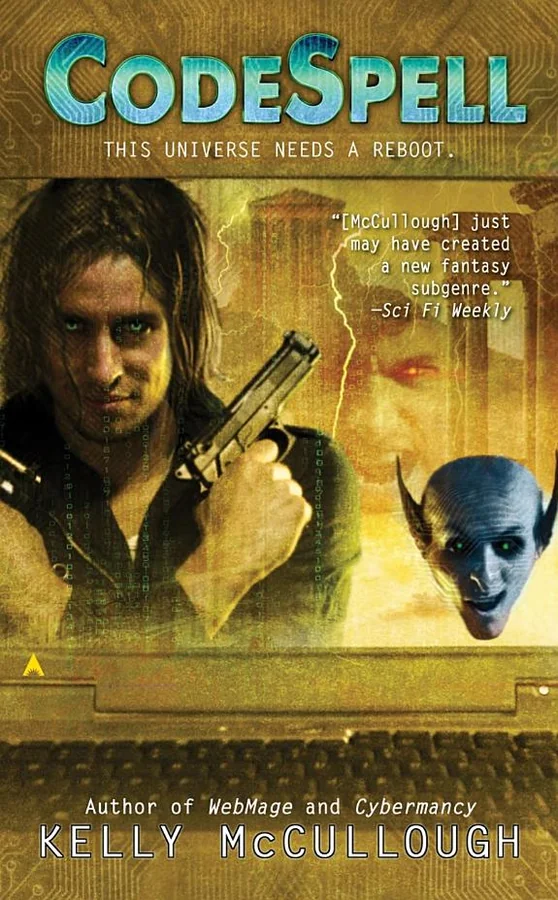
Kelly McCullough's 2008 novel Codespell imagines a world where magic meets the internet.
In Kelly McCullough's 2008 novel, Codespell, magic and technology have merged into a new reality. The story follows Ravirn, a sorcerer descended from the Fates, who operates in this digitally advanced magical environment. Ravirn is not just a practitioner of arcane arts; he is also a computer hacker, combining ancient magic with modern cybernetic skills.
The book is suited for readers of urban fantasy who enjoy detailed world-building and characters that reimagine mythological figures. Those who appreciate stories that place gods and mythical beings in modern settings, with technology integrated into magic systems, will find Codespell engaging. It appeals to readers seeking fantasy with a contemporary feel.
Codespell appeared during a time of significant growth for urban fantasy and digital humanities. The early 2000s saw a rising interest in speculative fiction that incorporated technology, mirroring real-world advancements. McCullough's novel captures this moment, depicting a world where magic adapts to the digital age, a concept explored by many authors in the expanding genre.
Codespell situates itself within a contemporary interpretation of ancient myth and fate. Ravirn's lineage connects him directly to the Fates, figures of destiny from Greek mythology, placing him at the intersection of predetermined paths and personal agency. The narrative revisits classical figures like Zeus and the Furies, recasting them within a modern, technologically infused magical framework. This approach reflects a modern esoteric tradition that reinterprets ancient archetypes and cosmologies through contemporary lenses, examining how concepts of destiny and divine intervention manifest in a world saturated by digital networks.
💡 Why Read This Book?
• You will learn how ancient mythological figures are recontextualized within a 21st-century digital framework, offering a unique perspective on figures like Zeus and the Furies, as depicted in "Codespell." • You will experience a narrative that integrates advanced computer hacking with traditional sorcery, exploring the concept of a "WebMage" and its implications for magical systems. • You will encounter a story that examines the tension between fate and individual agency, particularly through Ravirn's lineage connected to the Fates and his confrontations with Nemesis.
⭐ Reader Reviews
Honest opinions from readers who have explored this book.
❓ Frequently Asked Questions
What is a WebMage in Kelly McCullough's 'Codespell'?
A WebMage is a sorcerer who has adapted their magical abilities to the digital age. In 'Codespell,' this means Ravirn can cast spells through computer systems and manipulate digital networks using arcane knowledge.
Are the Greek gods featured in 'Codespell'?
Yes, the novel prominently features figures from Greek mythology, including Zeus and the Furies, reimagined within a contemporary, technologically advanced setting.
What is Ravirn's connection to the Fates?
Ravirn is a direct descendant of one of the three Fates, a lineage that imbues him with a unique understanding of destiny and a position within the novel's magical hierarchy.
Who is Nemesis in the context of 'Codespell'?
Nemesis is depicted as the unstoppable goddess of vengeance. She serves as a primary antagonist, relentlessly pursuing Ravirn and representing a force of cosmic retribution in the story.
When was 'Codespell' first published?
'Codespell' was first published on May 27, 2008, placing it within the early wave of urban fantasy novels that explored technological integration.
What kind of magic system does 'Codespell' employ?
The magic system in 'Codespell' is a blend of traditional sorcery and digital technology. Magic has evolved to be 'digital,' allowing characters like Ravirn to hack systems with spells and vice-versa.
🔮 Key Themes & Symbolism
Mythology Modernized
The work reimagines classical mythological figures and pantheons within a contemporary, technologically saturated world. Gods and goddesses are not relics but active participants in a reality where magic has gone digital. This infusion updates their archetypal roles, making them relevant to a 21st-century audience. The narrative explores how ancient powers interact with modern systems, challenging traditional interpretations of myth.
Magic and Technology Convergence
A central theme is the seamless integration of magic and computer science. The concept of a 'WebMage' embodies this fusion, where sorcery is performed through code and digital networks. This theme reflects contemporary anxieties and fascinations with technology, suggesting that even the most ancient arts must adapt to survive and thrive in a digitized world. The book posits technology as a new frontier for magical practice.
Fate vs. Agency
Through Ravirn's lineage as a descendant of the Fates, the novel looks at the perennial conflict between predetermined destiny and individual free will. His struggle against forces like Nemesis, the goddess of vengeance, highlights the challenges of escaping one's ordained path. The narrative questions whether ancient prophecies and cosmic roles can be circumvented or rewritten through personal choices and technological manipulation.
The Nature of Power
The book examines different forms of power in the modern era, contrasting the raw, ancient power of deities and cosmic forces with the more subtle, intellectual power derived from technology and hacking. Ravirn embodies this duality, wielding both arcane might and digital prowess. The narrative explores how these power structures intersect and conflict in a world where the lines between the magical and the mundane are increasingly blurred.
💬 Memorable Quotes
Direct passages from the work, attributed to the author.
“Magic has advanced with the times and gone digital.”
— This foundational concept highlights the novel's unique premise: ancient sorcery has not been replaced by technology but has evolved alongside it, becoming an integral part of the digital landscape.
“Ravirn, a direct descendant of one of the three Fates...”
— This establishes Ravirn's significant lineage and connection to the concepts of destiny and cosmic order, framing his character within the larger mythological and philosophical themes of the book.
“Ravirn... is a talented sorcerer—and computer hacker extraordinaire.”
— This succinctly defines the protagonist's dual nature, emphasizing the novel's core conceit of blending arcane abilities with modern technological skills, creating a unique heroic archetype.
“Nemesis, the unstoppable goddess of vengeance.”
— This introduces a key antagonist and thematic element: the relentless pursuit of retribution. Nemesis represents an ancient, uncompromising force that Ravirn must confront, highlighting the conflict between order, chaos, and vengeance.
“Playing hard-to-get with a gorgeous Fury…”
— This illustrates the novel's playful and modern take on mythological figures, showing how these ancient beings exist and interact within contemporary social and romantic dynamics.
🌙 Esoteric Significance
Tradition
While not strictly adhering to a single esoteric lineage, "Codespell" draws heavily from Western esoteric traditions by modernizing classical Greco-Roman mythology. It engages with the concept of divine pantheons and their interaction with human affairs, a common thread in Hermeticism and Theosophy, which often sought to synthesize ancient wisdom. McCullough's work reinterprets these figures for a secular, technologically advanced age, offering a unique secularized esoteric perspective.
Symbolism
The primary symbol is the fusion of the digital and the arcane, represented by the 'WebMage.' This symbolizes the adaptation of ancient powers to new mediums. Ravirn's connection to the Fates symbolizes the tension between predestination and free will, a core esoteric concern. Nemesis functions as a symbol of inescapable consequence and divine retribution, a potent force within many mytho-magical systems.
Modern Relevance
Contemporary thinkers exploring digital spirituality, cyber-occultism, and post-mythological narratives find resonance in "Codespell." The novel's concept of digitized magic anticipates current discussions about AI, consciousness, and the potential for technology to alter or augment human experience in ways previously confined to esoteric lore. It serves as a speculative fiction precursor to ideas about virtual realities and magical practice.
👥 Who Should Read This Book
• Readers interested in urban fantasy who enjoy seeing classical myths and deities reinterpreted through a modern, technological lens. • Fans of speculative fiction that explores the convergence of magic and computer science, particularly those intrigued by the concept of 'digital sorcery.' • Enthusiasts of character-driven stories featuring protagonists who blend traditional skills with cutting-edge expertise, like Ravirn the hacker sorcerer.
📜 Historical Context
Published in 2008, "Codespell" arrived during a flourishing period for urban fantasy, a genre that readily absorbed contemporary elements. The early 21st century saw authors increasingly integrating technology, social media, and digital culture into magical narratives. McCullough’s work tapped into this trend by conceptualizing magic as having evolved digitally, mirroring real-world technological advancements. This was a significant departure from earlier urban fantasy that often focused on more traditional, less technologically mediated magic. The book's premise aligns with a broader cultural fascination with the intersection of the mystical and the digital, a theme explored by contemporary authors like Charles Stross in his Laundry Files series, which also blended espionage, bureaucracy, and occult horror with computing.
📔 Journal Prompts
Ravirn's digital mastery alongside his sorcery: how might these skills complement or conflict in your own life?
The modernized Fates and Nemesis: reflect on the interplay between destiny and personal accountability.
Consider the concept of a 'WebMage': what contemporary systems could a sorcerer hypothetically interface with?
Analyze Zeus and the Furies in their 21st-century context: what archetypal roles do they now fulfill?
The challenge of staying ahead of Nemesis: explore the nature of consequence in a digitally connected world.
🗂️ Glossary
WebMage
A sorcerer who has adapted their magical abilities to the digital realm, capable of manipulating both arcane energies and computer systems.
Ravirn
The protagonist of 'Codespell,' a sorcerer and computer hacker who is a descendant of the Fates.
Fates
In the context of 'Codespell,' these are ancient entities connected to destiny, from whom Ravirn is descended. Their power is reimagined in a modern, possibly digital, framework.
Nemesis
The goddess of vengeance, portrayed as an unstoppable force pursuing Ravirn in the novel. Represents inescapable retribution.
Fury
Mythological Greek spirits of vengeance, depicted in 'Codespell' as contemporary figures interacting with Ravirn.
Chaos Power
A classification for magical beings or entities associated with disorder and unpredictability, which Ravirn has become.
Reboot
Metaphorically used in the blurb, suggesting a fundamental reset or overhaul of the universe or its systems, aligning with themes of change and evolution.
This book appears in 1 collection
🔮 Readers Also Liked
Browse all →









From the “Chaos Magic” Collection
View all →






More Free Magic & Ritual Books
View all →