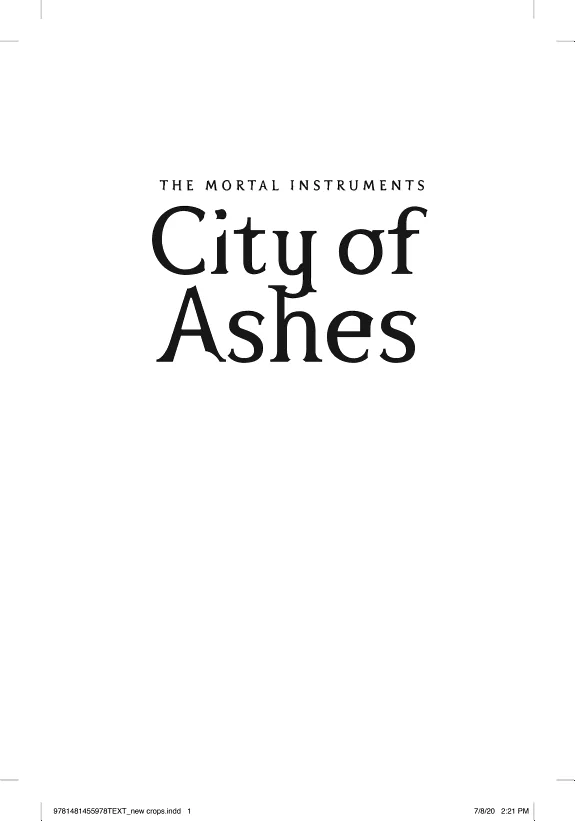
City of Ashes
 84
84

City of Ashes
Cassandra Clare’s City of Ashes does not merely continue Clary Fray’s journey; it actively tests her nascent understanding of the Shadowhunter world with escalating stakes and moral quandaries. The novel excels in deepening the mythology established in its predecessor, particularly through its exploration of the complex family dynamics and betrayals that underpin the Shadowhunter hierarchy. A notable strength lies in the intricate plotting, where revelations about Valentine Morgenstern’s past and motivations are carefully unveiled, creating a compelling sense of dread and urgency. However, the sheer volume of secondary characters and subplots, while contributing to the world’s richness, occasionally threatens to dilute the central narrative focus. The handling of Clary’s developing relationship with Jace, while central to the emotional arc, sometimes veers into predictable territory. Ultimately, City of Ashes succeeds as a robust middle chapter, intensifying the conflict and deepening character loyalties, making it a solid continuation for devoted readers.
📝 Description
84
City of Ashes, published in 2015, continues Clary Fray's induction into the Shadowhunter world.
This second book in Cassandra Clare's Mortal Instruments series picks up with Clary Fray adjusting to her identity as a Shadowhunter, a warrior protecting the human world from demons. Her ordinary life has been irrevocably altered, and she is learning to manage her own developing supernatural abilities. Clary discovers more about her family's past and the complicated relationships within the Shadowhunter society as she navigates the dangers of her new existence.
The story appeals to readers invested in the ongoing saga, especially those who enjoy urban fantasy blended with occult themes and detailed worldbuilding. It offers fast-paced action, evolving character dynamics, and unfolding mysteries. The book examines themes of self-discovery, predetermined fate, and the ethical challenges faced by individuals who guard the boundary between the mundane and the supernatural.
The series draws upon the concept of the Nephilim, a race of human-angelic hybrids with a mandate to fight demonic entities. This lore connects to various occult and religious traditions that posit angelic or divine beings intervening in the mortal realm to combat evil forces. Clare incorporates established mythologies and angelic lore, placing the narrative within a tradition of speculative fiction that engages with religious and occult symbolism.
💡 Why Read This Book?
• Gain insight into the intricate societal structures of the Nephilim, as depicted through the Clave’s political maneuvering and the internal conflicts among Shadowhunter families, providing a unique lens on hierarchical organizations. • Experience the unfolding mystery surrounding the Mortal Instruments themselves, understanding their symbolic weight and the lore that makes them central artifacts within the Shadowhunter universe. • Witness Clary Fray’s personal transformation as she confronts her inherited abilities and the difficult truths about her parentage, offering a narrative arc focused on self-discovery amidst supernatural turmoil.
⭐ Reader Reviews
Honest opinions from readers who have explored this book.
❓ Frequently Asked Questions
What is the primary conflict Clary Fray faces in City of Ashes?
Clary grapples with understanding her new identity as a Shadowhunter, uncovering dangerous truths about her family, and navigating the complex relationships within the Shadowhunter community while facing threats from Valentine Morgenstern.
When was Cassandra Clare's City of Ashes first published?
City of Ashes was first published in 2015, making it a relatively recent addition to the urban fantasy genre.
What are the Shadowhunters in Cassandra Clare's series?
Shadowhunters, or Nephilim, are a race of human-angelic hybrids who hunt demons to protect the human world. They possess unique abilities and are governed by the Clave.
Does City of Ashes introduce new mythical creatures?
While building on established lore, City of Ashes delves deeper into the hierarchy and conflicts within the Shadowhunter world and its interactions with various demon species.
What is the significance of the Mortal Instruments in the book?
The Mortal Instruments are powerful, ancient artifacts central to the ongoing conflict. Their nature and purpose are explored further, revealing their immense importance to both Shadowhunters and their enemies.
How does City of Ashes connect to other books in The Mortal Instruments series?
As the second book, City of Ashes directly follows the events of City of Bones and sets the stage for subsequent installments, deepening character arcs and escalating the overarching plot.
🔮 Key Themes & Symbolism
Inherited Identity and Destiny
Clary Fray's journey in City of Ashes is fundamentally about confronting her lineage. The book explores how one's birthright, especially within the Shadowhunter world, dictates not only power but also responsibility and often danger. Her struggle to reconcile her ordinary upbringing with her Nephilim heritage highlights the tension between chosen identity and predetermined fate. The narrative questions whether destiny can be altered, or if certain paths are irrevocably set by bloodline and ancient prophecies.
The Shadowhunter Hierarchy and Law
The Clave, the governing body of the Shadowhunters, is depicted as a complex, often rigid system of laws and traditions. City of Ashes showcases the political machinations, internal disputes, and the weight of ancient decrees that govern the Nephilim. This exploration studies themes of justice, loyalty, and the moral compromises individuals make to uphold the order, examining how established power structures can both protect and oppress.
Dual Realities and Hidden Worlds
The narrative maintains a stark contrast between the mundane human world and the hidden area of demons and Shadowhunters. This duality is explored through Clary's perspective as she navigates both realities, often finding the supernatural to be more complex and morally gray than initially perceived. The concept of the Veil, separating these worlds, becomes a crucial element, emphasizing the constant vigilance required by the Nephilim.
Betrayal and Shifting Loyalties
City of Ashes heavily features themes of betrayal and the subsequent re-evaluation of trust. Characters are forced to question the allegiances of those closest to them, as secrets and hidden agendas come to light. This creates a sense of pervasive uncertainty, where alliances can shift rapidly and the definition of friend versus foe becomes increasingly blurred, impacting Clary's personal relationships and her understanding of the Shadowhunter community.
💬 Memorable Quotes
Direct passages from the work, attributed to the author.
“She was a Shadowhunter. She was meant to fight demons.”
— This statement captures Clary's dawning realization of her identity and the inherent purpose assigned to her within the Shadowhunter world. It marks a key point where her acceptance of her lineage begins to solidify, even as the reality of that role becomes increasingly perilous.
“There are no good or evil choices. There are only choices.”
— This sentiment reflects the moral ambiguity prevalent in the Shadowhunter world. It suggests that actions are judged not by inherent morality but by their consequences and the context in which they are made, forcing characters to grapple with difficult decisions.
“The more you know, the more you know you don't know.”
— This aphorism speaks to the vastness of the Shadowhunter world and its hidden lore. As Clary uncovers more truths, she realizes the immensity of what remains unknown, emphasizing the continuous learning and adaptation required in her new life.
“He was supposed to be the villain. He wasn't supposed to be her father.”
— This expresses the profound shock and emotional turmoil Clary experiences upon discovering the true identity of Valentine Morgenstern. It underscores the shattering of her perceived reality and the complex familial bonds that complicate the central conflict.
💡 Key Ideas
Editorial paraphrase of the work's core concepts — not direct quotes.
Love is a dangerous thing. Love can make you weak.
This quote highlights the perceived threat that emotional attachments pose within the often-violent and duty-bound lives of Shadowhunters. It speaks to a belief that vulnerability, often stemming from love, can be exploited by enemies and hinder one's effectiveness.
🌙 Esoteric Significance
Tradition
While not directly aligned with a singular esoteric tradition like Hermeticism or Gnosticism, City of Ashes draws heavily on a syncretic blend of Judeo-Christian angelology and demonology, common in Western occult traditions. The concept of the Nephilim, beings of mixed angelic and human descent, echoes themes found in Kabbalistic lore and apocryphal texts. The series positions itself within a modern interpretation of these ancient narratives, adapting them for a contemporary audience interested in spiritual warfare and hidden orders.
Symbolism
Key symbols include the Stele, a rod used to draw the runes that empower Shadowhunters, representing the application of sacred geometry and divine will. The Angelic Rune itself symbolizes the connection to angelic power and the Nephilim’s divine mandate. The Mortal Instruments (Cup, Sword, Mirror) function as potent talismans, evoking concepts of divine revelation, authority, and reflection, central to many mystical traditions seeking ultimate truth and power.
Modern Relevance
Contemporary practitioners of urban fantasy and those exploring modern interpretations of angelology and demonology often reference Clare's work. Its popularity has made the Nephilim and related concepts accessible to a new generation, influencing fan fiction, role-playing games, and discussions around spiritual warfare in secularized contexts. The series’ exploration of hidden societies and secret knowledge also appeals to interest in conspiracy theories and alternative histories.
👥 Who Should Read This Book
• Young adults and fans of urban fantasy seeking intricate world-building and fast-paced narratives involving supernatural elements and secret societies. • Readers interested in exploring modern interpretations of angelology and demonology, particularly those who enjoy narratives centered on chosen heroes and their extraordinary destinies. • Enthusiasts of character-driven stories that focus on complex relationships, moral dilemmas, and the personal growth of protagonists thrust into extraordinary circumstances.
📜 Historical Context
Cassandra Clare’s City of Ashes, published in 2015, arrived during a peak period for young adult urban fantasy, a genre that had seen immense success with series like Stephenie Meyer’s Twilight and Suzanne Collins’ The Hunger Games. This era was characterized by a public appetite for stories blending contemporary settings with supernatural elements and often featuring strong, relatable protagonists. Clare’s work distinguished itself by drawing heavily on established occult and angelic lore, offering a more complex mythological framework than some of its contemporaries. While not directly engaging with the spiritualist movements of the late 19th century, the series taps into a long-standing fascination with angelic beings and hidden hierarchies, a theme explored by authors like Arthur Machen in earlier periods. The reception of The Mortal Instruments series, including City of Ashes, was overwhelmingly positive, leading to significant commercial success, a film adaptation, and multiple spin-off series, cementing its place within the contemporary fantasy landscape.
📔 Journal Prompts
Clary Fray's confrontation with her lineage.
The Clave's adherence to ancient laws.
The symbolism of the Stele and runes.
Valentine Morgenstern's motivations and methods.
The precarious balance between the mundane and Shadowhunter worlds.
🗂️ Glossary
Shadowhunters
Also known as Nephilim, they are a race of human-angelic hybrids who protect the human world from demons. They possess unique abilities granted by angelic blood.
Nephilim
The term for Shadowhunters, referring to their supposed descent from angels and humans. It implies a special status and responsibility within the supernatural hierarchy.
The Clave
The governing body of the Shadowhunters, responsible for establishing laws, maintaining order, and making decisions that affect the entire Shadowhunter community.
Demons
Malevolent supernatural entities that pose a threat to humanity. Shadowhunters are sworn to hunt and destroy them, acting as guardians between worlds.
Stele
A rod-like instrument used by Shadowhunters to draw runes onto skin. These runes imbue the user with various magical effects, enhancing their abilities.
Runes
Magical symbols drawn by Shadowhunters using a Stele. Each rune has a specific effect, such as increasing strength, healing, or invisibility.
Mortal Instruments
Powerful, ancient artifacts central to the lore of the Shadowhunters. Their specific nature and purpose are crucial to the ongoing conflict within the series.
This book appears in 1 collection
🔮 Readers Also Liked
Browse all →








From the “Demonology” Collection
View all →








More Free Occult Philosophy Books
View all →