Celtic Plant Magic
 63
63

Celtic Plant Magic



Sophia Crane (Associate Editor) — Jon G. Hughes' 'Celtic Plant Magic' is a luminous offering for any serious student of earth-based traditions. Hughes transcends mere herbalism, presenting a deeply spiritual and esoteric perspective on the plant world. His meticulous research illuminates the symbolic significance and magical applications of Celtic flora, revealing their role in ancient rites and folk practices. This work is particularly strong in its ability to connect the reader to the 'green consciousness' of the land, offering practical insights for ritualists and practitioners seeking to deepen their connection to natural energies. An indispensable guide for those drawn to the potent magic of the Celts.
📝 Description
63
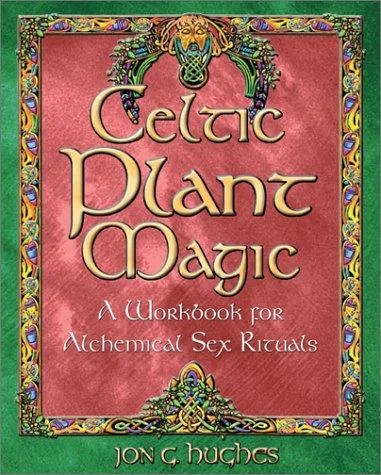
Jon G. Hughes's 'Celtic Plant Magic' details the use of plants in ancient Celtic healing, divination, and ritual.
This book examines the connections between plants and ancient Celtic practices. It looks at how people in that era understood the mystical and medicinal aspects of the plant world. Hughes brings together folklore, herbal knowledge, and the inherent magic found in nature. Readers will learn about specific plants, such as Rowan for protection and Mugwort for transformation.
The text invites those interested in reconnecting with natural cycles and understanding the energies within plants. It aims to show how this knowledge can be used for personal development and spiritual aims. The book presents a view of nature where each plant has a unique quality and a spiritual dimension.
Within the broader field of Western esotericism, 'Celtic Plant Magic' fits into traditions that seek to recover and practice pre-Christian European nature spirituality. It draws upon reconstructed or imagined Celtic beliefs concerning the animate world, particularly the perceived intelligence and power within plants. This aligns with modern pagan and animistic practices that emphasize direct engagement with the natural environment for magical and spiritual ends, moving beyond purely intellectual study to a more embodied, experiential approach to plant lore.
💡 Why Read This Book?
Embark on a journey to unlock the hidden magic of the plant kingdom. 'Celtic Plant Magic' offers ancient wisdom for modern practitioners, revealing the spiritual and ritualistic power of herbs. Ideal for seekers of earth-based spirituality, folklorists, and anyone wishing to deepen their connection to nature's potent forces. Learn to harness the subtle energies of plants for healing and transformation.
⭐ Reader Reviews
Honest opinions from readers who have explored this book.
❓ Frequently Asked Questions
What is the primary focus of Celtic Plant Magic?
The book focuses on the mystical and magical uses of plants within the context of ancient Celtic traditions, exploring their spiritual significance, ritualistic applications, and folkloric associations beyond their medicinal properties.
Is this book suitable for beginners in magic?
Yes, while it delves into esoteric knowledge, the book is accessible to beginners interested in plant magic and Celtic lore, providing a solid foundation for understanding these interconnected practices.
Does the book offer practical exercises or rituals?
Indeed. 'Celtic Plant Magic' provides guidance on engaging with plant energies, including practical advice for rituals, spellcraft, and personal development through the use of specific herbs and their symbolic meanings.
What is the relationship between plants and Celtic spirituality explored in this book?
The book explores the sacred relationship between plants and Celtic spirituality, viewing them as conduits of divine energy, allies in magical workings, and integral components of their cosmology and healing practices.
Can this book help in understanding medicinal properties?
While its primary focus is magical and spiritual, the book touches upon the historical and traditional medicinal uses of plants, offering a holistic view that integrates healing with occult practices.
🔮 Key Themes & Symbolism
The Sacred Green: Plants as Spiritual Allies
This theme explores the profound spiritual connection between the ancient Celts and the plant world, viewing flora not merely as resources but as sentient beings imbued with divine essence. It explores how specific plants were revered, consulted, and utilized as allies in spiritual journeys, divinatory practices, and communion with the Otherworld, highlighting the animistic worldview that saw life and spirit in every leaf and root.
Whispers of the Sidhe: Folklore and Enchantment
Here, we uncover the wide range of folklore woven around Celtic plants, revealing their association with fairies, elemental spirits, and ancient deities. The theme examines how plants served as potent talismans, protective charms, and ingredients in magical brews designed to influence luck, ward off malevolent forces, and attract benevolent energies. It’s an exploration of the enchanted narratives that imbue botanical elements with mystical power and symbolic meaning.
The Verdant Altar: Ritual and Practical Application
This crucial theme focuses on the tangible application of Celtic plant magic. It guides the reader through the construction of a verdant altar, the preparation of magical tinctures and incenses, and the performance of specific rituals designed to harness the unique energies of various plants. Emphasis is placed on ethical engagement with plant spirits and the mindful integration of herbal magic into contemporary spiritual practice for healing and empowerment.
💬 Memorable Quotes
Direct passages from the work, attributed to the author.
“Each bloom is a whispered prayer to the sky, each root a grounding anchor to the earth.”
— This highlights the dual nature of plants as conduits between the celestial and terrestrial realms, embodying both aspiration and stability.
“To know a plant is to know a spirit; to use it is to forge a pact.”
— This emphasizes the animistic perspective, viewing plants as conscious entities with whom one can form a reciprocal, spiritual relationship through magical practice.
“The magic of the green is the oldest magic, a language spoken before words.”
— This positions plant magic as primordial and instinctual, predating human language and representing a fundamental force of existence.
“In the herb's subtle scent lies the key to unlocking hidden realms.”
— This suggests that the aromatic properties of plants hold potent energetic signatures capable of altering consciousness and facilitating access to other dimensions or states of awareness.
💡 Key Ideas
Editorial paraphrase of the work's core concepts — not direct quotes.
The forest floor is a forgotten library, its pages written in leaf and root.
This quote suggests that nature, particularly the plant kingdom, holds ancient knowledge and wisdom waiting to be deciphered, much like a hidden archive.
🌙 Esoteric Significance
Tradition
This work draws heavily from the esoteric traditions of Celtic shamanism and Druidic practices, which emphasize a deep, animistic connection with nature. It aligns with traditions that view the natural world as alive with spirit and energy, using plants as primary mediators for spiritual communion, healing, and magical manifestation. The emphasis is on understanding the subtle energetic qualities of plants and their role in aligning the practitioner with the elemental forces and the cycles of the earth.
Symbolism
Central to the esoteric significance are the rich symbolic meanings attributed to each plant within Celtic culture. For instance, Rowan symbolizes protection and initiation, while Mugwort is associated with divination and psychic awareness. These plants are not just physical entities but carry layers of meaning tied to mythology, lunar cycles, and the human spiritual journey. Their symbolism acts as a key to understanding their magical potential and their role in rituals aimed at transformation, healing, and working through the unseen realms.
Modern Relevance
In an age increasingly disconnected from nature, 'Celtic Plant Magic' offers a vital pathway back to earth-based spirituality. Its modern relevance lies in providing practical tools and a profound philosophical framework for individuals seeking to deepen their connection to the natural world, harness its inherent energies, and cultivate personal well-being. It empowers practitioners to engage with plant allies for healing, intuition enhancement, and a more grounded, spiritually rich existence, bridging ancient wisdom with contemporary needs.
👥 Who Should Read This Book
This book is a treasure for a diverse audience. **Beginners** seeking an accessible entry into earth-based magic and Celtic spirituality will find a welcoming and informative guide. **Scholars** of folklore, ethnobotany, and ancient history will appreciate the meticulous research and contextualization of plant lore. **Seekers** of spiritual connection and personal growth will discover potent methods for deepening their relationship with nature and the divine. **Practitioners** of witchcraft, herbalism, and ritual magic will find invaluable insights and practical applications to enrich their craft, offering new avenues for spellwork and energetic attunement.
📜 Historical Context
The lore and practices detailed in 'Celtic Plant Magic' are deeply rooted in the historical and cultural field of the Celtic peoples, spanning from the Iron Age through the early medieval period and influencing later folk traditions. This era was characterized by a profound connection to the natural world, where cosmology, healing, and magic were intrinsically linked to the cycles of nature and the perceived spirits inhabiting it. The Celts possessed a sophisticated understanding of herbalism, not only for medicinal purposes but for spiritual and ritualistic applications. Their worldview, often animistic, imbued plants with consciousness and agency, making them vital components of their spiritual practices, including divination, protection, and communion with the Otherworld. The book draws upon surviving fragments of this rich heritage, including bardic traditions, folklore, and archaeological evidence, to reconstruct a picture of how plants were central to the lived spiritual experience of these ancient cultures.
📔 Journal Prompts
Reflect on your earliest memories of connecting with a specific plant. What emotions or sensations did it evoke?
Choose one plant featured in the book and meditate on its symbolic meaning. How does this symbolism resonate with your current life path?
Imagine you are a Celtic shaman. How would you approach a plant for guidance or healing? Write a dialogue.
What personal 'pact' might you be willing to forge with a plant ally, and what are you offering in return?
Consider a plant readily available in your environment. What hidden magical properties might it possess, beyond its common uses?
🗂️ Glossary
Animism
The belief that all natural objects, phenomena, and the universe itself possess an independent spirit or soul. In Celtic plant magic, it signifies the view that plants are living beings with consciousness and spiritual essence.
Sidhe
In Irish folklore, the Sidhe (pronounced 'shee') are supernatural beings, often associated with fairies or the 'people of the mounds.' They are believed to inhabit the Otherworld and have close ties to the natural landscape, including plants.
Otherworld
A parallel field of existence in Celtic mythology, often depicted as a land of eternal youth, abundance, and magic. Plants were sometimes seen as gateways or connections to the Otherworld.
Talismans
Objects believed to possess magical properties and provide protection or bring good fortune. In Celtic plant magic, specific herbs or parts of plants were often used to create potent talismans.
Divination
The practice of seeking knowledge of the future or the unknown by supernatural means. Certain plants were traditionally used in Celtic divination rituals for insight and prophecy.
This book appears in 3 collections
🔮 Readers Also Liked
Browse all →





More by Jon G. Hughes
All books →

From the “Ritual Magic” Collection
View all →





More Free Magic & Ritual Books
View all →