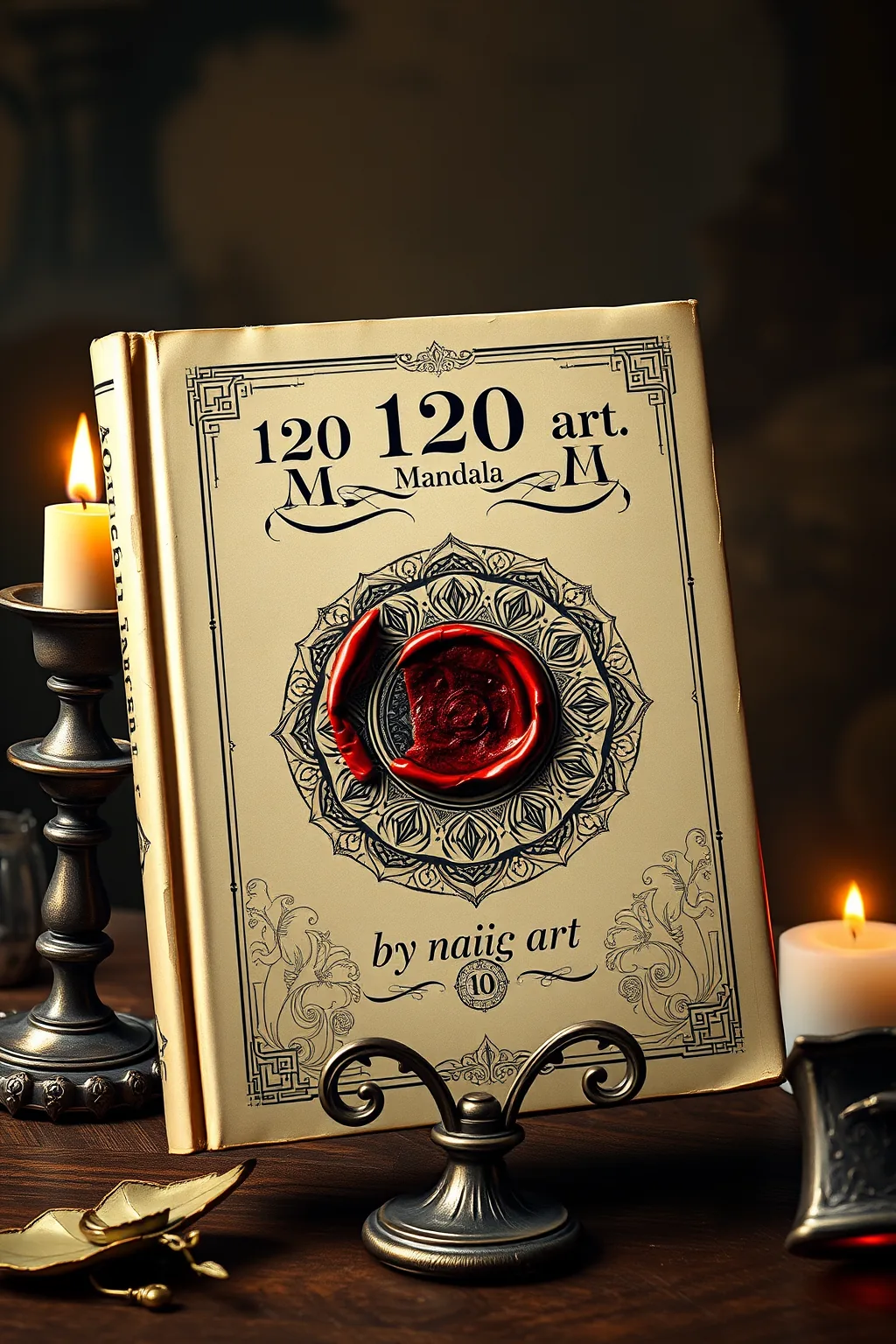
Adult Coloring Book 120 Mandala
 61
61

Adult Coloring Book 120 Mandala


By Balthazar Finch (Senior Critic, Occult Philosophy) — This '120 Mandala' coloring book is a revelation for the modern mystic. Eschewing superficial aesthetics, magic art has curated a collection of mandalas that resonate with palpable esoteric energy. Each design acts as a visual key, unlocking pathways to contemplation and inner gnosis. The sheer variety and depth of symbolism promise an engaging experience for both neophytes seeking accessible spiritual tools and seasoned practitioners looking for fresh meditative anchors. It’s a testament to the enduring power of sacred geometry in fostering self-discovery. Highly recommended for those seeking solace and insight through focused, mindful creation.
📝 Description
61
Magic Art's 120 Mandala Adult Coloring Book presents mandalas as visual keys to the subconscious.
This coloring book contains 120 mandala designs. The author, Magic Art, intends these patterns to serve as more than simple artistic endeavors. Each mandala is presented as a structured arrangement of ancient symbols and archetypal forms. Coloring these designs aims to quiet the mind, facilitating meditative states and intuitive awareness.
The act of coloring is framed as a way to engage with a symbolic visual language. This process is meant to awaken inner intuition and cultivate a sense of inner peace. The book invites individuals interested in spiritual growth and self-discovery to use the mandalas for connection with broader concepts of consciousness. The coloring activity itself is described as a form of personal transformation, uncovering underlying patterns within existence.
Mandala art has long been used in various esoteric traditions, notably Tibetan Buddhism, as a tool for spiritual practice and contemplation. These circular designs represent the cosmos, the self, and the divine, acting as visual aids to focus the mind and facilitate meditative experiences. In Western esoteric thought, mandalas are also employed for psychological exploration and as a means to access deeper layers of consciousness. This coloring book draws upon these traditions, offering accessible geometric forms intended to aid in self-reflection and a connection to universal patterns.
💡 Why Read This Book?
Unlock inner peace and discover hidden wisdom through the ancient art of mandala coloring. This book offers a unique meditative practice, fostering focus, creativity, and spiritual connection. It's an accessible entry point into esoteric symbolism for seekers of all levels, providing a tangible path to self-discovery and the cultivation of inner harmony. Engage with sacred geometry and awaken your intuition.
⭐ Reader Reviews
Honest opinions from readers who have explored this book.
❓ Frequently Asked Questions
What is the primary benefit of coloring mandalas from this book?
The primary benefit is the cultivation of a deep meditative state, enhanced focus, and the unlocking of subconscious insights through the engagement with sacred geometric patterns and ancient symbolism.
Are there specific esoteric traditions represented in the mandalas?
While not explicitly tied to one single tradition, the mandalas draw upon universal archetypal patterns found in various esoteric philosophies, including elements of Hermeticism, Kabbalah, and Eastern spiritual practices.
What materials are recommended for coloring?
High-quality colored pencils, fine-tip markers, or pastels are recommended to best capture the intricate details and vibrant energies of each mandala design. Experimentation is encouraged.
Can this book be used for ritualistic purposes?
Absolutely. The focused act of coloring can be incorporated into personal rituals for intention setting, meditation, or as a visual anchor for spiritual practices, deepening their efficacy.
Is this book suitable for beginners in mindfulness or esoteric studies?
Yes, it is exceptionally well-suited for beginners. The intuitive nature of coloring makes it an accessible entry point to mindfulness, meditation, and the exploration of symbolic language.
🔮 Key Themes & Symbolism
Sacred Geometry and Cosmic Order
This theme explores the profound language of sacred geometry, where each circle, line, and pattern within the mandalas represents fundamental principles of universal creation and order. The symmetrical and intricate designs are visual manifestations of the underlying cosmic blueprint, offering a tangible connection to the harmonious structures that govern reality. By coloring these forms, readers are invited to contemplate the interconnectedness of all things and the mathematical elegance inherent in the universe, fostering a sense of awe and understanding of our place within this grand design.
The Alchemical Journey of Transformation
The act of coloring the mandalas serves as a metaphor for personal alchemy – the process of transforming the mundane into the luminous. As colors are applied and the designs are completed, it symbolizes the integration of conscious and subconscious elements, the refinement of the self, and the emergence of inner potential. This theme encourages a mindful approach, where each stroke is an intentional step in a personal spiritual evolution, leading to greater self-awareness, emotional balance, and the manifestation of one's highest aspirations.
Unlocking the Subconscious and Intuition
Mandalas are powerful tools for accessing the deeper domains of the mind. Their intricate and repetitive patterns facilitate a state of focused attention, quieting the discursive intellect and opening channels to the subconscious. This theme highlights how the coloring process acts as a bridge, allowing intuitive insights, forgotten wisdom, and archetypal energies to surface. By engaging with these visual dialogues, readers can cultivate a stronger connection to their inner knowing, enhancing creativity, problem-solving abilities, and overall spiritual perception.
💬 Memorable Quotes
Direct passages from the work, attributed to the author.
“Color the silence, reveal the truth.”
— This suggests that the act of mindful coloring is not just about adding hues, but about actively engaging with the quiet spaces within, allowing hidden truths and insights to emerge.
“Each line a prayer, each shade a step.”
— This highlights the spiritual and intentional nature of the coloring process, framing each action as a devotional act leading towards spiritual progress and realization.
“The pattern within mirrors the pattern without.”
— This speaks to the Hermetic principle of 'As Above, So Below,' suggesting a profound interconnectedness between the internal field of the mind and the external reality we experience.
“Find your center, find your cosmos.”
— This underscores the mandala's function as a tool for centering oneself, implying that by achieving inner equilibrium, one can perceive and connect with the vastness of the universe.
💡 Key Ideas
Editorial paraphrase of the work's core concepts — not direct quotes.
Within the circle, the universe unfolds.
This quote emphasizes the mandala as a microcosm, reflecting the entirety of existence within its bounded form, suggesting that understanding the smallest part can lead to understanding the whole.
🌙 Esoteric Significance
Tradition
While universally applicable, the mandalas in this collection echo the principles found in Vajrayana Buddhism, where they are used as intricate 'deities' palaces' for visualizing enlightened beings and achieving spiritual realization. They also draw from the Hermetic tradition's emphasis on sacred geometry and the divine order of the cosmos, and the Kabbalistic Tree of Life's symbolic representation of creation and consciousness.
Symbolism
Key symbols include the circle (unity, eternity, the divine), the square (earthly realm, stability), radiating lines (energy, expansion), and intricate geometric patterns (cosmic order, interconnectedness). Each element is imbued with meaning, designed to engage the viewer on a subconscious level and facilitate contemplation of fundamental spiritual truths.
Modern Relevance
In our fast-paced, often chaotic modern world, mandalas offer a vital anchor for mindfulness, stress reduction, and mental clarity. They provide a tangible, accessible pathway to meditative practice and self-exploration, allowing individuals to connect with a sense of inner peace and purpose amidst external pressures. This ancient art form remains profoundly relevant for cultivating well-being and spiritual awareness.
👥 Who Should Read This Book
This '120 Mandala' coloring book is a treasure for a diverse array of individuals. For the absolute beginner, it offers a gentle and intuitive introduction to mindfulness and meditative practices, requiring no prior experience. Seekers of spiritual growth will find it a profound tool for self-discovery, intuition enhancement, and connecting with universal energies. Scholars and practitioners of esoteric traditions will appreciate the depth of symbolism and its potential application in ritual and contemplation. Even those simply seeking stress relief and a creative outlet will find immense value in the calming and engaging nature of these intricate designs.
📜 Historical Context
The mandala, a Sanskrit word meaning 'circle,' has a lineage stretching back millennia, deeply embedded in the spiritual and artistic traditions of Hinduism and Buddhism. Historically, mandalas were not mere decorations but served as sacred diagrams, crucial for meditation, ritual, and initiation. They functioned as cosmological maps, visual representations of the universe and the divine, used by monks and mystics to aid in contemplation and to achieve enlightenment. During the 20th century, Carl Jung rediscovered the psychological significance of mandalas, recognizing their spontaneous emergence in the dreams and art of individuals undergoing psychological integration. He posited them as archetypal symbols of the Self, representing the totality of the psyche. The modern resurgence of mandalas as adult coloring books taps into this long history, translating ancient spiritual tools into accessible contemporary practices for mindfulness, stress reduction, and personal exploration.
📔 Journal Prompts
As you color this mandala, what dominant emotions or thoughts arise? Record them without judgment.
What does the central motif of this mandala symbolize for you in your current life journey?
If this mandala were a message from your higher self, what would it be saying?
Describe the feeling of completion as you finish coloring a section. How does this translate to completing tasks in your life?
What new colors or patterns are you drawn to explore, and what might this suggest about areas of your life needing attention?
🗂️ Glossary
Mandala
A spiritual and ritual symbol in Hinduism and Buddhism, representing the universe. It is typically a geometric configuration of symbols, often circular, used for meditation and to aid in achieving spiritual enlightenment.
Sacred Geometry
The study of geometric forms and patterns found in nature and the universe, believed to hold symbolic and spiritual significance, reflecting the underlying order and harmony of creation.
Archetype
A universal, inherited pattern of thought or imagery derived from the collective unconscious, which influences human behavior and understanding of the world. In mandalas, they represent fundamental aspects of the psyche.
Gnosis
Knowledge of spiritual mysteries, often attained through direct experience or intuition rather than through empirical means. It represents a profound, personal understanding of divine truths.
Alchemy
An ancient philosophical and proto-scientific tradition aimed at purifying, maturing, and perfecting certain materials. Esoterically, it represents the transformation of the self and the attainment of spiritual perfection.
This book appears in 2 collections
🔮 Readers Also Liked
Browse all →









From the “Ceremonial Magic” Collection
View all →








More Free Magic & Ritual Books
View all →