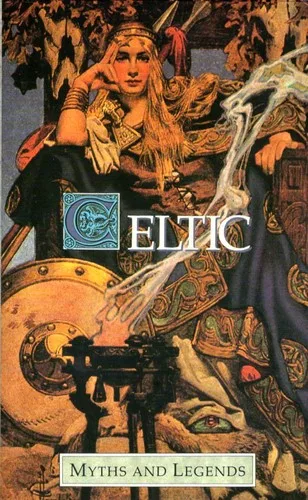
Celtic myths and legends
 71
71

Celtic myths and legends
Rolleston's "Celtic Myths and Legends" offers a solid, if somewhat dated, entry into the study of Irish and Welsh mythology. Its strength lies in its comprehensive cataloging of the major sagas and figures, providing a valuable resource for those new to the material. The organization, while academic, successfully presents the breadth of the mythological landscape. However, the work occasionally betrays the scholarly biases of its original publication era, sometimes presenting interpretations as definitive where modern scholarship might offer more nuanced perspectives. A particularly compelling section details the complex genealogies of the Tuatha Dé Danann, illustrating the intricate cosmogony. While it serves as a foundational text, readers should supplement it with contemporary analyses for a fuller understanding.
📝 Description
71
Thomas William Hazen Rolleston's "Celtic Myths and Legends" was published in 1990.
This book compiles and examines mythological narratives from ancient and medieval Ireland and Wales. It goes beyond a simple collection of stories to investigate the cultural foundations of these tales, focusing on the gods, heroes, and supernatural beings that shaped the Celtic imagination. Rolleston places these myths within their historical and social settings, giving readers a thorough view of a significant part of Western folklore.
The work is suitable for students of comparative mythology, folklore enthusiasts, and anyone interested in the pre-Christian spiritual beliefs of the British Isles. It will appeal to those who want to understand how enduring Celtic motifs appear in literature, art, and contemporary spiritual practices. Readers curious about the warrior spirit, the concept of the Otherworld, and the roles of druids and bards in ancient Celtic society will find ample material.
Published in 1990 amidst a resurgence of interest in Celtic studies, Rolleston's work engages with the textual traditions of Ireland and Wales. It seeks to reconstruct aspects of Celtic belief systems by examining surviving manuscripts like the Lebor Gabála Érenn. The book analyzes these narratives within their historical and social contexts, contributing to an understanding of pre-Christian spiritual landscapes and their influence on later traditions.
💡 Why Read This Book?
• Gain a structured understanding of the Tuatha Dé Danann, their lineage, and their conflicts as detailed in the mythological cycle, offering a glimpse into ancient Indo-European divine structures. • Explore the heroic sagas of figures like Cú Chulainn and Fionn mac Cumhaill, understanding the warrior ethos and societal values embedded within these foundational Irish narratives. • Comprehend the concept of the Otherworld (Tír na nÓg) and its pervasive influence across Celtic tales, illuminating a distinct perspective on cosmology and the afterlife.
⭐ Reader Reviews
Honest opinions from readers who have explored this book.
❓ Frequently Asked Questions
What are the main mythological cycles covered in Rolleston's Celtic Myths and Legends?
The book primarily focuses on the Mythological Cycle (Tuatha Dé Danann), the Ulster Cycle (Cú Chulainn), and the Fenian Cycle (Fionn mac Cumhaill), alongside historical legends and tales of the Otherworld.
When was Thomas William Hazen Rolleston's Celtic Myths and Legends first published?
The work by Thomas William Hazen Rolleston was first published in 1990, compiling and analyzing earlier research and narrative traditions.
Does the book discuss the role of druids in Celtic mythology?
Yes, Rolleston's work examines the presence and function of druids within the mythological narratives, often portraying them as keepers of knowledge, advisors, and figures of spiritual authority.
What is the significance of the Otherworld in Celtic myths according to Rolleston?
Rolleston explains the Otherworld, often referred to as Tír na nÓg, as a parallel realm of existence, a land of eternal youth and beauty, frequently accessed by mortals through magical means or encounters with supernatural beings.
Is this book suitable for beginners interested in Celtic folklore?
Absolutely. The book provides a foundational overview and detailed explanations of key figures and stories, making it an accessible starting point for newcomers to Celtic myths and legends.
Does Rolleston reference specific ancient texts?
Yes, the work draws upon and discusses various medieval Irish and Welsh manuscripts, including references to texts like the Lebor Gabála Érenn and the Ulster Cycle tales.
🔮 Key Themes & Symbolism
The Tuatha Dé Danann Pantheon
Rolleston meticulously details the origins and pantheon of the Tuatha Dé Danann, the supernatural race who inhabited Ireland before the Milesians. This section illuminates their complex divine hierarchy, their magical prowess, and their cyclical battles, particularly against the Fomorians. It offers a look into a pre-Christian cosmology where deities actively shaped the mortal world, providing a foundation for understanding Irish divine narratives and their echoes in later folklore and esoteric traditions concerning ancient European deities.
Heroic Cycles and Warrior Ethos
The book extensively covers the heroic sagas, focusing on figures like Cú Chulainn of the Ulster Cycle and Fionn mac Cumhaill and the Fianna of the Fenian Cycle. Rolleston analyzes their martial prowess, their adherence to codes of honor, and their confrontations with supernatural foes. This exploration provides insight into the valorization of martial skill and loyalty within ancient Celtic societies, offering a lens through which to view the archetype of the hero and its enduring presence in Western literature and thought.
The Otherworld and Cosmology
A central theme is the concept of the Otherworld, often depicted as Tír na nÓg, a mystical realm existing parallel to the human one. Rolleston explains its elusive nature, its inhabitants, and the frequent interactions between mortals and the beings of this realm. This theme is crucial for understanding the Celtic worldview, which seamlessly blended the mundane and the magical, the living and the dead, and the earthly and the otherworldly, influencing concepts of liminality and spiritual journeys.
Mythic Transmission and Interpretation
Rolleston addresses the challenges of studying Celtic mythology, arising from the oral tradition and the eventual recording of tales in medieval Christian monasteries. He discusses the process of compilation and the potential for Christian influence on the narratives. This theme offers a meta-commentary on the nature of myth, its evolution, and the critical methods required to approach ancient texts, relevant for scholars of folklore and comparative religion.
💬 Memorable Quotes
Direct passages from the work, attributed to the author.
“The Tuatha Dé Danann were the gods of Ireland, a people skilled in magic and warfare.”
— This statement captures the dual nature attributed to the primary divine race in Irish mythology – embodying both celestial power and martial capability, reflecting a worldview where the sacred was intertwined with the physical.
“Cú Chulainn's battle frenzy, the riastrad, transformed him into a terrifying warrior.”
— This highlights the supernatural transformation central to the hero's myth, illustrating the blurring of human and inhuman capacities in the face of extreme combat, a key element in heroic narratives.
“The druids held significant spiritual and political influence in ancient Celtic society.”
— This reflects the historical and mythological understanding of druids as central figures, not just priests, but also learned individuals wielding considerable authority within their communities.
“The transmission of these myths was heavily influenced by the monastic scribes who recorded them.”
— This interpretation underscores the critical challenge in studying Celtic lore: the filter of Christian chroniclers who preserved the pagan narratives, potentially altering their original context or intent.
💡 Key Ideas
Editorial paraphrase of the work's core concepts — not direct quotes.
Tír na nÓg represents a land beyond the reach of time and decay.
This paraphrase points to the idealized nature of the Celtic Otherworld, serving as an eternal counterpoint to the mortal realm's transience and suffering, a common motif in myths of paradise.
🌙 Esoteric Significance
Tradition
While not strictly aligned with a single esoteric lineage like Hermeticism or Theosophy, Rolleston's work taps into the broader stream of Western Esotericism's fascination with ancient European mythologies and pre-Christian spiritualities. It provides source material and conceptual frameworks that resonate with traditions seeking roots in indigenous European beliefs, offering archetypal patterns and narratives that can be interpreted through symbolic and psychological lenses, akin to how Jungian psychology or certain Neopagan movements engage with myth.
Symbolism
Key symbols explored include the **Otherworld (Tír na nÓg)**, representing an idealized spiritual or paradisiacal realm beyond mortal limitations, often accessed through liminal spaces or magical encounters. The **triskele** or triple spiral, a recurring motif in Celtic art, often symbolizes concepts of motion, the cycle of life, death, and rebirth, or the three realms (earth, sea, sky). The **sacred tree** or **well** frequently appears as a nexus between worlds, a source of wisdom, or a site of divine manifestation, embodying the connection between the terrestrial and the supernatural.
Modern Relevance
Contemporary practitioners of Celtic Reconstructionism, Neopaganism, and various forms of modern shamanism often draw directly from the narratives and cosmology presented by Rolleston. His work serves as a foundational text for understanding the archetypes and spiritual concepts that inform these modern traditions. Furthermore, thinkers in comparative mythology and depth psychology continue to analyze the enduring power of these Celtic archetypes, finding relevance in their exploration of heroism, the sacred feminine, and the human relationship with the natural and supernatural worlds.
👥 Who Should Read This Book
• Students of comparative mythology and folklore seeking a comprehensive overview of Irish and Welsh narrative traditions. • Aspiring practitioners of Celtic-inspired spiritual paths looking to understand the foundational myths and deities of these traditions. • Readers interested in the archetypal patterns of heroism, magic, and the relationship between the mortal and spirit realms within ancient European cultures.
📜 Historical Context
Thomas William Hazen Rolleston's "Celtic Myths and Legends," published in 1990, emerged during a period of sustained academic interest in Celtic studies. The mid-to-late 20th century saw scholars increasingly re-examining the rich manuscript traditions of Ireland and Wales, moving beyond earlier, more romanticized interpretations. Rolleston’s work engaged with the primary sources, such as the Lebor Gabála Érenn, and the heroic cycles, situating them within a framework that acknowledged both their cultural specificity and their broader Indo-European connections. This era also featured robust debate between mythological and historical-critical schools of interpretation. While Rolleston focused on the narrative and symbolic dimensions, contemporaries like Proinsias Mac Cana were also producing influential works on the subject. The reception of such studies was generally positive within academic circles, contributing to a more nuanced understanding of pre-Christian Celtic societies, though the esoteric and symbolic aspects often found a wider audience beyond purely academic discourse.
📔 Journal Prompts
The Tuatha Dé Danann's arrival and dominion over Ireland.
Cú Chulainn's heroic deeds and their consequences.
The nature and accessibility of the Otherworld (Tír na nÓg).
The role and perceived powers of druids in Celtic society.
Reflections on the Fenian Cycle's emphasis on warrior camaraderie.
🗂️ Glossary
Tuatha Dé Danann
Literally 'Tribes of the Goddess Danu,' a mythical race in Irish folklore said to be the gods of Ireland before the arrival of the Milesians. They were skilled in magic and possessed supernatural abilities.
Fomorians
A mythical race in Irish mythology, often depicted as monstrous or chaotic beings who warred with the Tuatha Dé Danann. They represent primal, often destructive, forces.
Ulster Cycle
One of the major cycles of Old Irish heroic literature, primarily focusing on the adventures and battles of the heroes of Ulster, most famously Cú Chulainn.
Fenian Cycle
Another major cycle of Irish heroic tales, centered around the warrior band known as the Fianna, led by Fionn mac Cumhaill. These stories often involve hunting, adventure, and encounters with the supernatural.
Tír na nÓg
Literally 'Land of Youth,' a mythical island or realm in Celtic mythology, often depicted as a paradise where inhabitants are eternally young and free from suffering.
Druid
A member of the learned class among the ancient Celts, functioning as priests, diviners, judges, and lore-keepers. Their exact role and beliefs are subject to historical interpretation.
Lebor Gabála Érenn
The 'Book of Invasions,' a medieval Irish compilation that chronicles the mythical history of Ireland, detailing successive waves of inhabitants and their conflicts.
🔮 Readers Also Liked
Browse all →






More by Thomas William Hazen Rolleston
All books →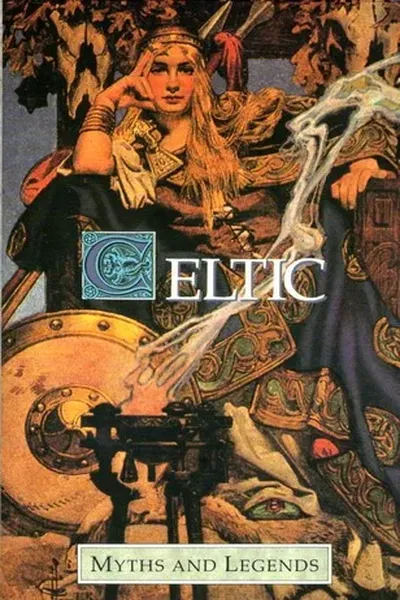
More Free Occult Philosophy Books
View all →