A Chakra & Kundalini workbook
 73
73

A Chakra & Kundalini workbook
Jonn Mumford’s A Chakra & Kundalini Workbook presents a direct, exercise-driven method for engaging with India’s subtle energy system. Unlike many purely theoretical treatises, Mumford prioritizes practical application, a strength that shines through in sections detailing specific meditations for each chakra. However, the text occasionally feels dense, with its first edition's layout from 2002 not always aiding clarity for the uninitiated. The exploration of the Muladhara chakra’s connection to grounding and survival instincts, for example, is well-articulated but requires focused reader attention. The work’s primary value lies in its systematic approach, offering a tangible path for those willing to commit to the prescribed practices. It serves as a functional manual rather than an inspirational narrative.
📝 Description
73
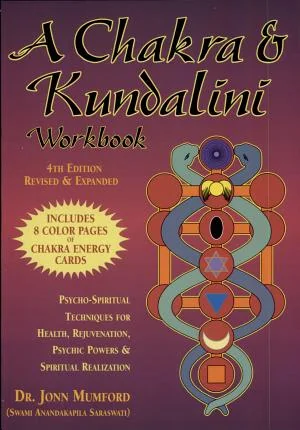
Jonn Mumford published A Chakra & Kundalini Workbook in 2002, offering practical exercises for energy work.
This workbook, first appearing in 2002, provides direct methods for engaging with the body's subtle energy centers and the Kundalini force. It moves past simple theory to offer concrete guidance and exercises for personal experience. The text is structured for individuals who are already practicing or beginning to study esoteric anatomy, yoga philosophy beyond asana, and internal energy meditation. It is particularly useful for those looking for a systematic way to connect theoretical understanding with their own energetic growth.
The book focuses on the seven main chakras, detailing their specific qualities and the nature of Kundalini energy. Readers will find instructions on how to awaken, balance, and channel these energies for spiritual insight and overall well-being. It also touches upon the physiological and psychological changes that can arise from these practices.
Published in the early 2000s, Mumford's workbook emerged during a time of sustained Western interest in Eastern spiritual systems. It follows in the lineage of earlier figures who sought to adapt yogic concepts for Western practitioners. Unlike purely academic or devotional texts, this work emphasizes practical application and direct experience, aiming to clarify complex yogic ideas for those engaged in personal spiritual development.
💡 Why Read This Book?
• Learn specific techniques for awakening and balancing the seven primary chakras, moving beyond abstract concepts to practical, guided exercises as presented in the workbook's numerous practice sections. • Understand the nature and potential effects of Kundalini energy through Mumford’s structured approach, offering a distinct perspective from purely philosophical texts. • Engage with the historical context of early 2000s Western esoteric studies through Mumford’s synthesis of yogic principles, as evidenced by the book's publication date and its focus on experiential learning.
⭐ Reader Reviews
Honest opinions from readers who have explored this book.
❓ Frequently Asked Questions
What is the main difference between this workbook and other books on chakras?
This workbook by Jonn Mumford emphasizes practical exercises and direct experience, differentiating it from purely theoretical or historical accounts of chakras and Kundalini, originating from its 2002 publication.
Is A Chakra & Kundalini Workbook suitable for absolute beginners?
Yes, the book is structured as a workbook, guiding beginners through concepts and practices related to chakras and Kundalini with a systematic approach.
When was A Chakra & Kundalini Workbook first published?
The book was first published in 2002, reflecting a period of keen interest in practical esoteric studies in the West.
Who is the author, Jonn Mumford?
Jonn Mumford, also known as John Mumford, is an author who has written on subjects related to spiritual development and esoteric practices, with this workbook being a notable entry from 2002.
Does the book cover Kundalini awakening techniques?
Yes, the workbook explicitly addresses Kundalini, offering guidance and exercises for understanding and working with this primal spiritual energy.
What specific concepts does the book explore beyond chakras?
Beyond the seven primary chakras, the book delves into the concept of Kundalini, its associated energies, and methods for its conscious engagement and integration.
🔮 Key Themes & Symbolism
Chakra System Mechanics
The workbook meticulously details the function and energetic location of the seven primary chakras, moving from the Root (Muladhara) to the Crown (Sahasrara). It explains how each center influences physical, emotional, and spiritual states, providing specific exercises designed to stimulate, balance, and integrate their energies. This approach emphasizes a functional understanding, moving beyond mere symbolism to practical application for energetic hygiene and development.
Kundalini Force Dynamics
Central to the text is the exploration of Kundalini, the dormant spiritual energy residing at the base of the spine. The book outlines the potential pathways for its ascent through the Sushumna nadi and its interaction with the chakras. It addresses both the constructive and potentially challenging aspects of awakening this potent force, offering methods for safe and conscious engagement.
Experiential Esotericism
This work prioritizes direct, personal experience over abstract theorizing. It functions as a practical guide, encouraging readers to engage with the exercises and meditations presented. The goal is to foster an embodied understanding of the subtle energy system, transforming theoretical knowledge into lived reality through consistent practice, a hallmark of experiential esoteric traditions.
Energetic Anatomy Integration
The book aims to help readers integrate their understanding of energetic anatomy—chakras, nadis, and Kundalini—into their daily lives. It suggests how cultivating awareness and balance within these subtle energy centers can lead to greater psychological integration, enhanced intuition, and a more profound connection to one's spiritual path, as explored through its practical exercises.
💬 Memorable Quotes
Direct passages from the work, attributed to the author.
“The chakras are not merely abstract symbols but functional energy centers.”
— This statement underscores the workbook's practical orientation, suggesting that the chakras should be understood and worked with as active components of our energetic system, rather than solely as conceptual diagrams.
“Balancing the Root chakra fosters stability and security.”
— This interpretation points to the direct correlation presented in the book between the Muladhara chakra and foundational feelings of safety and groundedness in an individual's life.
“The Crown chakra is the gateway to higher consciousness.”
— This highlights the book's view of the Sahasrara chakra as the ultimate point of spiritual connection and transcendence within the human energetic system.
💡 Key Ideas
Editorial paraphrase of the work's core concepts — not direct quotes.
Kundalini requires preparation and careful guidance for a balanced ascent.
This paraphrased concept highlights the book's cautious approach to Kundalini, emphasizing that its awakening is not to be undertaken lightly and necessitates specific preparatory practices and informed direction.
Meditation on the Third Eye enhances intuitive perception.
This paraphrased concept illustrates how the workbook connects the Ajna chakra to the development of psychic abilities and inner knowing through focused meditative practices.
🌙 Esoteric Significance
Tradition
This work fits within the broad lineage of yogic and Tantric traditions as adapted for Western esoteric practice. It draws heavily from the Hatha Yoga Pradipika and similar classical texts concerning Kundalini and chakras, but reframes them within a format accessible to contemporary seekers. It departs from purely devotional or ritualistic approaches by emphasizing direct experiential engagement and psychological integration.
Symbolism
Key symbols include the lotus flower, representing the blossoming of consciousness as energy rises through the chakras, and the coiled serpent (Kundalini), symbolizing primal, latent spiritual power. The colors and geometric shapes associated with each chakra also serve as symbolic anchors for their specific energetic qualities and functions within the body's subtle anatomy.
Modern Relevance
Mumford's workbook remains relevant for contemporary practitioners of yoga, meditation, and energy work seeking structured guidance. It influences modern approaches to somatic psychology and embodied cognition, where the integration of mind and body through energetic awareness is a growing focus. Thinkers exploring consciousness and subtle energy continue to reference practical manuals like this one.
👥 Who Should Read This Book
• Aspiring practitioners of yoga and meditation seeking a practical guide to energetic anatomy, moving beyond basic postures to understand internal energy systems. • Students of esoteric philosophy interested in the practical application of chakra theory and Kundalini concepts, particularly those who prefer a hands-on, workbook approach. • Individuals exploring self-development and consciousness expansion who are looking for structured exercises to cultivate inner awareness and energetic balance.
📜 Historical Context
Published in 2002, Jonn Mumford's A Chakra & Kundalini Workbook emerged during a period when Western esoteric thought was increasingly seeking practical, experiential applications of Eastern spiritual systems. Building on the legacy of figures like Helena Blavatsky and the Theosophical Society’s popularization of yogic concepts, this era saw a proliferation of guides aimed at explaining practices like yoga and meditation for Western practitioners. Mumford’s work positioned itself within this trend, offering a structured, workbook format that contrasted with more philosophical or devotional texts. It arrived amidst a broader interest in mind-body connection, influenced by New Age movements and the continued academic study of comparative religion and consciousness, represented by scholars like Huston Smith who explored Eastern philosophies. The book aimed to provide a tangible methodology for engaging with subtle energies, differentiating itself from purely theoretical explorations.
📔 Journal Prompts
Reflect on the specific qualities of the Manipura chakra as described.
Consider the symbolism of the coiled serpent and its relation to personal potential.
Document your experience with the grounding exercises for the Muladhara.
How does the book's concept of the Sushumna nadi inform your understanding of energy flow?
Analyze the connection between the Ajna chakra and intuitive insights.
🗂️ Glossary
Chakra
Literally 'wheel' in Sanskrit, these are psycho-energetic centers within the subtle body, believed to govern various physical, emotional, and spiritual functions.
Kundalini
A primal spiritual energy, often depicted as a coiled serpent, believed to reside at the base of the spine and capable of ascending through the central energy channel.
Muladhara
The Root Chakra, located at the base of the spine, associated with grounding, security, and survival instincts.
Svadhisthana
The Sacral Chakra, located in the lower abdomen, related to creativity, sexuality, and emotional expression.
Manipura
The Solar Plexus Chakra, located in the upper abdomen, associated with personal power, will, and self-esteem.
Anahata
The Heart Chakra, located in the center of the chest, governing love, compassion, and relationships.
Vishuddha
The Throat Chakra, associated with communication, self-expression, and truth.
Ajna
The Third Eye Chakra, located between the eyebrows, linked to intuition, insight, and psychic perception.
Sahasrara
The Crown Chakra, located at the top of the head, representing spiritual connection and cosmic consciousness.
Nadi
Energy channels within the subtle body through which vital life force (prana) flows. The three main nadis are Ida, Pingala, and Sushumna.
Sushumna
The central energy channel in the spine, through which Kundalini is said to ascend.
🔮 Readers Also Liked
Browse all →









More Free Spiritual Development Books
View all →