Carefree Dignity
 72
72

Carefree Dignity
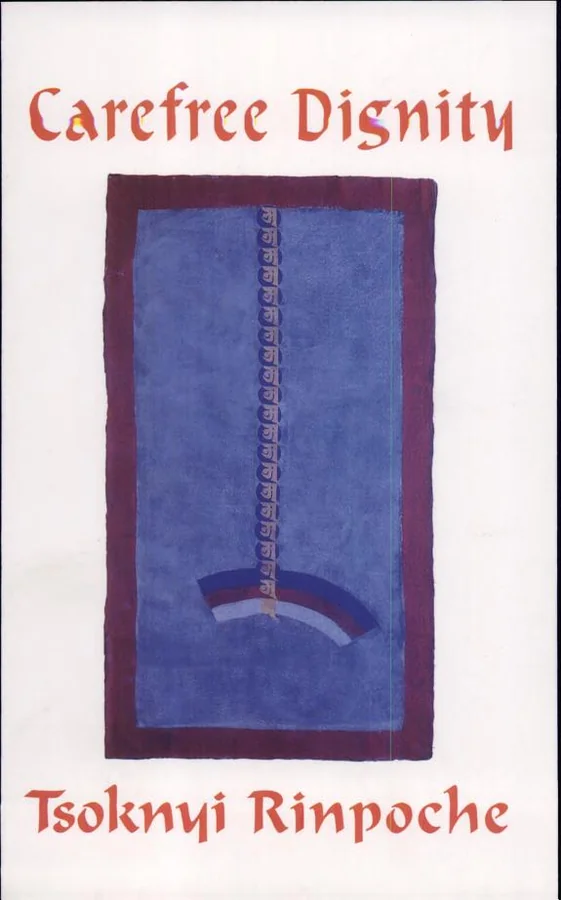
Tsoknyi Rinpoche’s 2004 work, Carefree Dignity, offers a potent antidote to the pervasive anxiety of modern life, presenting Buddhist teachings through the lens of an unshakeable inner spaciousness. Rinpoche, a reincarnate lama of the Nyingma tradition, speaks with the clarity of one who has lived these principles deeply. His explanation of 'carefreeness' as a profound inner freedom, rather than mere carelessness, is particularly striking, especially in his discussion of how this state allows for genuine compassion. A slight limitation might be that some readers accustomed to more academic Buddhist texts could find the direct, experiential approach less detailed on philosophical underpinnings. However, the strength of the book lies precisely in its practical, accessible wisdom. The concept of recognizing the mind’s innate clarity, even amidst mental afflictions, is powerfully conveyed. Carefree Dignity provides a vital, grounded perspective for spiritual practitioners.
📝 Description
72
Carefree Dignity, published in 2004, explains 'carefreeness' as inner spaciousness, not apathy.
Tsoknyi Rinpoche's 2004 book, Carefree Dignity, explains the Tibetan Buddhist concept of 'carefreeness' (ma-tsal-ba) not as a lack of concern, but as a profound inner spaciousness. This state arises from recognizing the nature of mind and allows individuals to engage with the world without internal limitations. Rinpoche, trained in the Nyingma lineage, connects these ideas to modern challenges, offering practical wisdom for contemporary life. The book is suited for practitioners of Tibetan Buddhism who wish to understand core principles like emptiness and compassion in today's world. It also offers guidance for those experiencing anxiety or stress, and for individuals interested in non-dual philosophies. The work articulates Mahayana Buddhist concepts in a way that is accessible, avoiding purely academic or ritualistic presentations.
This work emerges from the Nyingma tradition of Tibetan Buddhism, one of its oldest lineages. Tsoknyi Rinpoche, a recognized master, bridges traditional monastic education with the needs of Western students. The book translates complex Mahayana concepts, such as the recognition of mind's nature and the practice of 'pointing out instructions,' into a framework applicable to everyday life. It addresses the integration of spiritual insights, like the illusory nature of phenomena, and the cultivation of compassion, into daily activities.
💡 Why Read This Book?
• You will learn to distinguish between genuine inner freedom and mere apathy, a crucial distinction for authentic spiritual practice, as explained through Tsoknyi Rinpoche’s concept of 'carefreeness'. • You will gain practical methods for cultivating an unshakeable inner ease, even amidst difficult circumstances, directly informed by the Nyingma lineage teachings Rinpoche presents. • You will discover how recognizing the illusory nature of phenomena, as discussed in the book, can liberate you from reactive patterns and foster spontaneous compassion.
⭐ Reader Reviews
Honest opinions from readers who have explored this book.
❓ Frequently Asked Questions
What is the core message of Tsoknyi Rinpoche's Carefree Dignity?
The core message is that true 'carefreeness' is an internal state of spaciousness and freedom from constriction, enabling genuine compassion and engagement with life, rather than a lack of concern or responsibility.
How does Carefree Dignity differ from Western concepts of relaxation?
Unlike passive relaxation, 'carefreeness' in the book is an active, unshakeable inner ease cultivated through understanding the nature of mind, allowing one to meet challenges with clarity and equanimity.
What is Tsoknyi Rinpoche's background?
Tsoknyi Rinpoche is a recognized reincarnate lama from the Nyingma school of Tibetan Buddhism, educated in traditional monastic settings and teaching internationally since 1990.
Is Carefree Dignity suitable for beginners in Buddhism?
Yes, the book is written in an accessible style that makes complex Buddhist concepts understandable for those new to the tradition, while still offering depth for experienced practitioners.
What does the book say about dealing with difficult emotions?
It teaches that by recognizing the empty, luminous nature of mind, one can observe difficult emotions without being consumed by them, fostering a sense of spaciousness even during distress.
When was Carefree Dignity first published?
Carefree Dignity was first published on May 14, 2004, making it a relatively contemporary work in the field of Buddhist literature.
🔮 Key Themes & Symbolism
Inner Spaciousness
The central theme is cultivating a boundless inner space, termed 'carefreeness,' which is not apathy but a profound freedom from mental constriction. This spaciousness allows one to engage with the world without reactivity, stemming from an understanding of the mind's true nature. It’s about being open from within, rather than closed off by fear or attachment, enabling a more authentic and compassionate way of being.
The Nature of Mind
Rinpoche guides readers to recognize the mind’s inherent clarity and emptiness, moving beyond identification with fleeting thoughts and emotions. This understanding is key to achieving 'carefree dignity.' The work explains that phenomena, including our own mental states, are ultimately empty of inherent existence, a realization that liberates us from suffering.
Compassion from Freedom
Genuine compassion, according to the book, arises naturally from this state of inner freedom and spaciousness. When not bound by self-concern or reactivity, one can offer unfettered kindness and empathy. This contrasts with compassion that stems from obligation or pity, presenting it as an effortless outflow of recognizing shared humanity.
Integrating Practice
Carefree Dignity emphasizes the practical application of these insights into daily life. It’s not about escaping the world but about transforming one's relationship to it. The teachings encourage integrating the recognition of mind's nature and the practice of spaciousness into all activities, from mundane tasks to challenging interactions.
💬 Memorable Quotes
Direct passages from the work, attributed to the author.
“Being carefree, you can fit in anywhere. If you're not carefree you keep on bumping up against things. Your life becomes so narrow, so tight; it gets very claustrophobic.”
— This highlights the practical benefit of internal spaciousness: it allows for effortless interaction and adaptability, preventing the self-imposed limitations and anxieties that arise from a constricted inner state.
“Carefree doesn't mean careless. It is not that you don't care about others, not that you don't have compassion or are un-”
— This crucial distinction clarifies that 'carefreeness' is not indifference but a mature, unburdened way of relating to the world, where compassion is freely given without the weight of personal agitation.
“Carefree means being wide open from within, not constricted.”
— This succinctly defines the core concept: an internal state of openness and lack of tension, which is the foundation for genuine well-being and authentic engagement with life's experiences.
“If you're not carefree you keep on bumping up against things.”
— This illustrates the consequence of a lack of inner spaciousness—constant friction and conflict with external circumstances and other people, stemming from an internal rigidity.
“Your life becomes so narrow, so tight; it gets very claustrophobic.”
— This vividly describes the psychological experience of a constricted mind, emphasizing the feeling of being trapped and limited by one's own internal state, a state that 'carefreeness' aims to dissolve.
🌙 Esoteric Significance
Tradition
This work stems directly from the Nyingma school of Tibetan Buddhism, one of the oldest lineages. Its esoteric significance lies in its distillation of complex Dzogchen (Great Perfection) and Mahamudra principles into accessible teachings on the nature of mind and awareness. It departs from highly complex initiatory practices to offer a path focused on recognizing innate purity and spaciousness, aligning with the Nyingma emphasis on direct realization.
Symbolism
While not heavily reliant on overt symbolism in the Western esoteric sense, the book implicitly uses the concept of 'space' (Tibetan: nam mkha') as a potent symbol for the mind's boundless, unobstructed nature. The 'closeness' or 'narrowness' described represents the antithesis—a mind constricted by conceptual proliferation and attachment. The 'dignity' itself can be seen as the inherent purity and wakefulness of this fundamental awareness.
Modern Relevance
Contemporary mindfulness, secular Buddhism, and various somatic psychology approaches echo the principles articulated in Carefree Dignity. Thinkers and practitioners exploring non-dual awareness, the application of Buddhist psychology to mental health, and the cultivation of equanimity in stressful environments draw upon the accessible experiential wisdom Rinpoche offers. His emphasis on internal freedom appeals to current dialogues on resilience and well-being.
👥 Who Should Read This Book
• Practitioners of Tibetan Buddhism seeking to integrate the profound teachings of the Nyingma tradition into their daily lives, particularly those interested in understanding the nature of mind. • Individuals struggling with anxiety, stress, or feelings of being overwhelmed, who are looking for practical, spiritually-grounded tools to cultivate inner peace and resilience. • Students of comparative religion and philosophy interested in accessible explorations of Mahayana Buddhist concepts like emptiness and compassion from a recognized contemporary master.
📜 Historical Context
Carefree Dignity, published in 2004, emerged as Tibetan Buddhism gained significant traction in the West. Tsoknyi Rinpoche, a respected reincarnate lama from the Nyingma tradition who began teaching internationally in 1990, offered a contemporary voice to profound Mahayana Buddhist principles. This period saw many Westerners seeking spiritual teachings beyond traditional Western religious frameworks. Rinpoche's work differentiated itself by focusing on the direct experience of mind and the cultivation of inner freedom, presented in an accessible manner that resonated with those grappling with modern psychological stress. While academic scholars were dissecting Buddhist philosophy, Rinpoche's approach, exemplified in this book, provided practical, experiential guidance, making concepts like emptiness and compassion relatable to everyday life, distinguishing it from more scholastic or ritual-focused presentations.
📔 Journal Prompts
The experience of inner spaciousness versus mental constriction.
How the recognition of phenomena's illusory nature impacts daily decisions.
The distinction between genuine carefreeness and indifference in relationships.
Cultivating compassion from a place of inner freedom.
Applying the principle of 'wide open from within' to challenging situations.
🗂️ Glossary
Carefree Dignity
A state of unshakeable inner ease and spaciousness that arises from recognizing the nature of mind, allowing for genuine compassion and effortless engagement with life without inner constriction.
Nyingma Tradition
One of the oldest schools of Tibetan Buddhism, known for its emphasis on Dzogchen ('Great Perfection') teachings, which focus on the direct realization of the nature of mind.
Nature of Mind
In Tibetan Buddhism, this refers to the fundamental, pristine awareness that is inherently pure, luminous, and empty of conceptual elaboration or inherent existence.
Dzogchen
A central teaching in the Nyingma school, often translated as 'Great Perfection,' emphasizing the direct recognition of the mind's primordial, unconditioned state.
Pointing Out Instructions (ngo-sprod)
Specific instructions given by a qualified teacher to help a student directly recognize the nature of their own mind.
Phenomena
All observable things, experiences, and events, including thoughts and emotions, which in Buddhist philosophy are understood to be empty of inherent, independent existence.
Constriction
A state of mental or emotional tightness, limitation, or being closed off, often caused by fear, attachment, or misunderstanding the nature of reality.
This book appears in 1 collection
🔮 Readers Also Liked
Browse all →









From the “Tibetan Buddhism” Collection
View all →







More Free Occult Philosophy Books
View all →