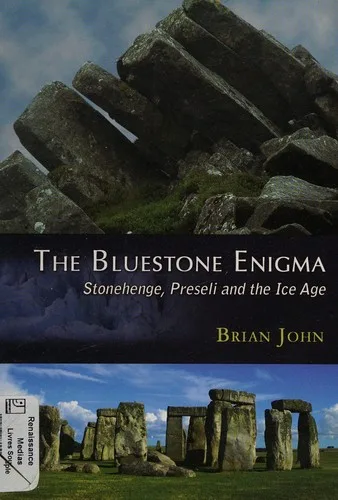
The Bluestone enigma
 81
81

The Bluestone enigma
Brian Stephen John’s *The Bluestone Enigma* offers a refreshing departure from more generalized esoteric fare. The author demonstrates a keen eye for the overlooked details that form the bedrock of complex symbolic systems. I found the chapter detailing the alchemical significance of "bluestone" particularly illuminating, presenting it not as a simple mineral but as a nexus of transformative energies. While the book’s density can be a barrier for casual readers, its meticulous research into the transmission of esoteric knowledge, particularly its discussion of medieval hermetic texts, is commendable. The prose, at times, leans towards academic dryness, which might deter those seeking purely inspirational content. However, for the dedicated scholar, the insights offered are substantial. It is a valuable addition for anyone serious about understanding the granular mechanics of Western esotericism.
📝 Description
81
Brian Stephen John's 2008 work, The Bluestone Enigma, examines overlooked currents in Western occult thought.
Published in 2008, The Bluestone Enigma by Brian Stephen John moves past common interpretations of esoteric traditions. It concentrates on specific historical and symbolic currents that shaped Western occult philosophy. The book details how certain often neglected concepts played important roles in the formation of various mystical systems.
This study is for serious students of esotericism, especially those interested in the historical basis of magical and philosophical systems. Readers who value detailed analysis and aim to connect diverse strands of occult knowledge will find it worthwhile. It is not an introductory book but one for those already familiar with the subject matter seeking to deepen their grasp.
The Bluestone Enigma appeared during a time of growing interest in esoteric studies, influenced by digital access and increased academic attention to occultism. Unlike more generalized works on mysticism, it focuses on specific, less common historical events and texts. This approach contrasts with popular accounts, favoring rigorous analysis of subjects once relegated to subcultures.
💡 Why Read This Book?
• Gain an understanding of the specific symbolic weight attributed to "bluestone" within alchemical traditions, moving beyond superficial interpretations. • Learn about the historical mechanisms of esoteric knowledge transmission, as detailed in the book’s analysis of medieval hermetic texts. • Appreciate the intricate connections between material substances and spiritual concepts, a core tenet explored through Brian Stephen John's detailed research.
⭐ Reader Reviews
Honest opinions from readers who have explored this book.
❓ Frequently Asked Questions
What is the primary focus of The Bluestone Enigma?
The Bluestone Enigma focuses on the symbolic and historical significance of specific esoteric concepts, particularly the notion of 'bluestone' within alchemical and hermetic traditions, tracing their transmission and interpretation.
Who is Brian Stephen John?
Brian Stephen John is the author of The Bluestone Enigma, first published in 2008. His work is noted for its detailed exploration of esoteric symbolism and historical context within Western occultism.
Is The Bluestone Enigma suitable for beginners in esotericism?
While accessible to those with some background, the book is better suited for intermediate to advanced students of esotericism due to its detailed analysis and assumption of prior knowledge.
When was The Bluestone Enigma first published?
The Bluestone Enigma was first published in 2008, a period marked by a resurgence of interest in esoteric studies and scholarly approaches to occultism.
What kind of esoteric traditions does the book explore?
The book primarily explores Western esoteric traditions, with a strong emphasis on Hermeticism and Alchemy, examining how their core concepts and symbols have evolved.
Does the book offer practical exercises?
The Bluestone Enigma is primarily an analytical and historical text. It focuses on understanding concepts and their historical context rather than providing practical exercises or rituals.
🔮 Key Themes & Symbolism
Symbolic Transmission
The book examines how esoteric knowledge, particularly within Hermetic and Alchemical lineages, is encoded and transmitted through symbols. It highlights "bluestone" as a potent example, analyzing its many-sided meanings across different historical periods and texts. This theme underscores the idea that symbols are not static but are dynamic carriers of complex philosophical and spiritual ideas, requiring careful decipherment by initiates and scholars alike.
Alchemical Materiality
A core theme is the interpretation of material substances within alchemy not just as physical components but as symbolic representations of spiritual processes. "Bluestone" serves as a focal point for this discussion, illustrating how mundane elements can be imbued with profound meaning related to transformation, purification, and the Major work. The work stresses that understanding alchemy requires appreciating this symbolic layer of materiality.
Historical Esoteric Currents
The Bluestone Enigma situates its analysis within broader historical currents of Western esotericism. It traces the lineage of certain concepts and symbols from antiquity through the medieval period and into the early modern era. This chronological approach reveals the evolution and adaptation of esoteric thought, demonstrating how ideas persist and transform, often in response to changing intellectual and cultural landscapes.
The Nature of Enigma
The title itself points to a central theme: the inherent enigmatic nature of esoteric teachings. The book explores why certain knowledge is veiled and how this veiling serves a purpose in the preservation and transmission of spiritual insights. It suggests that the process of unraveling these enigmas is as important as the knowledge gained, fostering a specific mode of critical and intuitive engagement.
💬 Memorable Quotes
Direct passages from the work, attributed to the author.
“Secret doctrines rely on a shared symbolic language.”
— This emphasizes the crucial role of a common, often coded, symbolic vocabulary in the preservation and transmission of esoteric knowledge, suggesting that understanding this language is key to accessing the doctrine.
“Material elements in alchemy mirror spiritual transformations.”
— This interpretation points to the fundamental hermetic principle of correspondence, where the processes observed in the material world, particularly within the alchemical laboratory, are seen as reflections of inner, spiritual change.
“The enigma is integral to the teaching.”
— This suggests that the mysterious or obscure nature of certain esoteric teachings is not accidental but a deliberate feature designed to engage the student's intellect and intuition, encouraging deeper investigation.
“Understanding the historical context is vital for deciphering symbols.”
— This highlights the importance of historical scholarship in esoteric studies, implying that symbols and concepts must be understood within their original cultural and intellectual milieu to grasp their full meaning.
💡 Key Ideas
Editorial paraphrase of the work's core concepts — not direct quotes.
The interpretation of 'bluestone' shifts across alchemical treatises.
This paraphrased concept highlights how the meaning of key symbols in alchemy is not fixed but context-dependent, varying between different authors and historical periods.
🌙 Esoteric Significance
Tradition
This work primarily engages with Western Hermeticism and Alchemy, two foundational pillars of esoteric thought. It seeks to illuminate specific, often overlooked, symbolic pathways within these traditions. By focusing on the nuanced interpretation of a single concept like "bluestone," it contributes to a deeper, more granular understanding of how alchemical and hermetic philosophies were articulated and transmitted historically, departing from broader philosophical surveys.
Symbolism
The central symbol, "bluestone," functions as a many-sided archetype. Within the alchemical context, it can represent a stage in the Great Work, a specific reagent, or a symbolic state of matter undergoing transformation. Its "blueness" often connects to celestial or spiritual influences. The book likely explores its association with the philosopher’s stone or intermediate preparations, linking material processes to cosmic principles and the aspirant’s inner journey.
Modern Relevance
Contemporary practitioners of Hermeticism and Alchemy benefit from *The Bluestone Enigma*'s detailed historical analysis, which provides a richer vocabulary for understanding traditional symbolism. Modern ceremonial magicians and comparative religion scholars may also find value in its approach to deciphering veiled meanings. The work’s meticulousness serves as a model for contemporary esoteric scholarship, encouraging a critical yet appreciative engagement with historical sources.
👥 Who Should Read This Book
• Students of Hermeticism and Alchemy seeking a deeper understanding of specific symbolic language and historical transmission pathways. • Researchers in the history of Western esotericism looking for detailed textual analysis of often-obscure concepts. • Occult practitioners interested in contextualizing their practice within a more rigorous historical and symbolic framework.
📜 Historical Context
Published in 2008, *The Bluestone Enigma* arrived during a period of burgeoning academic and popular interest in Western esotericism, facilitated by digital archives and a growing willingness to study occult traditions seriously. Brian Stephen John’s work emerged in contrast to more generalized New Age literature, aligning with a scholarly push towards rigorous textual analysis and historical contextualization, exemplified by scholars like Wouter J. Hanegraaff. The early 21st century saw a growing demand for works that could bridge the gap between arcane subjects and academic inquiry. While not directly engaging with a specific contemporary controversy, the book's detailed focus on specific symbolic lineages implicitly addressed the ongoing debate about the authenticity and historical development of esoteric practices, moving beyond the more speculative approaches prevalent in earlier eras.
📔 Journal Prompts
The historical evolution of the 'bluestone' concept.
How symbolic language in esoteric texts functions as an enigma.
The relationship between material substances and spiritual transformation in alchemy.
The challenges of accurately transmitting esoteric knowledge across centuries.
Identifying parallels between historical symbolic systems and contemporary esoteric discourse.
🗂️ Glossary
Bluestone
A term in alchemy, likely referring to a specific substance or symbolic state associated with transformation processes. Its precise meaning can vary across different historical texts and interpretations.
Hermeticism
A philosophical and religious tradition based on writings attributed to Hermes Trismegistus. It emphasizes concepts like "as above, so below" and the interconnectedness of the cosmos, influencing Western esotericism.
Alchemy
An ancient tradition concerned with the transformation of matter, often aiming to transmute base metals into gold and discover the elixir of life. It is also deeply symbolic, representing spiritual purification and enlightenment.
Major work
Latin for "Great Work," referring to the primary goal of alchemy: the creation of the Philosopher's Stone, which was believed to grant immortality and transmute metals. It also symbolizes spiritual perfection.
Symbolic Language
A system of communication using symbols to represent abstract ideas, spiritual concepts, or hidden meanings, particularly prevalent in esoteric traditions where direct expression might be guarded.
Transmission of Knowledge
The process by which esoteric doctrines, symbols, and practices are passed down through generations, often involving secretive methods, coded language, and carefully selected lineages of students.
Esoteric
Relating to or accessible only by a small number of people with a specialized knowledge or interest; often pertaining to mystical, spiritual, or occult subjects.
🔮 Readers Also Liked
Browse all →









More Free Occult Philosophy Books
View all →