Captain Voodoo. Band 2
 81
81

Captain Voodoo. Band 2
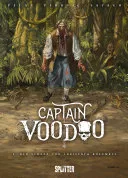
Jean-Pierre Pécau's "Captain Voodoo. Band 2" offers a potent, if grim, reimagining of pirate lore, weaving Voodoo mysticism into the fabric of 18th-century Caribbean conflict. The premise—an Irish resistance fighter, Cormac Mac Leod, summoning entities to defy slavery—is inherently compelling. Pécau excels at portraying the visceral consequences of such pacts, where the line between savior and monster blurs irrevocably. A notable strength is the visceral depiction of the supernatural forces at play, presented not as mere plot devices but as terrifying, primal powers. However, the narrative occasionally struggles under the weight of its own darkness; the relentless grimness, while thematically consistent, can sometimes overshadow character development, leaving motivations feeling starkly utilitarian. The depiction of Mac Leod’s pact, where he "paktieren mit Mächten, die jenseits unserer Vorstellungskraft liegen" (making pacts with powers beyond our imagination), highlights this duality. Ultimately, "Captain Voodoo. Band 2" is a potent, albeit bleak, exploration of power and rebellion through an occult lens.
📝 Description
81
In Captain Voodoo. Band 2, Jean-Pierre Pécau continues a dark fantasy tale set in the 18th-century Atlantic.
This volume follows Jean-Pierre Pécau's narrative that merges Caribbean piracy with Voodoo practices. Set against the backdrop of 18th-century seafaring and colonial expansion, the story portrays desperate individuals making supernatural pacts to fight oppression. The book expands on themes of rebellion and the dangerous price of wielding forbidden power. It is written for readers who appreciate historical fiction infused with occult elements, particularly those interested in Voodoo, piracy, and the supernatural.
The narrative engages with the historical realities of the era, including the transatlantic slave trade and the rise of piracy as a response to economic and political conditions. It also reflects the syncretic development of Voodoo in the Americas, especially in Haiti. The story reimagines this period of exploitation and resistance through a lens of occult pacts and spiritual conflict. Readers who enjoy morally ambiguous characters and narratives questioning the nature of power and freedom will find this work compelling.
This work is situated within a tradition of fiction that uses occult and spiritual systems as narrative engines for exploring societal and personal struggles. It draws on the historical syncretism of Voodoo, particularly as it developed in response to the brutal conditions of the Caribbean slave trade. The narrative employs Voodoo not merely as a cultural element but as a system of spiritual power, enabling characters to enact vengeance and pursue liberation through pacts with supernatural entities. This approach aligns with esoteric fiction that examines how marginalized or oppressed groups might access non-conventional means to challenge established orders.
💡 Why Read This Book?
• Gain insight into the syncretic Voodoo practices as depicted in the book, understanding how they are portrayed as tools of resistance against 18th-century oppression. • Explore the concept of 'pacts' with supernatural entities, as Cormac Mac Leod does, to grasp the narrative's unique take on gaining power through forbidden means. • Experience a dark fantasy interpretation of Caribbean piracy, moving beyond typical swashbuckling to confront the profound spiritual and ethical costs of liberation.
⭐ Reader Reviews
Honest opinions from readers who have explored this book.
❓ Frequently Asked Questions
What is the primary focus of Captain Voodoo. Band 2?
The book focuses on the fusion of Caribbean piracy and Voodoo mysticism, detailing how characters like Cormac Mac Leod use supernatural pacts to fight against oppression and slavery in the 18th century.
Who is the main protagonist in Captain Voodoo. Band 2?
The central figure is Cormac Mac Leod, an Irish resistance fighter who seeks freedom from slavery by invoking powerful, otherworldly entities.
What historical period does Captain Voodoo. Band 2 depict?
It is set in the 18th century, a period marked by colonial expansion, the slave trade, and the rise of piracy in the Caribbean.
Does the book explore Voodoo rituals?
Yes, the narrative incorporates Voodoo as a source of power and magic, depicting characters making pacts with entities beyond human comprehension.
Is Captain Voodoo. Band 2 a standalone novel?
No, it is identified as 'Band 2', indicating it is part of a series and likely continues a narrative established in a previous volume.
What kind of 'powers' are involved in the story?
The story features supernatural powers, with pacts made with entities described as 'beyond our imagination,' suggesting a dark, potent, and potentially terrifying form of magic.
🔮 Key Themes & Symbolism
Voodoo as Liberation
The work presents Voodoo not merely as a spiritual practice but as a potent force for rebellion and liberation. It details how characters, particularly Cormac Mac Leod, turn to these esoteric powers to escape the brutal realities of slavery and oppression in the 18th-century Caribbean. The narrative explores the idea that forbidden or 'dark' magic can become a last resort for the desperate, offering a path to freedom that transcends conventional morality and societal structures. This theme challenges traditional notions of good and evil by situating Voodoo pacts as acts of survival and resistance.
The Price of Power
A central theme is the profound and often terrifying cost associated with wielding supernatural power. The pacts made with entities 'beyond our imagination' are not presented as simple bargains but as dangerous commitments that fundamentally alter those who invoke them. The book likely explores the psychological and spiritual toll these pacts take, blurring the lines between the summoner and the summoned. This exploration serves as a cautionary tale about the corrupting influence of power, even when sought for seemingly just reasons like freedom.
Rebellion and Identity
Captain Voodoo. Band 2 examines rebellion through the lens of those pushed to the absolute margins of society. Cormac Mac Leod's journey from Irish resistance fighter to a figure invoking infernal powers highlights the desperate measures individuals take when facing existential threats like slavery. The narrative questions what it means to be human when forced to embrace monstrous forces to survive or fight back. This theme appeals to historical accounts of enslaved people using spiritual practices for resilience and resistance, re-imagined here with extreme supernatural consequences.
Dark Maritime Fantasy
The book merges the historical setting of Caribbean piracy with elements of dark fantasy and occult horror. It moves beyond typical pirate adventures to explore a world where the sea itself is imbued with ancient, dangerous magic, and Voodoo spirits play an active role in human conflicts. This creates a unique atmosphere where the known world of 18th-century maritime trade and warfare intersects with the unknown areas of the supernatural, offering a distinct subgenre of esoteric fiction.
💬 Memorable Quotes
Direct passages from the work, attributed to the author.
“Men and women who succumbed to the magic of Voodoo.”
— This phrase suggests a narrative where Voodoo is not just a practice but an overwhelming force, hinting at characters who are deeply influenced or even possessed by its power as they seek to defy their oppressors.
“Pact with beings that cast even the devil in the shadows.”
— This powerfully implies the existence of entities far more ancient, terrifying, or cosmically significant than traditional demonic figures, suggesting a high-stakes occult struggle at the core of the story.
“Irish resistance fighter Cormac Mac Leod.”
— This identifies the protagonist and his background, framing his actions within a context of historical struggle against oppression, making his later supernatural dealings a desperate act of defiance.
“Powers beyond our imagination.”
— This phrase emphasizes the sheer incomprehensibility and potentially limitless scope of the supernatural forces Cormac Mac Leod invokes, highlighting the extreme nature of his quest for freedom.
“A story of Caribbean sailors who fell prey to the magic of Voodoo.”
— This interpretation positions Voodoo as a potent, potentially consuming force within the narrative, suggesting that its magic has a profound and perhaps perilous effect on those who engage with it.
🌙 Esoteric Significance
Tradition
The work intersects with traditions of folk magic and demonology, particularly as they relate to Voodoo and its historical development in the Caribbean. While not strictly adhering to a formalized Western esoteric lineage like Hermeticism or Kabbalah, it draws upon the concept of pacts and invocation, common themes in grimoire traditions. The depiction of Voodoo aligns with interpretations that view it as a powerful, primal spiritual system capable of influencing material reality, often outside the bounds of Abrahamic religions.
Symbolism
Key symbols likely include maritime elements (ships, the sea) representing journeys into the unknown and the flow of fate, intertwined with Voodoo iconography (e.g., Loa, ritual objects) symbolizing potent spiritual forces and intermediaries. The concept of 'shadows' and beings that 'cast the devil in the shadows' suggests a hierarchy of spiritual power that transcends conventional good and evil dichotomies, pointing towards primordial, chthonic entities.
Modern Relevance
Contemporary practitioners and scholars of Afro-Caribbean spirituality continue to explore the resilience and power inherent in Voodoo. Modern occultists interested in non-Western magical systems may find Pécau's narrative an imaginative, albeit fictionalized, entry point into understanding the perceived efficacy of Voodoo as a force for empowerment. The book's themes of rebellion against systemic oppression through esoteric means also resonate with contemporary social justice movements and discussions on reclaiming marginalized spiritual traditions.
👥 Who Should Read This Book
• Readers fascinated by the historical context of 18th-century Caribbean piracy and the syncretic development of Voodoo. • Those interested in dark fantasy narratives that explore the moral ambiguities of power and rebellion through occult means. • Individuals seeking fictional explorations of how spiritual practices, like Voodoo, have historically served as tools for resistance and survival.
📜 Historical Context
Published in 2024, "Captain Voodoo. Band 2" draws upon the rich, often brutal, history of the 18th-century Caribbean. This era was defined by intense colonial rivalries, the pervasive institution of chattel slavery, and the resulting social unrest that fueled phenomena like widespread piracy. Simultaneously, West African spiritual traditions, brought to the Americas by enslaved peoples, were evolving into distinct syncretic religions like Voodoo. These practices, often misunderstood and feared by colonial powers, became vital sources of cultural identity, resilience, and resistance. The narrative taps into this historical milieu, reimagining acts of defiance not just through naval battles or mutinies, but through pacts with supernatural entities. This approach carries the historical accounts of spiritual power being invoked by oppressed populations. While contemporary authors like Marcus Rediker have explored the social dynamics of the pirate world, Pécau adds a layer of occult fantasy, moving beyond purely materialist interpretations of rebellion.
📔 Journal Prompts
Cormac Mac Leod's pacts with powers beyond imagination: what ethical boundaries are crossed for freedom?
The depiction of Voodoo magic: how does it function as a force for liberation in the narrative?
The cost of wielding supernatural power: reflect on the balance between empowerment and corruption.
Pirate narratives blended with the occult: consider the appeal of such genre fusion.
The concept of 'monstrous' entities: explore their role as tools against oppression.
🗂️ Glossary
Voodoo
A syncretic religion that originated in the French colonial colony of Saint-Domingue (present-day Haiti) from the combination of Vodun, West African religious practices, and Catholicism. It involves the worship of spirits known as Loa.
Pact
In occult and folkloric contexts, an agreement, often explicit, between a mortal and a supernatural entity, typically involving the exchange of services or allegiance for power, knowledge, or other benefits.
18th Century Caribbean
The historical period roughly from 1700-1799, characterized by European colonial powers, extensive trade networks, the transatlantic slave trade, and periods of intense piracy.
Resistance Fighter
An individual who actively opposes and fights against an occupying force or oppressive regime, often undertaking acts of sabotage, rebellion, or organized warfare.
Supernatural Entities
Beings or forces believed to exist outside the normal experience of natural law, often possessing extraordinary abilities and originating from spiritual or otherworldly realms.
Loa
Spirits or deities in Haitian Vodou, considered intermediaries between the human world and the supreme creator god, Bondye. They are invoked and served by practitioners.
Occult
Relating to supernatural, mystical, or magical powers, practices, or phenomena that are hidden from general view or understanding.