Freemasons
 83
83

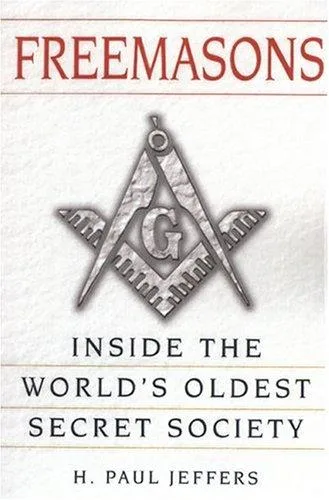
Freemasons
H. Paul Jeffers' "Freemasons" is a commendable effort to demystify a subject often shrouded in speculation. The book provides a clear, chronological overview, particularly strong in detailing the society's emergence in early 18th-century London. Jeffers effectively sketches the transition from medieval guilds to the speculative lodges that would come to define the organization. However, the work occasionally feels more like a historical survey than a deep dive into the esoteric philosophies that have animated many Masons. While the structure is logical, a more robust engagement with the symbolic interpretations that truly define Masonic practice for many would have elevated it. The passage detailing the formation of the Premier Grand Lodge in 1717 is particularly well-handled, offering a solid anchor in historical fact. Overall, it serves as a competent, if somewhat conventional, introduction to the historical trajectory of the Craft.
📝 Description
83
H. Paul Jeffers's "Freemasons" traces the fraternity's evolution from stonemasons' guilds to a philosophical order after 1717.
This book details the history of Freemasonry, beginning with its transition from medieval stonemasons' guilds to the speculative philosophical society that formed in London around 1717. Jeffers examines how the organization developed its rituals and symbolism, drawing from biblical narratives and alchemical traditions to create a system for moral and spiritual guidance. The work situates Freemasonry within the intellectual climate of post-Reformation Europe, a period marked by significant changes in thought and the prevalence of clandestine groups.
It is written for readers interested in the historical and societal aspects of Freemasonry, moving past sensational claims to offer a more grounded perspective. The book covers the fraternity's role in various historical movements, including the Enlightenment, and discusses its enduring influence into modern times. Jeffers focuses on the adaptation of Masonic practices and symbols to align with changing philosophical ideas throughout history.
This book places Freemasonry within the historical development of Western esoteric traditions that gained prominence during the Enlightenment. It acknowledges the society's emergence as a formal structure in 1717, a time when philosophical and spiritual inquiries often took coded or symbolic forms. The text discusses how Masonic allegories, drawing on ancient texts and alchemical imagery, served as vehicles for moral instruction and personal development, aligning with broader trends in Western esotericism that sought hidden meanings in nature and tradition.
💡 Why Read This Book?
• Understand the historical shift from operative stonemasons to speculative philosophical societies, a core concept illuminated by the book's examination of 18th-century London. • Gain insight into the Enlightenment's influence on Masonic ideals, as the book details how reason and fraternity became foundational principles. • Learn about the adaptation of ritual and symbolism, as the work explains how biblical and alchemical imagery was integrated into Masonic allegory.
⭐ Reader Reviews
Honest opinions from readers who have explored this book.
❓ Frequently Asked Questions
When did Freemasonry officially emerge as a speculative society?
Freemasonry as a speculative philosophical order is widely understood to have formally emerged in London with the establishment of the Premier Grand Lodge in 1717, marking a transition from earlier operative guilds.
What is the significance of operative stonemasons in Masonic history?
Operative stonemasons were medieval guilds of skilled craftsmen who built cathedrals and other structures. Their traditions, rituals, and tools are believed to have formed the basis for the allegorical and symbolic system adopted by speculative Freemasonry.
How did the Enlightenment affect Freemasonry?
The Enlightenment, with its emphasis on reason, individualism, and universal brotherhood, profoundly influenced early speculative Freemasonry. These ideals shaped the fraternity's philosophical underpinnings and its appeal to intellectuals and reformers.
Does "Freemasons" by H. Paul Jeffers explore modern Masonic practices?
While "Freemasons" primarily focuses on historical origins and development up to a certain point, it provides the foundational context necessary to understand contemporary Masonic structures and philosophical interpretations.
What kind of sources does Jeffers use in his historical account?
Jeffers draws upon historical documents, early Masonic writings, and scholarly research to construct his narrative, aiming for a historically grounded perspective on the fraternity's evolution.
Is this book suitable for someone completely new to Freemasonry?
Yes, "Freemasons" by H. Paul Jeffers serves as an accessible introduction for newcomers, offering a clear historical trajectory and explaining key concepts without assuming prior esoteric knowledge.
🔮 Key Themes & Symbolism
Guild to Society Transition
The work details the central shift from the practical, craft-based operative stonemasons' guilds of the medieval period to the philosophical, speculative societies that began to coalesce in the early 18th century. This transformation is central to understanding Freemasonry's evolution, moving from the construction of physical structures to the building of moral character and societal improvement through allegory and ritual.
Enlightenment Ideals
Jeffers examines how the intellectual currents of the Enlightenment, emphasizing reason, liberty, and universal fraternity, significantly shaped the philosophical framework of speculative Freemasonry. The book explores how these societal ideals were integrated into Masonic tenets, attracting thinkers and reformers seeking a platform for intellectual discourse and mutual improvement outside traditional hierarchies.
Ritual and Symbolism
A significant aspect of the book involves tracing the development and adoption of Masonic rituals and symbolism. It discusses how elements drawn from biblical narratives, ancient mystery traditions, and alchemical lore were adapted to create allegorical lessons designed to impart moral and spiritual teachings to initiates, forming the core of the Masonic experience.
Public Perception and Secrecy
The book addresses the inherent tension between Freemasonry's secretive nature and its public presence throughout history. It explores the reasons for its guarded practices, the development of its public image, and how societal perceptions, often fueled by speculation and conspiracy, have impacted the fraternity's reception across different eras.
💬 Memorable Quotes
Direct passages from the work, attributed to the author.
“The transition from operative to speculative Masonry occurred gradually.”
— This statement highlights that the shift wasn't an abrupt event but a slow evolution, with the philosophical aspects of the fraternity gradually taking precedence over the purely craft-based functions.
“The Enlightenment provided fertile ground for Masonic ideals of brotherhood.”
— This suggests that the philosophical climate of the Enlightenment, with its focus on humanism and universalism, created an environment where Masonic principles of equality and mutual support could flourish and gain acceptance.
“Early Masonic lodges served as centers for intellectual exchange.”
— This points to the function of Masonic meeting places not just as ritualistic venues but as social and intellectual hubs where members could discuss ideas and engage in philosophical discourse.
“Symbolism became the language of Masonic instruction.”
— This emphasizes the importance of allegorical and symbolic communication within Freemasonry, suggesting that complex moral and spiritual lessons were conveyed through symbolic representations rather than direct exposition.
“The foundation of the Premier Grand Lodge in 1717 marked a significant organizational step.”
— This refers to a specific historical event that formalized and centralized Masonic governance in London, playing a central role in the spread and standardization of speculative Freemasonry.
🌙 Esoteric Significance
Tradition
While "Freemasons" is primarily a historical text, it touches upon the esoteric lineage of Freemasonry, which draws heavily from Western Hermeticism, Kabbalah, and alchemical traditions. The work positions Freemasonry as a modern manifestation of ancient wisdom, adapting these older symbolic systems into a framework for moral and spiritual development accessible to a broader audience.
Symbolism
The book explores key Masonic symbols, such as the Square and Compasses, representing morality and self-control, and the Blazing Star, often interpreted as a symbol of divine truth or the Star of Bethlehem. It discusses how these and other motifs, like the plumb line and level, are used allegorically to teach principles of integrity, equality, and spiritual enlightenment.
Modern Relevance
Contemporary esoteric practitioners and historians of secret societies frequently reference works like Jeffers' to understand the foundational historical and symbolic structures of Freemasonry. Its clear exposition of the Craft's development provides a necessary backdrop for studying modern Masonic philosophy, ritual variations, and its ongoing influence on Western esoteric thought.
👥 Who Should Read This Book
• Students of Western Esotericism seeking to understand the historical roots of modern Masonic symbolism and philosophy. • History enthusiasts interested in the development of secret societies and their societal impact during the Enlightenment era. • Individuals curious about Freemasonry who desire a factual, historically grounded overview beyond sensationalized accounts.
📜 Historical Context
H. Paul Jeffers' "Freemasons" emerged in 2005, a period characterized by a renewed public interest in historical societies and a burgeoning market for books exploring esoteric traditions. Written in the wake of widespread conspiracy theories surrounding Freemasonry, Jeffers' work aimed to provide a more grounded, historical perspective. It situates the Craft's origins within the intellectual milieu of early 18th-century London, a hub of Enlightenment thought where rationalism and fraternity were highly valued. The book implicitly engages with earlier historical accounts, such as those by Coil, while seeking to present a synthesis of prevailing scholarship. It arrived in a landscape where authors like David Icke were popularizing elaborate, often unfounded, claims about Masonic control, making Jeffers' factual approach a counterpoint.
📔 Journal Prompts
The transition from operative to speculative Masonry: Reflect on how crafts can evolve into philosophical systems.
The influence of Enlightenment ideals on Masonic tenets: Consider how reason and fraternity shape any organizational structure.
The role of the Square and Compasses as symbols: Analyze how simple geometric forms convey profound moral lessons.
Early Masonic lodges as intellectual hubs: Explore the balance between ritualistic practice and intellectual discourse in fraternal organizations.
The historical reception of Freemasonry: Reflect on why secrecy often attracts public scrutiny and speculation.
🗂️ Glossary
Speculative Masonry
Freemasonry as it exists today, focused on philosophical and moral teachings rather than the literal craft of stone construction, emerging in the early 18th century.
Operative Masonry
The historical practice of stonemasons who belonged to medieval guilds, responsible for the physical construction of buildings, particularly cathedrals.
Premier Grand Lodge
The first official governing body of Freemasonry, established in London in 1717, which played a key role in organizing and promoting the fraternity.
Enlightenment
An 18th-century intellectual and philosophical movement emphasizing reason, individualism, and human rights, which significantly influenced Masonic principles.
Allegory
The use of symbols and symbolic narratives to convey deeper moral, spiritual, or political meanings, a primary method of instruction in Freemasonry.
Ritual
A set of ceremonial actions or established form of procedure, particularly in a religious or traditional context, used in Masonic degrees for instruction and initiation.
Fraternity
A group of people with a common interest, profession, or bond, emphasizing brotherhood and mutual support, a core concept within Freemasonry.
🔮 Readers Also Liked
Browse all →






More by H. Paul Jeffers
All books →
More Free Freemasonry & Secret Societies Books
View all →