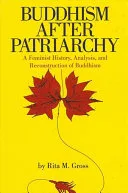
Buddhism After Patriarchy
 83
83

Buddhism After Patriarchy
Rita M. Gross’s Buddhism After Patriarchy fundamentally challenges the long-held assumption of Buddhism's inherent sexism. By meticulously excavating the historical record, Gross brings to light the often-silenced voices and contributions of women, from early nuns to contemporary practitioners. Her feminist analysis of core doctrines like *anatta* is particularly potent, revealing how concepts promoting egolessness and interdependence can, and should, dismantle hierarchical gender structures. The book’s strength lies in its scholarly rigor and its consistent return to textual evidence, moving beyond mere assertion to demonstrate how patriarchal interpretations have obscured Buddhism's potential for gender equity. A limitation, perhaps inherent to its 1992 publication date, is the focus on historical reconstruction and doctrinal analysis, with less emphasis on contemporary, evolving practices of feminist Buddhism. Nevertheless, Gross’s re-reading of the *Vinaya* to understand the establishment of the Bhikkhuni order remains a pivotal moment in the text. This work is an indispensable resource for anyone seeking to understand Buddhism's past and reimagine its equitable future.
📝 Description
83
Rita M. Gross's 1992 book, Buddhism After Patriarchy, challenges patriarchal interpretations of Buddhist doctrine.
First published in 1992, Buddhism After Patriarchy scrutinizes the historical and theological foundations of Buddhist traditions from a feminist viewpoint. Rita M. Gross reconstructs the often unacknowledged contributions of women throughout Buddhist history. She critically examines central Buddhist ideas, showing how they can support gender equality. The book questions the common idea that Buddhism is inherently patriarchal, suggesting instead that it holds the potential for a more equitable spiritual future.
This work is important for scholars of religion, especially those studying Buddhism and gender. It will also interest practitioners who want to understand the historical and doctrinal roots of gender bias in religious institutions. Anyone interested in feminist theology, comparative religion, or the development of spiritual traditions will find Gross's analysis insightful. It appeals to those who believe spiritual traditions can transform and advance social justice.
Buddhism After Patriarchy engages with the long tradition of Buddhist thought and practice, re-examining core concepts like anatta, karma, and nirvana. Gross argues that these ideas, when stripped of patriarchal accretions, are not inherently hierarchical. The book places itself within a lineage of critical scholarship that seeks to uncover the original, potentially egalitarian, spirit of the teachings, contrasting with later institutional developments that may have reinforced social hierarchies. It seeks to recover a Buddhism that can foster individual liberation and social justice.
💡 Why Read This Book?
• Understand the historical suppression and rediscovery of women's roles in Buddhism, as detailed in Gross's examination of early monastic records, providing a counter-narrative to traditional histories. • Grasp how core Buddhist concepts like *anatta* (no-self) can be reinterpreted to dismantle patriarchal hierarchies, a key argument presented through doctrinal analysis. • Gain a critical perspective on the development of Buddhist traditions, learning to distinguish between foundational teachings and later patriarchal accretions, particularly concerning the Bhikkhuni order.
⭐ Reader Reviews
Honest opinions from readers who have explored this book.
❓ Frequently Asked Questions
What is the primary argument of Buddhism After Patriarchy?
The book argues that core Buddhist teachings promote gender equity, and that patriarchal structures arose from historical interpretations and practices, not from the fundamental doctrines themselves. Rita M. Gross aims to reconstruct the historical record and offer a feminist interpretation of Buddhist concepts.
When was Buddhism After Patriarchy first published?
Buddhism After Patriarchy was first published on November 17, 1992. This date places it within a significant period of feminist scholarship engaging with global religious traditions.
Who is Rita M. Gross?
Rita M. Gross was a prominent scholar of Buddhism and feminist theology. She was instrumental in bringing a feminist perspective to the study of Buddhist history, doctrine, and practice, advocating for gender equality within Buddhist communities.
How does the book address the historical absence of women in Buddhist narratives?
Gross actively reconstructs Buddhist history by highlighting the roles of women, including nuns and female teachers, who have often been marginalized or omitted from traditional accounts. She provides a feminist analysis of the major concepts found in Buddhist religion.
What core Buddhist concepts are re-examined in the book?
The book re-examines fundamental concepts such as *anatta* (no-self), *karma*, and *nirvana*. Gross demonstrates how these teachings, when stripped of patriarchal interpretations, inherently support gender equity and liberation.
Is Buddhism After Patriarchy considered an esoteric text?
Yes, it is categorized as Esoteric literature due to its deep dive into the philosophical and historical nuances of a major world religion, challenging conventional interpretations and exploring the potential for spiritual evolution beyond established patriarchal norms.
🔮 Key Themes & Symbolism
Reclaiming Women's History
Gross systematically revisits Buddhist historical narratives, foregrounding the contributions and experiences of women that were often suppressed or overlooked. This includes detailing the lives of early nuns and female practitioners, challenging the male-centric focus of traditional chronicles. The work aims to correct the historical record, demonstrating that women were active participants and vital figures within Buddhism from its inception, thereby reshaping our understanding of its lineage and development.
Feminist Reinterpretation of Doctrine
The book offers a groundbreaking feminist analysis of core Buddhist concepts such as *anatta* (no-self), *karma*, and *nirvana*. Gross argues that these teachings, when understood without patriarchal bias, are inherently egalitarian. She demonstrates how concepts promoting interdependence and the dissolution of ego can actively dismantle gendered hierarchies and promote liberation for all beings, irrespective of gender.
The Potential for Post-Patriarchal Buddhism
Buddhism After Patriarchy envisions a future where Buddhist traditions can transcend their historical patriarchal encrustations. Gross explores how Buddhism might evolve to fully integrate feminine principles and perspectives, fostering gender equity and social justice. This theme focuses on the transformative capacity of the religion to adapt and offer a path to liberation that is inclusive and free from gender-based oppression.
Critique of Institutional Sexism
While affirming the egalitarian potential of Buddhist philosophy, Gross critically examines the historical and ongoing sexist practices within Buddhist institutions. She distinguishes between the Buddha's original teachings and the subsequent interpretations and institutional policies that led to the marginalization of women, particularly in monastic orders like the Bhikkhuni sangha.
💬 Memorable Quotes
Direct passages from the work, attributed to the author.
“The core teachings of Buddhism promote gender equity rather than male dominance.”
— This central thesis posits that Buddhism's foundational philosophy, focused on liberation and non-duality, is intrinsically opposed to hierarchical systems like patriarchy. Gross argues that sexism is a result of cultural and institutional overlay, not inherent doctrine.
“Women, usually absent from histories of Buddhism.”
— This highlights the historical erasure of women's roles in Buddhist traditions. Gross's work aims to rectify this by excavating and presenting the often-silenced narratives of female practitioners, teachers, and leaders throughout Buddhist history.
“She provides the first feminist analysis of the major concepts found in Buddhist religion.”
— This statement underscores the book's pioneering nature. It signifies Gross's unique contribution in applying feminist critical theory to foundational Buddhist philosophical and soteriological concepts, revealing their potential for gender liberation.
“What Buddhism might become in its post-patriarchal future.”
— This points to the forward-looking aspect of the book, envisioning an evolved Buddhism that has shed patriarchal structures. It suggests a potential for spiritual traditions to adapt and become more inclusive and equitable in contemporary society.
“The author completes the Buddhist historical record by discussing women.”
— This emphasizes Gross's role in offering a more comprehensive and accurate historical account of Buddhism. By including the previously marginalized experiences of women, she fills critical gaps in scholarly and popular understanding of the tradition.
🌙 Esoteric Significance
Tradition
While rooted in the academic study of Buddhism, Buddhism After Patriarchy engages with esoteric principles by questioning orthodox interpretations and seeking deeper, liberating truths. It aligns with esoteric traditions that prioritize individual gnosis and the re-evaluation of established dogma, particularly concerning the divine feminine and the dismantling of hierarchical power structures often present in exoteric religious forms.
Symbolism
The book implicitly engages with the symbolism of liberation and transformation. Concepts like *anatta* (no-self) can be seen as symbolic of shedding the egoic, socially constructed self, which often includes patriarchal conditioning. The potential for a 'post-patriarchal future' symbolizes a spiritual rebirth, a return to or realization of a more balanced, equitable essence within the tradition.
Modern Relevance
Contemporary movements advocating for engaged Buddhism, social justice within spiritual communities, and the re-establishment of female monastic lineages (like the Bhikkhuni order) draw heavily on the groundwork laid by Gross. Thinkers and practitioners focused on queer Buddhism and intersectional feminist approaches to spirituality also find her foundational critiques essential for their work today.
👥 Who Should Read This Book
• Scholars of Buddhist studies and gender theory seeking a foundational feminist critique of historical and doctrinal traditions. • Practitioners of Buddhism who wish to understand the roots of sexism within the religion and explore its potential for greater gender equity. • Students of comparative religion and feminist theology interested in how major world religions have been shaped by patriarchal structures and can be reinterpreted.
📜 Historical Context
Buddhism After Patriarchy emerged in 1992, a period marked by significant feminist inquiry into religious traditions globally. Rita M. Gross’s work was part of a wave of scholarship challenging the patriarchal biases embedded within established religions. It followed earlier critical examinations, such as Diana Paul's *Women in Buddhism* (1979), and contributed to the growing academic and practitioner discourse on gender in Buddhist studies. The book arrived when Western Buddhism was often perceived through a romanticized lens, overlooking the historical and institutional sexism present. Gross’s rigorous analysis provided a necessary corrective, re-examining canonical texts and historical accounts to demonstrate the compatibility of core Buddhist teachings with gender equity. Its reception was crucial in fostering a more critical and inclusive understanding of Buddhist history and potential.
📔 Journal Prompts
The historical absence of women in Buddhist chronicles and its impact on doctrine.
Feminist reinterpretation of *anatta* and its implications for dissolving gendered hierarchies.
The distinction between core Buddhist teachings and patriarchal institutional practices.
Envisioning a post-patriarchal future for Buddhist spiritual traditions.
Reconstructing the Buddhist historical record to include women's experiences.
🗂️ Glossary
Patriarchy
A social system where men hold primary power and predominate in roles of political leadership, moral authority, social privilege, and control of property. In the context of Buddhism, it refers to male dominance within its historical development and institutions.
Anatta
A core Buddhist doctrine, often translated as 'no-self' or 'non-self'. It posits that there is no permanent, unchanging, independent self or soul. Gross reinterprets this to argue against fixed gender roles and hierarchies.
Bhikkhuni
A fully ordained Buddhist nun. The history and establishment of the Bhikkhuni sangha (community of nuns) is a significant focus for Gross, as their lineage has faced considerable challenges and suppression in many Buddhist traditions.
Karma
The principle of cause and effect, where actions (karma) influence future consequences. Gross examines how this concept has been interpreted in ways that can reinforce social hierarchies, including gender inequality.
Nirvana
The ultimate goal of Buddhist practice, often described as the cessation of suffering, the extinguishing of the cycle of rebirth, and liberation. Gross explores how achieving nirvana is compatible with gender equity.
Feminist Analysis
An approach to examining texts, history, and social structures that critiques patriarchal assumptions and seeks to understand the experiences and perspectives of women, advocating for gender equality.
Gender Equity
The state of fairness and justice in the way gender is considered. It involves recognizing that different genders may have different needs and require different treatment to achieve equal outcomes.