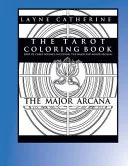
The Tarot Coloring Book the Major Arcana
 75
75

The Tarot Coloring Book the Major Arcana
Layne Catherine's "The Tarot Coloring Book: The Major Arcana" offers a refreshing, hands-on approach to engaging with Tarot's potent imagery. The artist's belief that her talent stems from a "Creative Source" imbues the project with an authentic spiritual current. The strength of this work lies in its simplicity: it doesn't demand prior knowledge, yet it provides a deep well for contemplation for those who possess it. The line art itself is detailed enough to be engaging without being overwhelming, a delicate balance. A notable limitation, however, is the lack of accompanying text to guide interpretation for novices; the book relies entirely on the visual and the user's existing knowledge or intuition. The illustration for The High Priestess, with its veiled presence and twin pillars, is particularly evocative, inviting a deep dive into the mysteries she represents. This book is a valuable tool for anyone seeking a more tactile connection to the Major Arcana.
📝 Description
75
Layne Catherine's 2016 book reimagines the Major Arcana as illustrations for creative engagement.
This volume presents the 22 Major Arcana cards, from The Fool to The World, as line art for users to color. Instead of a strict interpretive guide, it offers the archetypal imagery as a space for personal artistic expression. The artist, Layne Catherine, sees her work as connected to metaphysical exploration, turning the passive viewing of Tarot imagery into an active, introspective practice. This approach appeals to those new to Tarot study who are drawn to its symbols, as well as artists seeking a meditative practice. It also provides a fresh way for experienced Tarot enthusiasts to connect with the cards.
The book is suitable for a broad audience interested in Tarot, art therapy, and personal introspection. Individuals exploring spiritual or metaphysical ideas can use the coloring process as a form of active meditation, engaging with the archetypes visually and tactilely. The detailed line work is intended to inspire artists looking for a mindful activity. The work taps into the historical lineage of visual Tarot representation while aligning with contemporary trends in mindfulness and creative self-expression.
The Tarot, originating in 15th century Italy with decks like the Visconti-Sforza, has a long history of artistic interpretation and symbolic representation. Layne Catherine's work connects to this visual tradition, offering the archetypal imagery of the Major Arcana as a means of introspective practice. By inviting users to color these images, the book engages with a contemporary trend in art therapy and mindfulness, demonstrating how ancient symbolism can be experienced through tactile and creative means, fostering a personal connection with the cards' deeper meanings.
💡 Why Read This Book?
• You will experience a novel form of Tarot contemplation by actively coloring the 22 Major Arcana, fostering a kinesthetic connection to symbols like The Hierophant, which is impossible to replicate through passive study alone. • This book offers a unique entry point for individuals intimidated by traditional Tarot interpretation, allowing direct engagement with the visual language of archetypes first introduced in 15th-century Italy. • By imbuing each card with personal color choices, you translate abstract concepts, such as the journey of The Fool, into a tangible, personalized artistic expression that deepens intuitive understanding.
⭐ Reader Reviews
Honest opinions from readers who have explored this book.
❓ Frequently Asked Questions
What is the primary purpose of "The Tarot Coloring Book: The Major Arcana"?
Its primary purpose is to facilitate a personal, artistic, and meditative engagement with the 22 Major Arcana cards of the Tarot through coloring, encouraging intuitive interpretation.
Who is the intended audience for this coloring book?
It is intended for artists, spiritual seekers, those interested in Tarot, and individuals looking for a mindful, creative activity that connects them with archetypal imagery.
Does this book provide traditional Tarot meanings for each card?
No, the book focuses on the visual aspect and artistic expression, leaving the interpretation of traditional meanings to the user's discretion or prior knowledge.
When was "The Tarot Coloring Book: The Major Arcana" first published?
The book was first published on April 29, 2016.
What is the significance of the Major Arcana in Tarot?
The Major Arcana represent significant life lessons, spiritual archetypes, and major themes or turning points in a person's journey, often seen as the 'spine' of the Tarot deck.
Can someone with no prior Tarot knowledge use this book effectively?
Yes, individuals with no prior knowledge can use it as a meditative art activity, connecting with the imagery visually and intuitively, potentially sparking curiosity about Tarot.
🔮 Key Themes & Symbolism
Archetypal Symbolism
The book centers on the 22 Major Arcana, which represent fundamental human experiences and spiritual lessons. Symbols like The Emperor, The Hermit, and The Star are presented as visual prompts. The act of coloring allows for a personal internalization of these archetypes, transforming abstract concepts into something tangible and personally resonant, fostering a deeper connection to the universal narratives embedded within Tarot.
Creative Meditation
This work frames coloring as a form of active meditation. By focusing on the intricate lines of cards such as The Lovers or The Wheel of Fortune, users can enter a state of flow, quieting the mind and engaging their intuition. The artist's belief in divine inspiration for her talent underscores the potential for creative acts to be spiritual practices, fostering self-discovery through artistic engagement with esoteric imagery.
Personal Interpretation
Unlike traditional Tarot guides, this book prioritizes the user's subjective experience. The absence of prescribed meanings for each card encourages personal association and intuitive understanding. Coloring The High Priestess or The Devil allows individuals to project their own feelings and insights onto the imagery, making the exploration of Tarot a deeply personal journey of self-discovery rather than a scholarly pursuit.
Art as Spiritual Practice
Layne Catherine views her artistic talent as a divine gift, positioning the creation of art as a spiritually oriented expression. This perspective elevates the act of coloring the Tarot cards into a sacred ritual. Engaging with symbols like Justice or Temperance through art becomes a way to connect with higher consciousness and explore metaphysical concepts through a hands-on, visual medium.
💬 Memorable Quotes
Direct passages from the work, attributed to the author.
“As an artist who firmly believes that her talent comes from a divine place, a Creative Source, and is a spiritually oriented form of expression, I have been naturally drawn to things on a metaphysical plane all my life.”
— This statement reveals the author's foundational belief system, framing her artistic endeavors, including this Tarot coloring book, as a conduit for spiritual exploration and connection to a higher power.
“The Tarot has been both an intrigue and an inspiration for me as an artist.”
— This highlights the dual nature of the Tarot for the author: a subject of deep fascination and a powerful muse that fuels her creative output and artistic vision.
“Beyond being a set of symbol-filled images, most decks also serve as a vehicle for artistic expr”
— This incomplete phrase suggests the author sees Tarot decks as more than just static pictures; they are dynamic tools that facilitate artistic expression and engagement, hinting at the interactive nature of her coloring book.
“There has been and continues to be a fascination with the Tarot.”
— This observation acknowledges the enduring appeal and widespread interest in the Tarot across different cultures and time periods, setting the stage for the book's relevance.
“I have been naturally drawn to things on a metaphysical plane all my life.”
— This personal reflection underscores the author's lifelong inclination towards subjects beyond the physical realm, providing context for her deep engagement with the symbolic and spiritual dimensions of the Tarot.
🌙 Esoteric Significance
Tradition
This work aligns broadly with the Western Esoteric tradition, particularly its interest in archetypal symbolism and personal transformation through symbolic engagement. While not explicitly tied to a single lineage like Hermeticism or Kabbalah, it draws upon the universal appeal of the Major Arcana as foundational images within many esoteric systems that utilize Tarot for spiritual development and self-understanding.
Symbolism
Key symbols within the Major Arcana, such as The Fool's leap of faith or The Magician's tools of manifestation, are central. The coloring process encourages users to imbue these archetypes with personal meaning, exploring the visual language of power (The Emperor), wisdom (The Hermit), and transformation (Death), thereby internalizing their esoteric significance on an intuitive level.
Modern Relevance
In contemporary esoteric circles, there is a growing emphasis on embodied spirituality and creative practices. This book speaks to modern approaches to art therapy, mindfulness, and Jungian psychology's focus on archetypes. It appeals to a generation seeking accessible, non-dogmatic ways to connect with ancient wisdom traditions like the Tarot, fitting within the broader trend of integrating spiritual exploration with daily creative activities.
👥 Who Should Read This Book
• Aspiring Tarot enthusiasts who find traditional study intimidating will appreciate this accessible, visual entry point into the Major Arcana's archetypal narratives. • Artists and creatives seeking a meditative practice will benefit from the detailed line art, which offers a structured yet open-ended canvas for imaginative exploration. • Individuals interested in self-discovery and mindfulness will find the coloring process a valuable tool for introspection and connecting with universal symbols on a personal level.
📜 Historical Context
Published in 2016, Layne Catherine's "The Tarot Coloring Book: The Major Arcana" emerged during a resurgence of interest in adult coloring books, popularized by titles focusing on mandalas and nature. This trend dovetailed with a continued, vibrant engagement with esoteric practices, including Tarot. While the Tarot's origins trace back to 15th-century Italy with decks like the Visconti-Sforza, its symbolic language has been continuously reinterpreted. Catherine's work taps into this historical lineage of visual representation but reframes it for a contemporary audience seeking mindfulness and creative self-expression. Unlike purely academic studies or traditional divinatory guides, this book emphasizes tactile engagement. It stands apart from psychoanalytic interpretations of Tarot, such as those explored by Carl Jung in the mid-20th century, by focusing on direct artistic interaction rather than theoretical analysis.
📔 Journal Prompts
The Fool's journey: Reflect on the initial leap into the unknown depicted on the card.
The High Priestess's veiled wisdom: Consider the mysteries and intuition she represents.
The Lovers' choice: Explore the theme of partnership and decision-making.
The Wheel of Fortune's cycles: Contemplate the nature of change and destiny.
The World's completion: Reflect on the sense of accomplishment and integration.
🗂️ Glossary
Major Arcana
The set of 22 trump cards in a Tarot deck, representing significant life events, spiritual lessons, and archetypal figures in a person's journey.
Archetype
A universal, inherited pattern of thought or imagery derived from the collective unconscious, as proposed by Carl Jung, often embodied by figures in mythology and Tarot.
Symbolism
The use of images and signs to represent abstract ideas or qualities, a fundamental element in understanding Tarot cards.
Intuition
The ability to understand something immediately, without the need for conscious reasoning; a key element in personal Tarot interpretation.
Meditation
A practice where an individual uses a technique – such as mindfulness, or focusing the mind on a particular object, thought, or activity – to train attention and awareness.
Line Art
Artwork that consists of lines and marks, typically black and white, used in this context for coloring.
Creative Source
As described by the author, a divine or metaphysical origin of artistic talent and inspiration.