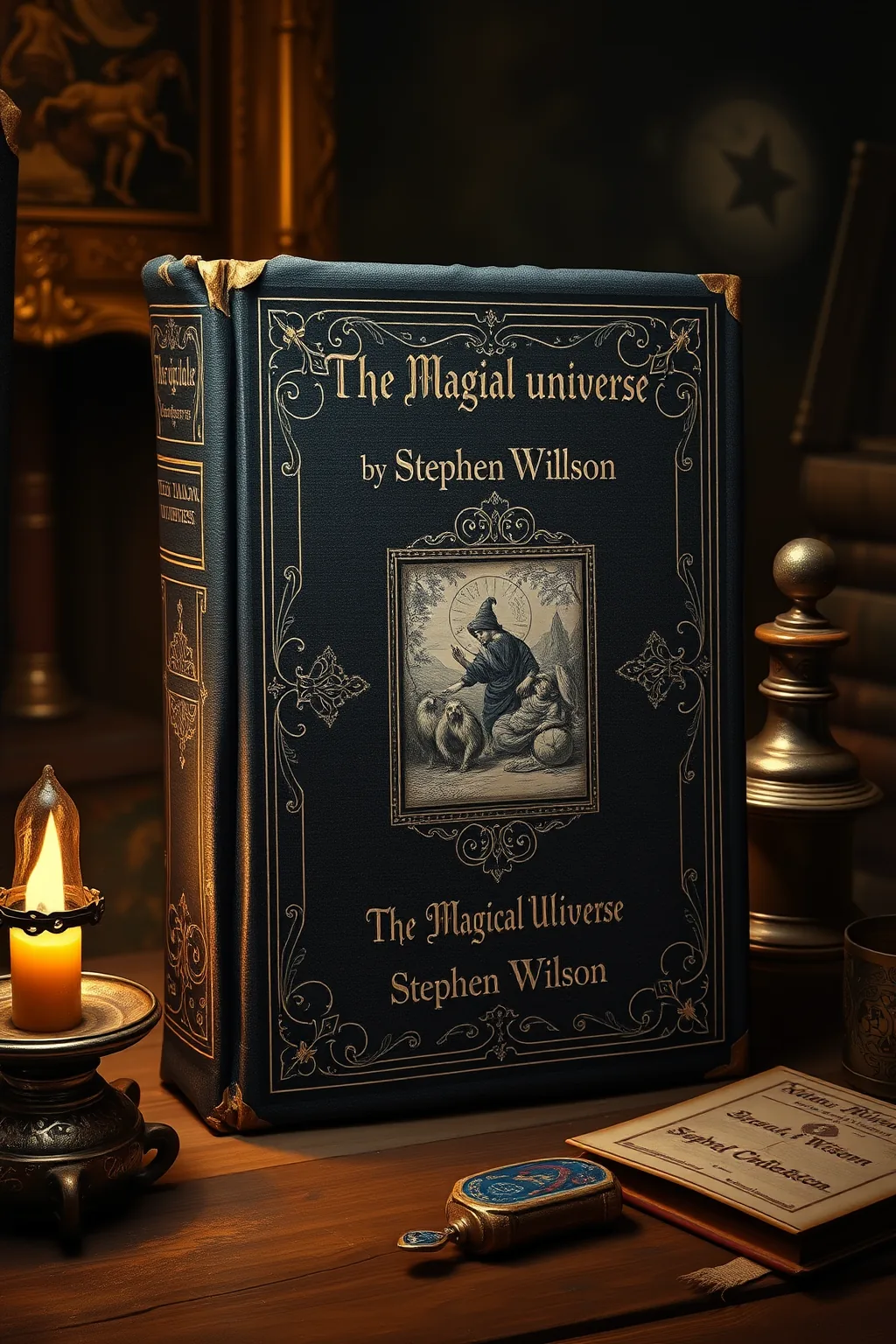
The magical universe
 75
75

The magical universe
Stephen Wilson’s The Magical Universe is a commendable attempt to map the vast terrain of magical belief and practice without succumbing to sensationalism. Its strength lies in its scholarly approach, presenting magic as a legitimate, albeit often misunderstood, facet of human intellectual history. Wilson avoids the common pitfall of presenting occultism as a monolithic entity, instead highlighting the diversity of traditions and their evolving interpretations. He is particularly adept at detailing the theoretical frameworks that underpin various magical systems. A limitation, however, is the sheer breadth of the subject; at times, the narrative feels more like an exhaustive catalog than a deep dive into any single tradition. The section discussing the influence of Hermeticism, for instance, while informative, could benefit from a more focused analysis of its impact on specific magical orders. Wilson’s work offers a solid, encyclopedic overview for those wishing to grasp the contours of this often-obscure field. It serves as a valuable reference for understanding magic’s place in the grander scheme of human thought.
📝 Description
75
Stephen Wilson's The Magical Universe, published in 2000, examines magic's philosophical and psychological dimensions.
Published in 2000, Stephen Wilson's The Magical Universe surveys magical thought and practice across cultures and historical periods. It moves past simple notions of spells to analyze the philosophical and psychological underpinnings of magic. The book seeks to place magic within broader intellectual and cultural histories, showing its lasting impact on how humans understand the cosmos and themselves. Wilson traces magical thought from ancient Mesopotamia and classical Greece through the Renaissance and Enlightenment into modern times. He acknowledges figures like Agrippa and Dee, whose writings influenced later occult movements. The work also touches on scholarly arguments about defining magic, distinguishing it from religious or scientific frameworks that often dismissed it. This book is for serious students of the esoteric, historians of religion and ideas, and practitioners who want a stronger theoretical basis for their work. It will appeal to those who see magic as a complex belief system that has shaped civilization, not just a set of techniques. Readers interested in the connections between psychology, anthropology, and occult philosophy will find much to consider.
The Magical Universe situates occult philosophy within a historical and intellectual framework, tracing its development across diverse traditions. Wilson acknowledges key figures in the Western esoteric tradition like Agrippa and Dee, whose works informed subsequent occult revivals. The book engages with the scholarly discourse surrounding magic's definition and its relationship to religious and scientific paradigms. It aims to provide a theoretical grounding for practitioners and scholars by analyzing magic as a complex system of belief and perception that has influenced human understanding of reality.
💡 Why Read This Book?
• Gain an understanding of the historical development of magical traditions, from ancient roots to the early 21st century, by examining specific periods like the Renaissance and its key figures like Agrippa. • Explore the diverse theoretical underpinnings of various magical systems, such as ceremonial magic and divination, and how they function as distinct modes of perception. • Grasp the relationship between magical thought and broader intellectual currents, understanding how concepts like the microcosm/macrocosm connection influenced Western esotericism.
⭐ Reader Reviews
Honest opinions from readers who have explored this book.
❓ Frequently Asked Questions
What is the primary focus of Stephen Wilson's The Magical Universe?
The book focuses on the historical and theoretical dimensions of magic across various cultures, exploring its principles, symbolic languages, and intellectual development from ancient times to the early 2000s.
Does The Magical Universe discuss specific magical rituals?
While it examines the principles behind rituals, the book's primary aim is to provide a scholarly survey of magical thought rather than a practical guide to performing specific rituals.
What historical periods does The Magical Universe cover?
The book spans a wide historical range, discussing magical traditions from ancient Mesopotamia and classical antiquity through the Renaissance, Enlightenment, and into the modern era.
Is The Magical Universe suitable for beginners in esotericism?
Yes, it provides a comprehensive overview that can serve as an excellent introduction for beginners interested in the history and theory of magic, though it avoids simplistic explanations.
How does Wilson define 'magic' in his work?
Wilson defines magic not just as spells, but as a complex system of belief and perception that has shaped human understanding, encompassing philosophical and psychological dimensions.
What distinguishes The Magical Universe from other books on magic?
Its distinction lies in its scholarly, historical, and theoretical approach, situating magic within broader intellectual history and avoiding sensationalist or purely practical orientations.
🔮 Key Themes & Symbolism
Evolution of Magical Theory
The book traces the theoretical frameworks that have defined magic across centuries. It examines how concepts like sympathetic magic, ceremonial invocation, and the influence of celestial bodies were understood and applied in different eras. Wilson highlights the intellectual shifts, such as the Renaissance’s integration of Neoplatonism and Hermeticism into magical practice, and the later attempts to reconcile magic with emerging scientific paradigms. The work provides a structured understanding of how magical philosophies developed and adapted, moving from ancient cosmologies to more individualized psychological interpretations found in the 20th century.
The Role of Symbolism and Ritual
Central to Wilson's analysis is the function of symbols and rituals within magical systems. He illustrates how specific symbols, from alchemical emblems to astrological sigils, serve as conduits for perceived cosmic energies and as keys to unlocking hidden knowledge. Rituals are presented not as mere performance, but as structured engagements designed to align the practitioner with specific forces or intentions. The book explores how the efficacy of magic was historically attributed to the precise manipulation of these symbolic and ritualistic elements, reflecting a belief in an ordered, interconnected universe.
Magic as a Cultural Force
Wilson positions magic as a significant, though often marginalized, force within broader cultural and intellectual history. He demonstrates how magical beliefs have influenced art, literature, philosophy, and even scientific inquiry throughout different epochs. By examining the reception and persecution of magical practices, the book sheds light on societal anxieties and the boundaries drawn between orthodox belief and heterodox expression. This perspective underscores magic's enduring presence and its role in shaping human attempts to understand and interact with the unseen aspects of reality.
Psychological Dimensions of Magic
The work touches upon the psychological interpretations of magical phenomena that gained prominence in the early 20th century. Wilson explores how certain thinkers began to view magical acts and beliefs through the lens of the human psyche, suggesting that they could represent archetypal patterns or the projection of inner states onto the external world. This perspective offers a way to understand the persistent appeal of magic even in a secularized age, linking it to fundamental human needs for meaning, control, and connection with deeper realities.
💬 Memorable Quotes
Direct passages from the work, attributed to the author.
“The history of magic is intertwined with the history of human attempts to comprehend the cosmos.”
— This suggests that magic is not an isolated phenomenon but a fundamental aspect of humanity's ongoing quest for knowledge and understanding of the universe's workings.
“Symbolism serves as the language through which magical forces are invoked and understood.”
— This highlights the critical role of symbolic representation in magical practice, positing that specific signs and images are essential for interacting with or perceiving esoteric energies.
“The study of magic reveals persistent patterns in human perception and belief across diverse cultures.”
— This points to the idea that despite variations in form, the underlying psychological and philosophical impulses driving magical thinking are remarkably consistent throughout history.
“The Renaissance marked a period of significant intellectual synthesis for magical traditions.”
— This highlights a specific historical moment where various esoteric and philosophical streams, particularly Neoplatonism and Hermeticism, converged to influence the development of magical practices.
💡 Key Ideas
Editorial paraphrase of the work's core concepts — not direct quotes.
Ritual provides the structure for intention to manifest in the material world.
This paraphrase emphasizes how organized actions, or rituals, are seen as the necessary framework for directing focused will and achieving desired outcomes in magical operations.
🌙 Esoteric Significance
Tradition
The Magical Universe situates itself within the broad tradition of Western Esotericism, drawing connections to Hermeticism, Neoplatonism, Kabbalah, and Renaissance magical philosophy. While not strictly adhering to a single lineage, it analyzes how these traditions interacted and evolved. Wilson's work acknowledges the historical tendency within these traditions to view the cosmos as an interconnected whole, amenable to manipulation through sympathetic correspondences and focused will, a core tenet of many esoteric systems.
Symbolism
Key symbols explored include the ouroboros, representing cyclical nature and cosmic unity, and alchemical symbols for transformation (e.g., the conjunction of opposites). The book discusses how these symbols function not merely as representations but as active agents or conceptual keys within magical frameworks, facilitating understanding and interaction with perceived universal forces. The concept of the microcosm reflecting the macrocosm is also central, linking human experience to the celestial and elemental realms.
Modern Relevance
Contemporary practitioners of ceremonial magic, chaos magic, and those interested in comparative mythology and symbolic studies often draw upon the historical foundations and theoretical frameworks detailed in works like Wilson's. It provides essential context for understanding the resurgence of interest in grimoires and ancient magical texts, informing modern interpretations and practices within various esoteric subcultures and academic explorations of belief systems.
👥 Who Should Read This Book
• Students of comparative religion and intellectual history seeking to understand the persistent role of magical thought in shaping societies and worldviews. • Practitioners of Western Esotericism who desire a comprehensive historical and theoretical overview to contextualize their own studies and practices. • Scholars of anthropology and cultural studies interested in the diverse ways humans have conceptualized and interacted with the unseen forces of the universe.
📜 Historical Context
Published in 2000, Stephen Wilson's *The Magical Universe* emerged during a period of renewed academic interest in the history of esotericism, following the influential work of scholars like Frances Yates and Antoine Faivre. The late 20th century saw a push to integrate occult studies into mainstream academic discourse, moving beyond the earlier dismissiveness often seen during the Enlightenment and Victorian eras. Wilson's work implicitly engages with this scholarly milieu, offering a broad survey that acknowledges the intellectual currents of figures like Heinrich Cornelius Agrippa and John Dee, whose Renaissance-era grimoires and philosophical treatises became foundational for subsequent occult revivals. The book navigates the complex relationship between magic and religion, and later, magic and science, positions that were actively debated among contemporaries. Unlike earlier, more polemical defenses or critiques of magic, Wilson adopts a more analytical stance, contributing to a more nuanced understanding of its historical significance and its place within Western intellectual traditions.
📔 Journal Prompts
The concept of the microcosm reflecting the macrocosm: how does this idea manifest in your personal understanding of existence?
Analyze the symbolic language of a specific ritual you are familiar with; what do its components represent?
Consider the historical reception of magical practices; what societal fears or beliefs does this reveal?
Reflect on the difference between magical thinking and scientific inquiry as presented in the text.
How might the psychological interpretations of magic offer a new perspective on ancient beliefs?
🗂️ Glossary
Hermeticism
A religious, philosophical, and esoteric tradition based primarily upon writings attributed to Hermes Trismegistus. It emphasizes divine knowledge, the interconnectedness of all things, and the potential for human spiritual ascent.
Neoplatonism
A school of philosophy that emerged in the 3rd century CE, building upon the work of Plato. It posits a hierarchical structure of reality, emanating from a supreme, transcendent 'One,' and emphasizes mystical contemplation and the return of the soul to the divine source.
Kabbalah
A system of Jewish mysticism that explores the nature of God and the universe through esoteric interpretations of the Hebrew Bible. It often involves intricate symbolic diagrams (like the Tree of Life) and meditations.
Ceremonial Magic
A branch of magic involving elaborate rituals, specific incantations, symbolic tools, and often the invocation of divine or spiritual entities, aiming to achieve specific magical effects or spiritual attainment.
Sympathetic Magic
A type of magic based on the principle that like produces like, or that a cause affects its natural effect at a distance. It involves using representations or effigies to influence the object or person they resemble.
Microcosm/Macrocosm
The philosophical concept that the human being (microcosm) is a reflection or miniature version of the universe (macrocosm), implying a deep correspondence and interconnectedness between the two.
Renaissance Magic
The diverse magical theories and practices prevalent in Europe from roughly the 14th to the 17th century, often synthesizing classical, Hermetic, Kabbalistic, and alchemical ideas with Christian theology.
🔮 Readers Also Liked
Browse all →








More by Stephen Wilson
All books →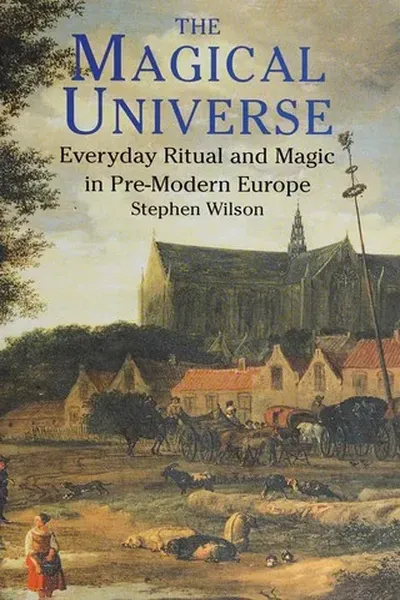
More Free Magic & Ritual Books
View all →