Blink of an Eye

 82
82

Blink of an Eye
Ted Dekker’s *Blink of an Eye* presents a high-concept premise: what if you could perceive the future, or a crucial moment, just before it happens? The execution, however, feels somewhat uneven. Dekker excels at building suspense and crafting disorienting scenarios that mirror the protagonist’s fragmented understanding of time. The initial setup, involving a character seemingly trapped in a loop of imminent danger, is particularly strong, pulling the reader into a state of anxious anticipation. A notable strength lies in Dekker's ability to translate complex temporal paradoxes into visceral, action-oriented sequences. However, the philosophical underpinnings, while intriguing, occasionally feel underdeveloped, serving more as plot devices than deeply explored ideas. The resolution, while aiming for a grand synthesis, might leave some readers wanting a more concrete or satisfying explanation for the temporal anomalies. Despite these limitations, the book offers a compelling, if sometimes perplexing, exploration of fate and perception.
Verdict: A fast-paced, mind-bending thriller that grapples with big questions, even if it doesn't fully resolve them.
📝 Description
82
Ted Dekker's 2008 novel *Blink of an Eye* questions the nature of time and reality.
Published in 2008, *Blink of an Eye* by Ted Dekker places readers within a narrative that challenges how we perceive existence and the flow of time. The story follows characters who confront fractured timelines and deep existential questions. This speculative fiction uses a fast pace, similar to a thriller, to examine philosophical ideas about free will, destiny, and the essence of consciousness. The way the story is told often reflects the confused experiences of the main characters, requiring readers to actively piece together the events as they happen.
This novel suits readers who enjoy speculative fiction that moves beyond typical genre conventions. Those drawn to philosophical questions woven into strong plotlines will find it engaging. It appeals to an audience that likes exploring complex mental states and unusual narrative structures. Readers who appreciate authors like Philip K. Dick or Ursula K. Le Guin for their work on the malleability of reality will likely find *Blink of an Eye* a rewarding experience. It is for those who are comfortable with uncertainty and enjoy a story that leaves a lasting impression.
Emerging in 2008, *Blink of an Eye* arrived during a time when literary and speculative genres were increasingly merging. Authors were more freely examining themes of consciousness, artificial intelligence, and reality's construction, influenced by prior literature and by developments in science and neuroscience. The early 21st century saw a rise in stories that played with temporal mechanics and alternate realities, partly due to popular science and philosophical discussions. This period also noted a growing interest in 'New Weird' fiction, which often combined different genres and introduced surreal or fantastic elements into otherwise realistic settings.
💡 Why Read This Book?
• You will gain a visceral understanding of temporal disorientation by experiencing the narrative's fractured timelines, mirroring the protagonist’s struggle to grasp events in *Blink of an Eye*. • You will confront the philosophical tension between free will and determinism as characters grapple with choices that feel both inevitable and self-directed, a core theme explored throughout the book. • You will ponder the subjective nature of reality and perception, observing how characters perceive time and events differently, challenging your own assumptions about objective truth.
⭐ Reader Reviews
Honest opinions from readers who have explored this book.
❓ Frequently Asked Questions
When was Ted Dekker's Blink of an Eye first published?
Ted Dekker's *Blink of an Eye* was first published in 2008, positioning it within the broader trend of speculative fiction exploring consciousness and reality.
What are the main themes explored in Blink of an Eye?
The novel primarily explores themes of determinism versus free will, the subjective nature of time and perception, and the consequences of glimpsing the future.
Is Blink of an Eye part of a series?
No, *Blink of an Eye* is generally considered a standalone novel by Ted Dekker, though it shares thematic concerns with his other works.
What genre does Blink of an Eye fall into?
It is classified as speculative fiction, often incorporating elements of thriller, psychological fiction, and philosophical fiction due to its exploration of complex ideas.
What makes the narrative structure of Blink of an Eye unique?
The narrative structure often mimics the characters' disorientation, with fractured timelines and non-linear progression, requiring the reader to actively piece together the story.
Who are some authors with similar thematic explorations to Ted Dekker in Blink of an Eye?
Readers who enjoy the reality-bending and philosophical aspects of *Blink of an Eye* might also appreciate works by Philip K. Dick or Ursula K. Le Guin.
🔮 Key Themes & Symbolism
Determinism vs. Free Will
The central conflict in *Blink of an Eye* revolves around whether human actions are predetermined or if genuine free will exists. Characters find themselves seemingly bound by fate, yet they struggle to assert their agency. The narrative constantly questions if perceived choices are truly free or simply steps on a preordained path. This exploration studies the philosophical implications of causality, forcing readers to consider their own perceived control over their lives and the nature of destiny itself. The book uses its high-stakes plot to dramatize these abstract philosophical debates.
Subjectivity of Time and Perception
Dekker plays with the very fabric of time, presenting it not as a linear, objective constant, but as something fluid and subjective. Characters experience temporal anomalies, glimpses of future events, or distorted perceptions of the present. This theme challenges the reader's reliance on a stable, external reality. The 'blink of an eye' concept itself suggests a moment that transcends ordinary temporal boundaries. The narrative encourages a re-evaluation of how our consciousness shapes our experience of time and reality, suggesting that perception is a powerful, reality-altering force.
The Nature of Consciousness
Intertwined with its exploration of time and fate, *Blink of an Eye* probes the nature of consciousness. The characters' internal struggles and evolving awareness are central to understanding the unfolding events. The novel hints that consciousness might be more interconnected and less bound by physical limitations than commonly assumed. It raises questions about the self, memory, and how our awareness interacts with the external world, particularly when confronted with phenomena that defy rational explanation. The characters' journey is as much an internal exploration of their minds as it is an external battle against circumstance.
Glimpses of the Future
The ability to perceive future events, even momentarily, is a critical element in *Blink of an Eye*. This narrative device serves not only to create suspense but also to examine the psychological and ethical burdens of precognition. Knowing what is to come, or believing one does, can paralyze action, create self-fulfilling prophecies, or lead to desperate attempts to alter an unchangeable future. The book explores the paradoxes inherent in such foresight, questioning whether such glimpses are truly helpful or ultimately a curse that undermines genuine experience and choice.
💬 Memorable Quotes
Direct passages from the work, attributed to the author.
“Time is not a river, but a sea.”
— This interpretation highlights the idea that time might not flow in a single, linear direction. Instead, it could be vast, encompassing, and potentially non-sequential, allowing for multiple possibilities or simultaneous experiences, much like different currents or depths within an ocean.
“Every choice casts a ripple.”
— This interpretation emphasizes the interconnectedness of actions and their outcomes. It suggests that even seemingly small decisions have far-reaching consequences that extend beyond the immediate moment, influencing the trajectory of events in ways that may not be immediately apparent.
“The past is a shadow, the future a mist.”
— This metaphorical quote frames the known (past) and the unknown (future) in terms of their elusiveness and lack of solid form. It suggests that while the past may have occurred, its influence can be insubstantial, and the future is inherently uncertain and difficult to grasp.
💡 Key Ideas
Editorial paraphrase of the work's core concepts — not direct quotes.
The future is not a destination, but a consequence.
This paraphrased concept suggests that events are not fixed points to arrive at, but rather the direct results of preceding actions and choices. It implies a dynamic relationship between the present and what is to come, emphasizing causality over predetermination.
We see what we are ready to see.
This paraphrased concept points to the subjective nature of perception and understanding. It suggests that our awareness and capacity to comprehend certain truths or realities are limited by our current state of being or readiness to accept them.
🌙 Esoteric Significance
Tradition
While not overtly tied to a single specific esoteric lineage like Hermeticism or Gnosticism, *Blink of an Eye* speaks to themes found in philosophical skepticism and certain interpretations of Advaita Vedanta or Buddhist concepts of Maya (illusion). It touches upon the idea that perceived reality is not absolute and that consciousness plays an important role in shaping experience. Its focus on subjective time and the limitations of ordinary perception aligns with mystical traditions that emphasize transcending the mundane to achieve a higher state of awareness or truth.
Symbolism
The 'blink of an eye' itself serves as a central symbol, representing moments of profound, instantaneous realization or temporal distortion that lie beyond ordinary human experience. Fractured timelines symbolize the fragmented nature of our perception and the potential for non-linear understanding. Characters grappling with their perceived destiny can be seen as symbols of the human struggle against the illusion of control, representing the soul's journey toward recognizing its true nature beyond temporal constraints.
Modern Relevance
In contemporary times, *Blink of an Eye*'s themes remain highly relevant, particularly with the rise of virtual reality, AI, and discussions surrounding simulation theory. Thinkers exploring consciousness studies, transhumanism, and the philosophy of mind find traces of Dekker's narrative in their work. The book's exploration of subjective reality and the potential for altered states of perception continues to be a fertile ground for contemporary speculative fiction authors and those interested in the intersection of science, philosophy, and mysticism.
👥 Who Should Read This Book
• Readers fascinated by philosophical paradoxes and existential questions, who enjoy narratives that challenge their understanding of reality and free will. • Fans of speculative thrillers who appreciate fast-paced plots interwoven with complex psychological and temporal concepts, seeking a story that offers more than simple entertainment. • Individuals interested in exploring the subjective nature of time and perception, and how consciousness might influence our experience of the world, looking for fictional explorations of these esoteric ideas.
📜 Historical Context
When *Blink of an Eye* was released in 2008, the literary landscape was receptive to speculative narratives that probed the nature of reality and consciousness. This period saw a continued influence from authors like Philip K. Dick, whose works often questioned perception and existence, and a growing interest in philosophical concepts within popular fiction. The early 21st century was marked by rapid technological advancements and increasing discourse around neuroscience and quantum physics, which fueled public fascination with the malleability of reality. Dekker's work fits within this broader cultural current, offering a thriller-paced exploration of themes that were being discussed in both academic and popular spheres. Contemporaries like Blake Crouch were also beginning to explore similar high-concept, reality-bending narratives. The reception of such books often highlighted the audience's appetite for stories that challenged conventional understanding, pushing the boundaries of genre fiction.
📔 Journal Prompts
The concept of the 'blink of an eye' as a moment of altered perception: How might your own understanding of time shift if you could experience such a phenomenon?
Character choices under the shadow of fate: Reflect on a moment where you felt your choices were both entirely your own and somehow predetermined.
The sea of time: If time is a sea rather than a river, what does this imply about past, present, and future events?
The ripple effect of actions: Consider a seemingly small choice you made and trace its potential long-term consequences.
Seeing what you are ready to see: What truths or realities might you currently be unprepared to perceive?
🗂️ Glossary
Determinism
The philosophical belief that all events, including human cognition, decision, and action, are causally determined by an unbroken chain of prior occurrences. In the context of the book, it questions whether characters truly have free will.
Free Will
The power of acting without the constraint of necessity or fate; the ability to act at one's own discretion. The book explores whether characters possess this or are bound by predetermined paths.
Precognition
The purported ability to gain information about events before they happen through extrasensory perception. The novel frequently features characters experiencing glimpses of the future.
Subjective Reality
The philosophical concept that reality is perceived and understood differently by each individual, influenced by their unique experiences, consciousness, and perception.
Temporal Anomaly
A deviation from the expected or normal progression of time. In the book, this manifests as fractured timelines, loops, or distorted perceptions of temporal flow.
Causality
The principle that every event has a cause and an effect. The book plays with causality, exploring how perceived future events might influence present actions, or vice versa.
Illusion (Maya)
In some philosophical and spiritual traditions, the concept that the perceived world is not the ultimate reality, but rather an illusion or a veil that obscures a deeper truth. The book hints at such possibilities regarding characters' perceptions.
🔮 Readers Also Liked
Browse all →









More by Ted Dekker
All books →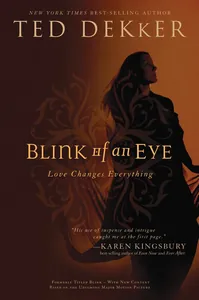


More Free Occult Philosophy Books
View all →