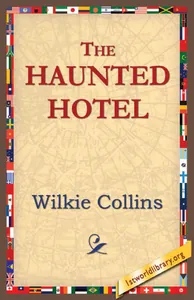
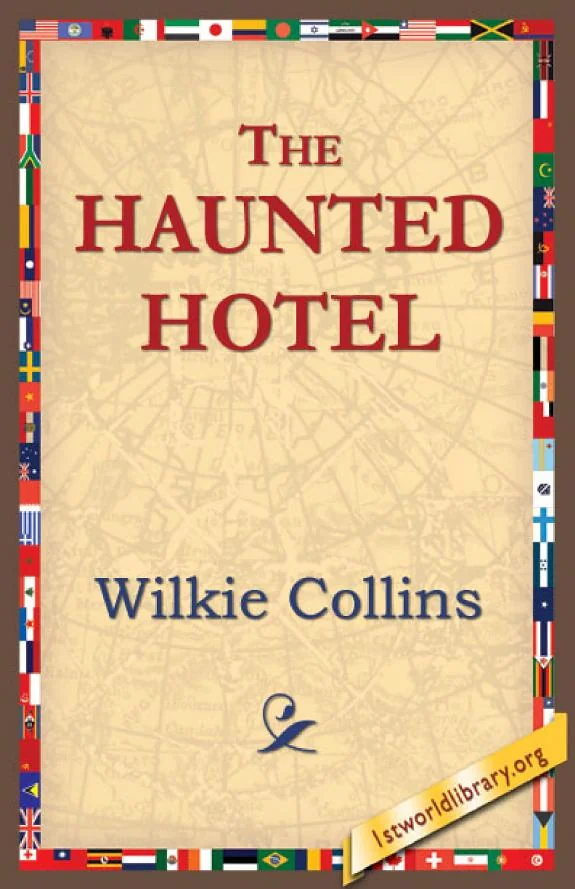
The Haunted Hotel

 77
77

The Haunted Hotel
Wilkie Collins’ *The Haunted Hotel* (1925) presents a chilling, if somewhat overwrought, exploration of psychic phenomena and familial curses. The novel excels in its atmospheric build-up, particularly in the early chapters detailing the eerie occurrences at the hotel. Collins masterfully uses suggestion and the characters' own anxieties to create a pervasive sense of unease, making the reader question what is real and what is imagined. However, the plot can become convoluted in its later stages, with an abundance of characters and subplots that, at times, detract from the central mystery. The character of Agnes Lockwood, a sensitive medium, is a particular strength, embodying the era's interest in spiritualism. A notable passage involves the unsettling manifestations during a séance, which truly capture the novel's spectral intent. While its pacing falters, the book remains a compelling, albeit dense, example of early 20th-century supernatural fiction. It is a worthwhile read for its historical insight into spiritualist themes, despite its narrative sprawl.
📝 Description
77
Wilkie Collins published The Haunted Hotel in 1925, a novel exploring guilt's supernatural effects.
The Haunted Hotel, published in 1925, concerns the psychological and supernatural consequences of guilt and buried secrets. Collins crafts a mysterious narrative where unexplained events at a grand hotel reflect the characters' internal struggles. The plot progresses through a series of disturbing occurrences, slowly revealing a complicated network of relationships and past misdeeds.
The story is suited for readers who enjoy gothic suspense and Victorian writing. It will interest those curious about early literary treatments of the uncanny, particularly how authors began to combine psychological realism with ghostly elements. While Collins shares a distinct talent for suspense and character development with authors like Edgar Allan Poe or Arthur Conan Doyle's supernatural works, his approach is unique.
Collins, a major figure in Victorian literature, was already known for detective novels like The Woman in White (1860). The Haunted Hotel appeared during a time when Spiritualism and the occult were growing in public interest, affecting arts and literature. This period saw widespread fascination with séances, mediums, and contacting the deceased, a cultural undercurrent that likely shaped the novel's spectral mood and its focus on unseen forces.
The novel emerged in the late Victorian era, a period marked by a surge of interest in Spiritualism and the occult. This cultural milieu fostered a fascination with séances, mediums, and the possibility of communicating with spirits. Collins's work taps into this atmosphere, using the spectral and the unexplained not just as plot devices but as reflections of inner psychological states and unresolved past traumas. The book engages with the idea that unseen forces, whether supernatural or psychological, can profoundly influence human lives and relationships.
💡 Why Read This Book?
• Gain insight into early 20th-century literary engagement with Spiritualism, as seen in the character of Agnes Lockwood and her purported mediumistic abilities, a significant cultural force around the 1920s. • Experience Collins' unique method of blending psychological suspense with supernatural dread, particularly in his descriptions of the unsettling events within the titular hotel. • Understand how Victorian and Edwardian authors used gothic tropes and spectral occurrences to explore themes of guilt and inherited sin, a concept central to the novel's plot.
⭐ Reader Reviews
Honest opinions from readers who have explored this book.
❓ Frequently Asked Questions
When was Wilkie Collins' 'The Haunted Hotel' first published?
Wilkie Collins' novel 'The Haunted Hotel' was first published in 1925. This places it within the early 20th century, a period of significant public interest in spiritualism and the occult.
What genre does 'The Haunted Hotel' fall into?
The novel is primarily categorized as gothic fiction and supernatural mystery. It incorporates elements of Victorian and Edwardian literature, focusing on suspense, eerie phenomena, and psychological unease.
Are there actual ghosts in 'The Haunted Hotel'?
The book explores spectral phenomena, but it deliberately blurs the line between supernatural events and psychological manifestations. Readers are encouraged to question the nature of the hauntings, whether they are external spirits or internal projections of guilt.
Who were some contemporaries of Wilkie Collins during the time he wrote?
Wilkie Collins was active during the Victorian era. Contemporaries include Charles Dickens, with whom he collaborated, and writers like George Eliot and Anthony Trollope, though their genres often differed.
What is the significance of the hotel setting in the novel?
The hotel in 'The Haunted Hotel' serves as more than just a backdrop; it is a focal point for the characters' secrets and anxieties. Its isolated, often grand, and transient nature makes it an ideal locus for unexplained events and psychological tension.
Does the book offer a clear resolution to its mysteries?
While the novel aims to resolve its central mysteries, the effectiveness of the resolution can vary for readers. Collins often leaves a degree of ambiguity, allowing for interpretation regarding the supernatural and psychological elements.
🔮 Key Themes & Symbolism
Psychological Haunting
The novel probes the idea that perceived hauntings are often projections of internal guilt, fear, or unresolved trauma. The spectral events within the hotel are intricately linked to the characters' psyches, suggesting that the true 'haunting' originates from within. This aligns with early psychological theories gaining traction in the late 19th and early 20th centuries, which sought to explain the irrational through internal mental states rather than solely external supernatural forces.
Inherited Guilt and Destiny
A significant theme is the burden of past actions and how they can manifest as a form of inherited curse or destiny affecting subsequent generations. The narrative explores how ancestral transgressions or secrets can create a palpable, almost supernatural, weight on the present. This concept of a pervasive, inescapable past is central to the novel's dark atmosphere and the characters' attempts to escape their perceived fate.
The Uncanny and Mediumship
The work engages with the Victorian and Edwardian fascination with Spiritualism and mediumship. It portrays characters who are sensitive to unseen forces or who claim to communicate with the spirit world. The uncanny is presented not just as outright spectral activity but as subtle disturbances and unsettling coincidences that challenge rational understanding, reflecting a broader cultural discourse on the boundaries between the material and the spiritual.
Secrecy and Revelation
The hotel itself functions as a repository for secrets, both personal and familial. The narrative structure often relies on gradual revelation, with hidden truths and past events slowly coming to light, often triggering the most intense supernatural or psychological episodes. This motif underscores the idea that concealed knowledge has a tangible, often destructive, power.
💬 Memorable Quotes
Direct passages from the work, attributed to the author.
“Is it the house that is haunted, or the people who inhabit it?”
— This question, central to the novel's ambiguity, challenges the reader to consider whether the disturbances are external spirits or internal psychological manifestations of the characters' own guilt and fears.
“She spoke of whispers in the night, of cold touches, and shadows that moved against the light.”
— This represents the typical spectral phenomena described in the book. It highlights the sensory nature of the hauntings—auditory, tactile, and visual—designed to create a chilling and unsettling experience for both characters and readers.
“The past, like a relentless tide, kept washing its secrets onto the shores of the present.”
— This metaphor illustrates the theme of inescapable history. It conveys how unresolved past events and hidden truths continuously resurface, impacting the characters' lives and driving the narrative forward with a sense of foreboding.
“He felt a presence, not of flesh and blood, but of something older, colder, and deeply sorrowful.”
— This interpretation of a spectral encounter emphasizes the non-corporeal nature of the haunting. It suggests a lingering emotional residue from past events, a sorrowful spirit tied to the location rather than an active, malevolent entity.
💡 Key Ideas
Editorial paraphrase of the work's core concepts — not direct quotes.
The air in the room was thick with unspoken dread, as if the very walls held their breath.
This paraphrase captures the novel's pervasive atmosphere of unease. It suggests that the supernatural or psychological tension isn't merely observed but felt as a palpable presence, contributing to the characters' growing anxiety and fear.
🌙 Esoteric Significance
Tradition
While not strictly adhering to a single esoteric lineage, *The Haunted Hotel* engages with themes prevalent in late 19th and early 20th-century occultism, particularly Spiritualism and psychical research. It reflects a broader cultural shift towards exploring consciousness and the possibility of non-material realities, aligning with Theosophical interests in the afterlife and psychic phenomena, though without explicit Theosophical doctrine.
Symbolism
The hotel itself functions as a potent symbol of the subconscious mind—a place of hidden rooms (repressed memories), echoing corridors (past traumas), and transient guests (fleeting thoughts or influences). The concept of 'cold spots' or unexplained noises symbolizes the intrusion of the spectral or psychological into the mundane, representing the porous boundary between the conscious and unconscious, or the living and the 'haunting' past.
Modern Relevance
Contemporary explorations of psychological horror, hauntology (the study of the persistence of the past), and the uncanny in literature and film often draw upon the groundwork laid by authors like Collins. His nuanced portrayal of how environments can embody psychological states or historical trauma remains relevant to discussions in gothic studies and theories of place and memory.
👥 Who Should Read This Book
• Students of Victorian and Edwardian literature interested in the evolution of gothic and supernatural fiction, particularly how authors like Collins incorporated contemporary spiritualist beliefs. • Readers drawn to psychological thrillers and mysteries who appreciate narratives that blur the lines between internal states and external phenomena. • Researchers of occult history and cultural studies examining the influence of Spiritualism and psychical research on popular literature and societal consciousness during the early 20th century.
📜 Historical Context
Wilkie Collins' *The Haunted Hotel*, published in 1925, emerged during a period of intense public and artistic engagement with Spiritualism. The late Victorian and Edwardian eras saw a surge in interest in séances, mediums, and the occult, influencing many writers. Collins, already a celebrated author for his detective novels like *The Moonstone* (1868), was writing in a literary landscape where authors like Arthur Conan Doyle explored spiritualist themes, and figures such as Madame Blavatsky and the Theosophical Society were prominent. While Collins’ work predates the peak of the ghost story revival post-World War I, *The Haunted Hotel* tapped into the lingering fascination with the uncanny and the supernatural that permeated society. The novel’s reception likely reflected this interest, with critics and readers debating the plausibility of its spectral events and its psychological underpinnings.
📔 Journal Prompts
The spectral manifestations in the hotel, reflect on their potential origins.
Agnes Lockwood's sensitivity, consider its portrayal and your own intuitive experiences.
The theme of inherited guilt, how might past actions echo into the present?
The hotel as a symbol, what hidden 'rooms' exist within your own life?
The balance between psychological and supernatural, where do you perceive the true source of fear?
🗂️ Glossary
Spiritualism
A religious movement prominent in the 19th and early 20th centuries, centered on the belief that the spirits of the dead can communicate with the living through mediums.
The Uncanny
In literature and psychology, the uncanny refers to something that is strangely familiar yet foreign at the same time, evoking a sense of unease or dread.
Medium
An individual believed to have the ability to communicate with spirits of the dead or other supernatural entities, acting as an intermediary.
Gothic Fiction
A genre characterized by elements of horror, death, and gloom, often set in old castles or isolated locations, featuring mystery, suspense, and supernatural occurrences.
Psychical Research
An interdisciplinary field that investigates alleged paranormal phenomena, including telepathy, clairvoyance, and hauntings, often employing scientific methods.
Spectral Phenomena
Events or occurrences attributed to spirits or ghosts, often involving apparitions, unexplained noises, or physical sensations like cold spots.
Inherited Guilt
The concept that guilt or responsibility for past transgressions can be passed down through generations, affecting the descendants.
🔮 Readers Also Liked
Browse all →








More by Wilkie Collins
All books →


More Free Occult Philosophy Books
View all →