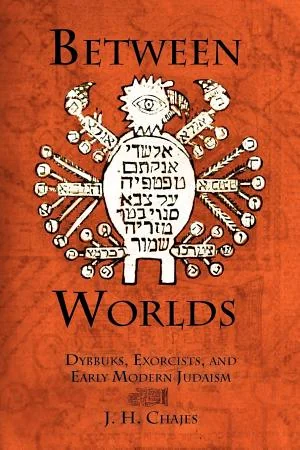
Between Worlds
 73
73

Between Worlds
J. H. Chajes’s Between Worlds presents a meticulously researched account of rabbinic exorcism, moving beyond simplistic portrayals of magic. The book excels in its detailed exposition of the techniques employed by exorcists, grounding esoteric practices in historical anthropology. A particular strength lies in Chajes’s ability to analyze the complex interplay between textual sources and lived ritual. However, the academic density, while a virtue for scholars, may present a barrier for the casual reader seeking a more narrative approach to the subject. The exploration of the exorcist’s role, particularly the detailed breakdown of specific incantations and their purported efficacy, is a standout section. Between Worlds offers a valuable, scholarly contribution to the understanding of Jewish magical traditions.
📝 Description
73
J. H. Chajes's 2003 book examines Jewish exorcism practices in rabbinic circles.
Published in 2003, J. H. Chajes's "Between Worlds" offers a scholarly look at Jewish exorcism rituals. The book uses historical anthropology and textual analysis to detail beliefs and practices related to spirit possession among certain rabbis. It goes beyond simple description to analyze the theories and practical methods used for expelling spirits.
The work is aimed at academics studying religion, Jewish history, and comparative demonology. It will interest those who study the practical use of magic and ritual in various religions, especially when supernatural events were managed through established customs. Advanced students of esoteric traditions seeking historical background will also find value in this study.
Chajes places rabbinic exorcism within larger historical and anthropological contexts. The book considers how Jewish communities, shaped by their environment and religious ideas, understood and responded to perceived spirit possession. It traces the development of these practices over time, looking at textual evidence and the social roles they fulfilled.
This study situates Jewish exorcism within the broader context of Kabbalah and Jewish mysticism, traditions that engage with the spiritual world and its perceived inhabitants. It examines how rabbinic circles developed specific practices for dealing with intrusive spirits, often referred to as dybbukim. The book analyzes the theoretical frameworks and ritualistic actions employed, connecting them to wider Near Eastern and Mediterranean magical traditions. It highlights the role of the exorcist as an intermediary, managing interactions between the human and spiritual planes according to a particular religious worldview.
💡 Why Read This Book?
• Gain a nuanced understanding of rabbinic demonology, including specific concepts like dybbukim, which are detailed through textual analysis of practices dating back centuries. • Discover the practical, ritualistic methods employed by historical Jewish exorcists, moving beyond abstract theory to concrete examples of amulets and incantations. • Appreciate the anthropological context of spirit possession within Jewish communities, understanding its social functions as explored through case descriptions from the research.
⭐ Reader Reviews
Honest opinions from readers who have explored this book.
❓ Frequently Asked Questions
What historical period does J. H. Chajes's research on rabbinic exorcism cover?
The research in Between Worlds primarily examines rabbinic exorcism practices and beliefs that evolved over centuries, with a focus on the historical development and application of these techniques within Jewish communities.
What is a dybbuk as discussed in Between Worlds?
A dybbuk, as analyzed in the book, refers to a possessing spirit or demon within Jewish folklore and magical traditions, which rabbinic exorcists sought to expel through specific rituals.
Does the book provide examples of actual exorcism rituals?
Yes, Between Worlds offers detailed descriptions and analyses of the magical techniques and ritualistic performances deployed by rabbinic exorcists to expel spirits.
Is Between Worlds suitable for someone new to esoteric studies?
While Between Worlds is academically rigorous, its detailed descriptions of historical practices and concepts like dybbukim can offer a solid, factually grounded introduction for those seriously interested in the esoteric dimensions of Jewish tradition.
What is the main academic discipline informing this book?
The primary discipline informing Between Worlds is historical anthropology, combined with textual analysis of rabbinic literature and magical traditions.
Where can I find more information on Jewish magical practices from this era?
Between Worlds by J. H. Chajes provides extensive scholarly insight. For broader context, exploring works on Kabbalah and Jewish folklore may offer additional perspectives on related magical practices.
🔮 Key Themes & Symbolism
Rabbinic Spirit Expulsion
The work meticulously documents the methods and beliefs surrounding the expulsion of possessing spirits (dybbukim) within specific rabbinic traditions. It moves beyond sensationalism to present a scholarly analysis of the rituals, incantations, and theological frameworks employed by exorcists. Chajes examines how these practices were understood and enacted, offering a unique window into the practical application of esoteric knowledge within historical Jewish communities.
Historical Anthropology of Possession
Between Worlds applies principles of historical anthropology to understand the phenomenon of spirit possession and its management in Jewish contexts. It explores the cultural and social dimensions of these beliefs, examining how possession was perceived, diagnosed, and treated. The book analyzes the role of the exorcist as a social and spiritual mediator, highlighting the intersection of religious belief, psychological states, and communal practices.
Jewish Magical Techniques
This theme focuses on the concrete magical techniques utilized by rabbinic exorcists. Chajes details the use of amulets, divine names, specific prayers, and ritualistic actions designed to compel or banish spirits. The analysis situates these techniques within broader Near Eastern magical traditions while emphasizing their specific articulation within the Jewish esoteric landscape, revealing a practical and often intricate system of spiritual intervention.
Conceptualizing the Spirit World
The book investigates how the spirit world, particularly the nature and agency of possessing entities, was conceptualized within rabbinic thought. It explores the taxonomy of spirits, their origins, and their interactions with the human realm. Chajes analyzes the theological and cosmological underpinnings that informed these views, demonstrating how a detailed understanding of the spirit world was essential for effective exorcism practices.
💬 Memorable Quotes
Direct passages from the work, attributed to the author.
“Analysis of magical techniques deployed by rabbinic exorcists.”
— This highlights the book's core contribution: dissecting the practical, often ritualistic, methods used by historical figures to address spirit possession, grounding esoteric practices in scholarly examination.
“Description of cases of possession.”
— The work provides specific examples and narratives of individuals believed to be possessed, offering concrete instances that anchor the theoretical analysis of exorcism within lived experience.
“Informed by recent research in historical anthropology.”
— This points to the book's methodological foundation, emphasizing its use of contemporary academic tools to interpret historical phenomena, lending it credibility and depth.
“Expel the ghostly intruders.”
— This phrase vividly captures the active, interventionist nature of rabbinic exorcism as presented in the book, framing the process as a direct confrontation with unwanted spiritual entities.
“Annotation of possession cases and exorcism.”
— Suggests a detailed, scholarly commentary on documented instances of possession and the subsequent ritualistic responses, indicating a thorough and analytical approach.
🌙 Esoteric Significance
Tradition
Between Worlds is situated within the study of Jewish esotericism and folk magic, specifically focusing on practices that fall under the umbrella of practical Kabbalah and rabbinic magic. It examines how esoteric concepts, particularly those related to angelology, demonology, and the power of divine names, were translated into practical rituals for addressing perceived spiritual disturbances. The work fits within a lineage of scholarship that seeks to understand the operative dimensions of Jewish mysticism, moving beyond purely theoretical or meditative aspects.
Symbolism
Central symbols analyzed include the power of divine names (Shemot Kadosh), which were believed to hold immense efficacy in compelling or banishing spirits. Another key motif is the use of amulets, often inscribed with scriptural verses, divine names, or specific sigils, serving as protective talismans or tools for ritual intervention. The concept of the 'ghostly intruder' itself functions symbolically, representing chaos, impurity, or the disruption of divine order that the exorcist sought to rectify.
Modern Relevance
Contemporary practitioners and scholars of Jewish mysticism and esotericism continue to draw upon Chajes's work for its detailed documentation of historical practices. Researchers exploring comparative demonology or the anthropology of religion find its case studies and analyses valuable. Modern practitioners of Jewish magical arts, while perhaps not directly replicating ancient rituals, utilize the historical understanding provided by such works to inform their own interpretations and approaches to spiritual protection and intervention.
👥 Who Should Read This Book
• Scholars of Jewish history and religion seeking in-depth analysis of esoteric practices beyond theoretical Kabbalah. • Anthropologists and historians of magic interested in comparative studies of spirit possession and exorcism rituals across cultures. • Students of comparative demonology and occult traditions looking for historically grounded case studies of spiritual intervention techniques.
📜 Historical Context
Published in 2003, J. H. Chajes's Between Worlds emerged during a period of renewed academic interest in Jewish magic and esotericism, moving beyond earlier, often dismissive, scholarship. The late 20th and early 21st centuries saw a significant increase in studies examining Kabbalah and folk magic not merely as theological curiosities but as integral components of Jewish history and practice. Chajes built upon and contributed to this burgeoning field, which sought to understand Jewish mystical and magical traditions through rigorous historical and anthropological lenses. This work offered a specific, focused analysis on exorcism, a practice often relegated to the fringes of study. It engaged with scholarship on broader Mediterranean and Near Eastern magical traditions, implicitly positioning Jewish practices within a wider cultural milieu, while also highlighting their unique rabbinic articulations. The meticulous research provided a counterpoint to more generalized or speculative accounts of Jewish magic, establishing a benchmark for detailed analysis.
📔 Journal Prompts
The rabbinic concept of the dybbuk and its societal function.
Ritualistic performances and their efficacy in spirit expulsion.
Historical anthropology's role in understanding possession cases.
The symbolic power of divine names in Jewish magic.
Analyzing the exorcist's authority and mediation.
🗂️ Glossary
Dybbuk
In Jewish folklore, a dybbuk is a possessing spirit, often the dislocated soul of a deceased person, believed to attach itself to a living person and influence their behavior.
Rabbinic Exorcism
Rituals and practices performed by learned Jewish individuals (rabbis or other knowledgeable figures) aimed at expelling malevolent spirits or demons from a possessed person or place.
Historical Anthropology
An academic field that combines historical research with anthropological methods to study past societies, their beliefs, practices, and cultural systems.
Magical Techniques
Specific methods, often involving ritual, incantation, or the use of symbolic objects, believed to influence supernatural forces or achieve desired outcomes.
Spirit Possession
A state or belief in which an entity (spirit, demon, etc.) is thought to have taken control of a person's body, affecting their mind and actions.
Shemot Kadosh
Literally 'Holy Names,' referring to the divine names or combinations of divine names used in Jewish mystical and magical practices for protection, invocation, or compulsion.
Amulets
Objects, typically worn or carried, inscribed with symbols, names, or texts believed to offer magical protection or power against harm or malevolent forces.
🔮 Readers Also Liked
Browse all →








More Free Occult Philosophy Books
View all →