Between the gates
 72
72

Between the gates
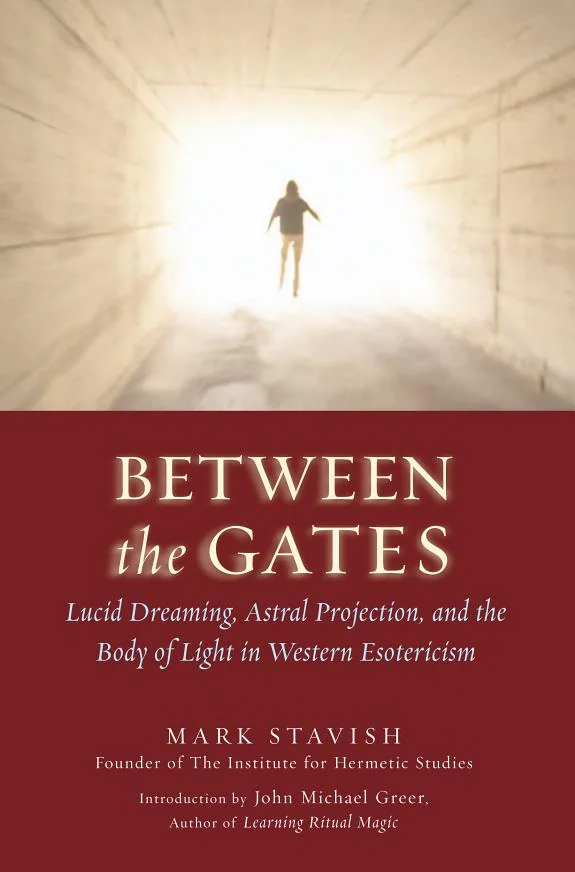
Stavish's "Between the Gates" offers a welcome, almost architectural, approach to occult philosophy. Where many texts sprawl, Stavish builds. The section detailing the "Five Gates" provides a lucid framework for conceptualizing spiritual progress, a concept that feels particularly robust. However, the very systematic nature can, at times, feel somewhat dry, particularly for readers accustomed to more narrative or experiential accounts of magic. The author's assertion regarding the necessity of specific meditative states for certain practices, while logically presented, might benefit from more direct experiential anchors for the reader. Ultimately, "Between the Gates" is a valuable, if demanding, cartography of the inner landscape for the dedicated student.
📝 Description
72
Mark Stavish published "Between the Gates" in 2008, structuring esoteric philosophy for serious students.
Mark Stavish's "Between the Gates," published in 2008, presents a systematic approach to esoteric philosophy. The book moves past theoretical discussions to provide practical frameworks for understanding occult disciplines. It is designed as a systematic presentation of ideas, aiming to guide dedicated students rather than offer a narrative. The work is intended for individuals who have already engaged with initial occult literature and seek a more rigorous method for their studies. It suits practitioners aiming to refine their grasp of magical theory, organize their practice, and interact with complex ideas found in various esoteric traditions. This is not a text for those entirely new to the subject.
Stavish addresses concepts like the nature of consciousness, the architecture of spiritual planes, the significance of symbolism in magical work, and the operation of ritual. He highlights the necessity of disciplined study and merging theoretical understanding with practical application. The book frames the occult path as one demanding consistent effort and a clear perception of the forces one is working with.
Published in 2008, "Between the Gates" appeared during a time of increased accessibility in esoteric publishing, yet often with a lack of deep structural analysis. Stavish's book addresses a need for clarity and systemization within modern occultism. This field had experienced a resurgence but sometimes followed eclectic and disorganized paths. The work follows in the tradition of authors like Israel Regardie, who aimed to bring order to ceremonial magic.
💡 Why Read This Book?
• You will learn a systematic method for understanding the internal architecture of esoteric development, directly applying Stavish's "Five Gates" model to your own practice. • You will gain a clearer conceptual grasp of the relationship between consciousness, symbolism, and ritual as presented in Chapter 3, "The Mechanics of Manifestation." • You will feel equipped with a framework to critically assess various occult traditions, moving beyond superficial understandings to a more structured engagement with their core principles, as explored in the book's comparative analysis.
⭐ Reader Reviews
Honest opinions from readers who have explored this book.
❓ Frequently Asked Questions
What is the primary focus of Mark Stavish's 'Between the Gates'?
The book primarily focuses on providing a structured, systematic approach to understanding esoteric philosophy and magical development. It outlines conceptual frameworks for spiritual progress, rather than offering a narrative.
Is 'Between the Gates' suitable for beginners in occultism?
It is generally not recommended for absolute beginners. The work assumes a foundational understanding of esoteric concepts and is best suited for students who have already engaged with introductory occult literature.
What historical period does the book's context relate to?
Published in 2008, it emerged during a period of renewed interest in esoteric studies. It can be seen as a contribution to systematizing occult knowledge, following earlier efforts by figures like Israel Regardie.
Does the book offer practical exercises?
While primarily conceptual, the book provides frameworks that can inform and structure practical magical and spiritual work. It emphasizes the integration of theory with practice.
What are some key concepts explored in 'Between the Gates'?
Key concepts include the nature of consciousness, spiritual planes, the role of symbolism in ritual, and the disciplined effort required for occult development.
Who is the author, Mark Stavish?
Mark Stavish is an author and educator known for his systematic approach to occult and esoteric subjects, aiming to provide clarity and structure to complex philosophical systems.
🔮 Key Themes & Symbolism
Systematic Esoteric Frameworks
The core of "Between the Gates" lies in its construction of systematic frameworks for understanding occultism. Stavish moves away from purely intuitive or historical accounts to present a structured model for spiritual and magical progression. This is evident in his "Five Gates" concept, which provides distinct stages or areas of focus for practitioners. The work emphasizes that effective magical work requires a clear conceptual map, allowing practitioners to orient themselves within the subtle realms and understand the mechanics of their own development.
Consciousness and Manifestation
A significant theme is the exploration of consciousness as the primary vehicle for magical operation. Stavish posits that understanding the nature and potential of consciousness is paramount to influencing reality. This involves not just personal awareness but also the manipulation of symbolic language and energetic forces. The book elaborates on how specific mental states and focused intention, when applied correctly, become the tools for manifestation, linking internal shifts to external results.
The Role of Symbolism
Symbolism is presented not merely as decorative or mnemonic, but as a fundamental language of the universe and a crucial component of magical practice. Stavish details how symbols act as conduits for energy and information, bridging the mundane and the sacred. Understanding and correctly employing symbolic systems, whether ancient archetypes or personal sigils, is shown to be essential for effective communication with subtle forces and for shaping the practitioner's inner and outer worlds.
Disciplined Practice
The book consistently underscores the necessity of discipline and rigorous study in occult pursuits. Stavish argues that haphazard or purely intellectual engagement is insufficient. True progress requires consistent effort, methodical application of principles, and a willingness to integrate theoretical knowledge into lived experience. This emphasis on disciplined practice serves as a counterpoint to more casual or sensationalized portrayals of magic.
💬 Memorable Quotes
Direct passages from the work, attributed to the author.
“The practitioner must possess a clear map of the terrain before attempting the journey.”
— This highlights Stavish's emphasis on systematic understanding. He believes a well-defined conceptual framework is essential for reading through the complexities of occult work, preventing aimless wandering.
“Ritual is the structured application of will through symbolic action.”
— This definition emphasizes the active and intentional nature of ritual within Stavish's system, focusing on the deliberate use of symbols to enact change.
“Without a developed internal discipline, external magical operations remain fundamentally unstable.”
— This interpretation stresses the foundational importance of inner development. Stavish suggests that outer magical effectiveness is contingent upon a strong, disciplined inner foundation.
“The Five Gates represent distinct phases of conscious engagement with the subtle worlds.”
— This refers to a central organizing principle in the book, suggesting a graduated pathway for practitioners to progressively deepen their understanding and interaction with esoteric realities.
💡 Key Ideas
Editorial paraphrase of the work's core concepts — not direct quotes.
Consciousness is not merely a product of the brain; it is the fundamental medium through which reality is experienced and shaped.
This paraphrase points to the book's view of consciousness as an active, creative force, central to magical practice and the construction of one's experienced reality.
🌙 Esoteric Significance
Tradition
Stavish's work draws heavily from Western Esoteric traditions, particularly Hermeticism and ceremonial magic, as codified by orders like the Hermetic Order of the Golden Dawn. It seeks to distill and systematize the core principles found within these lineages, presenting them in a logical, accessible manner. Unlike purely historical or devotional approaches, "Between the Gates" focuses on the practical application and theoretical coherence of these traditions for the modern practitioner, acting as a bridge between historical teachings and contemporary occult philosophy.
Symbolism
Central symbols explored include the "Gates" themselves, representing stages of initiation or conscious development. The concept of the "Middle Pillar" and "Lesser Banishing Ritual of the Pentagram" (though not always named explicitly, their underlying principles are present) often feature as foundational tools for energetic management and spiritual alignment. Stavish also emphasizes the power of archetypal symbolism and sigilization as direct means of interacting with subtle energies and influencing consciousness.
Modern Relevance
Contemporary practitioners of Western Esotericism, particularly those engaged with Golden Dawn-based systems or seeking a more structured magical education, find value in Stavish's methodical approach. His work is relevant to modern occult educators and students who prioritize clarity, systematic progression, and a robust theoretical foundation. Thinkers and groups focused on integrating psychological principles with magical practice also draw upon his conceptual models for understanding consciousness and manifestation.
👥 Who Should Read This Book
• Dedicated students of Hermeticism and ceremonial magic seeking a structured curriculum to deepen their theoretical understanding and practical application. • Practitioners who feel overwhelmed by the eclectic nature of modern occultism and desire a systematic framework for organizing their studies and practices. • Comparative religion scholars or philosophers interested in the structural and systematic aspects of esoteric traditions beyond mere historical accounts.
📜 Historical Context
Published in 2008, "Between the Gates" arrived during a period of significant public access to esoteric knowledge, facilitated by the internet and a general resurgence of interest in spirituality outside mainstream religious structures. This era saw a proliferation of occult authors, some adhering to established traditions like Thelema or Golden Dawn-derived systems, while others embraced more eclectic or syncretic approaches. Stavish's work distinguished itself by offering a highly systematic and structured presentation, aiming to provide a coherent theoretical underpinning for practitioners who might otherwise encounter fragmented or unsystematic teachings. It implicitly engaged with the ongoing discourse regarding the legitimacy and methodology of modern occultism, seeking to establish a rigorous path that contrasted with more New Age or superficial interpretations.
📔 Journal Prompts
The concept of the Five Gates: How does your current practice align with or diverge from these potential stages of development?
Reflect on the symbolic language within your chosen tradition; how does it function as a map?
Consider the relationship between internal discipline and external magical results as presented by Stavish.
Analyze a specific ritual or practice through the lens of structured symbolic action.
How can the principles of consciousness exploration inform your daily life and spiritual goals?
🗂️ Glossary
Esoteric
Pertaining to inner, hidden, or secret knowledge, typically concerning spiritual or mystical matters, accessible to a select group of initiates or practitioners.
Occultism
A broad term encompassing the study and practice of hidden or secret arts and sciences, including magic, alchemy, astrology, and divination, often focused on understanding and influencing natural and supernatural forces.
Symbolism
The use of symbols—objects, images, or words—to represent abstract ideas or qualities, particularly important in esoteric traditions for conveying complex spiritual concepts and energies.
Consciousness
The state or quality of awareness, or of being aware of an external object or something within oneself. In esoteric contexts, often viewed as a fundamental force and medium of reality.
Ritual
A prescribed series of actions or ceremonies performed in a specific order, often with symbolic meaning, intended to achieve a particular spiritual or magical effect.
Manifestation
The process by which an idea, intention, or subtle energy takes form in the physical world, often understood as a key outcome of effective magical practice.
Theurgy
A system of magic focused on invoking divine powers or spirits for the purpose of purification and the union of the soul with the divine.
🔮 Readers Also Liked
Browse all →









More by Mark Stavish
All books →



More Free Occult Philosophy Books
View all →