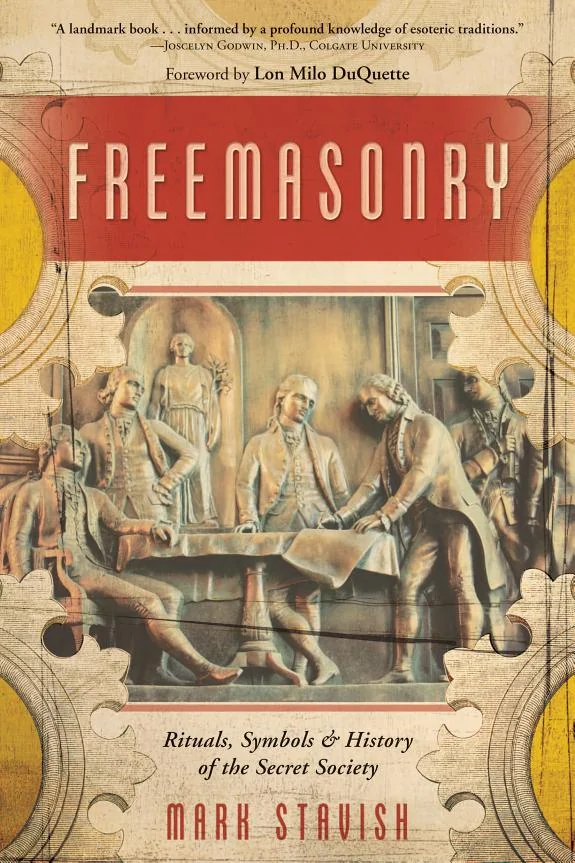
Freemasonry
 84
84

Freemasonry
Stavish's "Freemasonry" provides a much-needed anchor in the often-turbulent waters of Masonic literature, steering clear of sensationalism and focusing on the philosophical architecture. He correctly identifies the ritualistic progression as a system of moral and spiritual allegory, a point often lost in popular discussions. A particular strength is his clear exposition of the symbolic language, especially the architectural motifs that pervade the Craft. However, the work occasionally feels overly focused on the ritualistic minutiae without fully exploring the broader societal impact of Freemasonry during its formative periods, such as its connections to the Enlightenment philosophical salons. The discussion on the legend of Hiram Abiff, while thorough, could have benefited from a more comparative analysis with similar myths from other traditions. Nevertheless, for those seeking an ordered understanding of Masonic philosophy, Stavish offers a lucid and well-researched guide.
📝 Description
84
Mark Stavish's "Freemasonry" demystifies the fraternity's structure and philosophy in 2010.
Mark Stavish's "Freemasonry" moves past common misconceptions to detail the fraternity's structural and philosophical foundations. The book traces its historical development, examines ritualistic practices, and explains the symbolic language at its heart. Stavish aims to clarify Masonic teachings as a system for moral and spiritual instruction, drawing connections to other esoteric traditions. He explains Masonic degrees and their progression as allegorical steps.
This work is a serious resource for understanding Freemasonry, especially its esoteric aspects. It is useful for those outside the fraternity and for Masons seeking deeper context. Students of Western esotericism, comparative religion, and secret society history will find valuable information. The book suits readers who prefer a critical, analytical approach to understanding the philosophical framework, rather than sensationalized accounts.
This book places Freemasonry within the broader field of Western esotericism. It examines the fraternity's symbolic language and ritual as a structured system of moral and spiritual instruction, similar to how other esoteric traditions operate. Stavish connects Masonic philosophy to the Enlightenment and acknowledges how different interpretations have shaped its practice over time. The work provides context for understanding Masonic teachings as part of a larger esoteric heritage.
💡 Why Read This Book?
• Understand the symbolic language of Freemasonry: Learn how architectural metaphors and allegorical narratives, such as the legend of Hiram Abiff, are used within Masonic ritual to convey moral and spiritual lessons, as detailed in the book's exploration of key concepts. • Gain historical perspective on the Craft: Discover the transition of Freemasonry from operative guilds to a speculative society in the early 18th century, understanding its context within the broader intellectual currents of the Enlightenment. • Differentiate myth from reality: Acquire a factual basis for understanding Freemasonry's structure, philosophy, and practices, moving beyond sensationalized accounts to a grounded appreciation of its esoteric teachings.
⭐ Reader Reviews
Honest opinions from readers who have explored this book.
❓ Frequently Asked Questions
What is the primary purpose of Masonic ritual according to Mark Stavish?
According to Stavish, Masonic ritual primarily serves as a structured system of moral and spiritual instruction. It utilizes allegory and symbolism, particularly architectural motifs, to guide the initiate through an allegorical journey of self-improvement and the pursuit of wisdom.
How does Stavish explain the historical origins of Freemasonry?
Stavish traces Freemasonry's origins from medieval operative stonemason guilds to its transformation into a speculative society. He situates this shift within the intellectual and cultural milieu of the Enlightenment, highlighting the development of its philosophical underpinnings.
What role does symbolism play in Freemasonry as presented in the book?
Symbolism is central, with Stavish focusing on architectural metaphors and allegorical narratives. These symbols are presented not as mere decoration, but as a deliberate language designed to impart moral lessons and facilitate spiritual understanding for the Mason.
Is this book suitable for non-Masons interested in esoteric traditions?
Yes, the book is highly suitable for non-Masons interested in esoteric traditions. It provides a clear, demystified examination of Masonic philosophy and symbolism, contextualizing it within broader Western esoteric thought and history.
What key concept does Stavish use to describe the Masonic journey?
Stavish frequently employs the concept of 'spiritual architecture' or 'building a better self'. This metaphor frames the Masonic journey as a process of constructing one's inner life through moral discipline and the application of philosophical principles.
When was Mark Stavish's "Freemasonry" first published?
Mark Stavish's "Freemasonry" was first published in 2007, offering a contemporary yet historically grounded perspective on the fraternity's esoteric dimensions.
🔮 Key Themes & Symbolism
Allegory and Moral Instruction
The work thoroughly examines Freemasonry not as a religion or political entity, but as a system of moral and spiritual education. Stavish emphasizes the use of allegory, particularly within the ritualistic structure of the degrees, to convey profound ethical principles. He illustrates how narratives like the legend of Hiram Abiff serve as allegorical vehicles for understanding concepts such as fidelity, labor, and the pursuit of truth. This approach positions Masonic practice as a continuous process of self-refinement, where symbols and stories are tools for building character and fostering wisdom.
Symbolic Architecture
A central theme is the pervasive use of architectural and geometric symbolism within Freemasonry. Stavish explains how concepts like the building of King Solomon's Temple are not merely historical references but allegorical blueprints for constructing one's inner life. Tools of the operative mason are reinterpreted as symbols for moral virtues and spiritual development. This symbolic language, rooted in the craft traditions, provides a framework for understanding the universe and humanity's place within it, offering a structured method for esoteric inquiry.
Historical Evolution of the Craft
Stavish situates Freemasonry within its historical trajectory, detailing its transformation from medieval operative guilds to the speculative fraternity that emerged in the early 18th century. The book explores the intellectual currents of the Enlightenment that shaped Masonic philosophy and ritual. It acknowledges the geographical and temporal variations in Masonic practice and symbolism, providing context for understanding its enduring presence and evolution. This historical perspective is crucial for appreciating the philosophical depth and resilience of the institution.
Esoteric Framework
The book presents Freemasonry as a distinct esoteric tradition within the Western stream. Stavish connects Masonic teachings to broader Hermetic and philosophical traditions, highlighting its unique approach to spiritual development. He clarifies the nature of Masonic degrees as progressive stages of enlightenment, emphasizing the internal work required. This esoteric angle distinguishes the work from purely historical or sociological accounts, focusing instead on the philosophical and symbolic underpinnings that offer a path toward self-knowledge.
💬 Memorable Quotes
Direct passages from the work, attributed to the author.
“The ritualistic progression within Freemasonry is best understood as an allegorical journey.”
— This statement frames the core of Stavish's thesis, suggesting that the degrees and ceremonies are not literal events but symbolic representations designed to teach moral and spiritual lessons.
“Architectural metaphors form a fundamental symbolic language for Masonic teachings.”
— This highlights the book's focus on how tools and concepts from stonemasonry are reinterpreted esoterically to represent principles of character building and universal order.
“Freemasonry emerged as a speculative order during the Age of Enlightenment.”
— This factual anchor places the fraternity within a specific historical and intellectual context, emphasizing the philosophical shifts that influenced its development beyond operative craft guilds.
“The legend of Hiram Abiff serves as a central allegorical narrative.”
— This points to a key story within Masonic lore that Stavish uses to illustrate the principles of fidelity, loss, and the search for lost wisdom central to the fraternity's symbolism.
“The fraternity offers a structured path for moral and spiritual self-improvement.”
— This interpretation underscores the book's depiction of Freemasonry as a system for personal development, utilizing its rituals and symbols as tools for disciplined growth.
🌙 Esoteric Significance
Tradition
This work firmly situates Freemasonry within the Western Esoteric Tradition, specifically drawing parallels with Hermeticism and Gnosticism through its emphasis on inner knowledge and spiritual alchemy. Stavish interprets Masonic ritual as a form of practical philosophy, akin to the self-refinement sought in these lineages. While distinct, its allegorical method and symbolic language align with traditions that use symbolic systems to map the path of spiritual ascent and the attainment of gnosis or self-realization.
Symbolism
Central symbols explored include the Square and Compasses, representing morality and self-control; the Winding Staircase, symbolizing the ascent through degrees of knowledge and spiritual development; and the legend of Hiram Abiff, an allegory for the quest for lost wisdom and the resurrection of the soul. Stavish interprets these not merely as emblems but as active principles and narrative devices within the Masonic system for imparting esoteric truths.
Modern Relevance
Stavish's work remains relevant for contemporary students of Western esotericism, comparative religion, and symbolic studies. Thinkers and practitioners exploring ritual as a tool for psychological and spiritual transformation, and those investigating the historical development of esoteric societies, often reference his clear exposition. It provides a foundational text for understanding how ancient symbolic systems can be adapted to modern contexts for personal growth and philosophical inquiry.
👥 Who Should Read This Book
• Students of Western Esotericism: Those investigating Hermeticism, Gnosticism, and Kabbalah will find "Freemasonry" offers a valuable comparative perspective on symbolic systems and ritualistic development. • Inquisitive Masons: Initiated members seeking a deeper, philosophical understanding of their ritual and symbolism, beyond customary explanations, will benefit from Stavish's analytical approach. • Researchers of Secret Societies: Academics and enthusiasts studying the historical and philosophical evolution of fraternal orders and their societal impact will find a well-researched overview.
📜 Historical Context
Mark Stavish's "Freemasonry" emerged in 2007, a period when interest in esoteric traditions, including Freemasonry, was experiencing a resurgence in popular and academic circles. The book's appearance addressed a need for grounded, philosophical interpretations amid a sea of sensationalist literature and conspiracy theories. It positioned itself against the occult boom of the late 20th century, which often blurred distinct traditions. Stavish’s work engages with the historical trajectory of Freemasonry, particularly its transition from operative guilds in the late Middle Ages to speculative lodges in the early 18th century. This era, marked by the Enlightenment, saw Freemasonry become intertwined with philosophical discourse, moral philosophy, and burgeoning ideas of fraternity and social order. Key figures like Elias Ashmole, who documented early Masonic practices, and the philosophical underpinnings discussed by contemporaries of the early Grand Lodges, provide a backdrop. The book implicitly engages with the critical reception Freemasonry faced, from papal bulls to anti-Masonic tracts, by offering a reasoned defense of its esoteric and philosophical merit.
📔 Journal Prompts
The allegorical journey of Masonic ritual: How does the concept of staged progression mirror personal development?
Reflect on the symbolism of architectural tools like the square and compass in your own life.
Analyze the legend of Hiram Abiff as a metaphor for seeking lost knowledge or truth.
Consider the Enlightenment's influence on the philosophical underpinnings of Freemasonry.
How does the concept of 'building a better self' manifest in non-Masonic spiritual practices?
🗂️ Glossary
Speculative Freemasonry
Refers to Freemasonry as it evolved from the 17th century onwards, focusing on philosophical and moral teachings rather than the operative craft of stonemasonry.
Operative Masonry
The historical practice of stonemasonry guilds, from which Speculative Freemasonry is believed to have descended, involving the literal construction of buildings.
Allegory
A story, poem, or picture that can be interpreted to reveal a hidden meaning, typically a moral or political one. Stavish emphasizes its use in Masonic ritual.
Hiram Abiff
A central figure in Masonic legend, often depicted as the master craftsman at King Solomon's Temple, whose story embodies themes of loyalty, betrayal, and the pursuit of knowledge.
The Three Degrees
The primary levels of initiation and progression within Craft Freemasonry: Entered Apprentice, Fellow Craft, and Master Mason, each representing stages of learning and development.
Symbolic Language
The system of signs, gestures, and allegorical narratives used within Freemasonry to convey philosophical and moral truths, often drawing from operative craft tools and architecture.
Gnosis
Knowledge of spiritual mysteries, often considered salvific. Stavish links the Masonic pursuit of wisdom to this concept found in various esoteric traditions.
This book appears in 1 collection
🔮 Readers Also Liked
Browse all →



From the “Freemasonry” Collection
View all →





More Free Freemasonry & Secret Societies Books
View all →