Ben

 61
61

Ben

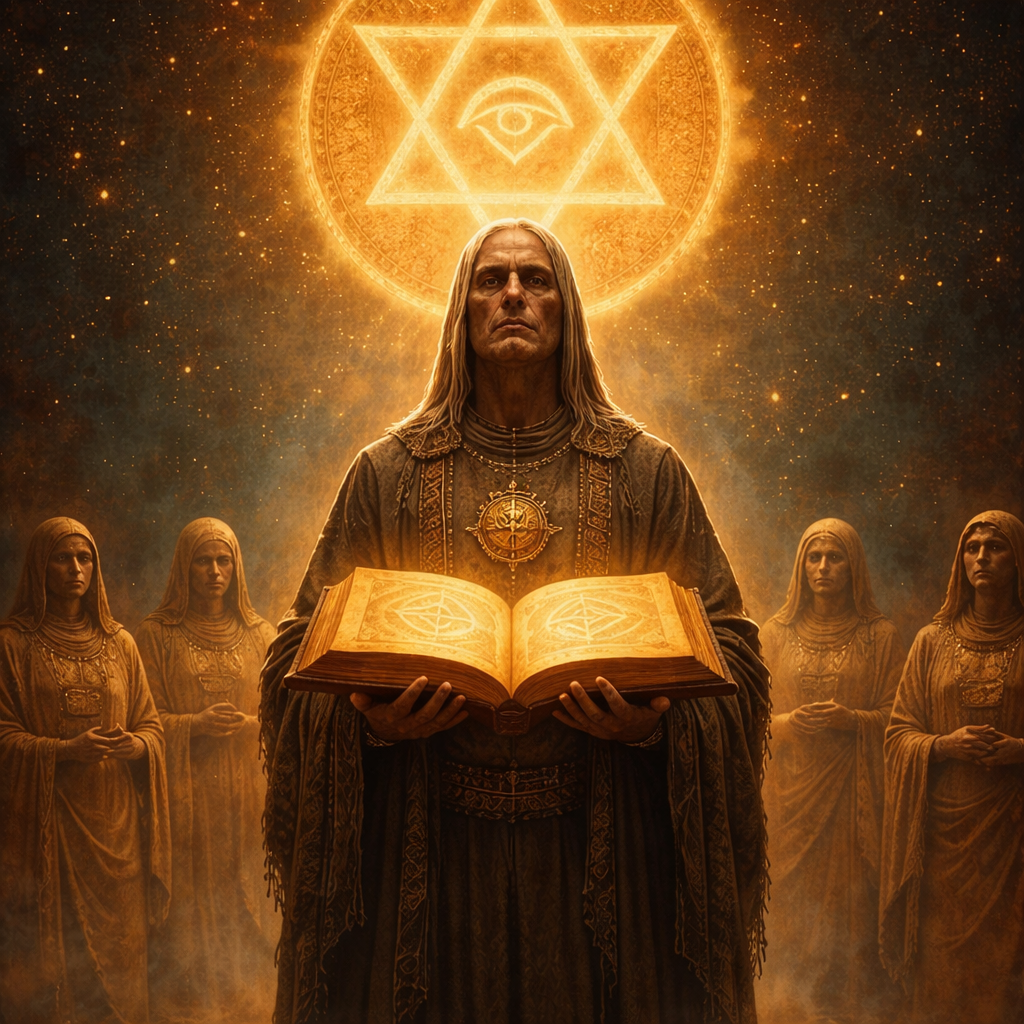

Moshe Idel's 'Ben' stands as a monumental contribution to Kabbalistic studies, offering unparalleled insights into the concept of the 'son' as a pivotal mystical archetype. Idel's meticulous scholarship and lucid prose dissect complex theological ideas, revealing the profound esoteric dimensions embedded within Rabbinic literature and early Kabbalistic texts. He masterfully illuminates the symbolic significance of 'ben' as a conduit for divine revelation and spiritual ascent. This work is indispensable for scholars of Jewish mysticism and occult traditions, providing a rigorous yet accessible exploration of core Kabbalistic doctrines. For serious students and practitioners, 'Ben' offers a gateway to deeper understanding and contemplative practice, solidifying Idel's position as a leading voice in the field.
📝 Description
61
Moshe Idel's 1988 book 'Ben' examines the concept of 'son' in Kabbalistic thought.
Moshe Idel's 'Ben' investigates the multifaceted concept of 'son' within Jewish mysticism, particularly Kabbalah. Idel traces how this idea, from its biblical roots to its complex interpretations in medieval Kabbalistic literature, functions as a key symbol. The book details how 'ben' signifies not only lineage and inheritance but also divine manifestation and the heir to spiritual knowledge.
Idel analyzes specific Kabbalistic texts and traditions to show how the concept of the son becomes a conduit for understanding the divine. He discusses mystical practices and symbolic language that connect the human and the divine through this mediating figure. The work illuminates the philosophical depth of Kabbalah, presenting its ideas for both academic study and personal spiritual inquiry.
This book situates itself within the study of Kabbalah, a mystical tradition within Judaism. It focuses on a specific symbolic concept, the 'son,' that appears across various Kabbalistic texts and schools. Idel’s work contributes to understanding the evolution of esoteric ideas and their theological implications, moving beyond simple historical accounts to analyze the conceptual development and symbolic weight of core terms within the tradition.
💡 Why Read This Book?
Uncover the hidden symbolism of the 'son' in Kabbalah, a central motif for understanding divine manifestation and spiritual lineage. Gain profound insights into the esoteric dimensions of Jewish mysticism and its historical development. Ideal for scholars, students of theology, and spiritual seekers yearning for a deeper connection to ancient wisdom traditions.
⭐ Reader Reviews
Honest opinions from readers who have explored this book.
❓ Frequently Asked Questions
What is the primary focus of 'Ben' by Moshe Idel?
The book primarily focuses on the multifaceted concept of 'ben' (son) within Kabbalistic and Jewish mystical traditions, exploring its symbolic, theological, and spiritual significance as a manifestation of divine presence and wisdom.
Is prior knowledge of Kabbalah required to read this book?
While prior familiarity with Kabbalah can enhance understanding, Idel's lucid explanations and thorough contextualization make 'Ben' accessible to dedicated newcomers interested in exploring the esoteric dimensions of Jewish thought.
How does 'Ben' contribute to our understanding of Jewish mysticism?
'Ben' illuminates a crucial, often overlooked, archetype within Kabbalah, revealing its role in concepts of divine emanation, covenant, and the messianic ideal, thereby deepening our comprehension of the tradition's intricate cosmology.
What kind of esoteric themes are explored in 'Ben'?
The book explores themes of divine immanence and transcendence, the nature of spiritual lineage, the role of intermediaries in divine revelation, and the symbolic representation of divine attributes through the concept of the 'son'.
Who is the ideal reader for Moshe Idel's 'Ben'?
The ideal reader is a scholar of religion, a student of Jewish mysticism, a philosopher, or any serious spiritual seeker interested in the profound, often hidden, symbolic language and esoteric doctrines of Kabbalah.
🔮 Key Themes & Symbolism
The Archetypal 'Ben' in Kabbalah
This theme looks at the profound and many-sided symbolism of 'ben' (son) within Kabbalistic literature. It examines how this concept transcends simple filiation, representing divine emanation, the covenant between God and Israel, the messianic figure, and the conduit for divine wisdom and revelation. Idel explores the evolution of this archetype from earlier Jewish texts to its sophisticated integration into mystical discourse, highlighting its role in understanding the divine-human relationship and the process of spiritual ascent. The 'son' becomes a lens through which the complex dynamics of creation, redemption, and divine presence are understood.
Esoteric Hermeneutics and Hidden Knowledge
Moshe Idel masterfully unpacks the methods of esoteric interpretation employed within Kabbalah. 'Ben' showcases how Rabbinic texts and biblical narratives are re-read through a mystical lens, revealing layers of hidden meaning and symbolic significance. The book illuminates the practice of gematria, notarikon, and temurah, demonstrating how these techniques unlock profound spiritual insights. It emphasizes that Kabbalah is not merely a system of belief but a practical discipline of unveiling veiled truths, where the 'son' archetype serves as a key to unlocking deeper levels of divine understanding and experiential knowledge.
The Evolution of Mystical Concepts
This theme traces the historical development and transformation of key mystical ideas within the Jewish tradition, with a particular focus on the concept of 'ben.' Idel meticulously analyzes how earlier understandings of divine sonship and lineage were reinterpreted and expanded upon by successive generations of Kabbalists. The book provides a critical historical perspective, demonstrating the dynamic nature of mystical thought and its continuous adaptation to new philosophical and spiritual contexts. It highlights the intellectual lineage and cross-pollination of ideas that shaped the body of Kabbalistic doctrine over centuries.
💬 Memorable Quotes
Direct passages from the work, attributed to the author.
“Within the cryptic verse, the divine echo resides.”
— This highlights the Kabbalistic belief that scripture holds deeper, esoteric meanings accessible through mystical interpretation, revealing divine truths hidden beneath the surface.
“Wisdom flows through the lineage of the illumined.”
— This points to the importance of spiritual transmission and the concept of a sacred lineage in Kabbalah, where knowledge and insight are passed down through generations of mystics.
“The contemplation of the 'ben' is a path to the divine father.”
— This emphasizes the meditative and contemplative practices central to Kabbalah, suggesting that focusing on the symbolic figure of the 'son' can lead to a direct experience of the divine.
“Symbols are the keys to unlock the celestial gates.”
— This underscores the power of symbolism in Kabbalah, presenting symbolic language as the essential tool for accessing higher spiritual realms and divine understanding.
💡 Key Ideas
Editorial paraphrase of the work's core concepts — not direct quotes.
The son is the bridge between the hidden and the revealed.
This quote expresses the core function of the 'son' archetype in Kabbalah: serving as a crucial link that connects the ineffable divine realm with the tangible, manifest world.
🌙 Esoteric Significance
Tradition
The primary esoteric tradition explored is Kabbalah, the esoteric mystical tradition within Judaism. Idel looks at its theoretical and practical aspects, focusing on the symbolic language, contemplative techniques, and theological concepts that define this lineage. He highlights how Kabbalah offers a framework for understanding the divine structure of the universe, the nature of creation, and the path to spiritual union with God, often through the intricate symbolism of the divine emanations (Sefirot) and archetypal figures.
Symbolism
Central to the esoteric significance of 'Ben' is its strong symbolism. The 'son' represents not only biological lineage but also the divine emanation, the perfected human being, the Messiah, and the embodiment of divine wisdom. Other key symbols include the Tree of Life (Sefirot), the divine names, and various biblical figures reinterpreted mystically. These symbols are not mere decorations but are seen as active forces and conceptual tools that facilitate spiritual ascent and understanding of the divine.
Modern Relevance
In the modern era, 'Ben' offers a profound re-engagement with the enduring questions of spirituality, consciousness, and humanity's relationship with the divine. Idel's work makes ancient Kabbalistic insights accessible, demonstrating their relevance to contemporary quests for meaning and transcendence. The book encourages a deeper appreciation for symbolic thinking and esoteric traditions as vital pathways for spiritual exploration, offering a counterpoint to purely materialist worldviews and providing tools for contemplative practice in the 21st century.
👥 Who Should Read This Book
Scholars of religion, comparative mysticism, and Jewish studies will find 'Ben' an indispensable resource, offering rigorous analysis and groundbreaking interpretations. Students of Kabbalah, both academic and practical, will benefit immensely from Idel's lucid exposition of complex themes. Spiritual seekers interested in the esoteric traditions of Judaism, and those looking to deepen their understanding of archetypal symbolism, will find this book a transformative guide. Practitioners seeking to enrich their contemplative practices with historical and philosophical depth will also find invaluable insights within these pages.
📜 Historical Context
Moshe Idel's 'Ben' emerges from a rich intellectual milieu, deeply rooted in the study of medieval and early modern Kabbalah. The book engages with the foundational texts of Jewish mysticism, including the Zohar, Sefer Yetzirah, and the writings of early Kabbalists like Isaac the Blind and Abraham Abulafia. Idel situates his analysis within the broader context of Jewish philosophy and theology, drawing connections to Maimonides and other influential thinkers. The historical period explored spans centuries, from the nascent stages of Kabbalistic thought in Provence and Spain to its efflorescence in Safed. This era was marked by intense spiritual yearning, the search for deeper meaning in scripture, and the development of sophisticated esoteric systems aimed at understanding the divine nature and humanity's place within the cosmos. Idel’s work provides a crucial bridge between these historical currents and contemporary understanding of Jewish mysticism.
📔 Journal Prompts
Reflect on the concept of 'son' in your own spiritual or philosophical framework. How does it differ from or resonate with Idel's Kabbalistic interpretation?
Consider a time when you felt a sense of lineage or transmission of knowledge. How did this experience shape your understanding?
Explore a symbol that holds deep personal meaning for you. What hidden layers of significance might it possess?
How can the idea of 'hidden knowledge' be understood in contemporary society? Where do we seek it, and what are its potential pitfalls and rewards?
Meditate on the balance between the 'hidden' and the 'revealed' in your life. How do these two aspects interact and influence your perception of reality?
🗂️ Glossary
Kabbalah
The esoteric mystical tradition within Judaism, focused on understanding the nature of God, the universe, and the human soul through symbolic interpretation and contemplative practices.
Ben
Hebrew for 'son.' In Kabbalah, it represents a complex archetype signifying divine emanation, spiritual heir, covenantal connection, and the manifestation of divine wisdom.
Sefirot
The ten divine emanations or attributes described in Kabbalah, forming the structure of the Tree of Life and representing stages of divine unfolding and creation.
Gematria
A Kabbalistic interpretive method that assigns numerical values to Hebrew letters and words to reveal hidden connections and meanings within texts.
Mysticism
A spiritual practice or belief that seeks direct experience of, or union with, the divine or ultimate reality, often through contemplation, meditation, and esoteric knowledge.
This book appears in 1 collection
🔮 Readers Also Liked
Browse all →









More by Moshe Idel
All books →



From the “Kabbalah” Collection
View all →








More Free Kabbalah & Jewish Mysticism Books
View all →