Being a pagan
 74
74

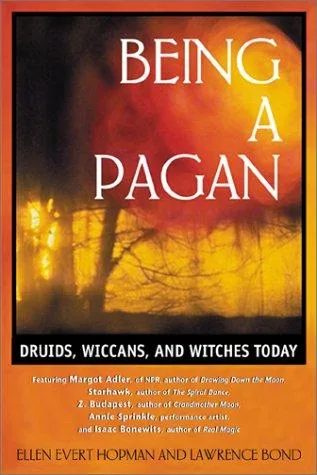
Being a pagan
Ellen Evert Hopman and Lawrence T. Bond’s 'Being a Pagan' offers a solid, if somewhat generalized, survey of contemporary Paganism. Its strength lies in its accessibility, presenting a wide array of beliefs and practices without overwhelming the uninitiated. The discussion of nature-based spirituality and cyclical time provides a valuable entry point for understanding the core ethos. However, the book sometimes struggles with depth, occasionally glossing over the nuances and internal debates that characterize more established Pagan traditions. A particularly illustrative moment is the exploration of various sabbat celebrations, which, while informative, could benefit from a more critical examination of their historical authenticity versus modern construction. The work serves as a useful primer but lacks the critical edge or deep dive into specific magical theory that some advanced practitioners might seek. It is a competent introduction to a complex subject.
📝 Description
74
Published in 2001, 'Being a Pagan' examines the modern Pagan revival and its varied expressions.
'Being a Pagan,' first released in 2001, addresses the contemporary resurgence of Paganism and the many forms it takes. The book goes beyond simple definitions to show a spiritual path that takes inspiration from old traditions while fitting into modern life. It discusses beliefs, practices, and ideas that characterize modern Paganism.
The work is helpful for anyone wanting to understand the growth of Paganism in the late 20th and early 21st centuries. It speaks to those new to Paganism and its main ideas, as well as those who practice it and want to know more about its history and different paths. It also interests scholars of religion who study modern spiritual movements. The book gives a wide view for people unfamiliar with the subject.
This book appeared during a time of notable expansion and variety within the Pagan community. As Paganism became more visible, books like 'Being a Pagan' were important for defining its identity and separating it from earlier occult groups or misunderstandings. The early 2000s saw growing interest from academics and the public in New Religious Movements, making this a relevant contribution to understanding a spiritual area that sought to bring back pre-Christian European traditions.
💡 Why Read This Book?
• Understand the core tenets of nature-based spirituality as presented in the book, moving beyond generalized concepts to grasp the specific reverence for Earth cycles and natural phenomena described. • Gain insight into the diverse pantheons and deities relevant to modern Pagan practice, as detailed in the text, offering concrete examples beyond common archetypes. • Learn about the structure and significance of ritual practices, including sabbats and esbats, as explored within 'Being a Pagan', providing a framework for understanding communal and solitary worship.
⭐ Reader Reviews
Honest opinions from readers who have explored this book.
❓ Frequently Asked Questions
When was 'Being a Pagan' first published?
'Being a Pagan' was first published in 2001, reflecting the state of contemporary Paganism at the turn of the millennium.
Who are the primary authors of 'Being a Pagan'?
The primary authors are Ellen Evert Hopman and Lawrence T. Bond, with Lawrence Bond also credited for the initial publication in 2001.
What is the main focus of 'Being a Pagan'?
The book focuses on explaining the beliefs, practices, and philosophies of contemporary Paganism, exploring its roots and diverse expressions.
Is 'Being a Pagan' suitable for beginners?
Yes, the book is designed to be accessible to newcomers interested in understanding Paganism's core concepts and practices.
Does the book cover specific Pagan traditions?
It covers a range of Pagan traditions and concepts, offering a broad overview rather than an exhaustive examination of any single path.
What historical period does the book's context relate to?
The book's context relates to the late 20th and early 21st centuries, a period of significant growth and diversification in the Pagan community.
🔮 Key Themes & Symbolism
Nature-Based Spirituality
A central theme is the profound connection to the natural world, viewing Earth and its cycles as inherently sacred. This involves an animistic perspective, seeing spirit in all things, from trees to rivers. The book details how this reverence translates into practices that align with seasons, lunar phases, and ecological awareness, distinguishing it from anthropocentric belief systems. It emphasizes harmony with nature rather than dominion over it, a core tenet for many contemporary Pagans seeking a more integrated existence.
Reconstruction and Revival
The work addresses the modern Pagan impulse to reconstruct or revive pre-Christian European spiritual traditions. This involves drawing from mythology, folklore, and archaeological evidence to inform contemporary practice. It explores how Pagans engage with ancient deities, symbols, and rituals, adapting them for a modern context. The book highlights the scholarly and intuitive efforts involved in this revival, acknowledging both the challenges of historical accuracy and the validity of lived spiritual experience in shaping modern Pagan identities.
Diversity of Practice
Recognizing that Paganism is not monolithic, this book illustrates the wide spectrum of beliefs and practices. It moves beyond stereotypes to showcase various paths, from Wicca and Druidry to polytheistic reconstructionism and eclectic Paganism. The text emphasizes individual spiritual authority and the acceptance of diverse expressions of Pagan identity. This inclusivity is crucial for understanding how a shared reverence for nature and the divine can manifest through myriad personal and communal approaches.
Ritual and Community
The importance of ritual in modern Pagan life is a recurring motif. The book explains the purpose and structure of various rites, including seasonal festivals (Sabbats) and lunar observances (Esbats). It underscores how these rituals foster a sense of connection to the divine, the natural world, and fellow practitioners. The role of community, whether through formal groves, covens, or informal gatherings, is presented as vital for support, shared learning, and the collective expression of Pagan faith.
💬 Memorable Quotes
Direct passages from the work, attributed to the author.
“Paganism is fundamentally a nature religion, deeply rooted in the cycles of the Earth.”
— This highlights the core principle of Paganism as an earth-centered faith, emphasizing the interconnectedness of spiritual life with the natural world and its rhythms.
“The revival of ancient traditions informs but does not strictly dictate modern Pagan practice.”
— This suggests that while historical sources are valuable, contemporary Pagans adapt and reinterpret them, prioritizing lived spiritual experience alongside historical research.
“Deities are often understood as immanent forces within nature, not distant, transcendent beings.”
— This points to an animistic or pantheistic understanding common in Paganism, where divinity is found within the fabric of the world itself.
“Community provides essential support for spiritual growth and the practice of ritual.”
— This emphasizes the social dimension of Paganism, where shared practice and mutual encouragement are seen as vital for individual and collective development.
“The Wheel of the Year marks significant points of celebration and reflection throughout the pagan calendar.”
— This refers to the eight major festivals celebrated by many Pagans, aligning spiritual observance with the changing seasons.
🌙 Esoteric Significance
Tradition
While not strictly adhering to a single esoteric lineage like Hermeticism or Theosophy, 'Being a Pagan' draws heavily from the modern Western Esoteric Tradition's interest in pre-Christian European beliefs and nature-based spirituality. It reflects the late 20th-century Pagan revival, which often synthesized elements from various sources, including folklore, mythology, and rediscovered ancient practices, influenced by earlier occultists who explored similar themes.
Symbolism
Key symbols explored include the Wheel of the Year, representing the cyclical nature of life, death, and rebirth, and the divine feminine/masculine archetypes often embodied in deities like the Triple Goddess and Horned God. The book also touches upon the symbolism inherent in natural elements – trees, stones, water – seen as conduits of spiritual energy and divine presence, reflecting an animistic worldview.
Modern Relevance
Contemporary practitioners of Druidry, eclectic Paganism, and polytheistic reconstructionist paths often find resonance with the foundational concepts presented in 'Being a Pagan'. The emphasis on ecological spirituality and the integration of ancient mythologies into modern life continues to influence spiritual seekers and community organizers. Its accessible overview remains a valuable resource for those exploring nature-based spiritualities in the current range of diverse religious and philosophical inquiry.
👥 Who Should Read This Book
• Individuals new to Paganism seeking a comprehensive yet accessible introduction to its core beliefs, practices, and historical context. • Scholars of comparative religion or sociology interested in understanding the dynamics and diversity of contemporary spiritual movements and the Neopagan revival. • Practitioners of nature-based spiritualities looking for a foundational text that articulates the ethos and common themes within modern Paganism.
📜 Historical Context
Published in 2001, 'Being a Pagan' arrived as the Neopagan movement was solidifying its presence in Western societies, moving from fringe occultism towards broader public recognition. This era saw a surge in New Religious Movements studies, with scholars like J. Gordon Melton documenting the growth and diversity of groups like Wicca, Druidry, and various polytheistic reconstructionist paths. The book's emergence coincided with the rise of the internet, which facilitated unprecedented connection and information sharing among geographically dispersed Pagans. It offered a counter-narrative to Christian dominance and secularism, articulating a spiritual path that emphasized immanence, nature, and pre-Christian European heritage. While not directly engaging with specific academic debates, it contributed to the ongoing discourse about the nature of modern spirituality and the reclamation of indigenous traditions, differentiating itself from earlier, more esoteric occult orders.
📔 Journal Prompts
The concept of the Wheel of the Year and its personal significance.
Reflections on the immanence of deities within the natural world.
My understanding of reconstructed versus revived traditions.
The role of community in my spiritual journey.
Personal connection to seasonal changes and their spiritual meaning.
🗂️ Glossary
Paganism
A broad term for modern nature-based spiritual paths that often draw from pre-Christian European traditions, emphasizing reverence for nature, deities, and cyclical time.
Neopaganism
A term often used interchangeably with modern Paganism, referring to the revival and adaptation of ancient pagan religions in the 20th and 21st centuries.
Wheel of the Year
The cycle of eight seasonal festivals celebrated by many Pagans, marking solstices, equinoxes, and cross-quarter days, representing the Earth's annual journey.
Sabbats
The eight major festivals of the Wheel of the Year, such as Samhain, Yule, Beltane, and Litha, often celebrated with rituals and gatherings.
Esbats
Rituals or celebrations that typically coincide with the phases of the Moon, particularly the full moon, focusing on lunar energies and the divine feminine.
Pantheon
The collective body of gods and goddesses worshipped by a particular culture or religion; in Paganism, often refers to reconstructed or adapted polytheistic systems.
Animism
The belief that spirits inhabit natural objects and phenomena, such as plants, animals, rocks, and weather, playing a significant role in many Pagan worldviews.
🔮 Readers Also Liked
Browse all →






![D. [i. e., Doktor] Balthasar Bekkers reformierten Predigers in Amsterdam bezauberte Welt. ... 1781: Vol 1 Iss 81](/img/thumb/d-i-e-doktor-balthasar-bekkers-reformierten-predigers-in-amsterdam-bezauberte-welt-1781-vol-1-iss-81-bekker-balthasar-1634-1698.webp)
More by Ellen Evert Hopman, Lawrence T. Bond, Lawrence Bond
All books →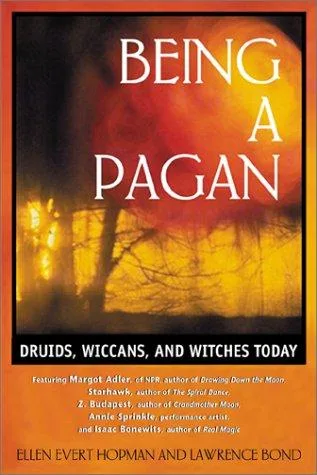
More Free Witchcraft & Paganism Books
View all →