Being a pagan
 76
76

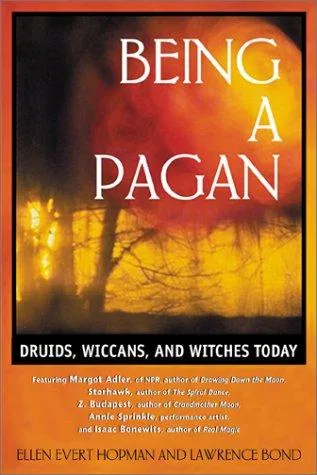
Being a pagan
Ellen Evert Hopman and Lawrence T. Bond's 'Being a Pagan' offers a structured introduction to a spiritual landscape often perceived as amorphous. Its strength lies in its clear exposition of fundamental tenets, particularly the concept of immanent divinity, which is presented without the usual New Age jargon. The inclusion of multiple voices, while contributing to a broader perspective, occasionally leads to a slight unevenness in tone and depth. A particular passage discussing the ethical implications of ecological interconnectedness provides a concrete example of the book's grounded approach to spiritual philosophy. However, the work could benefit from a more robust engagement with the historical schisms and diverse theological debates that have characterized Paganism's development. Despite this limitation, 'Being a Pagan' serves as a solid, accessible primer for those beginning their exploration of contemporary Pagan paths.
📝 Description
76
Published in 2001, 'Being a Pagan' offers diverse voices on modern Paganism.
This 2001 book gathers perspectives from various contributors to explain contemporary Paganism. It aims to clarify the core beliefs, practices, and philosophies of modern Pagan traditions. The authors address ideas about divinity, the connection between people and the natural world, and the ethics guiding Pagan life.
'Being a Pagan' serves as an accessible introduction for those new to the subject. It clarifies what it means to be Pagan in the early 21st century. The volume is for people curious about Paganism, whether they are exploring spiritual paths, trying to understand Pagan friends or family, or researching comparative religion. Established Pagans can also use it to deepen their understanding of the wider Pagan community and the history behind current practices. Students of religion and anthropology will find it a useful overview of a developing spiritual movement.
The early 2000s saw significant growth and variety within modern Paganism. Following the revival of Neo-Paganism in the late 20th century, 'Being a Pagan' emerged to articulate a developing identity and shared understanding. It appeared as the internet began to connect different groups more easily, leading to a more unified, though still varied, presentation of Pagan beliefs. The book captures this moment of consolidation and outward explanation.
Emerging in the early 2000s, 'Being a Pagan' reflects a period when modern Pagan traditions were solidifying their identities and articulating their beliefs to a wider audience. It follows the significant Neo-Pagan resurgence of the late 20th century, a time when various paths began to share common concepts like immanent divinity, a focus on nature, and cyclical understandings of life. The book captures this moment of increased communication and self-definition within the Pagan community, documenting a spiritual movement finding its voice and structure.
💡 Why Read This Book?
• Gain a foundational understanding of immanent divinity, a core concept in many Pagan paths, by examining its practical and philosophical implications as discussed in the book. • Appreciate the significance of seasonal cycles and their connection to ritual and worldview, as detailed within 'Being a Pagan', offering a new perspective on nature-based spirituality. • Understand the ethical frameworks guiding modern Paganism, focusing on personal responsibility and ecological awareness, as presented in the book's exploration of living a Pagan life.
⭐ Reader Reviews
Honest opinions from readers who have explored this book.
❓ Frequently Asked Questions
What is the primary focus of 'Being a Pagan'?
'Being a Pagan' focuses on explaining the core beliefs, practices, and philosophical foundations of contemporary Paganism. It aims to clarify what it means to identify as Pagan in the early 21st century for both newcomers and those seeking deeper understanding.
Who are the main authors and when was the book first published?
The book is authored by Ellen Evert Hopman and Lawrence T. Bond, with Lawrence Bond listed for the first publication in 2001. This timeframe places it within a period of growing visibility for modern Pagan movements.
Does 'Being a Pagan' discuss specific Pagan traditions?
While providing a general overview, the book touches upon various aspects common to many Pagan paths, such as the concept of immanent divinity and reverence for nature, rather than focusing exclusively on one specific tradition.
Is this book suitable for beginners interested in Paganism?
Yes, 'Being a Pagan' is designed as an accessible introduction, making it suitable for individuals curious about Paganism who are looking for clear explanations of its fundamental principles and practices.
What is the book's stance on the relationship between Paganism and nature?
The book strongly emphasizes the interconnectedness of humanity and the natural world, viewing the sacred as immanent within nature. This ecological awareness forms a key part of the ethical and spiritual outlook presented.
What does the book say about divinity?
A central theme is immanent divinity, suggesting that the divine is present within all living beings and the natural world, contrasting with purely transcendent concepts of God.
🔮 Key Themes & Symbolism
Immanent Divinity
This theme explores the concept of the sacred residing within the natural world and all living beings, a departure from solely transcendent religious frameworks. The book posits that divinity is not an external force but an intrinsic aspect of existence, influencing how practitioners interact with their environment and each other. This perspective underpins a reverence for life and the Earth, framing spiritual practice as an engagement with the immanent divine present in everyday phenomena and natural cycles.
Nature-Based Spirituality
Central to 'Being a Pagan' is the profound connection between spiritual life and the natural world. This theme highlights the cyclical rhythms of the Earth—seasons, lunar phases, and celestial movements—as fundamental to understanding divinity and human existence. Practices and beliefs are often grounded in observing and honoring these cycles, fostering a sense of belonging and interdependence within the ecosystem. The book emphasizes that authentic Pagan spirituality is deeply intertwined with ecological awareness and stewardship.
Ethical Living and Personal Responsibility
The work details an ethical framework for Pagans that emphasizes personal accountability for one's actions and their impact on the community and the environment. This is not based on rigid dogma but on a conscious understanding of interconnectedness. Living ethically involves respecting all life, striving for balance, and acting in ways that promote well-being for oneself, others, and the planet. This theme underscores the practical application of spiritual beliefs in daily life.
Community and Ancestral Connection
Beyond individual practice, 'Being a Pagan' explores the importance of communal bonds and the acknowledgment of ancestral heritage within modern Paganism. It discusses how shared rituals, celebrations, and mutual support strengthen the spiritual path. The connection to ancestors serves not only as a historical link but also as a source of wisdom and guidance, integrating past generations into the ongoing spiritual present and future.
💬 Memorable Quotes
Direct passages from the work, attributed to the author.
“Divinity is found within the earth and all living things.”
— This succinctly captures the essence of immanent divinity, a core tenet of modern Paganism. It suggests that the sacred is not remote but intimately present in the world around us, encouraging a perspective of reverence and connection to nature.
“The cycles of nature mirror the cycles of life and spirit.”
— This highlights the profound connection between natural phenomena and spiritual understanding in Paganism. It implies that observing seasons, moon phases, and celestial events offers insights into personal growth, ritual timing, and the broader cosmic order.
“Reverence for ancestors provides wisdom and continuity.”
— This points to the significance of ancestral veneration within Pagan traditions. It suggests that connecting with past generations offers guidance and a sense of belonging, bridging the past, present, and future.
“Paganism is a path of personal discovery and ethical engagement.”
— This interpretation frames Paganism not as a set of rigid doctrines but as a dynamic journey of self-exploration and responsible interaction with the world, grounded in personal experience and ethical consideration.
💡 Key Ideas
Editorial paraphrase of the work's core concepts — not direct quotes.
Our actions have consequences for the web of life.
This paraphrased concept emphasizes the ethical responsibility inherent in Pagan worldviews. It speaks to the understanding of interconnectedness, where individual choices impact the entire ecosystem, promoting mindful and sustainable living.
🌙 Esoteric Significance
Tradition
While not strictly adhering to a single lineage like Hermeticism or Gnosticism, 'Being a Pagan' draws heavily from the Neopagan revival, particularly its nature-based and polytheistic currents. It fits within the broader spectrum of modern esoteric thought that seeks direct experience of the divine, often through nature and personal gnosis. It departs from more academically focused or historically reconstructionist Paganisms by focusing on the lived experience and core philosophical tenets relevant to a broad contemporary audience, emphasizing immanence over strict adherence to ancient dogma.
Symbolism
A key symbol is the cycle of seasons, representing birth, growth, decay, and rebirth—a fundamental motif reflecting divine processes and the human life journey. The concept of the 'web of life' functions symbolically, illustrating the interconnectedness of all beings and the cosmos, underscoring ecological ethics. The divine itself, often envisioned as both Goddess and God (or multiple deities), represents the dynamic interplay of forces within immanent creation, embodying natural powers and archetypes.
Modern Relevance
Contemporary thinkers and practitioners in ecospirituality, animism, and various forms of modern polytheism continue to find resonance with the principles articulated in 'Being a Pagan.' Its clear exposition of immanent divinity and nature-based ethics informs discussions within academic circles studying new religious movements and influences the personal spiritual paths of individuals seeking alternatives to traditional Western religions. The book's accessible approach makes it a touchstone for those exploring embodied spirituality and earth-centered practices today.
👥 Who Should Read This Book
• Individuals new to Paganism: Those curious about Wicca, Neo-Paganism, or earth-based spirituality will find clear explanations of core concepts like immanent divinity and nature reverence. • Students of comparative religion: Researchers and academics seeking to understand the field of modern Western esotericism and new religious movements will benefit from this foundational text. • Eco-conscious spiritual seekers: People looking for a spiritual framework that deeply integrates ecological awareness and ethical responsibility with their worldview will find practical and philosophical guidance.
📜 Historical Context
Published in 2001, 'Being a Pagan' emerged during a significant period of maturation for contemporary Paganism. The late 20th century had witnessed a burgeoning interest and the formation of diverse groups, and this work sought to articulate a coherent, accessible overview for a growing audience. It arrived as the internet began to facilitate broader communication, allowing disparate traditions to find common ground and a shared voice. This era saw Paganism moving from the fringes towards greater public recognition, grappling with its identity and seeking to define itself against both established religions and secularism. While not directly engaging with specific contemporary authors in its core text, the book implicitly responded to the intellectual currents set by figures like Starhawk and Margot Adler, who had previously documented and shaped Pagan discourse. Its publication aimed to provide a foundational text for a spiritual movement solidifying its presence.
📔 Journal Prompts
The concept of immanent divinity and its presence in your daily environment.
Reflect on the cyclical nature of the seasons and your personal life.
How can the principle of 'web of life' inform your ethical decisions?
Exploring personal connections to ancestral traditions or heritage.
Understanding personal responsibility within a spiritual practice.
🗂️ Glossary
Immanent Divinity
The belief that the divine is present within the natural world and all living beings, rather than existing solely in a transcendent realm separate from creation.
Neo-Paganism
A broad category of modern spiritual movements that draw inspiration from pre-Christian European polytheistic religions, emphasizing nature, magic, and often Goddess worship.
Ecological Awareness
A conscious understanding of the interconnectedness between human activities and the natural environment, promoting stewardship and sustainability.
Sacred Cycles
The recurring patterns observed in nature, such as seasons, lunar phases, and solstices, which are often celebrated and incorporated into spiritual practices and rituals.
Polytheism
The belief in and worship of multiple gods and goddesses, often seen as distinct manifestations of divine energy or archetypes.
Animism
The belief that spirits inhabit natural objects, phenomena, and the environment, and that these spirits can influence events.
Ritual
A set of actions performed in a prescribed order, often for religious or spiritual purposes, to create a sacred space or achieve a specific spiritual outcome.
🔮 Readers Also Liked
Browse all →






More by Ellen Evert Hopman, Lawrence T. Bond, Lawrence Bond
All books →
More Free Witchcraft & Paganism Books
View all →