Druidism

 79
79

Druidism
Wright's "Druidism" is a commendable effort to present the subject with academic rigor, a rarity for its time. He judiciously sifts through classical sources, acknowledging their biases, a strength that elevates the work beyond speculative reconstructions. The detailed exploration of Druidic societal functions, from law to education, is particularly illuminating. However, the book's limitation lies in its reliance on secondary interpretations of primary sources, which, given the scarcity of direct Druidic texts, is perhaps unavoidable but can leave the reader yearning for more direct evidence. The section discussing Druidic beliefs on the soul's journey, while well-researched within the constraints of available data, highlights the speculative nature inherent in reconstructing such ancient traditions. It remains a foundational text for understanding early scholarly approaches to Druidism.
📝 Description
79
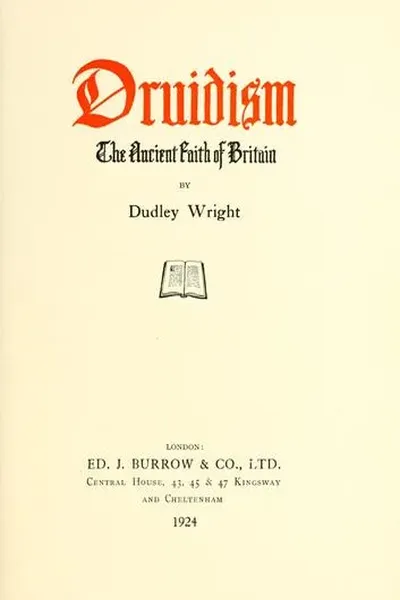
Dudley Wright's 1924 book examines the ancient Celtic priesthood beyond folklore.
Dudley Wright's "Druidism," published in 1924, goes beyond popular notions of folklore to offer a scholarly look at the ancient Celtic priesthood. Wright aimed to reconstruct the Druids' worldview, their place in society, and their esoteric knowledge. He based this reconstruction on historical and anthropological evidence available from classical antiquity, seeking to understand their philosophical ideas and spiritual practices. The book is for readers interested in comparative religion, ancient history, and the origins of Western esoteric traditions. It will appeal to those who value historical research applied to subjects often shrouded in myth. Scholars of Celtic studies, early European paganism, and comparative mythology will find its detailed approach useful. Wright's work emerged during a period of increased interest in ancient cultures, fueled by new anthropological and archaeological findings. It contributed to academic and public fascination with pre-Christian European religions. The book engages with scholarly discussions about the origins and nature of religious institutions, attempting to frame Druidism historically. Wright investigates core Druidic concepts like their judicial roles, astronomical knowledge, and philosophical schools. He also discusses their beliefs in reincarnation and connection to nature.
Wright's study situates Druidism within the early 20th-century academic and public interest in pre-Christian European religions. This period saw renewed attention to ancient spiritual paths, often informed by emerging archaeological and anthropological research. His work contributes to understanding how scholarship of the time attempted to reconstruct or interpret indigenous European traditions, moving from folklore towards historical and philosophical analysis. It reflects a broader trend of examining the roots of Western esoteric thought through the lens of historical inquiry.
💡 Why Read This Book?
• Gain a foundational understanding of scholarly approaches to Druidism as it was understood in the early 20th century, particularly the analysis of classical sources like Caesar's "Commentarii de Bello Gallico." • Appreciate the historical context of early 20th-century interest in ancient European paganism and comparative mythology, as Wright situates his research within this intellectual climate. • Explore specific theories regarding Druidic philosophy, such as their views on the transmigration of souls, presented through Wright's systematic examination of fragmented historical accounts.
⭐ Reader Reviews
Honest opinions from readers who have explored this book.
❓ Frequently Asked Questions
What is the primary focus of Dudley Wright's "Druidism"?
Wright's "Druidism" focuses on a scholarly examination of the ancient Celtic priesthood, aiming to reconstruct their worldview, societal roles, and perceived philosophical and esoteric practices based on historical accounts from antiquity.
When was Dudley Wright's "Druidism" first published?
Dudley Wright's "Druidism" was first published in 1924, placing it within the early 20th-century academic interest in ancient cultures and religions.
What historical sources does Wright consult in his study of Druidism?
Wright consults accounts from classical antiquity, primarily Greek and Roman writers such as Julius Caesar, Pliny the Elder, and Strabo, while acknowledging their potential biases and limitations.
Does "Druidism" discuss Druidic beliefs about the afterlife?
Yes, the work explores theories regarding Druidic beliefs about the soul's journey, including concepts such as reincarnation and the transmigration of souls, as interpreted from ancient sources.
Who would benefit most from reading this book?
Students of comparative religion, ancient European history, Celtic studies, and those interested in the origins of Western esoteric thought will find this book particularly beneficial.
Is "Druidism" a primary source text from the Druids themselves?
No, "Druidism" is a scholarly interpretation and historical analysis of Druidism written in the 20th century. It relies on secondary interpretations of ancient texts, as direct Druidic writings are scarce.
🔮 Key Themes & Symbolism
Druidic Philosophy and Beliefs
The work explores the philosophical tenets attributed to the Druids, particularly their views on the nature of the soul and the afterlife. Wright examines interpretations of their belief in the transmigration of souls, contrasting it with other ancient traditions. This exploration seeks to understand the Druidic cosmological framework and their ethical teachings, piecing together a picture from scattered classical references and later folklore.
The Druid as Scholar and Judge
Wright elucidates the many-sided role of the Druid within Celtic society. Beyond their spiritual functions, they are presented as intellectuals, custodians of knowledge, and arbiters of law and justice. The book highlights their perceived educational responsibilities, including the memorization of verses and the transmission of wisdom, underscoring their esteemed position in the community.
Classical Perceptions of Druidism
A significant portion of the book addresses how Druidism was perceived and documented by Greek and Roman authors. Wright critically analyzes accounts from figures like Julius Caesar and Strabo, recognizing the inherent biases and political motivations that may have shaped these descriptions. This theme emphasizes the challenge of reconstructing Druidic practices solely through external, often hostile, contemporary records.
Druidic Ritual and Nature Worship
The text touches upon the ritualistic aspects of Druidism, including their connection to sacred groves and natural phenomena. While direct evidence is limited, Wright discusses the symbolic importance of trees and the natural world in Druidic spiritual practices. This theme underscores the perceived animistic or pantheistic elements within their belief system.
💬 Memorable Quotes
Direct passages from the work, attributed to the author.
“The Druids were the philosophers of the Celtic peoples.”
— This statement captures Wright's view that Druidism was not merely a primitive religion but a sophisticated philosophical system central to Celtic culture and intellectual life.
“Their belief in the immortality of the soul was a cardinal point.”
— Wright highlights the Druidic doctrine of the soul's continuity, often interpreted as reincarnation, as a core tenet that influenced their worldview and ethical conduct.
“Caesar's 'Commentaries' provide some of our earliest detailed descriptions.”
— This points to the critical reliance on classical Roman accounts, particularly Julius Caesar's writings on the Gallic Wars, for information about Druidic practices and organization.
“The study of nature was integral to their spiritual understanding.”
— This interpretation reflects the book's exploration of the Druidic connection to the natural world, suggesting that their spirituality was deeply intertwined with observing and understanding natural phenomena.
💡 Key Ideas
Editorial paraphrase of the work's core concepts — not direct quotes.
They were held in great reverence for their wisdom and learning.
This paraphrased concept emphasizes the high social status and respect accorded to Druids within their communities, recognizing them as keepers of knowledge and judicial authority.
🌙 Esoteric Significance
Tradition
Wright's work engages with the Western Esoteric tradition by examining a pre-Christian European spiritual lineage. While not strictly Hermetic, Gnostic, or Kabbalistic, it aligns with the broader esoteric interest in ancient mysteries and nature-based spiritualities. It fits within a lineage of scholars and occultists seeking foundational wisdom in pre-Christian European roots, often seen as a precursor or parallel to more Eastern-influenced esoteric paths that gained traction in the same era.
Symbolism
The book frequently references the symbolism of sacred groves, which represented places of worship, learning, and judgment for the Druids. Trees themselves, particularly oak, were imbued with significant meaning, symbolizing wisdom, strength, and connection to the divine. Another motif is the mistletoe, a parasitic plant associated with healing and mystical properties, often linked to specific Druidic rituals and astronomical cycles.
Modern Relevance
Contemporary Neo-Druidism and various nature-based spiritual movements draw inspiration from historical and reconstructed Druidic practices. Thinkers and practitioners involved in ecological spirituality, Celtic Reconstructionism, and modern paganism often consult foundational texts like Wright's, even while critically assessing its historical limitations and 20th-century perspectives. It serves as a reference point for understanding the historical evolution of Druidic studies.
👥 Who Should Read This Book
• Students of comparative religion and ancient European history seeking a historical overview of scholarly interpretations of Druidism from the early 20th century. • Researchers interested in the development of Celtic studies and the academic discourse surrounding pre-Christian European spiritualities in the 1920s. • Enthusiasts of esoteric traditions looking to understand the historical foundations and classical references that have informed later reconstructions of Druidic practices.
📜 Historical Context
Dudley Wright's "Druidism" emerged in 1924, a period of heightened scholarly and popular interest in ancient European cultures and esoteric traditions. The early 20th century saw significant advancements in archaeology and anthropology, fueling a desire to understand pre-Christian European societies. Wright's work engaged with the intellectual currents of the time, which often romanticized or sought spiritual alternatives in ancient paganism. It contributed to a burgeoning field of comparative mythology and religious studies. Contemporary scholars like James Frazer, whose "The Golden Bough" (first published 1890) explored widespread magical and religious beliefs, represented a similar, albeit broader, scholarly interest in ancient customs. Wright's book, however, focused specifically on the Celtic priesthood, attempting a more concentrated historical reconstruction than the sweeping comparative analyses common at the time.
📔 Journal Prompts
Druidic roles as arbiters of justice and their impact on societal order.
The concept of the soul's immortality and its implications for Druidic ethics.
Classical accounts of Druidic practices and their potential biases.
The symbolism of sacred groves and natural elements in Druidic worship.
Reconstructing Druidic philosophical schools from fragmented historical evidence.
🗂️ Glossary
Druid
The priestly, judicial, and scholarly class among the ancient Celts, known for their wisdom, learning, and significant role in tribal society.
Transmigration of Souls
A philosophical or religious doctrine that the soul, upon death, begins a new life in a new body, either human or animal; a concept attributed to Druidic beliefs.
Sacred Groves
Areas of woodland considered holy by the Druids, used for religious rituals, sacrifices, and as places for philosophical instruction and judgment.
Bard
A poet, singer, and storyteller in ancient Celtic cultures, often considered a distinct but related order to the Druids, responsible for preserving history and mythology.
Vates
A term used by classical authors, potentially referring to a divinatory or prophetic class within or associated with the Druids, skilled in interpreting omens.
Classical Antiquity
The period of history encompassing the ancient Mediterranean civilizations, particularly Greece and Rome, whose writings provide much of the historical record for Druidism.
Gallic Wars
A series of military campaigns waged by Julius Caesar against various Gallic tribes between 58 and 50 BCE, documented in Caesar's own writings which include observations on the Druids.
🔮 Readers Also Liked
Browse all →









More by Dudley Wright
All books →




More Free Occult Philosophy Books
View all →