Automatic Writing
 84
84

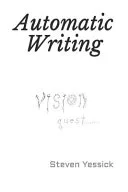
Automatic Writing
Steven Yessick’s "Automatic Writing" offers a practical manual for a technique that has long fascinated creatives and mystics alike. The book’s strength lies in its directness, presenting automatic writing as a learnable skill rather than an ineffable gift. Yessick avoids the spiritualist melodrama often associated with the subject, grounding the practice in accessible steps. A particularly effective section likely details methods for achieving the necessary mental quietude, a crucial hurdle for many attempting this work. However, the book’s brevity, first published in 2019, means it sometimes skims over the deeper philosophical implications. While it clearly explains *how* to do automatic writing, the exploration of *why* it works, or its potential for profound self-discovery beyond creative generation, feels less developed. The initial blurb’s connection to Dadaism is a vital anchor, reminding readers of the technique’s avant-garde origins. "Automatic Writing" serves as a functional primer for those eager to experiment, though seasoned practitioners may seek more extensive theoretical grounding elsewhere.
📝 Description
84
Steven Yessick's 2013 book details a method for bypassing the conscious mind.
Steven Yessick's "Automatic Writing" outlines a practice for accessing information beyond conscious thought. The book details techniques designed to suspend deliberate control, allowing for unfiltered expression from the subconscious or external sources. Yessick frames this method not simply as a curious phenomenon, but as a structured approach to tapping into non-rational thought. The practice can be applied to generate text, ideas, and even visions, acting as a direct channel to the uninhibited self.
This work targets artists, writers, and individuals engaged in esoteric or spiritual exploration aiming to broaden their creative capacities. It addresses those interested in the mechanics of consciousness, particularly the divide between the ego and deeper psychological layers. Readers exploring divination, channeling, or seeking inspiration outside of logical deduction will find relevant material. The book is for practitioners prepared to experiment with direct access to latent mental faculties.
Automatic writing has historical roots in 19th-century spiritualism, where mediums claimed spirit communication. Early 20th-century movements like Dada and Surrealism adopted automatism. Dada used it as a protest against logic, while Surrealism, influenced by psychoanalysis, sought to explore the unconscious. Yessick's book situates this practice within these artistic and intellectual currents, offering a contemporary interpretation of its lineage.
💡 Why Read This Book?
• Learn concrete techniques for bypassing the conscious mind, directly applicable to generating original material, as detailed in Yessick's method for automatic writing. • Understand the historical lineage of this practice, particularly its adoption by the Dada movement around 1916, providing context beyond personal exploration. • Develop a practical tool for accessing subconscious or intuitive insights, potentially leading to novel creative solutions or personal revelations not found in conventional problem-solving.
⭐ Reader Reviews
Honest opinions from readers who have explored this book.
❓ Frequently Asked Questions
What is the core difference between automatic writing and journaling?
Automatic writing emphasizes bypassing conscious thought to receive unfiltered input, often treating the output as external or subconscious communication. Journaling typically involves conscious reflection, analysis, and recording of thoughts and experiences.
Can automatic writing be used for purposes other than writing?
Yes, the principles of automatic writing can be adapted for other creative mediums, such as automatic drawing or painting, aiming to access subconscious imagery and expression directly.
When was the concept of automatic writing first explored in artistic movements?
The concept gained significant traction in artistic movements like Dadaism, which emerged around 1916, and later Surrealism, as a method to disrupt rational control and tap into the unconscious.
Is Steven Yessick's book suitable for beginners?
Yes, "Automatic Writing" by Steven Yessick is designed to be accessible, outlining the method in a way that beginners can understand and begin to practice.
How does automatic writing relate to spiritualism?
Historically, automatic writing was a key practice in 19th-century spiritualism, where mediums used it to allegedly channel messages from spirits, a precursor to its use in artistic and psychological contexts.
What is the primary goal of practicing automatic writing?
The primary goal is typically to access subconscious or supraconscious material, bypass the ego's censorship, and facilitate spontaneous creation or gain insight.
🔮 Key Themes & Symbolism
Bypassing the Ego
The book details methods for silencing the analytical mind, allowing unfiltered content to emerge. This focus on ego-transcendence is crucial for accessing the subconscious or what some traditions term the 'higher self.' By learning to suspend critical judgment, practitioners can uncover latent ideas and perspectives that conscious deliberation might obscure. This theme echoes practices found in contemplative traditions aiming for a state of non-interference with the natural flow of thought and inspiration.
Creative Channeling
Automatic writing is presented as a form of creative channeling, distinct from conventional writing processes. The work explores the idea that words and ideas can be received rather than purely generated. This concept aligns with esoteric notions of inspiration coming from external or deeper internal sources. The practice aims to make the writer a conduit, facilitating a flow of material that transcends personal limitations and conventional creative blocks, potentially leading to novel artistic expressions.
Dadaist & Surrealist Roots
The book connects automatic writing to avant-garde artistic movements, particularly Dadaism (circa 1916) and Surrealism. These movements utilized automatism as a means of rebellion against logic and societal norms, seeking raw, unmediated expression. Yessick's work grounds the practice within this historical context, suggesting its utility not just for personal growth but as a tool for radical artistic and psychological exploration, challenging the boundaries of authorship and consciousness.
The Nature of Inspiration
A central theme is the exploration of where creative inspiration originates. "Automatic Writing" posits that inspiration is not solely an intellectual product but can be accessed through non-rational means. The book encourages readers to consider alternative sources of creativity, whether they be the deep subconscious, archetypal realms, or other non-ordinary states of consciousness. This approach invites a re-evaluation of the creative process itself, opening it to a more mystical or psychological dimension.
💬 Memorable Quotes
Direct passages from the work, attributed to the author.
“The method involves quieting the mind's censor.”
— This highlights the core technical challenge of automatic writing: achieving a state of mental passivity where the internal critic does not interfere with the flow of spontaneous expression.
“Words emerge from a source beyond conscious invention.”
— This points to the esoteric interpretation of the practice, suggesting that the output originates from a deeper wellspring of consciousness, akin to intuition or external guidance.
“Dadaism employed automatism to disrupt logic.”
— This anchors the practice historically, linking it to an artistic movement that deliberately sought to break down rational structures in art and thought, emphasizing its radical potential.
“Practice is key to accessing the flow.”
— This emphasizes the practical, skill-based nature of automatic writing, suggesting that consistent application of the techniques is necessary to develop proficiency and reliable results.
“It is a tool for accessing the unmediated self.”
— This frames automatic writing as a means of self-discovery, offering a pathway to understand one's deeper psyche or true nature, uncolored by social conditioning or conscious self-deception.
🌙 Esoteric Significance
Tradition
This work fits within the broader esoteric tradition of accessing non-ordinary states of consciousness for insight and creation. It echoes practices found in Hermeticism's emphasis on correspondence between inner and outer worlds, and Gnosticism's pursuit of direct, unmediated knowledge. While not explicitly tied to a single lineage, it shares the fundamental goal of transcending the limitations of the rational mind to connect with deeper truths or hidden potentials, a common thread in many mystical paths.
Symbolism
While "Automatic Writing" may not focus on overt symbolism in the traditional sense, the act of writing itself becomes symbolic. The pen or keyboard can represent a tool for bridging the conscious and subconscious, the physical act of inscription a manifestation of inner processes. The resulting text, often appearing disjointed or unexpected, symbolizes the unconscious mind's complex, non-linear nature. The very act of receiving information rather than creating it symbolizes a form of surrender and trust in a deeper intelligence or innate psychic faculty.
Modern Relevance
In contemporary practice, automatic writing continues to be relevant for creatives seeking to overcome blocks and for those interested in personal development and mindfulness. Thinkers and practitioners exploring altered states of consciousness, shadow work, and intuitive development often incorporate these techniques. It appeals to modern interest in neuroplasticity and the untapped potential of the human mind, serving as a practical method for individuals exploring transpersonal psychology and alternative forms of knowing outside of empirical validation.
👥 Who Should Read This Book
• Aspiring writers and artists seeking novel methods to generate original content and overcome creative blocks. • Practitioners of esoteric disciplines interested in techniques for accessing subconscious or intuitive guidance and exploring altered states of consciousness. • Students of art history and cultural movements, particularly those studying Dadaism (circa 1916) and Surrealism, who want to understand the practical application of their theoretical concepts.
📜 Historical Context
Steven Yessick's "Automatic Writing," published in 2019, revisits a technique with deep roots in both spiritualist circles and avant-garde art. The practice gained significant prominence with the Dada movement, which emerged in Zurich around 1916 as a furious reaction to the perceived irrationality of World War I. Dadaists like Tristan Tzara explored automatism to liberate expression from bourgeois logic and convention. Following Dada, the Surrealists, heavily influenced by Freudian psychoanalysis, adopted and expanded upon these techniques in the 1920s, viewing automatism as a direct line to the unconscious mind. While Yessick's work engages with this lineage, it appears to offer a more contemporary, perhaps less overtly political or psychoanalytic, framework. The book situates automatic writing as a method applicable beyond these specific historical moments, potentially engaging with a broader esoteric or self-development audience, distinct from the direct artistic manifesto of its early proponents.
📔 Journal Prompts
Reflect on the concept of the 'mind's censor' and how its quieting might affect your writing.
Explore the distinction between 'receiving' words and 'inventing' them in your own experience.
Consider the Dadaist aim to 'disrupt logic' and how automatic writing facilitates this.
Analyze a piece of automatic writing for unexpected themes or symbols.
Experiment with the technique for 10 minutes, focusing on non-judgmental output.
🗂️ Glossary
Automatism
A technique, particularly in Surrealism and Dadaism, involving the expression of the subconscious or unconscious mind without conscious control or censorship. It aims for spontaneous creation.
Dadaism
An avant-garde art movement that emerged in Zurich around 1916, characterized by its rejection of logic, reason, and aestheticism, often employing absurdity and protest against societal norms.
Subconscious Mind
The part of the mind of which we are not aware but which influences feelings and behavior. In esoteric contexts, it's often seen as a source of intuition, creativity, and repressed memories.
Ego
In psychological and esoteric contexts, the part of the mind that mediates between the conscious and the unconscious, often associated with self-awareness, identity, and the rational intellect.
Channeling
The practice of receiving information or communication from a source believed to be outside the conscious mind, such as spirits, guides, or a deeper psychic faculty.
Stream of Consciousness
A literary technique that attempts to depict the multitude of thoughts and feelings that pass through the mind, often in a free-flowing, associative manner.
Surrealism
A cultural movement that began in the early 1920s, best known for its visual artworks and writings, heavily influenced by Freud, that sought to release the creative potential of the unconscious mind.