Astrology of Fate
 82
82

Astrology of Fate
Liz Greene's Astrology of Fate provides a sophisticated counterpoint to the often reductionist interpretations of astrological determinism. Her strength lies in her extensive use of mythological parallels, such as the tales of Oedipus and Persephone, to illustrate how perceived fated events function as catalysts for psychological growth. The book adeptly connects the abstract language of the zodiac to the concrete struggles of individuation. However, the sheer density of mythological and psychological references, while enriching, can occasionally make the text feel less accessible to the novice. A particular passage discussing Saturn's role in shaping life's inescapable challenges, framed through classical myths, highlights Greene's ability to imbue astrological concepts with deep psychological resonance. Ultimately, the work offers a compelling framework for understanding destiny as a dialogue between the soul and its circumstances.
📝 Description
82
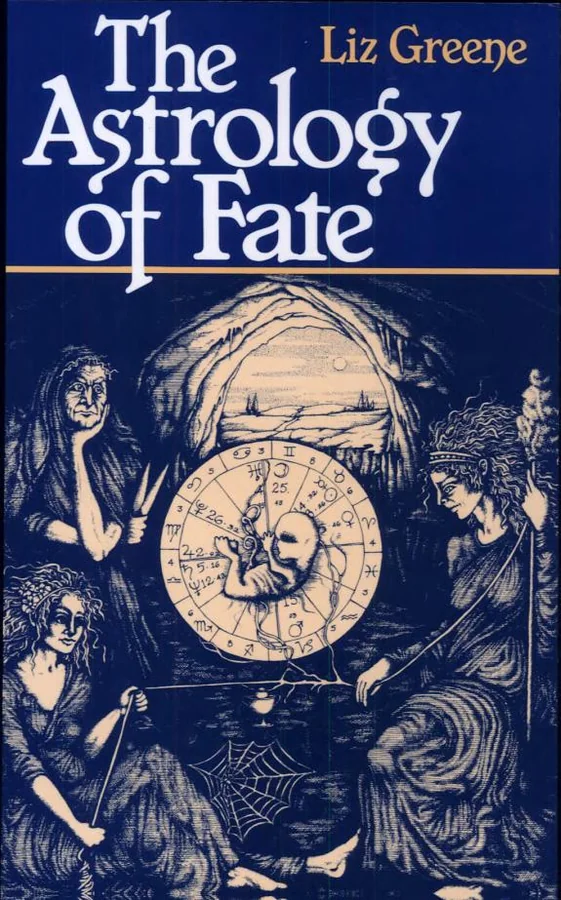
Liz Greene's 1984 book, Astrology of Fate, examines destiny through astrological symbolism and psychological theory.
Astrology of Fate, first published in 1984, examines how astrological symbolism and psychological theory interpret the concept of destiny. Liz Greene moves past simple horoscopes to explore an individual's relationship with predetermined life paths and the drive for personal agency. She uses myths, fairy tales, and the zodiac's archetypal language to show the connection between the cosmic map and the human psyche.
The book considers how our understanding of fate has changed. It suggests fate is not a fixed decree but a living force that consciousness and choice help shape. This work is for students of astrology interested in its psychological and mythological aspects. It will also appeal to those interested in comparative mythology, archetypal psychology, and philosophical questions about determinism and free will. Readers familiar with Jungian psychology and its symbolic applications will find Greene's method especially engaging.
Published in 1984, Astrology of Fate arrived during a time of renewed interest and intellectualization in astrology, especially within psychological fields. The book builds on the work of authors like Dane Rudhyar and the growing Jungian astrology movement. Greene's method of combining mythological stories with psychological ideas set it apart from purely predictive astrological texts. It addressed a growing desire to see astrological charts as symbolic representations of the psyche, aligning with the era's focus on depth psychology and esoteric philosophy.
💡 Why Read This Book?
• Understand how astrological placements, particularly those related to Saturn and the outer planets, function as symbolic representations of psychological challenges, a concept explored extensively in the book's mythological examples. • Gain insight into Liz Greene's unique approach, first articulated in this 1984 publication, that bridges Jungian psychology and traditional astrological symbolism to interpret fate. • Explore the evolution of the concept of fate through specific myths and zodiacal signs discussed, offering a framework for personal reflection on one's own life path.
⭐ Reader Reviews
Honest opinions from readers who have explored this book.
❓ Frequently Asked Questions
What is the primary focus of Liz Greene's Astrology of Fate?
The book's primary focus is on understanding astrological symbolism not as predictive destiny, but as a map of psychological patterns and life challenges. Greene uses myths and fairy tales to explore how fate can be interpreted and integrated for personal growth.
When was Astrology of Fate first published and by whom?
Astrology of Fate was first published on November 1, 1984. It is authored by Liz Greene, a renowned astrologer and psychologist known for her in-depth approach to astrological interpretation.
Does the book offer practical astrological interpretations for birth charts?
While it doesn't provide step-by-step chart interpretations, it offers a profound conceptual framework. Readers learn to see their birth chart's 'fated' elements as psychological patterns to be understood and worked with, rather than immutable decrees.
What role do myths and fairy tales play in Astrology of Fate?
Myths and fairy tales serve as illustrative tools, providing archetypal narratives that mirror the psychological dynamics and life challenges represented by astrological configurations. They help to contextualize the abstract zodiacal language.
Is this book suitable for someone new to astrology?
It can be challenging for absolute beginners due to its psychological and mythological depth. However, readers with some foundational knowledge of astrology or an interest in Jungian psychology and mythology will find it highly rewarding.
How does Greene's concept of fate differ from deterministic views?
Greene's view of fate is not deterministic in the sense of preordained outcomes. Instead, she interprets astrological 'fate' as inherent psychological potentials and challenges that offer opportunities for conscious engagement and personal evolution.
🔮 Key Themes & Symbolism
Fate as Psychological Pattern
The central theme posits that astrological 'fate' is not an external imposition but an internal psychological blueprint. Greene uses the birth chart not to predict events, but to illuminate ingrained patterns, potentials, and challenges inherent in the psyche. By examining zodiacal signs and planetary configurations through the lens of myths like those of Oedipus, the book argues that our destiny is an ongoing dialogue between consciousness and the archetypal forces shaping our lives. This perspective reframes perceived limitations as opportunities for growth and integration.
Archetypal Narratives and Individuation
Greene expertly employs myths and fairy tales to demonstrate the archetypal nature of astrological symbolism. Figures from Greek mythology and classic stories serve as metaphors for fundamental human drives and developmental stages. The pursuit of individuality, or individuation, is presented as the conscious process of understanding and integrating these archetypal energies, rather than being passively driven by them. The zodiacal signs become symbolic representations of these universal psychological journeys.
The Zodiac as a Mythological Map
Astrology of Fate reinterprets the zodiac not merely as a system for personality typing or prediction, but as a rich mythological landscape. Each sign and planet is imbued with symbolic meaning drawn from ancient stories and psychological archetypes. This approach allows readers to engage with their astrological charts on a deeper, more personal level, recognizing the inherent narratives and psychological dynamics that shape their experience of life and destiny.
Consciousness and Destiny
A core argument is that while astrological configurations may indicate certain potentials or life themes, it is human consciousness that ultimately determines how these are expressed and experienced. The book explores the concept of karma not as punishment or reward, but as the consequence of our choices and our level of awareness in engaging with life's inherent patterns. Greene suggests that by bringing conscious awareness to these patterns, individuals can actively participate in shaping their destiny.
💬 Memorable Quotes
Direct passages from the work, attributed to the author.
“Fate is not a sentence, but a summons.”
— This concise rephrasing suggests that perceived destiny should be viewed not as a fixed, inescapable doom, but as an invitation to engage with life's challenges and potentials actively.
“The zodiacal signs are expressions of the fundamental energies of the human psyche.”
— This interpretation moves beyond simplistic personality traits, framing astrological signs as deep-seated psychological forces that require understanding and integration for personal development.
“Mythological narratives offer blueprints for understanding our own life's journey.”
— This highlights Greene's method of using ancient stories to decode the symbolic language of astrology, revealing universal patterns applicable to individual psychological processes.
“The pursuit of individuality involves confronting the archetypal patterns within our charts.”
— This emphasizes the active role of the individual in the process of individuation, using astrological symbolism as a guide to understanding and integrating deep psychological structures.
“Our understanding of fate evolves as our consciousness expands.”
— This suggests that destiny is not static but dynamic, influenced by our growing self-awareness and our capacity to consciously engage with the psychological forces indicated by our astrological makeup.
🌙 Esoteric Significance
Tradition
This work is deeply rooted in the Western esoteric tradition, particularly its modern psychological branch, heavily influenced by Jungian archetypal psychology. It departs from older, more deterministic forms of Hellenistic or Medieval astrology by emphasizing the symbolic and psychological dimensions. Greene positions the birth chart as a map of the psyche's potential, aligning with a Hermetic principle of 'as above, so below' applied to internal states rather than solely external events. It fits within a lineage that seeks to understand cosmic order through the lens of human consciousness and spiritual development.
Symbolism
Central symbols include the zodiacal signs, interpreted as archetypal energies (e.g., Aries as the primal impulse, Cancer as the nurturing instinct), and the planets, especially the outer planets like Saturn, Uranus, Neptune, and Pluto, which represent generational themes and profound psychological shifts. Myths of figures like Oedipus and Persephone are employed to illustrate the archetypal nature of fated challenges, showing how these mythological narratives mirror the psychological dynamics embedded within astrological configurations.
Modern Relevance
Greene's work remains highly relevant for contemporary psychological astrologers, depth psychologists, and those interested in archetypal studies. Thinkers and practitioners exploring the intersection of consciousness, mythology, and symbolic systems continue to draw upon her foundational insights. Her approach informs modern therapeutic modalities that utilize symbolic language and narrative, such as Jungian analysis and archetypal psychology, making the book a touchstone for understanding the psyche through ancient symbolic frameworks.
👥 Who Should Read This Book
• Students of Jungian and archetypal psychology seeking to understand the symbolic language of the psyche through astrological and mythological frameworks. • Serious astrology practitioners looking to deepen their understanding beyond predictive techniques, focusing on psychological interpretation and the concept of destiny. • Readers interested in comparative mythology and philosophy of mind who wish to explore how ancient wisdom traditions can illuminate contemporary questions about free will and determinism.
📜 Historical Context
Published in 1984, Liz Greene's Astrology of Fate arrived during a fertile period for psychological astrology, deeply influenced by Carl Jung's theories of archetypes and the collective unconscious. This era saw a move away from purely predictive astrology towards interpretations that emphasized the psyche and personal development. Greene’s work distinguished itself by its extensive use of mythology and comparative religion, linking astrological symbols to universal human narratives, a departure from more mechanistic astrological systems prevalent at the time. While figures like Dane Rudhyar had already begun this integration, Greene’s comprehensive approach and accessible (though dense) prose solidified her position. The book resonated with a growing audience interested in esoteric philosophy and depth psychology, offering a sophisticated alternative to more superficial astrological readings and engaging with the intellectual currents that also informed the work of contemporaries like James Hillman in archetypal psychology.
📔 Journal Prompts
The astrological concept of fate as a 'summons' for personal growth.
Archetypal figures from mythology mirrored in zodiacal sign descriptions.
The relationship between outer planet transits and psychological transformation.
Interpreting perceived life challenges through the lens of specific myths discussed.
The balance between predetermined astrological patterns and conscious choice.
🗂️ Glossary
Archetype
In Jungian psychology, a universal, archaic pattern and image that derives from the collective unconscious and is the psychic counterpart of an inherited structure. Greene applies this concept to astrological symbols.
Individuation
The psychological process of integrating the conscious and unconscious aspects of the self to achieve wholeness. Greene views astrological work as a tool in this lifelong journey.
Zodiacal Signs
The twelve divisions of the ecliptic, each representing a distinct set of archetypal energies and psychological potentials that Greene explores through mythological parallels.
Fate
In Greene's context, not a fixed external destiny, but a pattern of psychological potentials and life challenges indicated by the birth chart, offering opportunities for conscious engagement.
Karma
Reinterpreted as the psychological consequences of our actions and awareness, rather than a system of reward or punishment. It relates to how we engage with our astrological patterns.
Psychological Astrology
An approach to astrology that emphasizes the symbolic representation of psychological processes and potentials within the birth chart, rather than solely predictive techniques.
Mythological Symbolism
The use of ancient stories and figures (e.g., from Greek mythology) to represent fundamental human experiences and psychological dynamics, as employed by Greene to interpret astrological concepts.
This book appears in 1 collection
🔮 Readers Also Liked
Browse all →









From the “Astrology” Collection
View all →









More Free Astrology & Cosmology Books
View all →