Chinese Astrology
 61
61

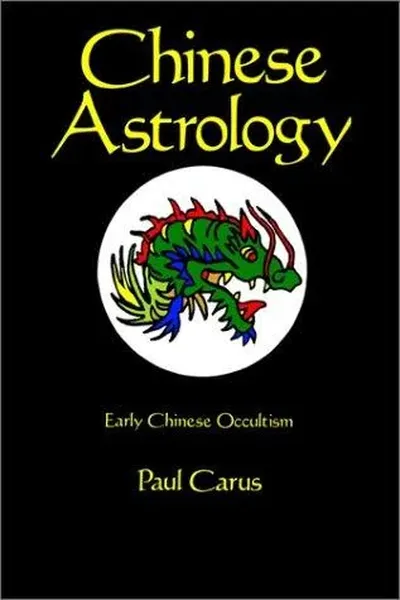
Chinese Astrology


By Cassian Rothmann (Senior Critic, Ancient Wisdom) — Chung Li's *Chinese Astrology* is an illuminating exposition of an ancient, potent system. It transcends mere horoscopic charting, delving into the philosophical underpinnings and esoteric symbolism that give this tradition its enduring power. Li masterfully decodes the complex interplay of the Five Elements and the twelve Animal Signs, offering readers a profound lens through which to understand destiny and personal growth. This work is indispensable for practitioners seeking to deepen their craft and for any scholar of esoteric traditions. It breathes life into ancient wisdom, making its profound insights accessible.
📝 Description
61
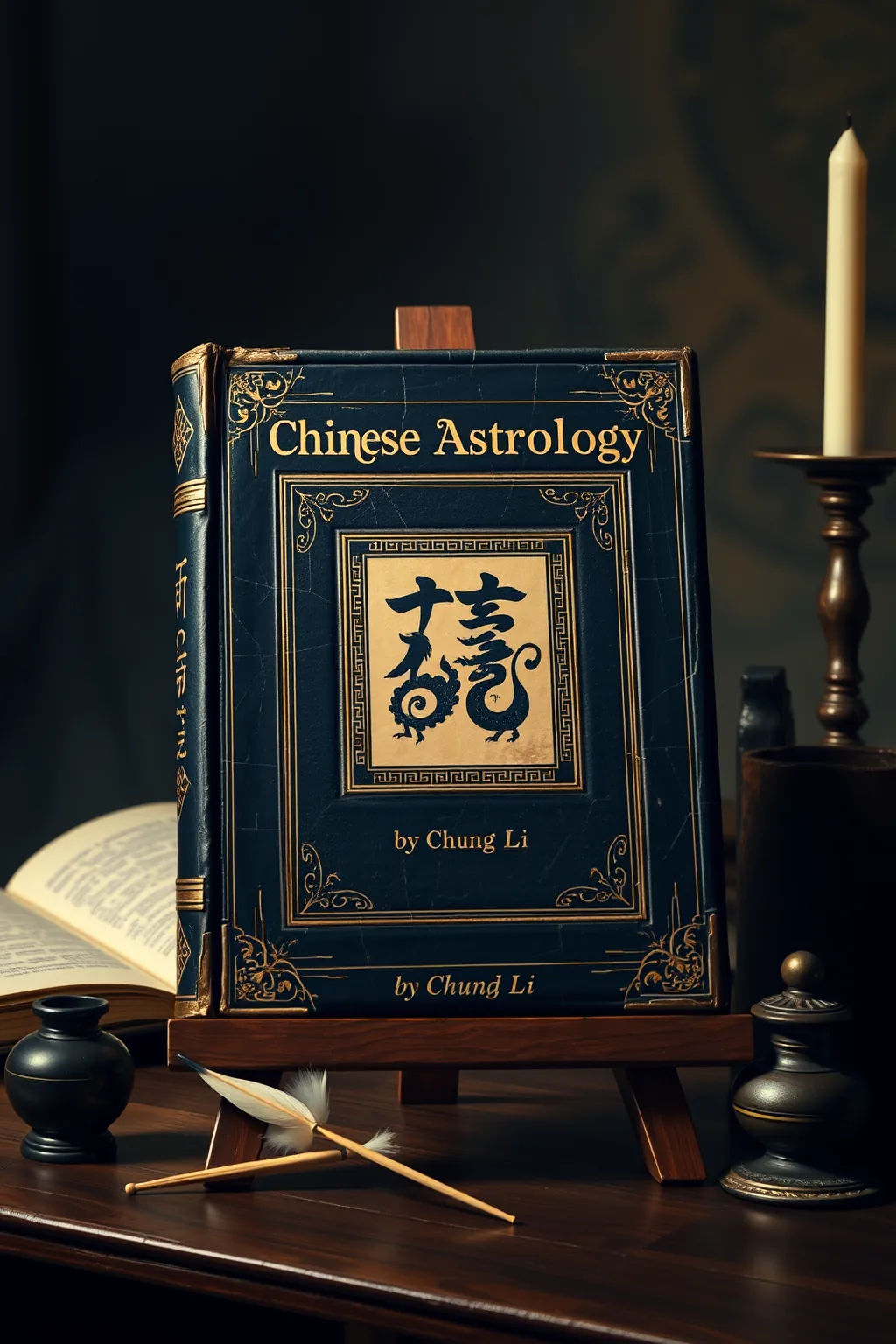
Chung Li's Chinese Astrology, first published in 1978, decodes the twelve animal signs and Five Elements.
Chung Li's 1978 book lays out the core principles of Chinese Astrology. It presents the system not just as a method for prediction, but as a framework for understanding personality and life's energetic flow. The text covers the interactions of the Five Elements—Wood, Fire, Earth, Metal, and Water—along with the fundamental concepts of Yin and Yang. It details the characteristics associated with each of the twelve zodiac animals, explaining their symbolic meanings and how they influence human affairs.
The book aims to help readers grasp the celestial patterns that shape individual lives. It encourages self-reflection and a recognition of life's cyclical patterns. Chung Li structured the work for those seriously interested in the subject, whether they are new to it or have prior study. The content illuminates the less obvious influences on human experience, offering a method for approaching life with greater awareness.
This book sits within the broader tradition of East Asian cosmological thought, which views the universe as an interconnected system governed by observable energies and cycles. Chinese Astrology, as presented by Chung Li, draws from Taoist philosophy and ancient Chinese metaphysics. It connects celestial phenomena to terrestrial events and individual human lives, aiming to provide insight into destiny and character through symbolic interpretation. This approach is part of a long history of divinatory and philosophical systems developed in China to understand humanity's place within the natural order.
💡 Why Read This Book?
Uncover the profound cosmic blueprint woven into your very being. *Chinese Astrology* offers more than predictions; it provides a roadmap to self-discovery, spiritual alignment, and understanding life's cyclical rhythms. Ideal for seekers of ancient wisdom, practitioners of esoteric arts, and anyone yearning to connect with the deeper currents of existence. Embark on a transformative journey into the heart of celestial wisdom.
⭐ Reader Reviews
Honest opinions from readers who have explored this book.
❓ Frequently Asked Questions
What are the core components of Chinese Astrology?
The core components include the twelve Animal Signs (Rat, Ox, Tiger, etc.), the Five Elements (Wood, Fire, Earth, Metal, Water), and the Yin and Yang principles. These elements interact to create a unique energetic profile for each individual.
How does the Five Elements system work in Chinese Astrology?
The Five Elements represent fundamental energies that influence personality, relationships, and life events. Their cyclical generation and destruction create dynamic interactions, shaping the complexities of an astrological chart.
What is the significance of Yin and Yang in this context?
Yin and Yang are complementary opposing forces that represent the dualistic nature of the universe. In Chinese Astrology, they describe the inherent qualities of signs and elements, contributing to balance and harmony within a chart.
Can Chinese Astrology help with understanding relationships?
Absolutely. By analyzing the compatibility and potential conflicts between different Animal Signs and their elemental influences, one can gain profound insights into interpersonal dynamics and foster more harmonious connections.
Is this book suitable for beginners?
Yes, Chung Li's clear and evocative prose makes this complex system accessible to beginners, while still offering depth and nuance for those with prior knowledge of esoteric studies.
🔮 Key Themes & Symbolism
The Dance of the Twelve Animals
Examine the rich mythology and archetypal energies of the twelve zodiac animals. Each creature embodies distinct characteristics, strengths, and challenges, offering a vibrant symbolic language for understanding personality, destiny, and the flow of time. Discover how these animal archetypes interact, creating a dynamic interplay of forces that shape individual lives and collective human experience. This section illuminates the profound connection between the animal kingdom and the celestial realms, revealing how their essence is imprinted upon our souls.
The Five Element Framework
Unravel the intricate cosmology of the Five Elements: Wood, Fire, Earth, Metal, and Water. Chung Li masterfully explains how these fundamental energies not only govern the cycles of nature but also profoundly influence human character, health, and fortune. Explore the generative and destructive cycles of the elements, understanding how their harmonious or disharmonious interplay creates the unique energetic signature of every individual. This knowledge provides a powerful tool for self-understanding and for working through the ever-changing currents of life with wisdom and balance.
Yin, Yang, and Cosmic Harmony
Explore the foundational principles of Yin and Yang, the complementary forces that underpin all existence. This section elucidates how these polarities manifest within Chinese Astrology, influencing the character of signs, elements, and their interactions. Discover the profound pursuit of balance and harmony within the astrological chart, understanding how the dynamic interplay of Yin and Yang leads to personal growth and spiritual integration. The book guides readers to recognize and harmonize these energies within themselves and their environment.
💬 Memorable Quotes
Direct passages from the work, attributed to the author.
“Within the cycle of the Dragon, lies the potential for both great creation and profound transformation.”
— This speaks to the powerful, dynamic energy of the Dragon sign, representing duality and the capacity for immense positive change and significant upheaval. It encourages embracing both aspects.
“The elements whisper secrets of our inner landscape.”
— This evocative phrase suggests that the Five Elements in one's chart are symbolic representations of internal psychological and energetic patterns waiting to be understood.
“Harmony is not the absence of conflict, but the skillful navigation of its energies.”
— This clear insights suggests that true balance in life and within an astrological chart comes from understanding and working with challenges, rather than avoiding them.
“Know your celestial mirror, and you shall know yourself.”
— This emphasizes the core purpose of astrology as a reflective tool, urging readers to use their astrological chart as a means to gain deep self-knowledge and insight.
💡 Key Ideas
Editorial paraphrase of the work's core concepts — not direct quotes.
The stars do not dictate, they illuminate.
This quote emphasizes that astrology is a tool for self-awareness and understanding, not a deterministic fate. It highlights the guiding, rather than commanding, nature of celestial influences.
🌙 Esoteric Significance
Tradition
This work is deeply embedded within the esoteric traditions of Chinese metaphysics, particularly Taoism. It draws upon ancient principles of cosmic harmony, the cyclical nature of time, and the energetic interplay of Yin and Yang and the Five Elements. Its esoteric significance lies in its application as a map of the soul's journey, offering insights into karmic patterns, spiritual potentials, and the interconnectedness of all things within the universal Tao.
Symbolism
The symbolism is incredibly rich, with each of the twelve animal signs representing archetypal human energies and life lessons. The Five Elements (Wood, Fire, Earth, Metal, Water) act as the dynamic forces that shape and transform these archetypes, creating a complex interplay of characteristics and potential outcomes. The cyclical nature of the calendar, the lunar phases, and the elemental interactions all form a profound symbolic language for understanding the ebb and flow of life.
Modern Relevance
In a world often characterized by disconnection and rapid change, Chinese Astrology offers a grounding and profound framework for understanding oneself and one's place in the cosmos. Its emphasis on cyclical patterns, elemental balance, and harmonious relationships provides timeless wisdom for navigating modern challenges. It serves as a powerful tool for personal development, fostering self-awareness, resilience, and a deeper connection to the natural rhythms of life, promoting holistic well-being.
👥 Who Should Read This Book
This profound exploration of Chinese Astrology is essential for several audiences. **Beginners** will find a clear and accessible entry point into a complex yet rewarding system. **Scholars of esoteric traditions** will appreciate the depth of its philosophical underpinnings and historical context. **Spiritual seekers** will discover a powerful tool for self-reflection, understanding life's purpose, and aligning with cosmic energies. **Practitioners of astrology and related modalities** will find invaluable insights to enhance their understanding and application of celestial influences, enriching their practice with ancient wisdom.
📜 Historical Context
Emerging from the rich soil of ancient Chinese philosophy and cosmology, Chinese Astrology, or *Shengxiao*, has a history stretching back millennia. Rooted in observations of celestial movements, agricultural cycles, and the profound philosophical systems of Taoism and Confucianism, it developed as an integral part of imperial governance, divination, and personal guidance. During dynasties such as the Han and Tang, its influence permeated society, shaping calendars, understanding human character, and advising on matters of state and personal life. The intricate system of the twelve animals and the Five Elements evolved through continuous study and refinement, becoming a sophisticated method for interpreting the cosmic energies believed to influence earthly affairs. This tradition reflects a worldview where humanity is intrinsically connected to the natural world and the cosmos, seeking to live in accordance with universal principles.
📔 Journal Prompts
Reflect on your birth animal sign: what are its core traits, and how do they manifest in your life?
Consider the Five Elements associated with your birth year. How do these elements interact and influence your personality and experiences?
How does the concept of Yin and Yang resonate with your personal life and interactions?
What cyclical patterns have you observed in your life, and how might they relate to the principles of Chinese Astrology?
How can understanding your astrological blueprint empower you to navigate future challenges with greater wisdom and grace?
🗂️ Glossary
Shengxiao
The Chinese term for the zodiac, literally translating to 'birth likeness' or 'birth animal'. It refers to the twelve-year cycle of animal signs that govern Chinese Astrology.
Wu Xing
The Chinese term for the Five Elements: Wood (Mu), Fire (Huo), Earth (Tu), Metal (Jin), and Water (Shui). They represent fundamental forces and their interactions within the cosmos and human life.
Yin and Yang
Fundamental Taoist concepts representing complementary opposites that create a dynamic balance in the universe. Yin is typically associated with passivity, darkness, and femininity, while Yang embodies activity, light, and masculinity.
Bazi
Often translated as 'Eight Characters' or 'Four Pillars of Destiny', Bazi is a complex system of Chinese astrology that uses the year, month, day, and hour of birth to create a chart detailing elemental and animal influences.
Gan Zhi
The Heavenly Stems and Earthly Branches, a sixty-year sexagenary cycle system used in traditional Chinese calendrical, astrological, and philosophical contexts. The Earthly Branches correspond to the twelve zodiac animals.
This book appears in 2 collections
🔮 Readers Also Liked
Browse all →![Mrs. Davis, (no. 7.) Crown Court, Little Poultney Street, Wardour Street, Soho, ... name and clock face on the door. Who has studied the occult sciences under the most learned sages after many years studious application; answers all adimssable [sic] questions in astrology, ... 1780](/img/thumb/mrs-davis-no-7-crown-court-little-poultney-street-wardour-street-soho-name-and-clock-face-on-the-door-who-has-studied-the-occult-sciences-under-the-most-learned-sages-after-many-years-studious-applica.webp)
![ERIC ED476541: Animals of the Chinese Zodiac. [Lesson Plan].](/img/thumb/eric-ed476541-animals-of-the-chinese-zodiac-lesson-plan-eric.webp)





More by Chung Li
All books →
From the “Astrology” Collection
View all →









More Free Astrology & Cosmology Books
View all →