✍️ Author Biography
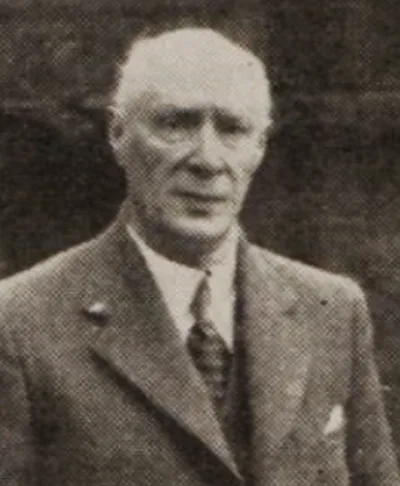
Benudhar Rajkhowa
📅 1770 – 1848
🌍 American
📚 1 free book
⭐ Known for: Hindu Manners, Customs and Ceremonies (Abb...
Benudhar Rajkhowa is identified as an author within a glossary of caste system studies, with no specific works or contributions detailed.
This text is a glossary related to the study of India's caste system, encompassing key figures, works, and concepts. It highlights early colonial administrators, missionaries, and ethnographers who documented caste hierarchies and social practices before 1900. Seminal works from this period include those by Abbé Dubois, Edgar Thurston, William Crooke, and Herbert Hope Risley, with some of these works being linked to race theory. The glossary also covers significant 20th-century contributions, such as John Henry Hutton's "Caste in India" and Louis Dumont's sociological analyses, which focused on ideological interpretations and hierarchical structures. It acknowledges Indian scholars like Romesh Chunder Dutt and M. N. Srinivas, who provided internal analyses and concepts like Sanskritisation, as well as B. R. Ambedkar, a pioneer of Indian sociology. Foundational concepts like varṇa, jāti, and endogamy/exogamy are also noted as shaping social organization. The glossary aims to serve as a reference for researchers exploring the origins and evolution of caste studies in India and the colonial construction of Hinduism.
Context of the Glossary
The provided text serves as a glossary for the study of the caste system in India. It aims to identify key individuals, significant publications, and important concepts relevant to the sociological and ethnographic examination of this complex social structure. The glossary acknowledges a range of contributors, from early colonial figures to modern scholars, and touches upon foundational concepts that have shaped social organization and hierarchy.
Scholarly Contributions
The glossary lists numerous scholars whose works are pertinent to understanding the caste system. These include early colonial ethnographers like Edgar Thurston and William Crooke, who documented caste hierarchies and practices. It also features figures associated with race theory, such as Herbert Hope Risley. The 20th century is represented by scholars like John Henry Hutton and Louis Dumont, who offered sociological and ideological analyses. Importantly, the contributions of Indian scholars, including Romesh Chunder Dutt, M. N. Srinivas, and B. R. Ambedkar, are recognized for providing indigenous perspectives and critical analyses of the caste system.
Key Concepts and Works
Central to the glossary are foundational concepts such as varṇa, jāti, endogamy, and exogamy, which are identified as crucial elements in the social and occupational organization of India. Several seminal works are mentioned, including Abbé Dubois' "Hindu Manners, Customs and Ceremonies," Edgar Thurston's "Castes and Tribes of Southern India," and B. R. Ambedkar's "Castes in India: Their Mechanism, Genesis and Development." The text also references various censuses and ethnographic surveys conducted during the British Raj, highlighting their role in collecting data on castes and tribes and influencing subsequent studies.
Key Ideas
- Varṇa: A conceptual framework for social stratification.
- Jāti: Endogamous groups forming the basis of the caste system.
- Endogamy: Marriage within a specific social group.
- Exogamy: Marriage outside a specific social group.
- Sanskritisation: A process of social mobility where lower castes adopt practices of higher castes.
- Purity and Pollution: Ideological principles underpinning caste hierarchy.