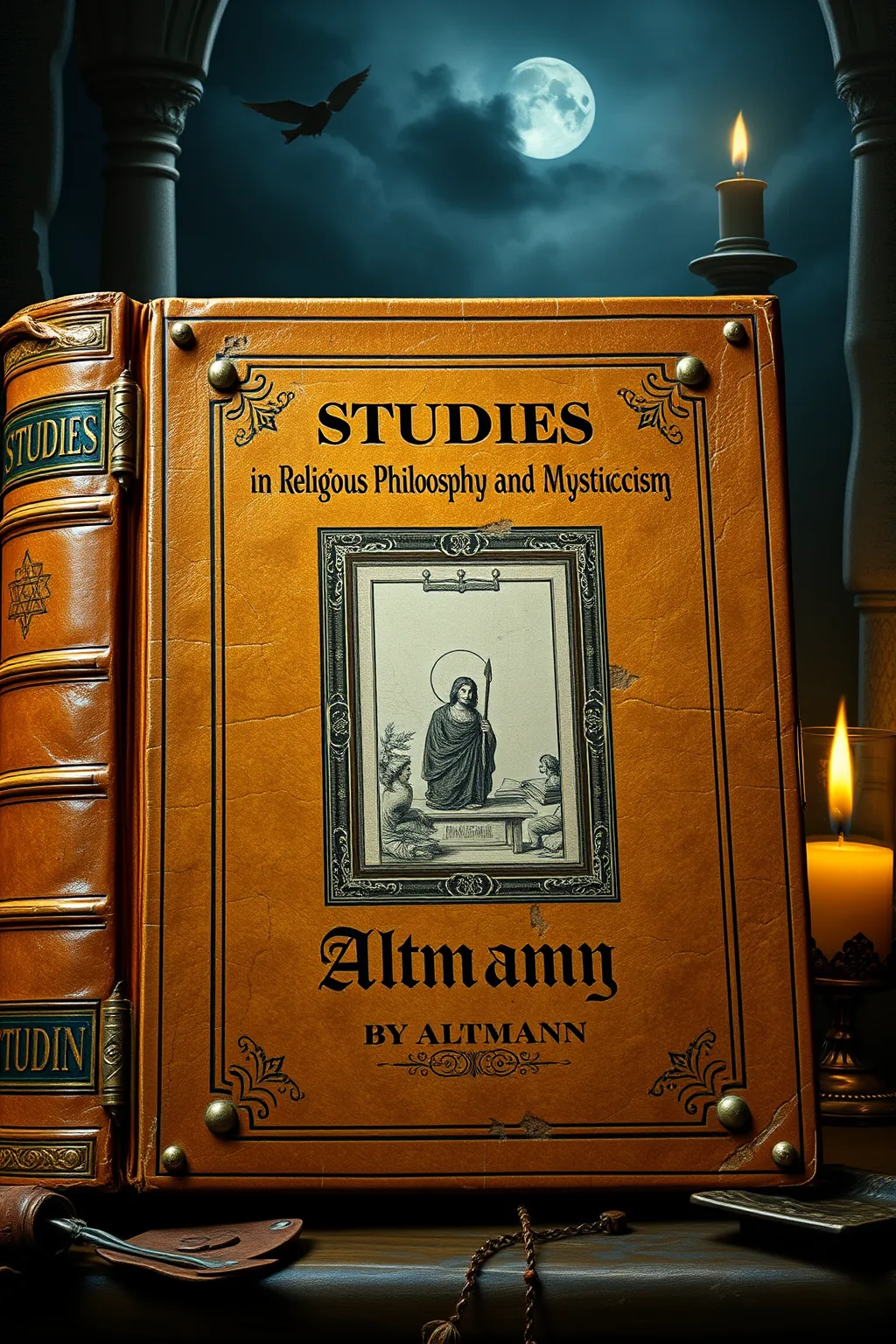
Art and Mysticism

 72
72

Art and Mysticism
Louise Nelstrop and Helen Appleton’s *Art and Mysticism* offers a sober, academic dissection of a topic often shrouded in romanticism. The strength lies in its systematic approach, moving from theoretical underpinnings to specific case studies that avoid hagiography. For instance, the chapter analyzing the spiritual draughtsmanship of Hilma af Klint provides a particularly lucid example of how abstract forms can indeed correlate with deeply personal esoteric beliefs, moving beyond mere aesthetic appreciation to explore intentional symbolic language. However, the book’s academic rigor occasionally becomes a limitation; the dense prose and reliance on philosophical jargon can make some sections less accessible to a general audience interested in the more direct experience of mystical art. The discussion on the phenomenology of mystical experience, while precise, could benefit from more direct engagement with the visual evidence presented. Ultimately, *Art and Mysticism* serves as a valuable, if demanding, scholarly resource for understanding the mechanics of art born from inner vision.
📝 Description
72
Published in 2018, Art and Mysticism examines how artists access and translate mystical experiences.
Louise Nelstrop and Helen Appleton's 2018 collection of essays investigates the connection between artistic creation and spiritual states. The contributors consider how artists across history have channeled mystical experiences into visual art, music, and literature. The book moves past simple interpretations, aiming to understand the psychological and philosophical forces that link creative impulse with the ineffable. It discusses not only artists who claimed divine inspiration but also the theoretical explanations for this phenomenon.
The volume is for academics, graduate students, and practitioners in esoteric studies, art history, and comparative religion. Artists and writers interested in the deeper, perhaps spiritual or psychological, origins of their work will also find it relevant. Readers seeking a rigorous, evidence-based look at mysticism in art, rather than anecdotal stories or devotional texts, will find this book especially useful. It requires careful consideration of complex ideas and theoretical arguments.
The link between art and mysticism has roots in Neoplatonism, where beauty was seen as a divine reflection. Figures like William Blake in the 18th century directly integrated his visions into his work. The 20th century saw movements like Surrealism, drawing on dreams and the unconscious, and scholarship from figures such as Evelyn Underhill. This book continues that discourse, synthesizing contemporary thought in psychology, philosophy of mind, and art theory with historical perspectives.
💡 Why Read This Book?
• Gain an understanding of the theoretical frameworks, such as the concept of 'inspired creation,' that scholars use to analyze the connection between mystical states and artistic output, as explored in the book's early chapters. • Examine specific historical examples, like the work of Hilma af Klint, to see concrete instances where artists translated esoteric beliefs into visual forms, offering a tangible link to the book's broader arguments. • Appreciate the nuanced distinction between consciously employed esoteric symbolism and art that seemingly channels the ineffable, providing a more sophisticated lens through which to view visionary art.
⭐ Reader Reviews
Honest opinions from readers who have explored this book.
❓ Frequently Asked Questions
What is the primary focus of *Art and Mysticism*?
The book primarily focuses on the complex relationship between artistic creation and mystical or altered states of consciousness, examining how artists access and translate these experiences into their work.
Who are the main authors and when was the book first published?
The book is edited by Louise Nelstrop and Helen Appleton, and it was first published in 2018.
Does *Art and Mysticism* discuss specific artists?
Yes, the work explores various artists and their connections to mysticism, with specific discussions potentially covering figures who engaged deeply with spiritual or esoteric traditions in their creative practice.
What academic fields does this book engage with?
It engages with art history, religious studies, philosophy of mind, psychology, and esoteric studies, bridging these disciplines to explore the phenomenon of mystical art.
Is *Art and Mysticism* suitable for beginners in esoteric studies?
While valuable, the book's academic and theoretical approach may be more suited for readers with some background in art history or esoteric philosophy, rather than absolute beginners.
What is the 'artist as visionary' concept discussed in the book?
This concept, explored within *Art and Mysticism*, debates whether artists are conduits for external inspiration or if their visionary qualities stem from deep psychological states and esoteric knowledge.
🔮 Key Themes & Symbolism
The Artist as Channel
This theme investigates the concept of the artist as a conduit for inspiration originating from beyond the conscious self. It examines how artists, whether intentionally or unconsciously, tap into altered states of consciousness—through meditation, trance, or intense psychological experiences—to produce art that transcends ordinary perception. The work questions the source of this inspiration, exploring whether it is divine, archetypal, or a manifestation of the deep unconscious, and how these channeled visions are then translated into tangible artistic forms like painting, sculpture, or music.
Esoteric Symbolism in Art
A central theme is the deliberate or emergent use of esoteric symbols within artistic creations. This involves analyzing how artists incorporate elements from various spiritual traditions—such as Hermeticism, Gnosticism, or Eastern mysticism—to convey complex metaphysical ideas or personal spiritual journeys. The book explores the semiotics of these symbols, considering their meaning within their original contexts and how they function within the artwork to communicate profound, often ineffable, truths to the viewer or listener.
Phenomenology of Mystical Experience
The work examines the subjective experience of mysticism itself and how it shapes artistic output. This includes exploring the nature of visions, ecstatic states, and moments of useful insights that artists report. It examines the psychological and neurological correlates of these experiences, as well as their philosophical implications. Understanding the phenomenology allows for a deeper appreciation of how the intense, often ineffable, quality of mystical encounters is represented and communicated through the medium of art.
Art as Spiritual Practice
This theme posits art not merely as an aesthetic object but as a form of spiritual discipline or practice. It considers how the act of creation itself can be a path to self-realization or spiritual growth for the artist. Furthermore, it examines how art can function as a catalyst for spiritual experience in the audience, inviting contemplation, transformation, or a connection to transcendent realities. The book analyzes artworks that are intended to facilitate spiritual awakening or serve as aids in contemplative practices.
💬 Memorable Quotes
Direct passages from the work, attributed to the author.
“The boundary between the visionary artist and the mystic is often indistinct.”
— This statement suggests that the profound inner experiences characteristic of mysticism are frequently mirrored in the creative output and perceived reality of visionary artists, implying a shared source or methodology.
“Artistic expression can be a vehicle for articulating the ineffable.”
— This highlights the unique capacity of art to communicate experiences or truths that are beyond the scope of ordinary language, serving as a bridge to domains of consciousness typically inaccessible.
“The interpretation of mystical art relies on understanding the artist's symbolic language.”
— This points to the necessity of contextual knowledge, particularly regarding esoteric traditions and symbols, for accurately comprehending the intended spiritual or metaphysical messages embedded within an artwork.
“Altered states of consciousness unlock unique creative potentials.”
— This concept posits that states of mind differing from normal waking consciousness—achieved through various means—can grant artists access to novel forms of perception and expression not available otherwise.
“Reception shapes the understanding of art rooted in esoteric experience.”
— The way an audience perceives and understands art is influenced by their own beliefs and cultural context, affecting how they engage with works derived from specific mystical or esoteric traditions.
🌙 Esoteric Significance
Tradition
While not strictly adhering to a single lineage, *Art and Mysticism* draws heavily from the Western Esoteric Tradition, encompassing Hermeticism, Gnosticism, and Neoplatonism, all of which have historically linked divine knowledge, spiritual attainment, and aesthetic beauty. It also touches upon Theosophical and Anthroposophical ideas regarding the spiritual nature of art and artists. The work departs from purely devotional or dogma-focused interpretations by employing scholarly analysis and psychological frameworks to understand the mechanisms of mystical art.
Symbolism
Key symbols often explored include mandalas, sacred geometry, and archetypal imagery. Mandalas, prevalent in various traditions, symbolize the cosmos and the unified self, often appearing in meditative art. Sacred geometry underlies many spiritual systems, representing divine order and creation. Archetypal images, as described by Carl Jung, are universal patterns of the unconscious that manifest in art, representing fundamental human experiences and spiritual truths.
Modern Relevance
Contemporary artists and thinkers exploring themes of consciousness, spirituality, and the intersection of art and science find resonance in this work. Practices like visionary art, psychedelic art, and contemporary spiritual art movements often draw upon the concepts discussed. Modern researchers in transpersonal psychology and consciousness studies also engage with the book’s analysis of how altered states inform creative expression and subjective experience.
👥 Who Should Read This Book
• Art historians and theorists interested in moving beyond formal analysis to explore the spiritual and psychological dimensions of creative works. • Students and practitioners of comparative religion and esoteric studies seeking to understand the manifestation of mystical experiences in tangible artistic forms. • Artists and writers curious about the deeper connections between their creative process, altered states of consciousness, and the tradition of visionary art.
📜 Historical Context
Published in 2018, *Art and Mysticism* enters a discourse with roots stretching back to antiquity, flourishing notably during the Renaissance with Neoplatonism and later re-emerging with figures like William Blake in the late 18th century. The 20th century saw significant engagement with this theme, particularly through Surrealism’s exploration of the unconscious and the work of scholars like Evelyn Underhill, who examined mystical experience. This 2018 volume builds upon such foundations, situating itself within contemporary academic conversations that bridge art history, religious studies, and philosophy of mind. It engages with theories of consciousness and perception that have evolved considerably since the early 20th century, offering a modern synthesis. The work implicitly contrasts with purely formalist or materialist interpretations of art prevalent in mid-20th century criticism, which often sidelined spiritual or metaphysical dimensions.
📔 Journal Prompts
Reflect on the concept of the 'artist as channel' in relation to your own creative impulses.
Analyze a piece of art you find spiritually resonant: what symbolic language is employed?
Consider the 'phenomenology of mystical experience' and how it might manifest visually.
Explore the 'artist as visionary' debate through the lens of a specific artist's biography.
How does the idea of 'art as spiritual practice' inform your view of creation?
🗂️ Glossary
Altered States of Consciousness
States of awareness that deviate from the normal waking state, often characterized by intensified sensory perception, altered sense of time, useful insights, or feelings of unity. These can be induced through meditation, ritual, psychedelics, or intense emotional experiences.
Esoteric
Relating to or accessible only by a select group of people possessing special knowledge or interest; often pertaining to spiritual or mystical traditions that are not publicly or exoterically revealed.
Gnosticism
A complex set of religious and philosophical ideas and systems that emerged in the early centuries CE, emphasizing personal spiritual knowledge (gnosis) for salvation. Gnostic thought often posits a dualistic worldview and a divine spark within humanity.
Hermeticism
A philosophical and religious tradition based primarily upon writings attributed to Hermes Trismegistus. It emphasizes the interconnectedness of all things, the divine nature of humanity, and the pursuit of spiritual knowledge through study and contemplation.
Inneffable
Too great or extreme to be expressed or described in words; often used to describe mystical experiences that transcend ordinary language and conceptualization.
Neoplatonism
A school of philosophy that emerged in the 3rd century CE, heavily influenced by Plato. It posits a hierarchical structure of reality emanating from a supreme, ineffable 'One,' with the goal of achieving mystical union with this ultimate principle.
Visionary Art
Art created by individuals, often outside the mainstream art world, who claim to be inspired by visions received during altered states of consciousness, mystical experiences, or profound psychological insights.
🔮 Readers Also Liked
Browse all →








More Free Mysticism & Contemplation Books
View all →