Anthroposophy as a Fairy Tale
 84
84

Anthroposophy as a Fairy Tale
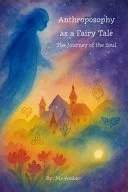
MS Amber Smith's "Anthroposophy as a Fairy Tale" attempts a delicate feat: translating the dense philosophical architecture of Rudolf Steiner into the intuitive language of myth and verse. The lyrical prose, at its best, achieves a meditative quality, particularly when exploring the 'becoming' of the individual spirit. The illustrations, often abstract and dreamlike, do contribute to the intended atmosphere, a welcome departure from dry academic treatises. However, the work occasionally falters in its clarity, sometimes leaving the reader adrift in metaphor without sufficient grounding in Steiner's specific terminology. A passage describing the "silver threads of destiny" could have benefited from more direct linkage to concepts like karma or spiritual guidance, a slight missed opportunity for those seeking precise understanding. Despite this, the collection offers a gentle, artistic gateway into anthroposophical thought. It is a contemplative piece for those who prefer feeling their way into spiritual concepts rather than dissecting them.
📝 Description
84
Published in 2025, Anthroposophy as a Fairy Tale uses poetic prose to interpret Rudolf Steiner's spiritual science.
Anthroposophy as a Fairy Tale, published in 2025, is a collection of prose and verse inspired by Rudolf Steiner's esoteric teachings. The author, MS Amber Smith, aims to translate complex spiritual-scientific concepts into an accessible narrative. The book features illustrations intended to evoke a dreamlike state, encouraging readers to reflect on human experience and personal growth. Its structure is designed to guide individuals in self-discovery, rooted in the philosophical foundations of anthroposophy. Footnotes and references are included to support further study.
This work is for readers interested in a contemplative approach to spiritual philosophy, especially those drawn to Rudolf Steiner's ideas but finding his academic writings challenging. It appeals to those who appreciate lyrical expression and symbolic narratives. Individuals engaged in personal growth and spiritual inquiry, open to examining the human condition through a perspective of cosmic evolution, will find it relevant. The book serves as an introduction for newcomers and a reflective resource for those already familiar with anthroposophical study.
Anthroposophy, founded by Rudolf Steiner in the early 20th century, proposed a spiritual scientific method for understanding the world, distinct from materialism or conventional religion. This book engages with that tradition, potentially exploring modern applications of Steiner's core concepts. Steiner's work influenced movements like Waldorf education and biodynamic farming, and this publication reflects an ongoing discussion within esoteric circles about making these ideas more approachable.
💡 Why Read This Book?
• Gain an intuitive grasp of anthroposophical 'becoming' through poetic prose, offering a different pathway than Steiner's direct lectures. • Experience the 'wonder of the human experience' as interpreted through evocative illustrations, designed to awaken subconscious spiritual perceptions. • Explore concepts like the spiritual evolution of humanity, supported by footnotes referencing Rudolf Steiner's broader philosophical corpus.
⭐ Reader Reviews
Honest opinions from readers who have explored this book.
❓ Frequently Asked Questions
What is the primary philosophical basis of "Anthroposophy as a Fairy Tale"?
The book is founded on anthroposophy, a spiritual philosophy developed by Rudolf Steiner. It seeks to understand the spiritual nature of the human being and the cosmos through methods akin to scientific inquiry but applied to non-material realms.
Who was Rudolf Steiner and why is he relevant to this book?
Rudolf Steiner (1861-1925) was an Austrian esotericist and philosopher who founded anthroposophy. His extensive lectures and writings form the intellectual bedrock upon which MS Amber Smith's collection is built.
What makes the illustrations in this book significant?
The illustrations are integral to the book's aim of creating a 'dreamlike atmosphere.' They are intended to bypass purely intellectual understanding and evoke intuitive or subconscious responses, aligning with anthroposophical methods of spiritual perception.
Is this book suitable for beginners in esoteric studies?
Yes, it is designed to be an accessible entry point. By using fairy tale and poetic language, it aims to make complex anthroposophical concepts understandable and relatable to those new to the subject.
What does the book mean by 'the deeper truth of their own becoming'?
This phrase refers to the anthroposophical concept of spiritual evolution. It suggests that individuals have an inner potential for spiritual growth and self-realization that can be consciously cultivated throughout life.
What kind of references or footnotes can readers expect?
The book includes insightful footnotes and references that direct readers to specific concepts or lectures by Rudolf Steiner, providing pathways for those who wish to explore the source material more deeply.
🔮 Key Themes & Symbolism
Spiritual Becoming
The work centers on the anthroposophical concept of 'becoming,' understood as the continuous process of spiritual evolution and self-realization inherent in human existence. It posits that individuals are not static beings but are in a constant state of development towards higher spiritual consciousness. This theme is explored through poetic narratives and symbolic imagery, inviting readers to perceive their own life journey as a path of unfolding spiritual potential, a core idea presented in Rudolf Steiner's extensive corpus on human development.
The Fairy Tale as Spiritual Pedagogy
This collection utilizes the form of the fairy tale and lyrical prose as a vehicle for spiritual knowledge. It posits that these narrative structures possess an inherent capacity to communicate profound truths that resonate on a deeper, subconscious level, bypassing purely intellectual apprehension. This approach aligns with pedagogical methods that emphasize imagination and intuition, suggesting that symbolic stories can awaken dormant spiritual faculties within the reader, much like the imaginative approach advocated in Waldorf education.
Awakening Inner Wonder
A significant theme is the cultivation of a sense of wonder regarding the human experience and the surrounding cosmos. The book encourages readers to look beyond the material world and perceive the spiritual realities that underpin existence. Through vivid language and dreamlike illustrations, it seeks to reawaken a childlike openness and curiosity, fostering a more conscious and appreciative engagement with life's mysteries and the inherent spiritual dimensions of everyday reality.
💬 Memorable Quotes
Direct passages from the work, attributed to the author.
“The soul, a seed awaiting the sun of understanding.”
— This metaphor suggests the dormant potential within the human soul, comparing it to a seed that requires conscious effort and spiritual insight (the 'sun of understanding') to germinate and grow.
“We walk paths woven from starlight and memory.”
— This poetic phrase evokes the interconnectedness of destiny and past experiences. 'Starlight' suggests a cosmic, perhaps fated, element, while 'memory' points to the personal history that shapes our present journey.
“Within the tale, the self finds its echo.”
— This highlights the reflective power of narrative. By engaging with the stories presented, readers are encouraged to find parallels and deeper understanding of their own inner lives and personal development.
“The dreamscape, a threshold to the unseen.”
— This suggests that the state of dreaming, or a dreamlike consciousness fostered by the book's style, serves as a gateway to perceiving spiritual realities that are not accessible through ordinary waking consciousness.
“Each breath, a step in the great becoming.”
— This emphasizes the continuous nature of spiritual evolution. It frames even the most basic biological function as part of the ongoing process of transformation and growth central to anthroposophy.
🌙 Esoteric Significance
Tradition
This work is firmly rooted in the Western esoteric tradition, specifically within the lineage of Anthroposophy founded by Rudolf Steiner. It departs from more rigid, academic presentations of Steiner's thought, instead aligning with Gnostic and Hermetic impulses to convey spiritual truths through allegory and symbolic narrative. It seeks to offer a path of knowing that is experiential and imaginative, rather than solely intellectual, reflecting a broader trend in modern esoteric movements to integrate symbolic wisdom with personal psychological development.
Symbolism
The book likely employs archetypal symbols common in fairy tales, such as the 'seed' representing potential, 'starlight' for destiny or cosmic influence, and the 'dreamscape' as a portal to non-physical realities. These symbols function as keys to unlocking deeper spiritual understanding. The 'tale' itself acts as a symbol for the structured unfolding of spiritual processes, mirroring the concept of divine creation or the evolution of consciousness as described in anthroposophical cosmology.
Modern Relevance
Contemporary thinkers and practitioners in fields influenced by Steiner, such as integral psychology, consciousness studies, and holistic education, may find value in this book's approach. Its focus on imaginative perception and the integration of spiritual concepts into lived experience speaks to modern quests for meaning that move beyond purely materialistic frameworks. Schools of thought emphasizing narrative therapy or the use of mythopoetic language to foster personal growth could also draw inspiration from its methods.
👥 Who Should Read This Book
• Seekers of spiritual knowledge interested in Rudolf Steiner's anthroposophy but prefer an artistic and narrative introduction over dense philosophical texts. • Individuals drawn to the power of fairy tales and symbolic language for personal insight and understanding of the human condition. • Aspiring practitioners of contemplative or imaginative spiritual disciplines looking for resources that foster inner reflection and a connection to the unseen.
📜 Historical Context
Published in 2025, "Anthroposophy as a Fairy Tale" emerges in a contemporary era where interest in Rudolf Steiner's spiritual science continues to find new audiences. Steiner himself, active in the early 20th century, established anthroposophy as a distinct spiritual path, seeking to bridge the materialist worldview with a scientifically verifiable understanding of the spiritual. This book’s approach, using fairy tales and poetic prose, can be seen as a response to the perceived complexity of Steiner’s original lectures, such as those on the evolution of consciousness or the nature of the ethers. It potentially engages with modern anthroposophical discourse, which often seeks accessible methods for applying Steiner’s insights in areas like education (Waldorf schools) and agriculture (biodynamic farming). Its form suggests a dialogue with contemporary esoteric literature, offering a gentler, more artistic entry point compared to, for example, the more philosophical or theosophical texts that preceded it, and perhaps aiming to counter the criticisms of spiritualism that often arose during the Theosophical Society's peak influence.
📔 Journal Prompts
The soul as a seed awaiting understanding: How has external or internal 'sunlight' fostered your growth?
Reflecting on paths woven from starlight and memory: Identify a moment where destiny and personal history converged.
The self finding its echo in a tale: What story (fairy tale, myth, personal narrative) has significantly mirrored your inner journey?
Experiencing the dreamscape as a threshold: Document a dream or meditative state that offered unexpected insight.
Considering the great becoming: How can the simple act of breathing be consciously integrated into your spiritual practice?
🗂️ Glossary
Anthroposophy
A spiritual philosophy founded by Rudolf Steiner, seeking to understand the spiritual nature of the human being and the cosmos through methods analogous to natural science but applied to non-material realms.
Becoming
In anthroposophy, the ongoing process of spiritual evolution and self-realization that characterizes human life. It emphasizes that individuals are in a continuous state of development towards higher consciousness.
Spiritual Science
The term Rudolf Steiner used for anthroposophy, indicating a rigorous, verifiable approach to understanding spiritual realities, distinct from mere belief or speculation.
Ethers
Rudolf Steiner described different 'ethers' (life, chemical, light, sound) as subtle forces or substances that permeate the physical world and are crucial for life processes and spiritual perception.
Dreamscape
A metaphorical term used in the book to describe the area of dreams or altered states of consciousness, considered a threshold for accessing spiritual insights and subconscious material.
Inner Wonder
A state of profound curiosity and appreciation for the mysteries of existence, both internal and external, cultivated as a means of spiritual awakening and connection.
Lyrical Prose
Writing characterized by poetic qualities, rhythm, and emotional expression, often used to convey subjective experiences or complex ideas in an evocative manner.