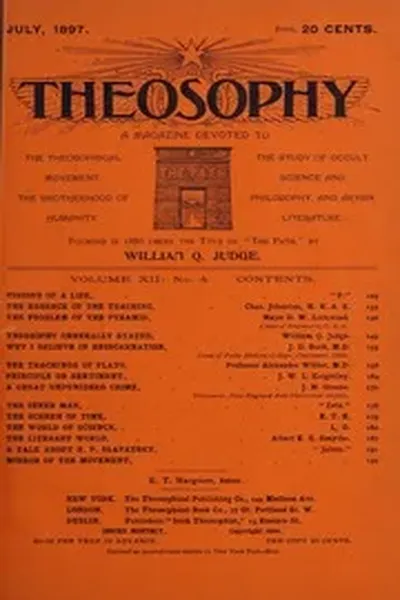
Anthroposophic Medicine
 76
76

Anthroposophic Medicine
The authors of Anthroposophic Medicine offer a detailed exploration of a medical system deeply rooted in Rudolf Steiner's complex cosmology. The strength of this work lies in its systematic presentation of the fourfold human constitution and its correlation with physical ailments. It provides concrete examples of how specific remedies and therapeutic approaches, such as those involving mistletoe extracts or artistic therapies, are intended to address imbalances within the etheric, astral, and "I" bodies. However, the book's primary limitation for the uninitiated reader is the dense philosophical scaffolding required to fully grasp the underlying principles. A passage discussing the "astral body's" role in fever, for instance, demands prior familiarity with Steiner's entire oeuvre. Ultimately, Anthroposophic Medicine serves as a thorough, if sometimes esoteric, guide for those already committed to exploring Steiner's medical insights.
📝 Description
76
Anthroposophic Medicine details a healing approach integrating scientific understanding with Rudolf Steiner's spiritual science.
This work presents a holistic view of human health, built on the anthroposophic understanding of the human being. It posits that individuals are composed of physical, etheric, astral, and "I" (ego) bodies, each influencing well-being. Illness is understood as a manifestation of imbalances within these bodies, and therapy aims to restore equilibrium across all levels of the human constitution. The physician's role is seen not just in treating physical symptoms but in guiding the patient toward rebalancing their entire being. This text offers a framework for medical practice informed by these principles.
The book is for medical practitioners, therapists, and students who wish to broaden their understanding of health beyond conventional materialistic views. It will also interest those studying Rudolf Steiner's philosophy and its application to healing. Individuals involved with complementary and alternative medicine, especially those considering spiritual or energetic aspects of health, will find relevant perspectives. It requires an openness to concepts that go beyond standard biological models, providing a resource for those who see spirit, soul, and body as interconnected in the healing process.
Anthroposophic Medicine emerged from Rudolf Steiner's spiritual scientific movement in the early 20th century. Steiner lectured widely on the subject, laying its theoretical basis for clinical practice. The development of anthroposophic medicine was closely tied to the founding of the Ita Wegman Clinic in Switzerland in 1921, a collaborative effort involving Steiner and physician Ita Wegman. This medical current developed as a distinct approach within the broader context of anthroposophy, seeking to understand and treat the human being in their spiritual, soul, and physical dimensions.
💡 Why Read This Book?
• Gain a unique perspective on illness causation by understanding the interplay of the physical, etheric, astral, and "I" bodies, as detailed in the text's explanation of Steiner's spiritual science. • Learn about specific anthroposophic therapeutic modalities, such as the use of mistletoe preparations, which aim to rebalance subtle human constitutions rather than solely treating physical symptoms. • Grasp the historical development of Anthroposophic Medicine, particularly its connection to the Ita Wegman Clinic founded in 1921, to contextualize its place within alternative healing traditions.
⭐ Reader Reviews
Honest opinions from readers who have explored this book.
❓ Frequently Asked Questions
What is the fundamental difference between Anthroposophic Medicine and conventional Western medicine?
Anthroposophic Medicine views the human being as comprising four bodies (physical, etheric, astral, "I") and sees illness as a disharmony within these. Conventional medicine primarily focuses on the physical body and biochemical processes, often without considering these subtler energetic and spiritual dimensions.
Who was Rudolf Steiner and what is his connection to this medical approach?
Rudolf Steiner (1861-1925) was an Austrian philosopher and esotericist who founded anthroposophy. He lectured extensively on a spiritual understanding of nature and humanity, laying the theoretical foundation for Anthroposophic Medicine, which seeks to apply his insights to healing.
What kind of remedies are typically used in Anthroposophic Medicine?
Remedies are often derived from plants, minerals, and metals, prepared according to specific anthroposophic pharmaceutical methods. Common examples include mistletoe extracts for cancer support and various mineral preparations to address specific constitutional imbalances.
Is Anthroposophic Medicine only for people who believe in Steiner's philosophy?
While rooted in anthroposophy, the medical principles can be explored by anyone interested in a holistic approach to health. Many practitioners are physicians who integrate these concepts into their practice, focusing on the therapeutic potential rather than strict adherence to all philosophical tenets.
What role do artistic therapies play in Anthroposophic Medicine?
Artistic therapies, such as eurythmy (a form of movement art), music, and painting, are considered essential. They are used to stimulate the etheric and astral bodies, fostering self-healing processes and helping to restore balance and vitality in ways that purely physical interventions may not achieve.
When was Anthroposophic Medicine first developed and practiced?
The foundations were laid by Rudolf Steiner's lectures starting around 1919. The first anthroposophical hospital was established in Arlesheim, Switzerland, in 1921, marking the beginning of its organized clinical practice.
🔮 Key Themes & Symbolism
The Fourfold Human Being
Central to this work is the concept of the human being as a composite of four interconnected bodies: the physical, etheric (life force), astral (consciousness/soul), and the 'I' (spirit/individuality). Each body has distinct functions and vulnerabilities. Illness is understood not merely as a physical malfunction but as a disruption in the harmonious relationship between these bodies, or between the human being and cosmic forces. This framework guides diagnostic and therapeutic efforts, aiming to restore balance across all levels of existence.
Spiritual-Scientific Therapeutics
This medicine employs a range of therapies designed to address the subtle bodies. Beyond conventional pharmaceuticals, it utilizes remedies derived from nature (plants, minerals, metals) prepared through specialized anthroposophic processes. Artistic activities like eurythmy, music, and painting are also integral, seen as vital means to awaken and strengthen the etheric and astral forces, promoting the body's inherent capacity for regeneration and self-healing.
Cosmic Influences on Health
Anthroposophic Medicine posits that human health is influenced not only by internal factors but also by cosmic rhythms and forces. The book explores how planetary movements, stellar influences, and earthly cycles are interwoven with human physiology and pathology. Understanding these connections is crucial for diagnosis and for selecting appropriate therapeutic interventions that work in harmony with natural, universal processes.
The Physician as Spiritual Guide
The role of the physician in Anthroposophic Medicine extends beyond clinical treatment. Practitioners are encouraged to act as guides, helping patients understand the spiritual and karmic dimensions of their illness. This involves fostering self-awareness and supporting the individual's developmental path, recognizing that healing is intrinsically linked to personal growth and the integration of one's spiritual destiny.
💬 Memorable Quotes
Direct passages from the work, attributed to the author.
“The human being is a spiritual being, manifesting through soul and body.”
— This statement captures the anthroposophical view that the physical form is an expression of deeper, non-material realities – the soul and spirit – which are primary in understanding health and disease.
“Illness often arises from a disharmony between the four bodies.”
— This highlights the core principle that ailments are not solely physical but can stem from imbalances in the etheric, astral, or 'I' bodies, requiring interventions that address these subtle energetic and spiritual aspects.
“The etheric body carries the forces of life and growth.”
— This defines the vital role of the etheric body, suggesting that disruptions here can manifest as weakened vitality, poor regeneration, or arrested development, pointing towards life-force enhancing therapies.
“The astral body is the seat of consciousness and sensation.”
— This interpretation links the astral body to subjective experience, emotions, and the nervous system, implying that imbalances may present as mood disorders, sensory disturbances, or cognitive issues.
“Therapies must aim to strengthen the individual's 'I' organization.”
— This points to the ultimate goal of anthroposophic healing: fostering the development of the spiritual self, or 'I', enabling the individual to overcome illness and integrate it into their life's path.
🌙 Esoteric Significance
Tradition
Anthroposophic Medicine is a direct outgrowth of Rudolf Steiner's anthroposophy, which itself draws upon and synthesizes elements from Western esoteric traditions including Hermeticism, Neoplatonism, Kabbalah, and Gnosticism, alongside Eastern philosophies. It positions itself as a spiritual-scientific path, seeking to provide empirical, albeit non-materialistic, validation for spiritual realities. It departs from purely mystical traditions by emphasizing the observable (though subtle) effects of spiritual forces on the physical organism and advocating for a scientifically verifiable methodology.
Symbolism
Key symbols include the four human bodies (physical, etheric, astral, 'I'), representing distinct planes of existence and function. The plant kingdom, particularly the mistletoe, holds significant symbolic weight as a 'plant of the sun' often used in cancer therapies, symbolizing a connection between cosmic forces and earthly healing. The concept of cosmic rhythms, such as planetary influences, also functions symbolically, linking the microcosm of the human body to the macrocosm.
Modern Relevance
Contemporary practitioners of Anthroposophic Medicine continue to work in clinics and private practices worldwide, particularly in Europe. Its influence can be seen in complementary and alternative medicine circles, with proponents often engaging with modern research into the placebo effect, mind-body connection, and the energetic basis of health. Thinkers and practitioners in fields like biodynamic agriculture (also founded by Steiner) and Waldorf education often share a similar worldview, demonstrating the enduring impact of Steiner's holistic paradigm.
👥 Who Should Read This Book
• Medical practitioners and therapists interested in expanding their understanding of human constitution beyond the purely physical, seeking to integrate spiritual-scientific principles into their practice. • Students of Rudolf Steiner's philosophy and anthroposophy looking for a practical application of his ideas in the field of health and healing. • Individuals engaged with holistic or complementary health approaches who are curious about a system that posits a detailed energetic and spiritual anatomy alongside the physical.
📜 Historical Context
Anthroposophic Medicine emerged in the wake of Rudolf Steiner's extensive lectures on medicine and healing, beginning in earnest around 1919. This spiritual-scientific approach developed within a broader European intellectual climate that saw burgeoning interest in alternative therapies and spiritual philosophies, partly as a reaction against the perceived materialism of late 19th and early 20th-century science. Key figures like Ita Wegman collaborated closely with Steiner, leading to the establishment of the first anthroposophical hospital in Arlesheim, Switzerland, in 1921. This medical current existed alongside other developing holistic practices, such as homeopathy pioneered by Samuel Hahnemann, and psychoanalytic theories emerging from figures like Sigmund Freud. While these other movements also explored the non-physical aspects of human experience, Anthroposophic Medicine distinguished itself through its specific cosmology of the four human bodies and their relationship to cosmic forces, a framework distinct from both conventional biomedicine and contemporary psychological theories.
📔 Journal Prompts
The etheric body's role in life forces and regeneration.
Manifestations of astral body disharmony in illness.
The physician's task as a guide to spiritual development.
Therapeutic applications of plant-based remedies.
Balancing the four human bodies for optimal health.
🗂️ Glossary
Anthroposophy
A spiritual philosophy founded by Rudolf Steiner, seeking to bridge the gap between science and the spiritual world. It posits that human beings are complex entities with physical, soul, and spiritual components, and that these can be understood through spiritual insight and scientific observation.
Etheric Body (Life Body)
The second of the four human bodies in anthroposophic thought. It is considered the field of life forces, growth, reproduction, and healing processes. It is responsible for the organism's vitality and regenerative capacities.
Astral Body (Soul Body)
The third human body, associated with consciousness, sensation, feeling, instinct, and movement. It mediates between the spiritual 'I' and the physical/etheric realms, and is seen as the source of subjective experience and psychological states.
The 'I' (Ego)
The fourth and highest human body, representing the core of individuality, self-awareness, and spiritual identity. It is the organizing principle that strives to integrate and master the lower bodies, driving personal development and karmic evolution.
Eurythmy
An artistic movement art developed by Rudolf Steiner and Ita Wegman. It makes speech and music visible through specific gestures and movements, intended to harmonize the etheric and astral bodies and support physical and psychological well-being.
Spiritual Science
The term used by Rudolf Steiner to describe his method of investigating the spiritual world through clairvoyant perception and rigorous thinking, aiming for results that possess a similar clarity and verifiability to natural science.
Ita Wegman Clinic
The first anthroposophical hospital, founded in Arlesheim, Switzerland, in 1921. It served as a center for developing and practicing anthroposophic medicine under the guidance of Rudolf Steiner and Ita Wegman.
This book appears in 1 collection
🔮 Readers Also Liked
Browse all →






From the “Anthroposophy” Collection
View all →



More Free Theosophy & Anthroposophy Books
View all →