Angels & Demons - Movie Tie-In
 79
79

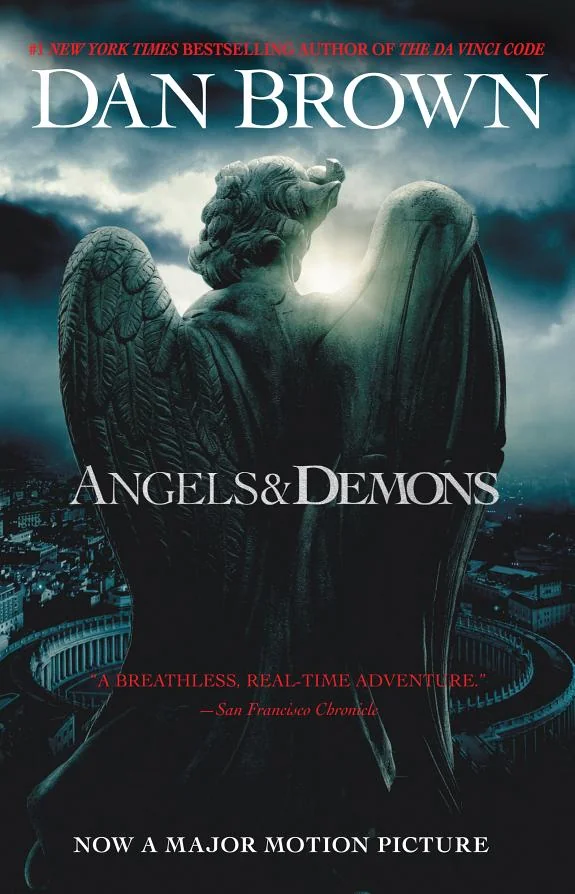
Angels & Demons - Movie Tie-In
Dan Brown's *Angels & Demons* is a relentless pursuit, less a novel and more a high-octane scavenger hunt through Rome. The strength lies in its sheer propulsive energy; Brown excels at creating intricate puzzles that propel the reader forward, particularly Langdon's deciphering of the West-East path of illumination. However, the characterizations often feel thin, serving more as vessels for exposition than fully realized individuals. The dialogue, at times, strains credulity, particularly when characters deliver lengthy historical lectures mid-chase. A particular strength is the vivid portrayal of Rome's iconic landmarks, which become active participants in the plot. Despite its narrative contrivances, the book delivers a satisfyingly complex, if occasionally superficial, thriller experience. It’s a puzzle box that demands to be opened, even if what’s inside isn’t entirely novel.
📝 Description
79
Dan Brown's 2009 thriller, *Angels & Demons*, centers on a Vatican investigation.
Robert Langdon, a symbologist, is called to Rome after a CERN physicist is murdered and antimatter is stolen. The plot follows his urgent efforts to decode ancient clues and stop a terrorist attack planned by a resurfaced secret organization. The novel uses Rome's historical and religious sites as a backdrop for this race against time. Langdon must unravel the secrets of the Illuminati, an Enlightenment-era society, and their supposed opposition to religious power.
The story pits scientific inquiry, represented by CERN and antimatter, against religious symbolism and the rituals of a papal conclave. It examines themes of faith versus reason and the ongoing tension between science and religion throughout history. The book looks at how ancient conspiracies might influence modern events, suggesting that hidden groups can shape global affairs.
This novel engages with the popular fascination surrounding secret societies and historical conspiracies, particularly the Illuminati. It blends elements of religious history, scientific concepts like antimatter, and the lore of hidden groups manipulating world events. The narrative uses the Vatican and Rome's sacred spaces as a stage for a conflict between ancient, clandestine forces and established religious authority, reflecting a common trope in conspiracy fiction where hidden knowledge challenges perceived reality.
💡 Why Read This Book?
• Gain insight into the symbolic language of Rome's sacred sites, understanding how locations like St. Peter's Square and the Pantheon are intricately linked to the narrative's unfolding mystery. • Explore the historical rivalry between Enlightenment secret societies, like the Illuminati, and established religious powers, tracing their supposed influence through centuries. • Witness the dramatic clash between scientific discovery, specifically antimatter research at CERN, and deeply ingrained religious dogma, as depicted in the book's escalating conflict.
⭐ Reader Reviews
Honest opinions from readers who have explored this book.
❓ Frequently Asked Questions
What is the central mystery in Dan Brown's Angels & Demons?
The central mystery involves the murder of a CERN physicist and the theft of antimatter, linked to the resurgence of the Illuminati and a plot to destroy Vatican City during a papal conclave.
Who is Robert Langdon in Angels & Demons?
Robert Langdon is a Harvard symbologist and the protagonist who is called upon to decipher ancient clues and symbols to prevent a catastrophic event.
What historical secret society is featured in Angels & Demons?
The historical secret society featured prominently is the Illuminati, an Enlightenment-era group believed to be anti-clerical and dedicated to science and reason.
What is the significance of the 'Path of Illumination' in the book?
The Path of Illumination is a series of locations in Rome, marked by ancient symbols, that Langdon must follow to uncover the Illuminati's plot and locate the stolen antimatter.
How does Angels & Demons connect science and religion?
The novel juxtaposes the scientific concepts of antimatter and particle physics, particularly from CERN, with the religious rituals, dogma, and architecture of the Vatican and Catholic Church.
When was Dan Brown's Angels & Demons first published?
Dan Brown's Angels & Demons was first published on March 31, 2009.
🔮 Key Themes & Symbolism
Ancient Secret Societies
The narrative heavily features the Illuminati, an Enlightenment-era organization, portraying their historical conflict with the Catholic Church and their alleged enduring influence. The book explores the idea that such clandestine groups can operate across centuries, manipulating events from the shadows and leaving behind cryptic clues for their modern-day resurgence. This theme taps into popular fascination with hidden histories and powerful, unseen forces shaping the world.
Science vs. Religion
A core tension in *Angels & Demons* is the perceived antagonism between scientific advancement and religious doctrine. The story pits the cutting-edge research at CERN, specifically the creation of antimatter, against the ancient traditions and beliefs of the Vatican. This conflict drives much of the plot, raising questions about whether faith and reason can coexist or if they are inherently at odds.
Symbolism and Sacred Geography
The book utilizes Rome's rich historical and religious landscape as a canvas for its mystery. Robert Langdon's expertise in symbology is crucial as he deciphers ancient symbols and follows a 'Path of Illumination' connecting key churches and landmarks. This theme highlights how physical spaces can be imbued with meaning and historical narratives, serving as a map for hidden truths.
The Papacy and Conclave
The backdrop of a papal conclave, the process of electing a new Pope, provides a critical time constraint and a high-stakes environment for the unfolding conspiracy. The novel explores the internal politics and traditions of the Catholic Church, using the conclave as a symbolic battleground for the forces of light and darkness, faith and anti-faith.
💬 Memorable Quotes
Direct passages from the work, attributed to the author.
“Science is making the world a more dangerous place.”
— This interpretation captures a sentiment expressed within the narrative, reflecting concerns about the potential misuse of scientific discovery, particularly the creation of powerful substances like antimatter, and its implications for global security.
“Symbols are the language of the ancient world.”
— This interpretation underscores the importance of symbology in deciphering the novel's mysteries. It reflects Robert Langdon's role as a symbologist, tasked with interpreting visual cues embedded in art, architecture, and historical artifacts to unravel the conspiracy.
“The Vatican has a secret weapon.”
— This interpretation refers to the narrative's exploration of the Church's defenses and hidden capabilities, often juxtaposed against the scientific threat posed by the Illuminati's stolen antimatter.
💡 Key Ideas
Editorial paraphrase of the work's core concepts — not direct quotes.
The Illuminati feared the power of the church. They believed that science and reason were the path to enlightenment.
This paraphrased concept highlights the fundamental ideological conflict at the heart of the novel. It positions the Illuminati as champions of secular knowledge and rational thought, directly opposing the spiritual authority and traditional teachings of the Catholic Church.
They were the church's worst nightmare: scientists.
This paraphrased quote emphasizes the historical tension and perceived threat that scientific inquiry posed to established religious institutions. It suggests a deep-seated fear within the Church regarding the challenge that empirical observation and rationalism presented to its doctrines.
🌙 Esoteric Significance
Tradition
While not strictly adhering to a single esoteric tradition, *Angels & Demons* draws heavily on Gnostic themes of hidden knowledge and the perceived corruption of established religious hierarchies. The Illuminati, as portrayed, embody a secularized Enlightenment pursuit of truth, reminiscent of Rosicrucian or Freemasonic ideals of secret knowledge passed down through enlightened individuals, contrasting with the dogmatic authority of the Catholic Church.
Symbolism
Key symbols include the Illuminati's ambigram logo, representing duality and hidden meanings, and the four elemental symbols (Earth, Air, Fire, Water) used to mark the 'altars of science' across Rome. These symbols function as cryptic clues, guiding the protagonist through a sacred geography that blends historical religious sites with scientific concepts, creating a symbolic battleground.
Modern Relevance
The novel's themes of conspiracy, the tension between science and religion, and the power of hidden knowledge continue to resonate in contemporary discussions. It feeds into modern interests in secret societies, alternative histories, and the perceived influence of powerful, unseen organizations, often discussed within online communities and by authors exploring similar speculative fiction genres.
👥 Who Should Read This Book
• Readers fascinated by the intersection of history, religion, and conspiracy theories, seeking a fast-paced narrative that uses real-world locations and historical lore as its stage. • Fans of Dan Brown's previous works, particularly *The Da Vinci Code*, who appreciate his signature blend of puzzle-solving, art history, and high-stakes thrillers. • Individuals interested in exploring the symbolic meanings embedded within religious art and architecture, especially within the context of Rome and the Vatican.
📜 Historical Context
Published in 2009, *Angels & Demons* arrived during a period of continued popular interest in conspiracy theories and the perceived historical conflicts between religious institutions and scientific progress. The novel revisits themes explored in Dan Brown's earlier work, *The Da Vinci Code* (2003), which itself sparked considerable debate and controversy, particularly concerning its interpretations of Christian history and the alleged lineage of Jesus. While the Illuminati were a real historical secret society active during the Enlightenment, Brown's portrayal fictionalizes their continued existence and influence over centuries, aligning with a broader genre of speculative historical fiction. The book's reception was largely characterized by its commercial success rather than academic engagement, though it tapped into ongoing discussions about faith, reason, and hidden power structures that echoed debates from figures like Voltaire and Enlightenment thinkers who championed reason over dogma.
📔 Journal Prompts
The Illuminati's perceived role as champions of science and reason.
Robert Langdon's interpretation of Rome's sacred geography.
The symbolic representation of the Vatican's 'secret weapon'.
The conflict between antimatter research and religious dogma.
The enduring power of ancient symbols in modern narratives.
🗂️ Glossary
Ambigram
A typographical design that can be read in more than one way, often appearing as the same word or different words when viewed from different directions or orientations. Used prominently by the Illuminati in the book.
Antimatter
A substance composed of antiparticles, which are counterparts to ordinary matter particles. When matter and antimatter meet, they annihilate each other, releasing immense energy. Central to the plot's threat.
CERN
The European Organization for Nuclear Research, a multinational organization dedicated to scientific research, particularly in particle physics. The theft of antimatter occurs here.
Illuminati
A historical secret society founded in Bavaria in the late 18th century, believed by some to have survived and continued to exert influence. Brown fictionalizes their resurgence.
Papal Conclave
The assembly of cardinals of the Catholic Church who meet to elect a new Pope. The novel's events unfold during this crucial period.
Path of Illumination
A series of locations in Rome marked by ancient symbols, which Robert Langdon must follow to uncover the Illuminati's plot.
Symbologist
An expert in the study of symbols and symbolism. Robert Langdon's profession, central to his role in deciphering clues.
This book appears in 1 collection
🔮 Readers Also Liked
Browse all →








From the “Secret Societies” Collection
View all →



More Free Occult Philosophy Books
View all →