Ancient Astronauts
 79
79

Ancient Astronauts
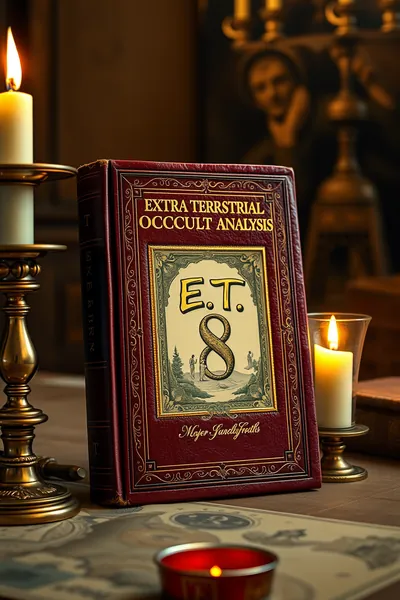
John Frum's "Ancient Astronauts" attempts to unravel a grand conspiracy, positioning anachronistic artifacts as the key to unlocking humanity's suppressed history. The narrative’s strength lies in its ambitious scope, proposing a radical reinterpretation of religious origins through the lens of extraterrestrial intervention. The initial premise, involving a tablet created by someone not yet born but long dead, is a compelling hook that immediately signals the story's unconventional direction. However, the execution sometimes falters. While the concept of Jacco uncovering a "web of deceit" spanning human history is intriguing, the narrative occasionally becomes mired in exposition, slowing the pace. A particularly effective moment involves Jacco's internal conflict as he grapples with the implications of his discoveries, highlighting the personal cost of challenging established narratives. The book is most successful when it leans into the speculative, but it could benefit from tighter plotting and more dynamic character interactions to fully realize its potential. It offers a singular perspective on ancient mysteries, even if it doesn't always land its most complex ideas with perfect clarity.
📝 Description
79
John Frum's 2017 novel 'Ancient Astronauts' begins with an anachronistic tablet.
John Frum's novel 'Ancient Astronauts' follows Jacco as he uncovers a hidden history of humanity. His investigation starts with an artifact that appears to predate its creator. This discovery leads Jacco into a complex web of deception spanning centuries. He must confront fundamental questions about human origins and the development of modern religions.
The book presents itself as a revelation of a core secret, detailing the events that shaped present spiritual beliefs. It is written for readers interested in alternative historical accounts and esoteric ideas. Specifically, the novel appeals to those who enjoy science fiction that questions established historical and religious narratives. Readers drawn to mysteries involving ancient civilizations, concealed knowledge, and cosmic influences will find this story engaging.
The concept of ancient astronauts, popularized by Erich von Däniken's 'Chariots of the Gods?' in 1968, suggests extraterrestrial influence on early human cultures. This idea challenges traditional historical and archaeological interpretations. Frum's novel engages with this tradition, using it as a fictional premise to explore the potential impact of such visitors on human civilization and the formation of religious paradigms.
💡 Why Read This Book?
• Gain a fictional exploration of how extraterrestrial contact, as presented in the "Ancient Astronauts" narrative, might have shaped early religious doctrines, offering a speculative counterpoint to traditional historical accounts. • Understand the concept of "anachronistic artifacts" as narrative devices that challenge linear historical progression and explore hidden timelines. • Experience the protagonist Jacco's personal struggle to reconcile profound, paradigm-shifting revelations about humanity's origins with his existing worldview.
⭐ Reader Reviews
Honest opinions from readers who have explored this book.
❓ Frequently Asked Questions
What is the central mystery in John Frum's "Ancient Astronauts"?
The central mystery revolves around the discovery of a tablet created by someone who appears to exist outside of linear time, hinting at a hidden history and a "web of deceit" influencing human development and religious beliefs.
What is the significance of the tablet in the book?
The tablet serves as the inciting incident, revealing an anachronistic origin and acting as the primary clue that propels the protagonist, Jacco, into uncovering "humanity's biggest secret" about its past and religious foundations.
What historical period does "Ancient Astronauts" reference?
While the book's narrative spans human history, it engages with concepts popularized in the mid-20th century regarding ancient astronaut theories, suggesting a non-human influence on early civilizations and belief systems.
Who is the protagonist, and what is his role?
The protagonist is Jacco, who accepts a job offer from an old friend that leads him to discover the truth behind ancient history. He struggles with the implications of his discoveries and aims to expose humanity's greatest secret.
Does "Ancient Astronauts" present factual historical accounts?
No, "Ancient Astronauts" is a speculative fiction narrative. It explores the themes and ideas associated with ancient astronaut theories but presents them within a fictional story, not as historical fact.
What are the main themes explored in the book?
The book explores themes of hidden history, extraterrestrial influence on human development, the origins of religious beliefs, deception, and the personal cost of uncovering profound truths about humanity's past.
🔮 Key Themes & Symbolism
Anachronistic Artifacts
The narrative is anchored by the discovery of an artifact that defies conventional chronological understanding—a tablet created by an individual not yet born, yet deceased. This concept serves as the primary catalyst, challenging linear history and suggesting a temporal paradox or manipulation. It implies that certain historical truths are deliberately obscured, accessible only through objects that seemingly shouldn't exist within their discovered context. This theme prompts contemplation on the nature of time and the possibility of hidden historical layers.
Web of Deceit
Central to the plot is the idea of a pervasive "web of deceit" that spans human history, deliberately obscuring critical truths about humanity's origins and development. This conspiracy is presented as the architect of current religious beliefs, implying that established doctrines are constructs designed to maintain ignorance. The protagonist's journey involves navigating this intricate network of falsehoods, revealing the immense scale of manipulation involved in shaping human consciousness and societal structures over millennia.
Extraterrestrial Influence
The book posits that ancient astronauts, or extraterrestrial beings, played a significant role in shaping human civilization and spirituality. This influence is framed not as benevolent guidance but as a carefully managed intervention that led to the formation of current religious systems. The narrative suggests that understanding humanity's true origins requires acknowledging this non-human agency, which has been systematically hidden from public awareness, forming the core of "humanity's biggest secret."
Confronting Hidden Truths
The protagonist, Jacco, faces a profound personal struggle as he uncovers these hidden truths. His journey is not merely an intellectual pursuit but an emotional and psychological ordeal. He must "come to terms" with revelations that fundamentally alter his perception of reality and humanity's place in the cosmos. This theme explores the psychological impact of confronting deeply ingrained beliefs and the societal resistance to paradigm-shifting knowledge, emphasizing the difficult decisions required to expose such secrets.
💬 Memorable Quotes
Direct passages from the work, attributed to the author.
“Humanity's biggest secret wasn't a conspiracy of men, but of beings who saw us as a project.”
— This interpretation suggests that the core secret being uncovered is not a terrestrial plot but evidence of extraterrestrial involvement in human development. It reframes humanity's history as an experiment or a managed creation by advanced non-human entities.
“The gods we worshipped were elements of visitors who didn't stick around to explain.”
— This concept posits that ancient mythologies and religious figures are misinterpretations or lingering memories of extraterrestrial contact. It implies that the divine narratives humans cherish originated from encounters with beings whose true nature and purpose were misunderstood.
💡 Key Ideas
Editorial paraphrase of the work's core concepts — not direct quotes.
The tablet was found, but its creator hadn't lived yet. A paradox that was the first thread pulled.
This quote expresses the story's central enigma: an object existing outside the normal flow of time. It highlights the anachronistic nature of the artifact and its function as the initial clue in a larger historical mystery that defies conventional understanding.
He accepted the job from an old friend, a decision that unraveled everything he thought he knew.
This paraphrased concept illustrates the protagonist Jacco's important moment. It signifies how a seemingly ordinary act—taking a job offer—becomes the catalyst for a profound and destabilizing journey into hidden truths and historical deception.
To expose the truth meant risking not just his life, but the fragile peace built on comfortable lies.
This paraphrased idea emphasizes the immense personal danger and societal disruption that comes with revealing the book's central conspiracy. It highlights the conflict between the pursuit of truth and the maintenance of social order based on widespread, accepted falsehoods.
🌙 Esoteric Significance
Tradition
While not explicitly aligning with a single esoteric lineage, "Ancient Astronauts" draws heavily from the modern esoteric concept of "ancient astronaut theory," which itself synthesizes elements of ufology, alternative history, and a reinterpretation of religious cosmology. It departs from traditional Hermetic or Gnostic frameworks by positing external, non-human agents as the primary architects of human spiritual development, rather than internal divine sparks or demiurgic forces.
Symbolism
The primary symbol is the "anachronistic tablet," representing knowledge that transcends linear time and conventional understanding—a paradoxical artifact hinting at hidden origins. The concept of a "web of deceit" functions symbolically as the intricate, invisible structure of manipulation that has shaped human consciousness. "The gods" mentioned in the text symbolize misinterpreted extraterrestrial visitors, representing humanity's tendency to deify the unknown or the technologically advanced.
Modern Relevance
The work appeals to contemporary interest in deep history, ufology, and conspiracy theories that question official narratives. Thinkers and communities exploring transhumanism, the simulation hypothesis, and the potential for advanced non-human intelligence (whether alien or artificial) may find thematic connections. It speaks to a modern skepticism towards established institutions and a search for alternative explanations for humanity's existence and consciousness.
👥 Who Should Read This Book
• Speculative fiction enthusiasts interested in alternative histories and the "ancient astronaut" genre. • Readers exploring esoteric concepts and questioning traditional narratives of human origins and religious development. • Individuals intrigued by fictional narratives that blend mystery, conspiracy, and science fiction elements to explore humanity's place in the cosmos.
📜 Historical Context
Published in 2017, John Frum's "Ancient Astronauts" emerges within a long-standing discourse on extraterrestrial influence on ancient civilizations. This field gained significant popular traction with Erich von Däniken's "Chariots of the Gods?" in 1968, which proposed that ancient monuments and texts were evidence of alien visitation. Von Däniken's work, while widely popular, was met with considerable skepticism from the academic archaeological and historical communities, who largely attributed human achievements to indigenous development and cultural diffusion. Frum's novel enters this conversation not as a scholarly treatise but as a fictional exploration, building upon the speculative groundwork laid decades prior. The book implicitly engages with the pseudoscientific and esoteric interpretations that challenge mainstream historical narratives, placing itself in dialogue with a persistent fringe theory that continues to capture public imagination.
📔 Journal Prompts
The anachronistic tablet's existence challenges linear time; how does this concept affect your perception of historical records?
Jacco's struggle to accept his discoveries reflects the difficulty of confronting paradigm-shifting information. Describe a personal instance where you faced cognitive dissonance.
Consider the idea of "humanity's biggest secret." What kind of knowledge would be so profound and dangerous to reveal?
If religious beliefs are constructs, what purpose might they serve from an external perspective, as suggested by the "ancient astronauts" theory?
The "web of deceit" implies deliberate obfuscation. How might such a large-scale deception be maintained across human history?
🗂️ Glossary
Anachronistic Artifact
An object found in an archaeological or historical context that appears to belong to a period much later than the one in which it was discovered, suggesting temporal paradox or advanced, hidden origins.
Web of Deceit
A pervasive and historical network of falsehoods and manipulations allegedly designed to conceal fundamental truths about humanity's origins and development from its own populace.
Ancient Astronauts
Hypothetical extraterrestrial beings who are theorized to have visited Earth in antiquity, influencing human culture, technology, and religious beliefs, as explored in speculative fiction and fringe theories.
Jacco
The protagonist of "Ancient Astronauts," who uncovers a hidden history and struggles with the implications of his discoveries about humanity's origins and religious foundations.
Humanity's Biggest Secret
The central revelation within the book's narrative, referring to the undisclosed truth about humanity's true origins and the role of external, possibly extraterrestrial, forces in shaping its history and religions.
Paradoxical Creation
A concept where an object or event appears to be created before its creator exists or before its supposed time of origin, challenging conventional understanding of causality and chronology.
Expose Religious Beliefs
The narrative's aim to reveal the hidden mechanisms or origins behind current religious doctrines, suggesting they are not organic developments but rather the result of deliberate, perhaps external, influence.