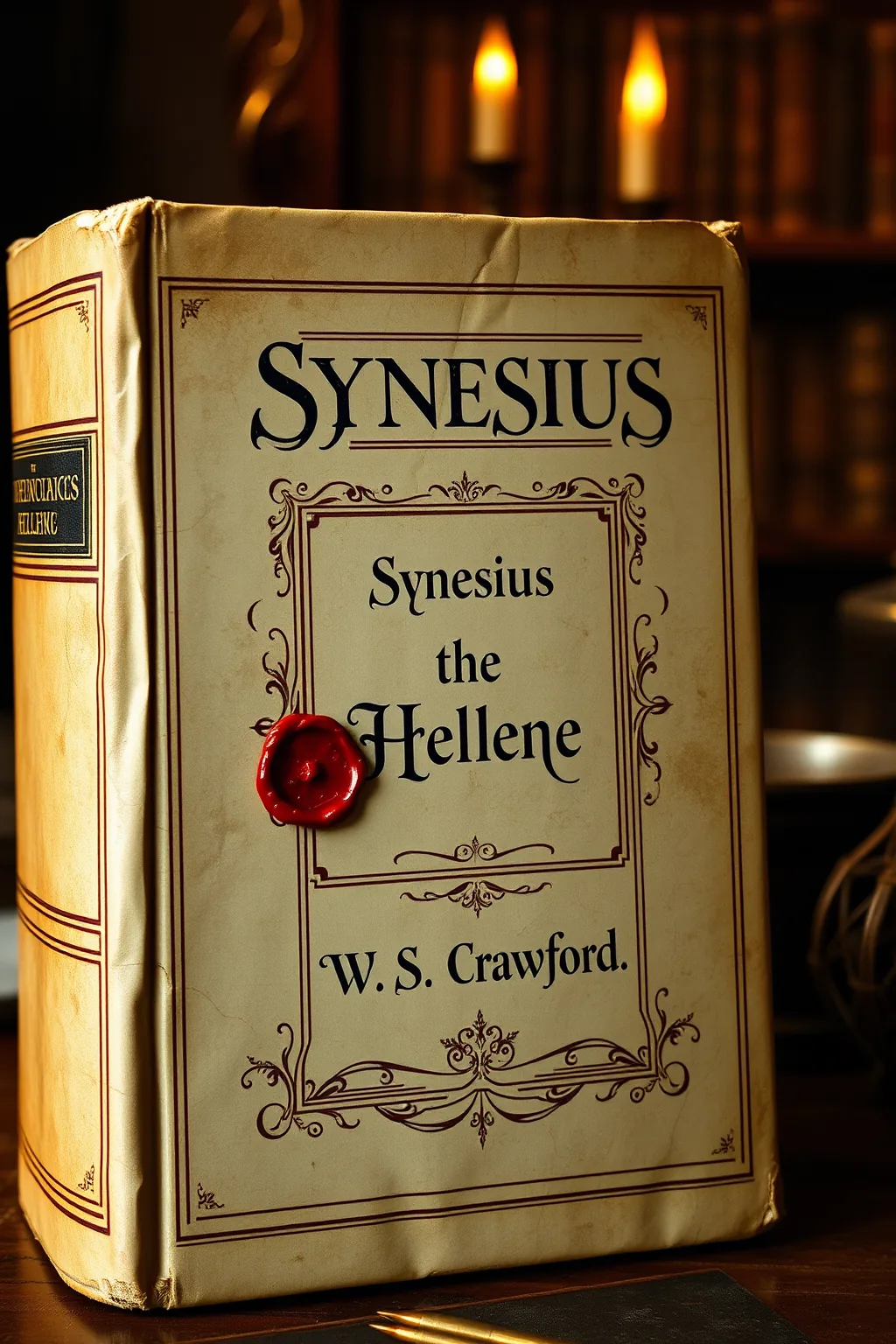
Synesius the Hellene
 77
77

Synesius the Hellene
Crawford’s examination of Synesius of Cyrene offers a meticulously researched account of a philosopher-bishop navigating a period of profound societal and theological change. The strength of the work lies in its detailed exposition of Synesius’s intellectual lineage, tracing his Neoplatonic roots through Plotinus and Iamblichus. A particular passage vividly illustrates Synesius’s struggle to reconcile his philosophical ideals with the practical demands of his ecclesiastical office, highlighting his unique position. However, the prose can occasionally become dense, requiring sustained attention from the reader, which might deter those seeking a more accessible overview. Despite this, Crawford provides an essential resource for understanding a pivotal, yet often overlooked, figure of late antiquity. The book serves as a valuable scholarly contribution to the study of late classical thought and early Christianity.
📝 Description
77
W. S. Crawford's Synesius the Hellene examines a late antique bishop, philosopher, and Neoplatonist.
This biography and philosophical study focuses on Synesius of Cyrene, a figure bridging late antiquity's Roman decline and early Christianity. Crawford details Synesius's life and thought within this period of significant intellectual and religious change. Synesius lived from about 373 to 414 AD, a time when Neoplatonism was a major philosophical current. The book investigates Synesius's philosophical system, his reliance on Neoplatonic ideas, and his engagement with Plato and Plotinus. It also covers his attempts to integrate these classical Greek traditions with his Christian beliefs. The work considers his perspectives on the soul, the divine, and how knowledge is attained.
Synesius of Cyrene stands as a fascinating example of the intellectual currents active during the transformation of the Roman world. His adherence to Neoplatonism, a philosophical system that sought to understand the divine and the cosmos through reason and contemplation, placed him within a rich esoteric tradition. This tradition, stemming from Plato and further developed by figures like Plotinus, emphasized spiritual ascent and the pursuit of higher knowledge. Synesius's efforts to harmonize these complex philosophical ideas with his role as a Christian bishop highlight the dynamic interplay between esoteric thought and developing religious doctrines in late antiquity.
💡 Why Read This Book?
• Gain a concrete understanding of Neoplatonic philosophy as practiced by Synesius of Cyrene, a key figure in late antiquity, through Crawford's detailed analysis of his correspondence and writings. • Appreciate the historical milieu of the late Roman Empire (c. 4th-5th century AD), understanding the societal pressures and intellectual debates Synesius contended with as a bishop. • Explore the specific tension between classical Hellenistic thought and early Christian doctrine as embodied in Synesius's life and work, offering a unique perspective on theological synthesis.
⭐ Reader Reviews
Honest opinions from readers who have explored this book.
❓ Frequently Asked Questions
Who was Synesius of Cyrene and when did he live?
Synesius of Cyrene was a prominent philosopher, bishop, and writer of late antiquity, living approximately from 373 to 414 AD. He was a student of Hypatia of Alexandria and a key figure in the Neoplatonic tradition.
What philosophical school did Synesius belong to?
Synesius was a devoted adherent of Neoplatonism, deeply influenced by the teachings of Plotinus and Iamblichus. His work reflects a synthesis of Platonic philosophy with his Christian beliefs.
What is the primary focus of W. S. Crawford's book?
The book focuses on the life, philosophical thought, and ecclesiastical role of Synesius of Cyrene, contextualizing his contributions within the intellectual and religious landscape of the late Roman Empire.
What historical period does Synesius the Hellene cover?
The book covers the late antique period, specifically the late 4th and early 5th centuries AD, a time of significant transition for both the Roman Empire and Western thought.
What were some key intellectual influences on Synesius?
Synesius was significantly influenced by classical Greek philosophers, particularly Plato and Plotinus, and he also studied under the renowned mathematician and philosopher Hypatia of Alexandria.
What makes Synesius's work relevant today?
Synesius's synthesis of philosophical inquiry and spiritual practice remains relevant for those exploring the historical development of Western esotericism and the dialogue between reason and faith.
🔮 Key Themes & Symbolism
Neoplatonic Synthesis
The work explores Synesius's deep engagement with Neoplatonism, particularly the emanational cosmology derived from Plotinus and Iamblichus. It details how Synesius sought to harmonize these philosophical concepts with Christian doctrine, presenting him as a bridge between classical Hellenistic thought and emergent Christian theology. His philosophical outlook informed his understanding of the divine, the soul's journey, and the pursuit of knowledge, offering a unique perspective on the intellectual currents of late antiquity.
Philosophy and Ecclesiastical Role
A central theme is the dynamic tension between Synesius's philosophical inclinations and his responsibilities as a bishop in Cyrene. The book examines how his Neoplatonic worldview influenced his pastoral duties and theological interpretations. It highlights his practical application of philosophical principles to governance and spiritual guidance, demonstrating that his intellectual pursuits were not detached but deeply integrated into his life of service during the late Roman period.
Late Antique Intellectual Landscape
Crawford situates Synesius within the complex intellectual and religious milieu of the late 4th and early 5th centuries AD. This context includes the enduring influence of classical Greek philosophy, the rise of Christianity, and the intellectual ferment in centers like Alexandria. The work illustrates how figures like Synesius and his teacher Hypatia navigated these shifting paradigms, contributing to a rich philosophical discourse that shaped future Western thought.
The Bishop as Philosopher
This theme investigates the archetype of the philosopher-bishop, embodied by Synesius. The book analyzes his writings, particularly his letters, to reveal how he maintained a philosophical disposition while undertaking episcopal duties. It explores his views on virtue, reason, and divine illumination, and how these informed his leadership and his articulation of faith. The work showcases a rare instance of a prominent philosopher actively leading a Christian community.
💬 Memorable Quotes
Direct passages from the work, attributed to the author.
“His thought represents a remarkable effort to harmonize the rigorous intellectualism of Hellenism with the burgeoning spiritual demands of Christianity.”
— This interpretation highlights Synesius's unique position as a mediator between classical philosophy and early Christian theology, emphasizing his intellectual agility in bridging two distinct worldviews.
“He sought to understand divine truths through both philosophical contemplation and Christian revelation.”
— This interpretation underscores Synesius's dual approach to spirituality and knowledge, acknowledging his reliance on both classical philosophical methods and Christian doctrine to grasp ultimate realities.
“The intellectual currents of Alexandria during the late 4th century provided a fertile ground for Synesius's philosophical development.”
— This statement emphasizes the critical role of Alexandria as an intellectual hub, suggesting that its academic environment was instrumental in shaping Synesius's philosophical education and subsequent thought.
“Crawford traces Synesius's intellectual lineage back to Plotinus and Plato.”
— This interpretation directly references the philosophical ancestry explored in the book, identifying Plotinus and Plato as primary influences on Synesius's Neoplatonic framework.
💡 Key Ideas
Editorial paraphrase of the work's core concepts — not direct quotes.
The life of Synesius demonstrates the profound influence of Neoplatonic metaphysics on an active ecclesiastical leader.
This paraphrased concept points to the practical impact of Neoplatonic ideas on Synesius's role as a bishop, suggesting his philosophical beliefs were not merely theoretical but shaped his actions and leadership.
🌙 Esoteric Significance
Tradition
Synesius of Cyrene is an important figure within the broader lineage of Neoplatonism, a philosophical tradition that profoundly influenced Western esotericism. His adherence to the teachings of Plotinus and Iamblichus, coupled with his Christian faith, places him at a unique crossroads. This synthesis is significant as it demonstrates how classical philosophical structures, with their emphasis on divine emanations, hierarchies, and the ascent of the soul, could be integrated into a Christian framework, prefiguring later esoteric developments.
Symbolism
Within Synesius's thought and writings, the sun often appears as a symbol of the supreme, intelligible principle, echoing Neoplatonic and Hermetic traditions. The concept of the 'logos' or divine word is also central, representing the mediating principle between the absolute divine and the material world. Furthermore, Synesius's emphasis on the soul's journey towards divine illumination reflects the Neoplatonic ideal of henōsis (union with the One), a key mystical aspiration in many esoteric paths.
Modern Relevance
Contemporary thinkers and practitioners interested in the historical development of Western esotericism and comparative religion often turn to Synesius. His efforts to bridge philosophical inquiry with spiritual practice and his unique position as a philosopher-bishop resonate with modern seekers exploring the integration of intellect and spirituality. Schools of thought that emphasize philosophical mysticism, theurgy, and the philosophical underpinnings of religious experience find historical precedent and conceptual richness in Synesius's work.
👥 Who Should Read This Book
• Students of late antique philosophy and theology seeking to understand the intellectual transition from Hellenism to Christianity. • Scholars of Neoplatonism interested in a historical figure who synthesized classical thought with early Christian doctrine. • Readers exploring the lives of influential figures like Hypatia of Alexandria and their impact on subsequent intellectual history.
📜 Historical Context
W. S. Crawford's "Synesius the Hellene" emerges from a scholarly tradition focused on late antiquity, a period of profound transition from the classical pagan world to the Christian Middle Ages. Synesius of Cyrene (c. 373-414 AD) lived during the reigns of Theodosius I and Honorius, a time when Christianity was solidifying its dominance and classical philosophical schools were adapting or declining. The intellectual climate was dominated by Neoplatonism, a complex philosophical system that sought to synthesize Platonic ideas with mystical and religious elements. Synesius was a student of Hypatia of Alexandria, a prominent pagan philosopher and mathematician, placing him directly within this vibrant intellectual milieu. His work reflects the ongoing dialogue and sometimes tension between pagan philosophical traditions and the rapidly expanding Christian Church. While figures like Augustine of Hippo were shaping Christian theology in the West, Synesius represented a different approach, one deeply rooted in Hellenistic philosophy yet committed to Christian episcopacy. The book situates Synesius against contemporaries who were grappling with similar issues of faith, reason, and societal change.
📔 Journal Prompts
Synesius's reconciliation of Neoplatonism and Christianity: What parallels exist in contemporary spiritual dialogues?
Reflect on the symbol of the sun as presented in Synesius's cosmology and its potential meanings.
Analyze the tension between Synesius's philosophical ideals and his role as bishop.
Consider the intellectual environment of Alexandria in the late 4th century and its influence on Synesius.
Explore the concept of the soul's ascent towards divine illumination as articulated by Synesius.
🗂️ Glossary
Neoplatonism
A philosophical system originating with Plotinus in the 3rd century AD, which interprets Plato's philosophy in a mystical and hierarchical manner, emphasizing the concept of 'The One' as the ultimate source of all reality and the soul's journey towards union with it.
Hypatia of Alexandria
A prominent female philosopher, astronomer, and mathematician who lived in Alexandria, Egypt, during the late 4th and early 5th centuries AD. She was a leading figure in the Neoplatonic school and a teacher of Synesius.
Logos
In Greek philosophy and theology, 'logos' typically refers to a principle of order and knowledge. In Neoplatonism and later Christian thought, it often signifies a divine reason or word that mediates between the ultimate God and the created universe.
Theurgy
A practice within some ancient Greek and Roman religions, particularly associated with later Neoplatonism (like Iamblichus), involving rituals and ceremonies believed to invoke divine assistance or facilitate communion with the divine.
Henōsis
A Greek term meaning 'unification' or 'oneness'. In Neoplatonism, it refers to the ultimate goal of the soul's spiritual journey: achieving union or communion with 'The One', the supreme principle of reality.
Cyrene
An ancient Greek city on the coast of North Africa, near modern-day Shahhat, Libya. It was the birthplace of Synesius of Cyrene and the location of his bishopric.
Late Antiquity
A historical period generally spanning from the 3rd to the 8th century AD, characterized by the transition from classical Greco-Roman civilization to the medieval period, marked by significant religious, political, and cultural shifts.
🔮 Readers Also Liked
Browse all →









More by W. S. Crawford
All books →
More Free Occult Philosophy Books
View all →