House of Night

 73
73

House of Night
House of Night attempts to carve out its niche in the crowded YA paranormal landscape by grounding its vampyre lore in a distinct mythology, centered on the Goddess Nyx and drawing from Native American spiritual concepts. Zoey Redbird’s reluctant transformation into a vampyre offers a potentially compelling perspective on outsider status and destiny. However, the narrative often feels bogged down by excessive exposition and a familiar romantic entanglement formula. The pacing in the initial chapters can be slow, particularly when detailing the mechanics of vampyre society and Zoey’s internal monologues. While the exploration of Zoey’s burgeoning powers and her connection to Nyx is a strength, the supporting characters sometimes lack depth, serving more as plot devices than fully realized individuals. The introduction of the "Vampyre" designation and its associated responsibilities presents an intriguing mystical element, yet its full potential feels underdeveloped in this first installment. Ultimately, House of Night offers a serviceable entry into supernatural fiction, but it struggles to differentiate itself significantly from its genre predecessors.
Verdict: A competent, if conventional, entry into the YA paranormal genre with some unique mythological underpinnings.
📝 Description
73
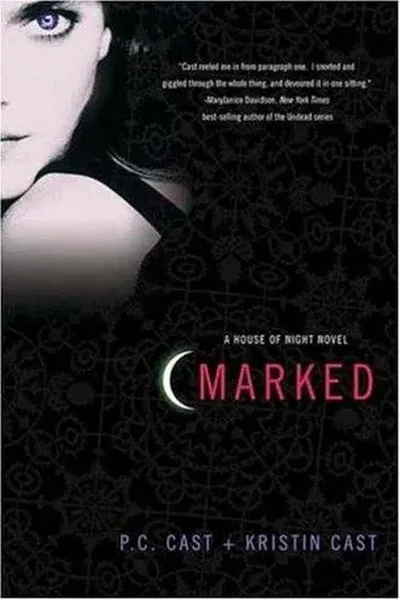
Published in 2007, House of Night begins a young adult series about vampyres.
House of Night introduces Zoey Redbird, a 16-year-old who learns she is a fledgling vampyre, marked by the Goddess Nyx. This marks her for entry into the House of Night, a school where she will train to control her new abilities and understand her place in a hidden vampyre society. The story blends fantasy, romance, and a young woman's transition into adulthood.
The series appeals to young adults interested in paranormal romance and urban fantasy. Readers who connect with themes of destiny, self-discovery, and finding where they belong will find a narrative that examines these ideas within a supernatural framework. It is particularly suited for those who enjoy stories about secret societies, magical training, and the complexities of forming a new identity, especially when that identity connects to ancient mythology.
The novel taps into the burgeoning paranormal romance genre of the mid-2000s, offering a distinct take on vampire lore. It incorporates elements of Native American mythology, specifically referencing the Goddess Nyx as the creator of vampyres. This creates a structured, hierarchical vampyre society with its own rules and belief systems, moving beyond typical undead tropes to explore a living, evolving supernatural community.
💡 Why Read This Book?
• Gain insight into a unique take on vampyre mythology, centered around the Goddess Nyx and the concept of the "Change," which deviates from traditional undead lore. • Explore themes of destiny and self-discovery through Zoey Redbird's transformation and her journey to understand her role as a "squatted" vampyre. • Understand the early 2007 landscape of YA paranormal fiction and how House of Night contributed to the genre's evolving tropes.
⭐ Reader Reviews
Honest opinions from readers who have explored this book.
❓ Frequently Asked Questions
What is the primary mythology behind the vampires in House of Night?
The series' vampyres are not undead but living beings transformed by the Goddess Nyx. This transformation, known as the "Change," grants them extended life and supernatural abilities, forming a unique spiritual and biological system.
Who is Zoey Redbird and what is her significance?
Zoey Redbird is the protagonist, a 16-year-old Native American girl who discovers she is a "squatted" – a fledgling vampyre chosen by Nyx. Her journey centers on accepting her destiny and mastering her powers.
What is the House of Night setting?
The House of Night is a school and sanctuary for fledglings, where they are trained in the ways of vampyre society and learn to control their emerging abilities under the guidance of mentors.
When was the first book in the House of Night series published?
The first book, "House of Night," was published in 2007, positioning it within the surge of paranormal romance for young adults during that period.
Are the vampires in House of Night immortal?
While not technically immortal in the sense of being undead, vampyres in this series have vastly extended lifespans after undergoing the Change, living for centuries.
What does the term 'squatted' mean in House of Night?
A 'squatted' refers to a fledgling vampyre, one who has been marked by Nyx and is undergoing the initial stages of transformation and training at a House of Night.
🔮 Key Themes & Symbolism
Destiny and Choice
The narrative heavily explores the dichotomy between predetermined destiny and individual free will. Zoey is "marked" by the Goddess Nyx, indicating a fated path as a powerful vampyre. However, her journey involves not just accepting this destiny but actively shaping it, making choices that define her character and influence the vampyre world. This theme questions whether one's path is set in stone or if agency can alter even the most profound of omens, offering a spiritual exploration of self-determination within a supernatural framework.
Belonging and Identity
Upon discovering her vampyre nature, Zoey is thrust into a world where she is both an outsider and, potentially, a chosen one. The House of Night serves as a literal and metaphorical space for her to find belonging among others who share her unique transformation. This theme is crucial as Zoey grapples with her human past and her vampyre future, navigating complex relationships and societal expectations within the vampyre hierarchy. Her struggle mirrors the universal adolescent experience of finding one's place and forging a personal identity.
Mythology and Spirituality
The series constructs an intricate mythology around the Goddess Nyx, the creator and ruler of the vampyre race. This spiritual foundation is deeply intertwined with Native American beliefs and symbolism, particularly concerning Zoey's heritage. The concept of the "Change" is presented as a sacred, biological, and spiritual event. The book explores themes of divine calling, the sacredness of life cycles, and the presence of ancient deities in the modern world, offering a unique spiritual dimension to the supernatural narrative.
Coming of Age in a Supernatural World
House of Night serves as a coming-of-age story set against a backdrop of supernatural events. Zoey's transition from an ordinary teenager to a fledgling vampyre involves learning new skills, understanding dangerous powers, and facing complex social dynamics. The challenges she encounters – from navigating friendships and romantic interests to confronting threats within the vampyre community – are amplified by her extraordinary circumstances, providing a unique lens through which to examine adolescent growth and resilience.
💬 Memorable Quotes
Direct passages from the work, attributed to the author.
“Zoey Redbird was a bad girl. She had to be.”
— This opening statement immediately establishes Zoey's character arc. It suggests a transformation from a perceived 'bad girl' into something more complex, hinting at the challenges and potentially difficult choices she will face as she embraces her vampyre destiny.
“We are the children of the Goddess Nyx.”
— This declaration signifies the collective identity and spiritual foundation of the vampyre society within the book. It connects the characters to a divine origin and establishes a sense of shared heritage and purpose under their creator.
“She was a squatted. A fledgling vampyre.”
— This phrase defines Zoey's initial status in the vampyre world. It marks her as a beginner, someone undergoing the initial stages of transformation and learning, setting the stage for her development and training at the House of Night.
“You can't change your destiny. You can only try to live up to it.”
— This interpretation of a common theme in the book suggests that while fate may play a role, the true challenge lies in how one embodies and acts upon their predetermined path, emphasizing personal responsibility within a fated existence.
💡 Key Ideas
Editorial paraphrase of the work's core concepts — not direct quotes.
The Change isn't about dying. It's about becoming.
This quote captures the core of the series' vampyre lore. It emphasizes that the transformation is a rebirth and evolution, not an end, highlighting the spiritual and biological metamorphosis central to the House of Night narrative.
🌙 Esoteric Significance
Tradition
The work draws loosely from Neopagan and Native American spiritual traditions, particularly in its creation of the Goddess Nyx and the concept of the "Change" as a sacred, transformative event. It departs from traditional Western esoteric lineages like Hermeticism or Kabbalah by focusing on a unique, internally consistent mythology rather than adapting existing frameworks. The emphasis on divine feminine power and cyclical transformation aligns with certain modern Pagan and Goddess-centric spiritualities, positioning the vampyre existence as a spiritual evolution rather than a curse.
Symbolism
The primary symbol is the crescent moon, often associated with Nyx and the feminine divine, representing cycles, transformation, and the night. The "Mark" that appears on a fledgling vampyre's skin is another key symbol, signifying their chosen status and connection to Nyx; its appearance and complexity often indicate the individual's potential power. The vampyre transformation itself symbolizes a profound rite of passage, a spiritual and biological metamorphosis that signifies moving from one state of being to another, often with inherent spiritual or magical responsibilities.
Modern Relevance
Contemporary readers and practitioners interested in modern Paganism, particularly Goddess spirituality and witchcraft, find resonance in the book's emphasis on the divine feminine and transformative processes. The narrative's exploration of destiny, spiritual calling, and finding community among those with unique gifts appeals to individuals exploring their own spiritual paths or seeking relatable narratives about self-discovery in a modern context. It serves as a gateway for younger audiences to engage with themes of spirituality and mythology, even if presented through a fictional lens.
👥 Who Should Read This Book
• Young adult readers interested in paranormal romance and urban fantasy who enjoy stories about chosen ones and secret societies. • Individuals exploring themes of destiny, identity, and finding belonging, particularly when grappling with significant life changes or feeling like an outsider. • Fans of supernatural lore who appreciate unique mythologies that blend ancient concepts with modern storytelling and incorporate elements of the divine feminine.
📜 Historical Context
Published in 2007, "House of Night" arrived during a golden age for young adult paranormal fiction, a genre significantly shaped by the success of Stephenie Meyer's "Twilight" series. P.C. Cast’s novel tapped into this burgeoning market by offering a distinct take on vampire lore, moving away from the undead trope towards a more spiritual and biological transformation. Unlike Meyer's focus on romantic angst and isolated vampires, Cast introduced a structured vampyre society with a formal academy, the House of Night, and a rich mythology centered on the Goddess Nyx, incorporating elements of Native American spirituality. This approach distinguished it from the more Gothic or purely romantic vampire narratives that preceded it. The novel's reception was largely positive within its target demographic, contributing to the series' immense popularity and its subsequent expansion into a multi-book saga. While not directly engaging with contemporaries like Charlaine Harris (whose Sookie Stackhouse novels also featured vampires), Cast’s work carved out its own space by blending supernatural elements with themes of destiny, identity, and coming-of-age.
📔 Journal Prompts
Zoey's initial reaction to being "marked" by Nyx.
The significance of the House of Night as a sanctuary and training ground.
Exploring the "Change" as a spiritual metamorphosis rather than an end.
Comparing Zoey's internal struggles with her external vampyre destiny.
The role of friendship and mentorship in reading through the vampyre world.
🗂️ Glossary
Vampyre
A living human who undergoes a transformation bestowed by the Goddess Nyx, gaining extended life and supernatural abilities. They are not undead but are a distinct species with their own society and mythology.
Goddess Nyx
The creator and ruler of the vampyre race in the House of Night series. She is depicted as a powerful, divine feminine entity who chooses individuals for transformation.
The Change
The supernatural process by which a human becomes a vampyre. It involves physical and spiritual metamorphosis, marked by specific physical changes and the development of new abilities.
Squatted
A fledgling vampyre, one who has been marked by Nyx and is in the early stages of transformation and training at a House of Night. They are still learning to control their new nature.
The Mark
A physical sign, often a blue, black, or red tattoo-like pattern, that appears on a fledgling vampyre's body, indicating their status as chosen by Nyx and their potential power.
House of Night
A boarding school and sanctuary for vampyre fledglings. It serves as a place of training, community, and protection as young vampyres learn to control their powers and integrate into vampyre society.
Darkness
In this context, 'darkness' refers not to evil, but to the vampyre realm, the night, and the spiritual essence associated with the Goddess Nyx and her chosen people.
🔮 Readers Also Liked
Browse all →








More by P. C. Cast, Kristin Cast
All books →




More Free Occult Philosophy Books
View all →