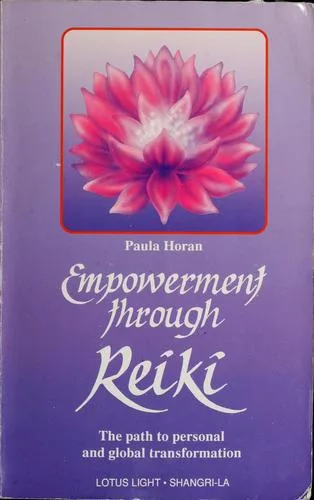
Empowerment Through Reiki
 84
84

Empowerment Through Reiki
Paula Horan’s "Empowerment Through Reiki" provides a clear, no-nonsense introduction to the Usui System of Natural Healing. Published in 1998, it arrives at a time when Reiki was gaining considerable traction in Western esoteric circles, and it serves as a solid primer. Horan, a practitioner of considerable experience, excels at breaking down the mechanics of energy transfer. Her explanation of the attunement process, for instance, is direct and informative, avoiding overly mystical jargon that can sometimes alienate newcomers. A notable strength is the book’s emphasis on practical application, detailing how one might approach self-healing or helping others. However, the work occasionally falters in its historical context, presenting Reiki’s origins with less critical nuance than some later scholarly works might offer. While it details the 'three levels' of Reiki, the depth of discussion on the esoteric lineage, beyond Mikao Usui, remains somewhat superficial. Despite this limitation, Horan’s directness makes "Empowerment Through Reiki" a valuable, accessible resource for anyone beginning their journey with this healing art.
📝 Description
84
Paula Horan's Empowerment Through Reiki, first published in 1998, explains the Usui System of Natural Healing.
Paula Horan's 1998 book, Empowerment Through Reiki, details the Usui System of Natural Healing. Horan, a Reiki master, explains Reiki as a universal life force that individuals can channel for healing purposes. The text covers the fundamental principles of this practice, including how energy is transmitted and received. It also addresses the potential physical and psychological effects that can arise from using Reiki.
This book is for anyone interested in energy healing, especially those wanting to learn or practice Reiki. It suits beginners curious about Reiki's origins and function, as well as experienced practitioners seeking to deepen their understanding. Readers interested in self-healing, complementary health methods, or alternative well-being approaches will find useful information. The book also appeals to those drawn to spiritual or metaphysical subjects and a structured system of energy work.
Published in 1998, Empowerment Through Reiki entered a growing Western interest in energy healing and alternative medicine. Reiki, originating in Japan, became more widely known in the West from the 1970s. Horan's work contributes to a body of literature aiming to make practices like the Usui System accessible to a broader audience. It sits within a tradition that views universal life force as a source of therapeutic potential, connecting to broader spiritual and metaphysical explorations of human energy fields.
💡 Why Read This Book?
• Gain a foundational understanding of Reiki energy flow and its perceived effects, as detailed in the book's explanation of "universal life force energy," allowing for practical self-application. • Learn about the structure of Reiki training, specifically the "three levels" of initiation and the associated techniques, offering a roadmap for personal development within the practice. • Explore the ethical framework of Reiki through the "Reiki precepts," providing actionable principles for fostering personal balance and contributing to the well-being of others, as outlined by Paula Horan.
⭐ Reader Reviews
Honest opinions from readers who have explored this book.
❓ Frequently Asked Questions
What is the primary focus of Paula Horan's "Empowerment Through Reiki"?
The book's primary focus is to explain the Usui System of Natural Healing, known as Reiki. Paula Horan, an experienced Reiki master, details how Reiki energy works, its applications for healing, and the potential effects achieved through its practice, making it accessible for beginners.
When was "Empowerment Through Reiki" first published?
Empowerment Through Reiki by Paula Horan was first published on January 26, 1998. This places its release during a period of increasing Western interest in energy healing and complementary therapies.
Does the book explain the different levels of Reiki training?
Yes, the book elaborates on the "three levels" of Reiki training. It outlines the progressive stages of learning, including attunements and the development of skills necessary to channel Reiki energy more effectively at each level.
What are the "Reiki precepts" mentioned in the book?
The "Reiki precepts" are the five core principles or ethical guidelines associated with Reiki practice. "Empowerment Through Reiki" discusses these as foundational elements for personal growth and fostering a balanced approach to healing.
Is this book suitable for someone entirely new to Reiki?
Absolutely. Horan's writing style is direct and aims to demystify Reiki. The book serves as an excellent introduction, explaining fundamental concepts like "universal life force energy" and practical techniques for those with no prior knowledge.
What does the book say about the effects of Reiki?
The book describes various effects that can be achieved with Reiki, ranging from physical relaxation and stress reduction to emotional balance and enhanced vitality. Horan explains these as outcomes of channeling "universal life force energy" into the self or others.
🔮 Key Themes & Symbolism
Universal Life Force Energy
The core concept of "universal life force energy," referred to as Ki or Prana in other traditions, is central to "Empowerment Through Reiki." Horan explains this energy as the fundamental essence of existence, accessible through Reiki practice. The book details how this energy can be consciously channeled by a Reiki practitioner to promote healing and balance in oneself and others. It explores the idea that blockages or imbalances in this energy flow can contribute to illness, and that Reiki can help restore harmony, leading to improved physical, emotional, and spiritual well-being.
The Three Levels of Reiki
Horan meticulously outlines the structured progression of learning Reiki through its "three levels." Each level represents a distinct phase of attunement and skill development. The first level typically focuses on self-healing and basic energy perception. The second level introduces advanced techniques, including distance healing and the use of specific symbols. The third level, often considered the master level, involves deeper spiritual connection and the ability to initiate others into Reiki. This tiered approach provides a clear learning path for aspiring practitioners.
The Reiki Precepts
Integral to the practice, as presented in "Empowerment Through Reiki," are the "Reiki precepts." These are five guiding principles intended to foster a mindful and ethical approach to life and healing. They typically include themes related to living in the present moment, not worrying, being grateful, working diligently, and extending compassion to oneself and others. Horan emphasizes that embodying these precepts is as crucial as the energy work itself for achieving holistic well-being and spiritual growth.
Energy Centers and Balance
The book touches upon the concept of internal "energy centers" within the body, often aligned with the chakra system. Horan suggests that Reiki energy works to clear blockages and restore balance to these centers, which in turn influences physical and emotional health. By directing "universal life force energy," practitioners aim to harmonize these subtle energy pathways. This holistic view posits that maintaining energetic equilibrium is key to preventing illness and supporting the body's natural healing capabilities.
💬 Memorable Quotes
Direct passages from the work, attributed to the author.
“The three levels of Reiki training offer a progressive path to mastery.”
— This statement highlights the structured curriculum of Usui Reiki. The work details how each of the "three levels" builds upon the last, imparting new knowledge, techniques, and attunements, guiding the student toward greater proficiency and spiritual development.
“Understanding how Reiki energy works is key to its effective application.”
— This reflects Horan's pedagogical approach. The book aims to clarify the practice by explaining the mechanics of energy transfer and the principles behind its therapeutic effects, empowering the reader to utilize Reiki with confidence.
“Balance within the body's energy centers is crucial for health.”
— This refers to the concept that subtle energy pathways and "energy centers" within the body can become imbalanced. Horan's work suggests that Reiki can help to clear these blockages and restore energetic harmony, supporting overall vitality.
💡 Key Ideas
Editorial paraphrase of the work's core concepts — not direct quotes.
Reiki energy is a universal life force that can be channeled for healing.
This paraphrased concept captures Horan's central thesis: Reiki is not an invention but an accessible natural energy. The book elaborates on how this force, when directed with intention, can facilitate restorative processes within the body and mind.
Practicing the Reiki precepts fosters personal growth and well-being.
This paraphrased concept emphasizes the ethical and spiritual dimension of Reiki. Horan presents the "Reiki precepts" not just as rules, but as a way of life that supports the healing process by cultivating inner peace and positive conduct.
🌙 Esoteric Significance
Tradition
Empowerment Through Reiki is rooted in the modern esoteric tradition of energy healing, specifically the Usui System of Natural Healing. While Mikao Usui drew upon Japanese spiritual practices and Buddhist influences, the system's popularization in the West, particularly through figures like Hawayo Takata, integrated it into a broader New Age and metaphysical framework. Horan's work aligns with this Western interpretation, presenting Reiki as a universal life force accessible through focused intention and attunement, fitting within the contemporary esoteric landscape that seeks practical spiritual tools for self-improvement and healing.
Symbolism
While not overtly symbolic in the manner of Hermetic or Kabbalistic texts, "Empowerment Through Reiki" implicitly engages with symbolism through its core concepts. The "universal life force energy" itself acts as a potent symbol of interconnectedness and vitality. The "three levels" of Reiki can be seen as symbolizing stages of spiritual development and mastery. Furthermore, the "Reiki precepts" function symbolically, representing ethical conduct and mindful living as foundational pillars for effective healing and personal transformation, guiding practitioners towards a more balanced existence.
Modern Relevance
Horan's work continues to be relevant for contemporary practitioners and students of energy healing. Its clear exposition of Reiki principles informs modern approaches that often integrate energy work with mindfulness, stress reduction techniques, and therapeutic practices. Thinkers and practitioners in fields like integrative medicine, quantum healing, and consciousness studies often draw upon the foundational understanding of energy flow and intention that books like this provide, making it a persistent reference for those exploring subtle energy systems and their impact on well-being.
👥 Who Should Read This Book
• Aspiring Reiki practitioners seeking a clear, foundational text explaining the "universal life force energy" and the "three levels" of training. • Individuals interested in self-healing and complementary therapies looking for practical techniques to manage stress and enhance personal well-being. • Students of esoteric traditions interested in understanding the principles and ethical framework of the Usui System, particularly the "Reiki precepts."
📜 Historical Context
Published in 1998, "Empowerment Through Reiki" emerged during a significant period of Western engagement with Eastern healing traditions. The late 20th century saw a surge in popularity for practices like acupuncture, meditation, and energy work, driven by a growing dissatisfaction with purely biomedical approaches and an increased openness to holistic wellness. Reiki, having been introduced to the West by Hawayo Takata in the mid-20th century, was rapidly gaining traction. Horan's book contributed to this wave, offering a structured and accessible explanation of Usui Reiki, a system founded by Mikao Usui in Japan in the early 1900s. This era was also marked by the burgeoning field of complementary and alternative medicine (CAM), with institutions and researchers beginning to explore these modalities more formally. While Horan’s work focuses on practical application, contemporary scholars like Richard G. Davidson were exploring the neurological effects of meditation and mindfulness, indicating a broader intellectual current interested in the mind-body connection.
📔 Journal Prompts
The concept of "universal life force energy" and its perceived flow.
Personal reflection on the "Reiki precepts" for daily application.
Exploring one's personal experience with the "three levels" of Reiki understanding.
Identifying potential blockages within the body's "energy centers."
How intention shapes the channeling of healing energy.
🗂️ Glossary
Reiki
A Japanese form of energy healing called Usui System of Natural Healing, believed to be channeled from a universal life force (Ki) to promote relaxation, reduce stress, and support the body's natural healing abilities.
Universal Life Force Energy
The fundamental energetic essence of the universe, also known as Ki or Prana, which practitioners learn to channel through Reiki to facilitate healing and balance.
Attunement
A sacred ceremony performed by a Reiki master to initiate a student into Reiki, opening their energy channels to receive and transmit "universal life force energy."
Reiki Master
An individual who has completed the highest level of Reiki training and is qualified to initiate others into the practice and teach all levels of Reiki.
Reiki Precepts
The five ethical and spiritual principles of Reiki, intended to guide practitioners towards personal growth, mindfulness, and compassionate living.
Energy Centers
Subtle energy points within the body, often corresponding to the chakra system, which are believed to influence physical and emotional well-being. Reiki is thought to help balance these centers.
Chakras
In esoteric traditions, these are the main energy centers within the human body, believed to govern various physical, emotional, and spiritual functions.