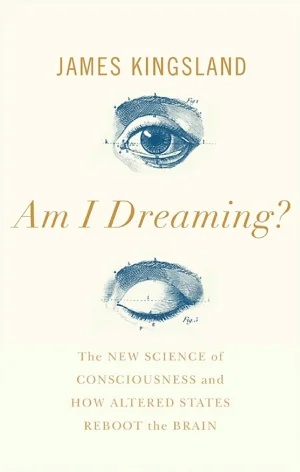
Am I Dreaming?
 73
73

Am I Dreaming?
James Kingsland’s exploration of altered states in *Am I Dreaming?* offers a compelling synthesis of scientific inquiry and anecdotal evidence. His analogy of the brain as a computer needing a 'reboot' is a clear, if somewhat simplistic, entry point. The book shines when Kingsland moves beyond the analogy to detail practices observed from Peruvian shamans to Silicon Valley tech workers. He effectively illustrates how various techniques, from lucid dreaming to mindfulness, serve to disrupt ingrained cognitive pathways. A limitation, however, is the occasional tendency to present these states as purely mechanistic, potentially overlooking deeper philosophical implications that many practitioners seek. The section on hypnotic trances, for instance, could benefit from acknowledging the historical spiritual dimensions often associated with the practice. Despite this, Kingsland’s journalistic approach makes complex ideas accessible. The work provides a valuable overview for those intrigued by the mind's capacity for self-transformation.
📝 Description
73
James Kingsland's 2010 book, Am I Dreaming?, likens altering consciousness to rebooting a computer.
Am I Dreaming? examines the human brain's ability to enter altered states of consciousness. James Kingsland, a science journalist, draws parallels between these mental shifts and rebooting a computer system. The book investigates techniques that intentionally change thought patterns, leading to new perspectives on the self and the world. Kingsland explores various methods that facilitate these mental changes, appealing to those interested in the connections between neuroscience, psychology, and esoteric practices.
Readers curious about lucid dreaming, mindfulness, hypnosis, and other ways to access non-ordinary awareness will find this work engaging. It aims to clarify the mechanisms behind altered states and their potential for personal insight. Kingsland situates current scientific research on consciousness within a historical context, referencing ancient shamanic traditions and their uses of altered states for healing and divination. He contrasts these historical practices with modern applications in fields like psychotherapy and technology, tracing humanity's long engagement with altered awareness.
This book connects modern scientific inquiry into consciousness with historical esoteric traditions. It acknowledges ancient shamanic practices that utilized altered states for purposes such as healing and divination. Kingsland traces a lineage of human engagement with altered awareness, contrasting these historical methods with contemporary applications found in psychotherapy and technology. The work highlights how practices like lucid dreaming and meditation can disrupt habitual thinking, offering a bridge between subjective experience and objective brain activity.
💡 Why Read This Book?
• Understand how practices like lucid dreaming, as detailed in the book, can offer a direct method for exploring subconscious landscapes, providing personal insights unavailable through ordinary waking consciousness. • Learn about the scientific investigations into states like hypnotic trances, offering a framework to analyze and potentially integrate these experiences into personal development, moving beyond mere curiosity. • Gain an appreciation for the historical breadth of altered states, from ancient shamanic traditions to modern Silicon Valley applications, highlighting their consistent role in human innovation and self-discovery.
⭐ Reader Reviews
Honest opinions from readers who have explored this book.
❓ Frequently Asked Questions
What is the core scientific premise of James Kingsland's 'Am I Dreaming?' regarding the brain?
The book posits that the human brain, much like a computer, can benefit from 'rebooting' through altered states of consciousness. This allows for the disruption of hard-wired thinking patterns and the gaining of new perspectives.
What kinds of altered states does James Kingsland discuss in 'Am I Dreaming?'?
Kingsland covers a range of states including lucid dreams, mindfulness meditation, and hypnotic trances, exploring their commonalities and effects on perception and cognition.
Where does Kingsland draw examples from in his exploration of altered states?
The book features examples from diverse settings, including shamans in Peru and tech workers in Silicon Valley, illustrating the cross-cultural and contemporary relevance of altered states.
What is the author's background, and how does it influence 'Am I Dreaming?'?
James Kingsland is a science journalist. This background informs his approach, aiming to bridge scientific understanding of consciousness with experiential accounts of altered states.
Can 'Am I Dreaming?' help readers understand their own dreams better?
Yes, the book specifically delves into lucid dreaming as a method to gain conscious control and awareness within the dream state, offering insights into dream content and its potential meanings.
Is 'Am I Dreaming?' a practical guide to achieving altered states?
While it explores various states and their effects, the book is primarily an investigation and synthesis of existing research and practices rather than a step-by-step instructional manual.
🔮 Key Themes & Symbolism
Cognitive Pattern Rebooting
The central thesis posits that intentional shifts into altered states of consciousness, such as lucid dreaming or hypnotic trances, function akin to rebooting a computer. This disruption of habitual neural pathways, a concept explored extensively by Kingsland, is presented as a mechanism for generating novel insights and perspectives on reality and self-awareness. The work examines how these 'reboots' can break down rigid thinking structures.
Neuroscience of Non-Ordinary Awareness
Kingsland bridges subjective experience with objective scientific observation, investigating the neurobiological underpinnings of altered states. The book discusses how practices like mindfulness meditation influence brain activity, creating measurable shifts in perception. This exploration aims to clarify states often relegated to the purely spiritual or anecdotal, grounding them in current scientific understanding.
Cross-Cultural Applications
The work highlights the universal human engagement with altered states across different cultures and eras. From the shamanic traditions of Peru, where altered states are integral to healing and ritual, to contemporary applications in Silicon Valley for innovation, Kingsland demonstrates that the drive to access these states is a persistent aspect of human experience and adaptation.
Self-Perception and Worldview
A significant theme is how engaging with altered states can fundamentally alter an individual's perception of self and their place in the world. By stepping outside ordinary consciousness, individuals can gain new viewpoints, challenge ingrained beliefs, and foster a more flexible and expansive understanding of reality. The book suggests this leads to greater self-awareness.
💬 Memorable Quotes
Direct passages from the work, attributed to the author.
“The human brain is remarkably similar to a computer.”
— This core analogy introduces Kingsland's thesis that cognitive processes can be reset or altered through specific practices, akin to restarting a malfunctioning electronic device.
“From shamans in Peru to tech workers in Silicon Valley.”
— This phrase highlights the broad scope of Kingsland's research, connecting ancient indigenous practices with modern technological environments in the study of consciousness.
“Exploring lucid dreams, mindfulness, hypnotic trances.”
— This lists key techniques discussed in the book for accessing and utilizing altered states of consciousness for personal exploration and understanding.
“Altered states can offer new perspectives into ourselves and the world.”
— This captures the book's promise: that exploring non-ordinary consciousness is not merely an academic pursuit but a path to enhanced self-awareness and a broader worldview.
💡 Key Ideas
Editorial paraphrase of the work's core concepts — not direct quotes.
Rebooting our hard-wired patterns of thinking can gain new perspectives.
This paraphrase captures the essence of the book's argument: that intentionally disrupting habitual thought processes through altered states is key to achieving fresh insights.
🌙 Esoteric Significance
Tradition
While not strictly adhering to a single esoteric lineage, *Am I Dreaming?* draws upon traditions that explore consciousness beyond the mundane, including shamanism and contemplative practices found in Buddhism. It aligns with a modern esoteric interest in the untapped potential of the human mind, viewing altered states not just as anomalies but as vital pathways to deeper knowledge and self-realization. The work secularizes and scientifically validates concepts historically explored in mystical traditions.
Symbolism
The concept of 'rebooting' functions as a central modern symbol for the esoteric idea of mental purification or renewal. Lucid dreaming itself is a powerful symbol of inner mastery and the ability to work through the subconscious, a theme present in Gnostic and Hermetic thought regarding self-knowledge. The contrast between the 'hard-wired' brain and the potential for flexible, altered states symbolizes the tension between conditioned existence and liberated consciousness.
Modern Relevance
Kingsland's work is highly relevant to contemporary fields like neurofeedback, biohacking, and the therapeutic application of mindfulness and psilocybin. Thinkers and practitioners in these areas often reference the need to understand and modulate brain states, echoing Kingsland's core arguments. His synthesis provides a accessible entry point for those interested in the scientific underpinnings of practices explored in traditions like Theosophy or Western esotericism, seeking practical applications.
👥 Who Should Read This Book
• Individuals curious about the science behind meditation and mindfulness, seeking to understand how these practices alter brain function and perception. • Explorers of lucid dreaming interested in the neurocognitive mechanisms that enable conscious awareness within dreams, potentially leading to self-discovery. • Readers interested in comparative studies of consciousness, connecting ancient shamanic rituals with modern psychological techniques and their impact on worldview.
📜 Historical Context
Published in 2019, James Kingsland's *Am I Dreaming?* entered a landscape increasingly interested in the scientific validation of subjective consciousness experiences. The book arrived amidst a resurgence of interest in mindfulness, psychedelics, and contemplative practices, often framed through neuroscience. It engaged with the ongoing discourse initiated by figures like Oliver Sacks, who explored the neurological basis of unusual mental states, and contemporary researchers like Anil Seth, who investigates the predictive nature of the brain. Kingsland's work navigated between the historical practices of shamanism, with its long-standing use of altered states for healing and spiritual insight, and the modern secular applications emerging in fields like psychology and even corporate productivity. While not facing overt censorship, the book contributed to a growing academic and popular acceptance of exploring non-ordinary consciousness, challenging purely materialistic views that had dominated much of the 20th century's scientific thought.
📔 Journal Prompts
The concept of 'rebooting' cognitive patterns through altered states.
Your personal experiences with lucid dreams or mindfulness.
The brain as a computer analogy and its limitations.
Shamanic practices and their relation to modern psychological techniques.
The potential for hypnotic trances to alter self-perception.
🗂️ Glossary
Altered States of Consciousness
Non-ordinary states of awareness that differ significantly from the typical waking state, characterized by changes in perception, thought, emotion, and sense of self.
Lucid Dreaming
A state of dreaming in which the dreamer is aware that they are dreaming and may be able to exert some degree of control over the dream's narrative or environment.
Mindfulness
A mental state achieved by focusing one's awareness on the present moment, while calmly acknowledging and accepting one's feelings, thoughts, and bodily sensations.
Hypnotic Trance
A state of focused attention and reduced peripheral awareness characterized by an enhanced capacity for response to suggestion, often induced by a hypnotist.
Cognitive Patterns
The habitual ways in which an individual thinks, perceives, and processes information, often deeply ingrained and resistant to change.
Neuroscience
The scientific study of the nervous system, including the brain, with a focus on understanding its structure, function, development, and pathology.
Shamanism
A range of beliefs and practices concerning communication with the spirit world, often involving altered states of consciousness induced by rituals or substances.
This book appears in 1 collection
🔮 Readers Also Liked
Browse all →








From the “Altered States of Consciousness” Collection
View all →
![EBOOK COLLECTION ( PART 8) [ CSI][h 33t]](/img/thumb/ebook-collection-part-8-csi-h-33t.webp)


More Free Occult Philosophy Books
View all →