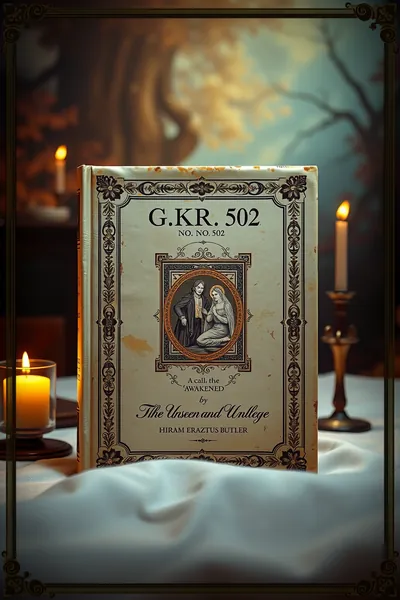
The chill

 73
73

The chill
Ross Macdonald’s *The Chill* is a novel that refuses to be easily categorized, a characteristic that elevates it beyond the typical detective fare of 1963. The true strength lies in its psychological density; Macdonald uses the framework of a missing person case to dissect the rot beneath the polished surfaces of affluent California life. The character of Lew Archer, our investigator, is less a hard-boiled cynic and more a weary observer, a conduit for the reader into the characters' damaged psyches. One particularly striking element is the pervasive sense of inherited guilt, where the sins of parents become inescapable burdens for their children, a concept Macdonald handles with a somber gravity.
However, the intricate plotting, while laudable, occasionally becomes so labyrinthine that it risks obscuring the emotional core. The sheer number of interconnected secrets can, at times, feel like an intellectual exercise rather than a visceral unfolding. The passage describing the antagonist's descent into moral compromise, driven by a desperate need for control, exemplifies Macdonald's skill but also highlights the narrative’s tendency to prioritize psychological exposition. Ultimately, *The Chill* is a significant work that uses the detective novel to explore the enduring consequences of hidden lives and fractured families.
📝 Description
73
Ross Macdonald's 1963 novel, The Chill, examines how buried secrets shape family legacies.
Ross Macdonald’s 1963 novel, The Chill, follows private investigator Lew Archer as he investigates a case in Southern California. The investigation unearths a tangled history involving a missing person, a wealthy family, and a past crime. Macdonald uses the detective genre to explore the psychological weight of inherited guilt and the ways past actions continue to haunt the present.
The narrative unfolds with Archer piecing together fragmented clues, revealing how the characters' lives are interconnected through a shared history of deception and unresolved trauma. The novel moves beyond a simple mystery, focusing on the internal lives of its characters and the destructive patterns that repeat across generations. Macdonald’s prose captures the atmosphere of mid-century California, a setting that mirrors the hidden complexities beneath a seemingly ordinary facade.
While not overtly spiritual, Macdonald's work taps into esoteric themes by focusing on the unconscious forces that drive human behavior. The novel's concern with inherited trauma and the inescapable influence of the past aligns with certain psychological perspectives that explore the deeper, often hidden, connections between individuals and their lineage. The detective's role becomes a method of uncovering these subterranean truths, akin to a psychoanalyst probing the hidden layers of the psyche to understand present discontents. This approach reflects a broader late 20th-century interest in the hidden architecture of personal and familial lives.
💡 Why Read This Book?
• Gain insight into the psychological inheritance of trauma, as depicted through the generations in *The Chill*, understanding how past actions shape present realities. • Explore the concept of the 'chill'—an existential emptiness—as a metaphor for unresolved guilt and its pervasive influence on character behavior, a key theme in Macdonald's work. • Appreciate the evolution of the mid-20th century detective novel, specifically how Ross Macdonald, in *The Chill* (1963), moved beyond simple mystery to delve into complex character studies and societal undercurrents.
⭐ Reader Reviews
Honest opinions from readers who have explored this book.
❓ Frequently Asked Questions
What is the central theme explored in Ross Macdonald's The Chill?
The central theme of *The Chill* is the pervasive psychological and existential emptiness, often stemming from inherited guilt and unresolved secrets, that haunts the characters and drives their destructive behaviors.
Who is the protagonist and what is his role in The Chill?
The protagonist is private investigator Lew Archer. His role is to untangle a complex web of deceit and uncover buried truths, acting as an observer and catalyst for confronting the past.
When was The Chill originally published, and what was happening culturally at that time?
*The Chill* was first published in 1963, a period marked by growing social disillusionment and increasing interest in psychological theories, which influenced the novel's focus on hidden human motivations.
How does The Chill differ from a typical detective novel?
Unlike many detective novels focused solely on solving a crime, *The Chill* uses the investigation as a vehicle to explore deep psychological issues, character motivations, and the lasting impact of familial secrets.
What does the 'chill' metaphor represent in the book?
The 'chill' represents a profound emotional or spiritual void, a coldness within characters caused by guilt, betrayal, and a lack of genuine connection, which Macdonald uses to explore the human condition.
Are there any specific historical events or figures referenced in The Chill?
While *The Chill* does not directly reference specific historical events, its exploration of psychological repression and societal anxieties aligns with the intellectual currents of the early 1960s in America.
🔮 Key Themes & Symbolism
The Pervasive 'Chill'
The novel's central metaphor, the 'chill,' signifies a deep-seated existential emptiness and emotional desolation. This isn't a literal cold but a spiritual or psychological void born from unresolved guilt, betrayal, and the inability to form authentic connections. Macdonald illustrates how this internal coldness infects the lives of his characters, leading to destructive actions and fractured relationships. The investigation by Lew Archer becomes a quest to understand and perhaps alleviate this pervasive sense of frigidity that permeates the affluent Californian society depicted in the book.
Inherited Guilt and Generational Trauma
A significant aspect of *The Chill* is its exploration of how the sins and secrets of one generation inevitably burden the next. Characters find themselves trapped by the past actions of their parents or ancestors, unable to escape the consequences of decisions made long before their birth. This theme looks at the concept of inherited trauma, where psychological damage and moral compromise are passed down, shaping destinies and perpetuating cycles of dysfunction. The novel suggests that confronting these legacies is essential for any hope of breaking free.
The Facade of California Life
Macdonald masterfully uses the setting of California, often perceived as a land of sunshine and opportunity, to contrast with the inner darkness of his characters. The novel exposes the hypocrisy and hidden turmoil beneath the veneer of prosperity and normalcy. Beneath the idyllic exteriors of suburban homes and successful careers lie webs of deceit, obsession, and moral decay. This theme critiques the American Dream, suggesting that societal success can often mask profound personal failures and ethical compromises, creating a psychological 'chill' within.
Identity and Self-Deception
The characters in *The Chill* often struggle with their true identities, frequently resorting to self-deception to cope with past traumas or present moral failings. They construct elaborate lies and pretenses to maintain their public image, which inevitably crumbles under scrutiny. Lew Archer's investigation forces these individuals to confront the truths they have long suppressed, revealing the fragility of identities built on falsehoods. The novel suggests that true self-understanding requires an honest reckoning with one's past, however painful.
💬 Memorable Quotes
Direct passages from the work, attributed to the author.
“The respectable people were the ones who had the most to hide.”
— This observation highlights the novel's critique of societal facades. It suggests that outward respectability often serves as a cover for hidden transgressions and moral compromises, particularly within the affluent circles Macdonald depicts.
“Truth was a dangerous thing in this town.”
— This statement underscores the pervasive atmosphere of deceit and secrets within the novel's setting. It implies that uncovering the truth poses a significant threat to the established order and the carefully constructed lies of its inhabitants.
“He carried his past like a disease.”
— This powerful image conveys the debilitating and pervasive nature of guilt and trauma. It suggests that the burden of past actions is not merely a memory but an active, destructive force that sickens and consumes the individual.
💡 Key Ideas
Editorial paraphrase of the work's core concepts — not direct quotes.
The past was never dead. It wasn't even past.
This paraphrased concept expresses the novel's core message about the inescapable influence of history. It suggests that unresolved events and buried secrets continue to actively shape the present, influencing characters' actions and destinies.
He was a man who had learned to live with the cold inside him.
This quote captures the essence of the 'chill' metaphor. It describes a character who has become accustomed to, or resigned to, a profound emotional emptiness and lack of genuine feeling, a state of being that defines much of their existence.
🌙 Esoteric Significance
Tradition
While not overtly occult, *The Chill* engages with themes resonant in Gnostic and Hermetic thought, particularly the concept of a fallen or corrupted state of being and the struggle against illusion. The pervasive 'chill' can be interpreted as a manifestation of spiritual ignorance or a disconnection from the divine spark within, a concept echoed in Gnostic ideas of the material world as a prison. Macdonald’s exploration of inherited sin and the burden of the past also touches upon karmic principles found in Eastern traditions, though filtered through a Western psychological lens.
Symbolism
The 'chill' itself functions as a potent symbol of spiritual or psychological death, an existential void stemming from ignorance and deception. Water imagery, often present in Macdonald's work, can symbolize the subconscious or the flow of time and memory, but in *The Chill*, it may also represent the overwhelming nature of buried truths or emotional stagnation. The contrast between the bright Californian sun and the internal darkness symbolizes the Gnostic idea of a material world that obscures true spiritual reality, creating a deceptive facade.
Modern Relevance
Contemporary psychological thrillers and literary fiction continue to explore the themes of inherited trauma, buried secrets, and the search for identity that Macdonald masterfully depicted in *The Chill*. His nuanced approach to character psychology and his use of the detective genre to examine societal ills remain influential. Thinkers and writers focused on intergenerational trauma, the impact of societal pressures on individual well-being, and the critique of superficial appearances can find rich ground for reflection in Macdonald's work.
👥 Who Should Read This Book
• Readers interested in psychological thrillers that delve beneath the surface of conventional crime narratives, seeking complex character motivations and thematic depth. • Students of mid-20th century American literature and the evolution of the detective novel, particularly those examining how authors like Ross Macdonald used the genre for social commentary. • Individuals drawn to explorations of inherited guilt, the lasting impact of secrets, and the struggle for self-understanding within flawed characters and families.
📜 Historical Context
Published in 1963, *The Chill* emerged from a fertile period for American literature, particularly the evolving detective novel. The early 1960s witnessed a cultural shift, with a growing skepticism towards post-war optimism and an increased exploration of psychological complexities, influenced by thinkers like Freud and Jung. Macdonald's work, while firmly rooted in the tradition of hardboiled detective fiction pioneered by authors like Dashiell Hammett, pushed the genre towards more introspective and thematic territory. He was part of a wave of writers who used crime narratives to dissect societal anxieties and the darker aspects of the human psyche. This era saw authors like Patricia Highsmith also exploring psychological suspense and moral ambiguity. Macdonald's focus on inherited guilt and the psychological fallout of secrets distinguished him, offering a more literary and somber take on crime than purely plot-driven stories, and resonating with a readership increasingly interested in the hidden torments of seemingly ordinary lives.
📔 Journal Prompts
The pervasive 'chill' experienced by characters: how does it manifest internally and externally?
Lew Archer's role as an investigator: does he seek justice, understanding, or something else?
The weight of inherited guilt: how do the past actions of parents affect their children in the novel?
Reflect on the symbolism of the Californian setting versus the inner lives of its inhabitants.
The construction and eventual collapse of false identities: what drives characters to deceive themselves and others?
🗂️ Glossary
The Chill
A metaphor for profound existential emptiness, emotional coldness, and spiritual desolation experienced by characters due to unresolved guilt, betrayal, and lack of authentic connection.
Lew Archer
The recurring private investigator protagonist in Ross Macdonald's novels, known for his weary but persistent pursuit of truth and his deep understanding of human frailty.
Inherited Guilt
The concept that the moral transgressions and secrets of one generation can burden and negatively influence subsequent generations, shaping their lives and destinies.
Psychological Inheritance
The idea that emotional patterns, traumas, and unresolved issues are passed down through families, impacting the psychological makeup and behavior of offspring.
Facade
An outward appearance or presentation designed to conceal a less pleasant or true reality; in *The Chill*, this often masks moral compromise and hidden secrets.
Self-Deception
The act of convincing oneself to believe something that is contrary to fact or reality, often as a coping mechanism for difficult truths or past actions.
Mid-Century California Noir
A subgenre of crime fiction set in California, typically in the mid-20th century, characterized by morally ambiguous characters, complex plots, and a focus on societal undercurrents.
🔮 Readers Also Liked
Browse all →






More by Ross Macdonald
All books →
More Free Occult Philosophy Books
View all →