Alchemy

 61
61

Alchemy

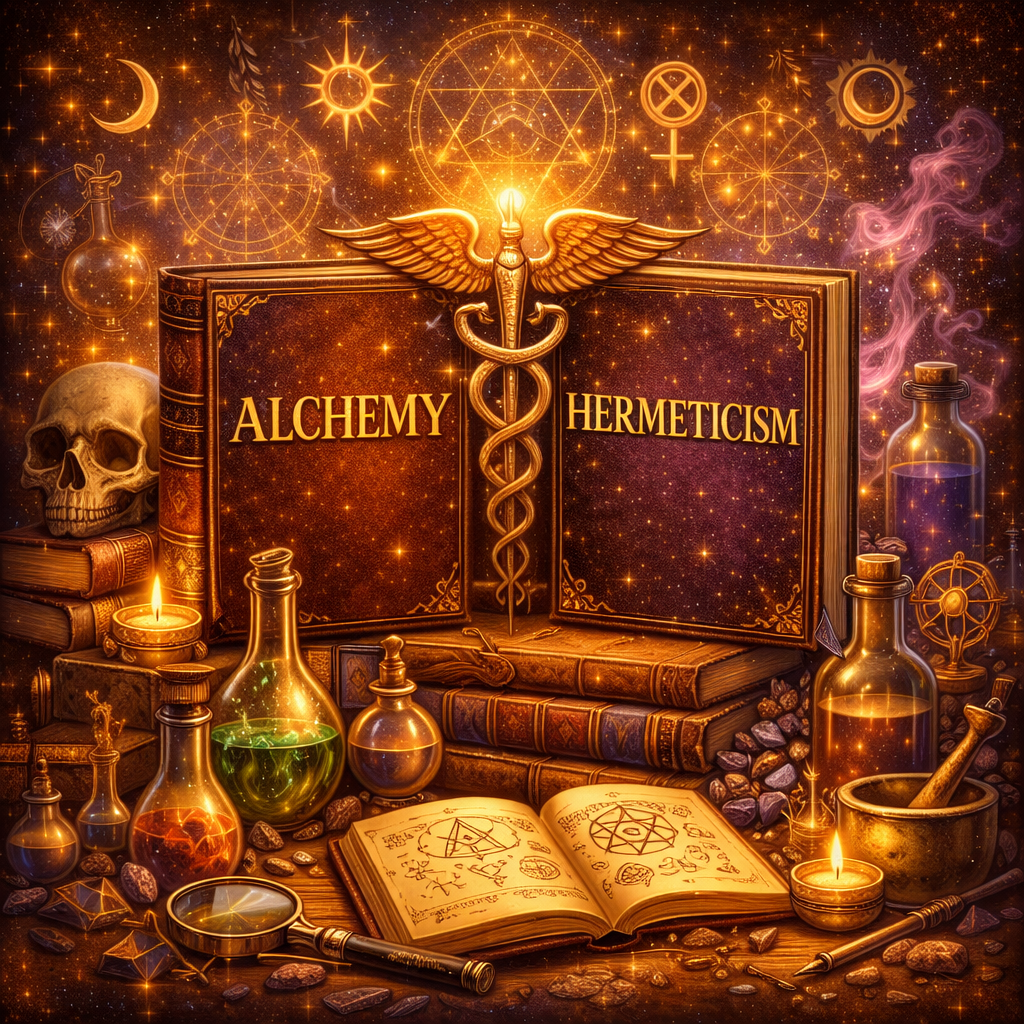

Richard Grossinger's 'Alchemy' is a masterful exploration of one of the most mystifying and fascinating fields of esoteric study. Grossinger's deep dive into the symbolism and philosophical underpinnings of alchemy is both enlightening and inspiring. He masterfully weaves together historical context, philosophical musings, and practical applications, making this book an invaluable resource for both novices and seasoned practitioners. The strength of this work lies in its ability to demystify complex alchemical concepts while maintaining their mystical allure. Grossinger's prose is evocative and thought-provoking, making 'Alchemy' a must-read for anyone interested in the esoteric and occult traditions.
📝 Description
61
Richard Grossinger's 'Alchemy' was published in 2019, examining alchemical traditions.
Richard Grossinger's 'Alchemy' examines the historical and symbolic dimensions of the alchemical tradition. The book looks at how alchemists understood the transformation of both physical substances and the human psyche. Grossinger connects alchemical symbolism to broader esoteric philosophies and practices that have persisted through various cultures.
This work considers alchemy not just as a precursor to modern chemistry, but as a complex system of thought and spiritual discipline. It discusses the symbolic language used in alchemical texts and its relation to concepts of personal growth and cosmic order. The book aims to illuminate the underlying principles of transformation that alchemists sought to achieve.
This book situates itself within the broad spectrum of Western esotericism, a field concerned with hidden knowledge and spiritual disciplines often outside mainstream religious or scientific frameworks. Alchemy, with its roots in ancient Hellenistic Egypt and later development through medieval Islamic and European scholars, represents a significant current within this tradition. Grossinger's work engages with the historical texts and philosophical underpinnings of alchemy, linking its practices and symbolism to a lineage of seekers interested in the fundamental nature of reality and consciousness.
💡 Why Read This Book?
Why read this book — Richard Grossinger's 'Alchemy' is a comprehensive guide for those seeking to understand the mystical and philosophical dimensions of alchemy. It is ideal for scholars looking to deepen their knowledge, practitioners seeking practical insights, and spiritual seekers eager to explore the transformative power of alchemical symbolism. This book offers a rich tapestry of esoteric wisdom that can inspire personal growth and spiritual enlightenment.
⭐ Reader Reviews
Honest opinions from readers who have explored this book.
❓ Frequently Asked Questions
What is the main focus of 'Alchemy' by Richard Grossinger?
The main focus is the exploration of alchemical symbolism, its philosophical significance, and practical applications in personal and spiritual transformation.
Who would benefit most from reading this book?
Scholars of esoteric traditions, practitioners of alchemy, and spiritual seekers interested in the mystical and occult will find this book particularly beneficial.
Does the book cover historical alchemy?
Yes, it provides a historical context for alchemy, discussing its development and influence over the centuries.
Are there practical exercises or rituals included?
While the book focuses more on the philosophical and symbolic aspects, it does provide insights that can be applied to personal alchemical practices.
How does Grossinger approach the subject of alchemy?
Grossinger approaches alchemy with a blend of scholarly rigor and spiritual intuition, making the subject accessible and relevant to modern readers.
🔮 Key Themes & Symbolism
The Philosopher's Stone
The Philosopher's Stone is a central theme in alchemy, symbolizing the ultimate goal of spiritual and material transformation. Grossinger explores its mythical and symbolic significance, revealing how it represents the union of opposites and the attainment of perfection.
The Four Elements
Alchemy is deeply rooted in the concept of the four elements—earth, air, fire, and water. Grossinger examines how these elements interact and transform, reflecting the alchemical process of purification and transmutation.
The Great Work
The Great Work is the alchemical process of transformation, both physical and spiritual. Grossinger discusses the stages of this process, from the initial purification to the final union, offering insights into its mystical and esoteric significance.
💬 Memorable Quotes
Direct passages from the work, attributed to the author.
“The Philosopher's Stone is the symbol of ultimate unity and perfection.”
— Grossinger highlights the mystical goal of alchemy, representing the union of all opposites and the attainment of spiritual enlightenment.
“The Great Work is a journey of purification and transformation.”
— Grossinger describes the alchemical process as a path of spiritual growth and enlightenment, involving the purification of both body and soul.
💡 Key Ideas
Editorial paraphrase of the work's core concepts — not direct quotes.
The alchemist seeks not only to transform matter but to transform himself.
This quote underscores the dual nature of alchemy, where the external process mirrors the internal journey of the practitioner.
The elements are the building blocks of alchemy, each with its unique properties and roles.
This passage emphasizes the fundamental role of the four elements in alchemical practices and their symbolic significance.
Alchemy is the art of making gold out of base metals, both literally and metaphorically.
This quote captures the essence of alchemy, where the transformation of matter reflects the transformation of the self.
🌙 Esoteric Significance
Tradition
Richard Grossinger's 'Alchemy' belongs to the Hermetic tradition, which emphasizes the unity of all things and the process of spiritual transformation. This tradition draws on ancient Egyptian, Greek, and medieval alchemical practices, focusing on the symbolic and mystical dimensions of alchemy.
Symbolism
Key symbols in this book include the Philosopher's Stone, the four elements, and the Great Work. These symbols represent the process of transformation, the union of opposites, and the attainment of spiritual enlightenment. Grossinger's interpretation of these symbols provides clear insights into the esoteric and mystical aspects of alchemy.
Modern Relevance
Today, , 'Alchemy' remains relevant for modern practitioners of alchemy and those interested in the esoteric and occult traditions. Its exploration of symbolic language and philosophical depth offers a rich source of inspiration for personal growth and spiritual enlightenment. Contemporary scholars and practitioners continue to draw on Grossinger's insights to deepen their understanding of alchemy and its transformative power.
👥 Who Should Read This Book
Beginners will find 'Alchemy' an accessible introduction to the mystical and philosophical dimensions of alchemy. Scholars of esoteric traditions will appreciate Grossinger's deep dive into historical and symbolic aspects. Spiritual seekers will benefit from the book's insights into personal and spiritual transformation. Practitioners of alchemy will find practical applications and inspirations for their own work.
📜 Historical Context
Written during a time of renewed interest in esoteric and mystical traditions, Richard Grossinger's 'Alchemy' emerged as an important work that bridged the gap between historical alchemical practices and modern spiritual seekers. The book's importance lies in its ability to clarify complex alchemical concepts while preserving their mystical allure. Grossinger's work has influenced numerous scholars and practitioners, contributing to the resurgence of interest in alchemy and hermeticism in contemporary times.
📔 Journal Prompts
Reflect on the symbolism of the Philosopher's Stone in your own life.
How do the four elements manifest in your personal journey?
Consider the stages of the Great Work and how they apply to your spiritual growth.
What insights from 'Alchemy' resonate most with your own experiences?
How can the principles of alchemy be applied to your daily life?
🗂️ Glossary
Philosopher's Stone
The ultimate goal in alchemy, symbolizing the union of opposites and the attainment of perfection.
Four Elements
The fundamental building blocks of alchemy—earth, air, fire, and water—each with unique properties and roles.
Great Work
The alchemical process of transformation, involving purification and the union of opposites.
Hermetic Tradition
An esoteric tradition emphasizing the unity of all things and the process of spiritual transformation.
Alchemical Symbolism
The use of symbols to represent the mystical and philosophical dimensions of alchemy.
This book appears in 3 collections
🔮 Readers Also Liked
Browse all →







More by Richard Grossinger
All books →


From the “Hermeticism” Collection
View all →







More Free Alchemy & Hermeticism Books
View all →






![Works [37 plays, 5 poems, sonnets]](/img/thumb/works-37-plays-5-poems-sonnets-william-shakespeare.webp)
![The Widow Ching Pirate [5 stories]](/img/thumb/the-widow-ching-pirate-5-stories-jorge-luis-borges-195810.webp)