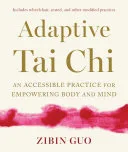
Adaptive Tai Chi
 80
80

Adaptive Tai Chi
Zibin Guo’s Adaptive Tai Chi tackles the often-insurmountable physical barriers that prevent many from engaging with this venerable practice. The book's strength lies in its meticulous breakdown of movements and its genuine commitment to inclusivity, offering seated and wheelchair-specific forms that retain the art's core principles. Guo’s explanation of how "empowering the mind" is central, even when physical movement is limited, offers a valuable perspective for practitioners of all levels. A potential limitation, however, is that the "helpful illustrations" mentioned in the blurb, while present, might not always fully convey the subtle energetic nuances crucial to Tai Chi for those completely unfamiliar with the practice. The section detailing "stationary standing" exercises, for instance, effectively illustrates postural alignment but relies heavily on reader interpretation for the internal sensations. Despite this, Guo provides a practical and necessary bridge for many to access the profound benefits of Tai Chi Chuan. It succeeds in making the art more approachable without sacrificing its integrity.
📝 Description
80
Zibin Guo's 2025 book redefines Tai Chi practice for all physical abilities.
Adaptive Tai Chi offers a practical system for engaging with the traditional Chinese art, developed by Zibin Guo. This approach emphasizes making Tai Chi accessible, regardless of an individual's physical condition. The book details a range of exercises, including standing and moving forms, stationary stances, seated routines, and modifications specifically for wheelchair users. Guo's primary goal is to extend the profound benefits of Tai Chi to a wider population.
The work is intended for anyone interested in Tai Chi, particularly those who might find conventional methods challenging due to age, injury, disability, or other physical limitations. Its adaptable nature benefits newcomers to Tai Chi and also offers experienced practitioners a new perspective on flexibility within the art. Furthermore, it serves as a resource for instructors aiming to create more inclusive teaching environments.
Tai Chi Chuan, with its roots in Chinese martial arts and health practices, has a long history. While it gained popularity in the West, many adaptations still required considerable physical exertion. Guo's method, presented in this 2025 book, addresses a contemporary interest in mind-body practices and somatic exploration. It aligns with a modern view of embodied movement, aiming to broaden access to established arts.
Originating centuries ago in China, Tai Chi Chuan is more than a martial art; it is a practice deeply connected to Taoist principles of energy cultivation (Qi) and harmony with natural forces. Its movements are designed to foster internal balance, promote longevity, and align the practitioner with the Tao. Traditional lineages often emphasize specific forms and internal energetic development. Zibin Guo's Adaptive Tai Chi reinterprets these principles, suggesting that the core energetic and philosophical benefits are not contingent on rigid adherence to traditional physical structures, thus democratizing access to this ancient Taoist path.
💡 Why Read This Book?
• Learn how to modify fundamental Tai Chi movements, such as the "postural alignment" in stationary standing, to suit any physical ability, ensuring you can cultivate internal energy regardless of limitations. • Understand the principle of "empowering the mind" as central to Tai Chi practice, discovering how mental focus and intention can transform your experience even with limited physical expression. • Gain practical sequences for "seated" and "wheelchair" practice, offering concrete methods to experience the health and meditative benefits of Tai Chi Chuan that are often inaccessible in traditional forms.
⭐ Reader Reviews
Honest opinions from readers who have explored this book.
❓ Frequently Asked Questions
Can beginners who have never practiced Tai Chi before use Adaptive Tai Chi?
Absolutely. Adaptive Tai Chi is specifically designed for accessibility. It breaks down movements into simple, modifiable steps, making it ideal for beginners. The focus on "empowering the mind" alongside physical practice ensures newcomers can engage with the core principles from the outset.
What specific adaptations are included for people with mobility issues?
The book provides detailed sequences for seated practice and for individuals using wheelchairs. These adaptations focus on maintaining correct "postural alignment" and cultivating internal energy (Qi) through modified upper body and breath work, ensuring the essence of Tai Chi is preserved.
How does Adaptive Tai Chi differ from traditional Tai Chi Chuan?
While rooted in traditional Tai Chi Chuan, Adaptive Tai Chi prioritizes "adaptability." It modifies traditional forms to accommodate varying physical abilities, focusing on principles like "empowering the mind" and energy cultivation rather than solely on complex physical execution. The 2025 publication emphasizes inclusivity.
Are there illustrations or diagrams to guide the practice?
Yes, the book includes "helpful illustrations" to guide practitioners through the various sequences. These visuals are designed to clarify "postural alignment" and movement pathways for both standing and adapted forms, aiding comprehension and practice.
What are the primary benefits of practicing Adaptive Tai Chi?
Practitioners can expect improved balance, increased body awareness, stress reduction, and enhanced mental focus. The core benefit is experiencing the "transformative qualities" of Tai Chi Chuan, promoting well-being and mind-body integration regardless of one's physical condition.
Is Zibin Guo a recognized expert in Tai Chi?
Yes, Zibin Guo is recognized for his work in adapting and teaching Tai Chi. His approach in "Adaptive Tai Chi" (first published 2025) is informed by extensive experience in the practice and a commitment to making its benefits widely accessible.
🔮 Key Themes & Symbolism
Inclusivity in Practice
This work fundamentally redefines access to Tai Chi Chuan by emphasizing "adaptability." It moves beyond the often-rigid physical requirements of traditional forms to create a practice accessible to individuals with diverse physical capabilities. The book details specific sequences for standing, seated, and wheelchair users, demonstrating that the core principles of energy cultivation, mind-body connection, and "empowering the mind" can be realized irrespective of physical limitations. This theme challenges conventional notions of what constitutes authentic Tai Chi practice, broadening its reach and applicability in the modern world.
Mind-Body Integration
Central to Adaptive Tai Chi is the concept of "transformative qualities" achieved through a profound mind-body integration. The book posits that the effectiveness of Tai Chi lies not solely in physical execution but significantly in mental focus, intention, and awareness. Zibin Guo guides readers to cultivate "internal energy" (Qi) through conscious breathing and focused intent, even within simplified or modified movements. This holistic approach underscores the idea that the mind actively shapes the body's experience and potential for healing and well-being.
Accessible Energetics
Adaptive Tai Chi makes the esoteric concept of Qi cultivation practical and reachable. By offering modified "inclusive sequences," the book demonstrates how to channel and develop internal energy (Qi) without requiring advanced physical prowess. The focus on "postural alignment" and deliberate movement, even in simplified forms, serves as a conduit for energetic flow. This theme explains the energetic aspects of Tai Chi, presenting them as accessible to anyone willing to engage with focused intention and mindful practice, thereby democratizing a key element of esoteric traditions.
Holistic Well-being
Beyond physical exercise, Adaptive Tai Chi offers a path to holistic well-being by integrating mental, emotional, and physical health. The practice encourages self-awareness, stress reduction, and a greater sense of internal harmony. By making Tai Chi accessible, the book empowers individuals to take an active role in their own health journey. The emphasis on "empowering the mind" suggests that mental resilience and emotional balance are cultivated alongside physical vitality, contributing to an overall enhancement of life quality for practitioners.
💬 Memorable Quotes
Direct passages from the work, attributed to the author.
“Overcoming challenges by empowering the mind and transforming the body.”
— This core tenet highlights Tai Chi's dual focus: mental fortitude and physical adaptation. It suggests that true progress in the art comes from cultivating internal strength and flexibility, allowing one to meet external difficulties with greater resilience and awareness.
“A simple and inclusive Tai Chi program, completely modifiable.”
— This statement expresses the book's primary objective – to democratize Tai Chi. It emphasizes ease of learning and broad applicability, signaling a departure from more complex or physically demanding traditional forms, making the practice attainable for a wider audience.
“Sequences for standing/moving, stationary standing, seated, and wheelchair.”
— This list concretely outlines the program's adaptability. It assures potential practitioners that diverse physical needs have been considered, offering practical solutions for engagement across a spectrum of abilities and environments.
“Experience the transformative qualities of this art.”
— This phrase points to the deeper, non-physical benefits of Tai Chi, suggesting that the practice offers more than just exercise. It implies a lasting impact on one's overall state of being, encompassing mental clarity, emotional balance, and energetic vitality.
“An innovative approach that speaks to this power.”
— This suggests Zibin Guo's method is not merely a collection of modified movements but a thoughtful reinterpretation of Tai Chi's fundamental potential. It implies a fresh perspective designed to unlock the art's inherent power for a contemporary audience.
🌙 Esoteric Significance
Tradition
While Tai Chi Chuan itself is a rich tradition encompassing martial, meditative, and healing arts, Adaptive Tai Chi interfaces with its esoteric dimensions by focusing on the cultivation and circulation of internal energy (Qi). It aligns with Taoist principles of balance and flow, and Hermetic ideas of correspondence between the microcosm (the body) and macrocosm (the universe). The emphasis on "transformative qualities" speaks to the potential for spiritual and energetic development inherent in the practice, making it accessible beyond purely physical exercise.
Symbolism
The practice implicitly draws on the Taoist symbol of Yin and Yang, representing the interplay of complementary forces (e.g., soft and hard, yielding and asserting) central to Tai Chi's movements. The concept of "Qi" itself is a fundamental symbol of vital life force energy, the manipulation and circulation of which is key to esoteric Tai Chi. The deliberate, flowing "sequences" can be seen as symbolic representations of natural processes and cosmic harmony, guiding the practitioner towards alignment with these universal principles.
Modern Relevance
Adaptive Tai Chi resonates strongly with contemporary somatic practices, therapeutic movement modalities, and the burgeoning field of embodied cognition. Thinkers and practitioners in fields like rehabilitative therapy, mindfulness-based stress reduction, and even certain branches of contemporary dance and yoga draw parallels. The work's focus on accessibility and mind-body integration makes it relevant to anyone seeking practical tools for self-care, stress management, and enhancing overall well-being in a fast-paced, often physically demanding modern world.
👥 Who Should Read This Book
• Individuals experiencing physical limitations due to age, injury, or disability who wish to engage with the profound benefits of Tai Chi Chuan. • Yoga instructors, physical therapists, and wellness coaches seeking to incorporate inclusive and adaptable movement practices into their offerings. • Beginners curious about Tai Chi but intimidated by traditional, physically demanding forms, looking for an accessible entry point to mind-body cultivation.
📜 Historical Context
Zibin Guo's "Adaptive Tai Chi," published in 2025, emerges in an era where the accessibility of traditional practices is increasingly emphasized. While Tai Chi Chuan has a history spanning centuries in China, its global dissemination saw various interpretations and adaptations emerge throughout the 20th century. Figures like Yang Chengfu codified many foundational forms, emphasizing specific lineages and rigorous training. Guo's work, however, directly addresses limitations inherent in many of these standardized approaches. It arrives in a cultural landscape receptive to mind-body modalities, influenced by movements like yoga and mindfulness that have also undergone significant adaptation for broader appeal. Unlike martial arts purists who might advocate for strict adherence to historical forms, Guo’s approach champions a more inclusive, therapeutic application, reflecting a contemporary shift towards personalized wellness practices. The work positions itself as a necessary evolution, ensuring the benefits of Tai Chi Chuan are not confined by physical ability.
📔 Journal Prompts
The concept of 'empowering the mind' in Adaptive Tai Chi.
Reflecting on the 'transformative qualities' accessible through 'inclusive sequences'.
How can 'postural alignment' be maintained in seated Tai Chi practice?
The role of 'Qi' cultivation in modified Tai Chi movements.
Personal exploration of 'adaptability' within the framework of Tai Chi Chuan.
🗂️ Glossary
Qi (Chi)
The vital life force energy believed in traditional Chinese culture to animate all living things. In Tai Chi, cultivating and circulating Qi is central to health, vitality, and martial effectiveness.
Tai Chi Chuan
A traditional Chinese martial art practiced for both its defensive applications and its health benefits. Known for its slow, flowing movements, it emphasizes balance, coordination, and mind-body integration.
Postural Alignment
The correct positioning of the body's segments relative to each other. In Tai Chi, maintaining proper alignment is crucial for efficient energy flow, stability, and preventing injury.
Transformative Qualities
Refers to the profound physical, mental, and energetic changes that can result from consistent Tai Chi practice, leading to improved well-being, resilience, and self-awareness.
Inclusive Sequences
Specific sets of movements within Tai Chi that have been modified or designed to be accessible to individuals with a wide range of physical abilities, including those using wheelchairs or practicing seated.
Stationary Standing
A foundational Tai Chi practice involving holding a specific stance and focusing on internal awareness, breath, and energy cultivation without significant bodily movement.
Adaptability
The core principle of Zibin Guo's approach, emphasizing the modification of traditional Tai Chi forms to suit individual physical capabilities, ensuring broader access to the art's benefits.









![Story of Dreams, Fate and Destiny [Zurich Lecture Series Edition]](/img/thumb/story-of-dreams-fate-and-destiny-zurich-lecture-series-edition-erel-shalit-518400.webp)