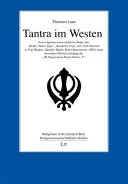
Tantra im Westen
 73
73

Tantra im Westen
Thorsten Laue's *Tantra im Westen* performs a valuable service by dissecting the often-muddled presentation of Tantra in Western esoteric circles. The book’s strength lies in its methodical approach, tracing how concepts like *kundalini* and *chakras* have been reinterpreted, often simplified, and sometimes distorted through translation and adaptation. Laue is particularly adept at highlighting the divergence between the sophisticated philosophical underpinnings of Tantric traditions in India and their more generalized or therapeutic applications in the West. A limitation, however, is that the work occasionally feels more like an academic survey than a deeply engaging exploration of lived practice, which might leave some readers wanting more practical application or experiential depth. The discussion of how early 20th-century Theosophical movements contributed to the Western dissemination of certain Tantric ideas, albeit in a decontextualized manner, is a particularly illuminating passage. Ultimately, *Tantra im Westen* serves as a crucial corrective for anyone seeking clarity on the complex history of Tantra's Western reception.
📝 Description
73
Thorsten Laue's 2012 book examines Western interpretations of Tantric traditions.
Tantra im Westen, published in 2012, provides a scholarly look at how Tantric practices and philosophies have been received and reshaped in Western cultures. Thorsten Laue investigates the adaptation, misunderstanding, and integration of these spiritual systems, which originated in the Indian subcontinent, into European and North American esoteric thought. The work goes beyond surface-level descriptions to analyze the historical evolution and conceptual changes that accompanied Tantra's transmission.
This book is for students of comparative religion, esoteric history, and anyone interested in how Eastern spiritual practices cross cultural divides. Readers will find value in its examination of how Eastern philosophies interact with Western occult and mystical thought. It suits those who prefer rigorous research and a critical perspective on spiritual traditions, avoiding popular sensationalism.
Laue's study arrives at a time when Western engagement with Eastern spirituality had already intensified. The book engages with academic and esoteric discussions about the transformation of practices when they move across cultural borders. It considers earlier Orientalist studies and contemporary movements that adapt ancient traditions for modern Western audiences. The 2012 publication date places it after several significant periods of Tantric influence in the West.
This book situates itself within the history of Western esotericism's engagement with Eastern traditions. Following periods where Eastern philosophies were often filtered through Orientalist lenses or adapted by various occult groups, Laue's work offers a more critical analysis of Tantra's reception. It addresses how concepts originating from Indian subcontinent were reinterpreted, sometimes losing their original context, within Western spiritual and magical circles, particularly in the late 20th and early 21st centuries.
💡 Why Read This Book?
• Gain a critical understanding of how concepts like *chakras* and *kundalini* were Westernized, moving beyond popular New Age interpretations, as detailed in Laue's analysis of post-2012 reception. • Appreciate the historical trajectory of Eastern spiritual practices entering Western esoteric thought, noting the influence of early 20th-century movements like Theosophy. • Distinguish between original South Asian Tantric traditions and their adapted Western forms, fostering a more informed and nuanced perspective on cross-cultural spiritual transmission.
⭐ Reader Reviews
Honest opinions from readers who have explored this book.
❓ Frequently Asked Questions
What is the primary focus of Thorsten Laue's Tantra im Westen?
The book's primary focus is the reception and adaptation of Tantric traditions within Western esoteric and spiritual contexts, examining how Indian concepts have been interpreted and practiced since their introduction.
When was Tantra im Westen first published?
Tantra im Westen by Thorsten Laue was first published in 2012, placing it within a period of significant engagement with Eastern spiritualities in the West.
Does the book discuss the historical origins of Tantra?
While the book's main emphasis is on Western reception, it inherently engages with the original South Asian roots of Tantra to highlight the transformations and reinterpretations that occurred.
Who would benefit most from reading Tantra im Westen?
Students of comparative religion, esoteric history, and those interested in the cross-cultural exchange of spiritual practices, especially the specific case of Tantra's Westernization, would find this book beneficial.
What key Tantric concepts are examined in the book?
The book examines concepts such as *shakti*, *kundalini*, and *chakras*, analyzing how they are understood and applied within Western esoteric frameworks.
Is Tantra im Westen a practical guide to Tantric practices?
No, Tantra im Westen is primarily a scholarly and analytical work examining the history and interpretation of Tantra in the West, rather than a manual for practice.
🔮 Key Themes & Symbolism
Western Reinterpretation of Tantra
The work critically examines how core Tantric concepts, such as the activation of *kundalini* or the function of *chakras*, have been translated and adapted into Western esoteric frameworks. Laue highlights how these practices, often divorced from their original South Asian philosophical and religious contexts, have been reshaped to fit Western spiritual aspirations, therapeutic needs, or even commercialized spiritual products since the initial waves of influence in the late 20th century.
Cultural Transmission and Transformation
A central theme is the process by which spiritual traditions are transmitted across cultures and the inevitable transformations they undergo. *Tantra im Westen* investigates the role of Western translators, practitioners, and esoteric movements in reinterpreting and sometimes misrepresenting Tantric principles. This section explores how the original intent and complex cosmological views of South Asian Tantra were simplified or altered to resonate with Western sensibilities.
Distinguishing Original vs. Western Tantra
Laue strives to draw a clear distinction between the diverse and ancient Tantric traditions originating from the Indian subcontinent and the various forms of 'Western Tantra' that have emerged. This theme addresses the critical need to understand the original South Asian lineage, its philosophical depth, and the socio-religious environment from which it arose, contrasting it with later Western appropriations and reformulations.
Esoteric Movements and Tantric Influence
The book explores how specific Western esoteric movements, including those influenced by Theosophy and later New Age thought, played a role in disseminating and shaping the Western understanding of Tantra. It analyzes how these movements integrated or adapted Tantric elements into their own systems, often focusing on energetic and psychological aspects rather than the full ritualistic and devotional spectrum of its origins.
💬 Memorable Quotes
Direct passages from the work, attributed to the author.
“The reception of Tantra in the West often prioritized individual experience over communal or ritualistic contexts.”
— This highlights a key divergence: traditional Tantra is deeply embedded in specific religious communities and practices, whereas Western interpretations frequently emphasize personal liberation or self-discovery, sometimes at the expense of broader cultural or devotional elements.
“Concepts like *kundalini* were frequently re-contextualized as purely psychological or energetic phenomena.”
— This points to the Western tendency to demythologize or reduce complex spiritual concepts to more scientifically or psychologically palatable terms, often losing the cosmological and theological dimensions inherent in the original South Asian traditions.
“Translation played a central role in both the dissemination and distortion of Tantric teachings.”
— The way terms and ideas were rendered into Western languages significantly influenced how Tantra was understood, leading to interpretations that might not have been intended by the original practitioners.
“The focus shifted from complex deities and cosmologies to simplified models of universal energy.”
— This observation underscores how Western adaptations often streamlined the intricate pantheons and philosophical systems of Tantra, favoring more generalized notions of spiritual energy or consciousness that could be more readily integrated into existing Western frameworks.
“The therapeutic and self-help applications often overshadowed the original spiritual goals of Tantra.”
— This suggests that a significant driver for Western interest in Tantra has been its perceived utility for personal well-being and psychological growth, a perspective that can differ markedly from the soteriological aims of its South Asian origins.
🌙 Esoteric Significance
Tradition
While Tantra itself is a broad and ancient category of South Asian spiritual traditions, *Tantra im Westen* situates itself within the study of Western Esotericism. It examines how elements perceived as Tantric have been absorbed into diverse Western occult, spiritual, and New Age movements. The work departs from traditional South Asian lineages by focusing on the *reception* and *adaptation* of these practices within a distinctly Western philosophical and cultural milieu, often highlighting their integration into systems like modern occultism or therapeutic spirituality.
Symbolism
The book likely examines the Western interpretations of key Tantric symbols. For instance, the *chakras*, often depicted as energy centers in the body, are discussed in their Westernized form, sometimes simplified from their complex cosmological roles in Indian traditions. Similarly, the concept of *kundalini*, the coiled energy at the base of the spine, is analyzed regarding its Western conceptualization as a force for spiritual awakening or psychic development, distinct from its original tantric context.
Modern Relevance
Contemporary thinkers and practitioners in Western Esotericism continue to engage with the legacy of Tantra's adaptation. Laue's work remains relevant for understanding current trends in somatic spirituality, energy work, and the ongoing dialogue about cultural appropriation in spiritual contexts. Modern schools of Western yoga, meditation, and neo-tantric practices often trace their lineage or conceptual framework back to these Westernized interpretations, making an understanding of their historical reception crucial.
👥 Who Should Read This Book
• Students of Comparative Religion: Those seeking to understand the complex dynamics of how Eastern spiritual traditions are interpreted and practiced in non-native cultural contexts, particularly concerning Tantra's Westernization. • Practitioners of Western Esotericism: Individuals involved in occult, New Age, or alternative spiritual paths who wish to critically examine the origins and transformations of the practices and concepts they engage with. • Cultural Historians: Researchers interested in the history of ideas, cross-cultural exchange, and the evolution of spiritual movements in the modern West, especially post-2012.
📜 Historical Context
Thorsten Laue's *Tantra im Westen* was published in 2012, a period where Western esoteric interest in Eastern traditions, including Tantra, was well-established but also subject to increasing critical scrutiny. The late 20th century saw a surge in the availability of translated texts and teachings, often filtered through figures like Helena Blavatsky and the Theosophical Society, which introduced elements of Indian spirituality, including concepts later associated with Tantra, into Western occultism. By 2012, academic scholars and practitioners alike were grappling with the implications of Orientalism and the decontextualization of these practices. Laue's work emerges in dialogue with this ongoing reassessment, implicitly engaging with the reception history that saw Tantra presented in popular Western culture often as a path to ecstatic experience or sexual liberation, a stark contrast to its diverse South Asian roots. The book addresses a landscape shaped by contemporary thinkers who continue to debate the authenticity and ethical implications of these cross-cultural spiritual borrowings.
📔 Journal Prompts
The Western reinterpretation of *chakras* versus their South Asian origins: what is lost or gained?
Reflect on the role of translation in shaping your understanding of esoteric concepts.
Analyze the shift from communal ritual to individual experience in Western spiritual adaptations.
Consider the ethical implications of decontextualizing spiritual practices.
How did early 20th-century movements like Theosophy influence the Western perception of Tantra?
🗂️ Glossary
Tantra
A broad category of South Asian spiritual traditions characterized by ritual practices, meditation, yoga, and the use of mantras and visualizations, aiming for spiritual liberation or realization.
Western Esotericism
A broad term encompassing diverse spiritual, magical, and philosophical traditions that developed in Europe and North America, often drawing from or reinterpreting ancient, mystical, or non-mainstream sources.
Chakras
In Tantric traditions, these are understood as energy centers within the subtle body. Western adaptations often focus on their psychological or energetic functions.
Kundalini
A primordial cosmic energy believed to reside at the base of the spine in Tantric traditions, often conceptualized in the West as a powerful force for spiritual awakening.
Shakti
In Hinduism, the divine feminine energy or power, often seen as the active, creative force of the universe. Its interpretation varies significantly across different Tantric schools.
Theosophy
An esoteric movement founded in the late 19th century that sought to synthesize Eastern and Western spiritual and philosophical traditions, significantly influencing the early Western reception of Indian concepts.
Orientalism
A critical term referring to the way Western cultures perceive and represent Eastern cultures, often characterized by stereotypical, romanticized, or condescending portrayals.